
Commercial Refrigeration / Freon Leak Repair & Refill

Freon leak repair · Toronto & GTA

Commercial Refrigeration Equipment Freon Leak Refill & Leak Repair

Topping up refrigerant without finding where it went is money poured into the air — the same charge will be gone again.

When commercial refrigeration equipment needs a refrigerant refill, the equipment is usually not holding temperature and is not performing as it should. Refrigerant loss also has to be treated as an environmental and safety matter, so the leak needs to be identified rather than covered over.

CooperFix locates the leak, repairs it, evacuates the system and weighs in the correct charge against the nameplate, then records the readings. That sequence is what separates a repair from a refill that lasts a few weeks.

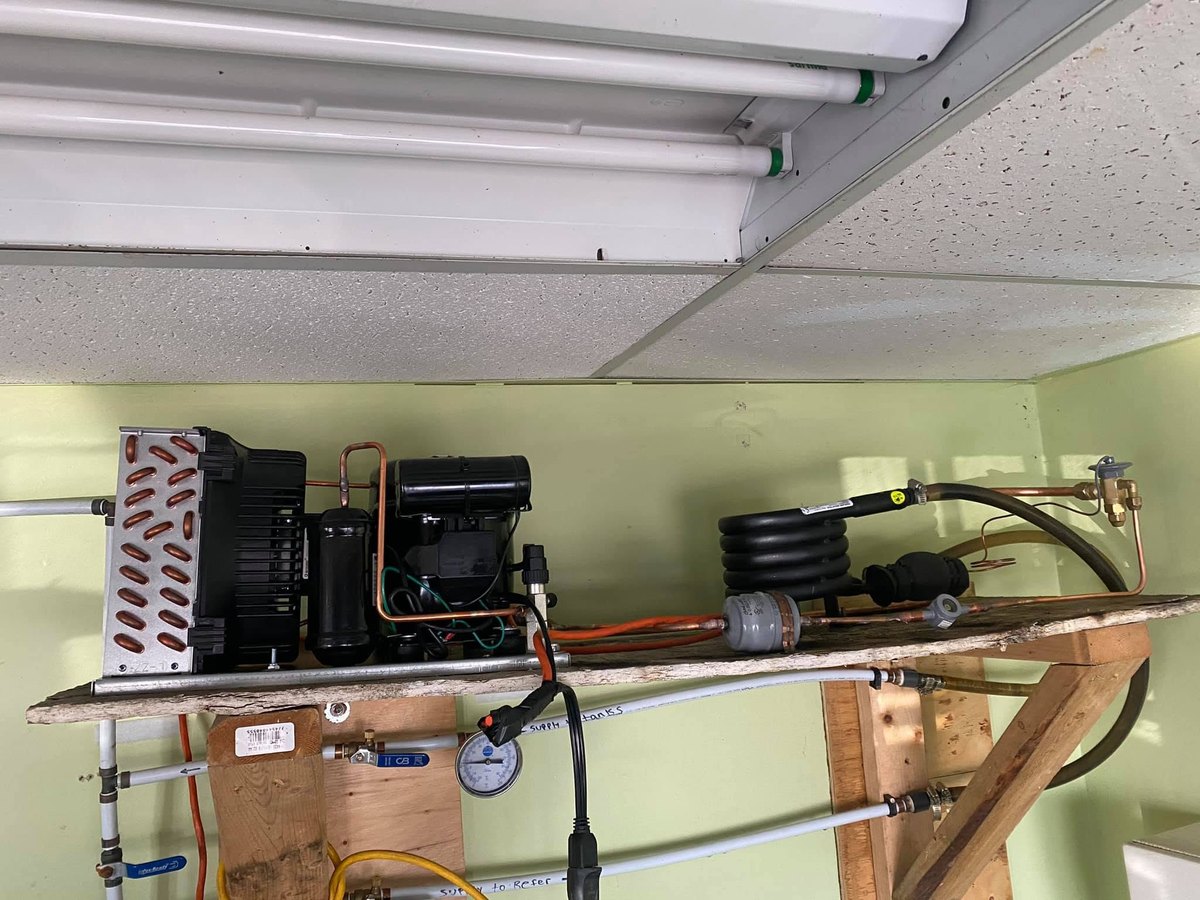
Manifold gauges connected to a condensing unit
Manifold gauges connected to a condensing unit.CooperFix · Toronto & GTA
Service request

Book Leak Repair Service

Send the data plate details, the refrigerant type if shown and what the equipment is reading now.

647-483-3777

    Please prove you are human by selecting the plane.

    CooperFix services commercial refrigeration equipment only.

    What this service covers

    A leak is found with numbers, not a guess

    Freon leaks are a hassle. When commercial refrigeration equipment needs a refrigerant refill or repair, the fridge or freezer is not cooling and is not performing optimally. Refrigerant can be harmful to people and to the environment, so the problem needs to be identified as soon as possible and checked by a professional. CooperFix provides commercial refrigeration equipment repair service in Toronto and the GTA.

    The leak is located, the joint or component is repaired, the circuit is evacuated and the charge is weighed in against the nameplate. A system that is topped up instead is empty again within weeks, and the leak grows while the equipment runs.

    The businesses served with this work include bakeries, catering operations, grocery and convenience stores, coffee shops, ice cream shops, dairy operations, farm markets, restaurants, pharmacies, chemical laboratories, logistics companies and property managers.

    Symptoms

    What is the equipment doing?

    Temperature is not holding

    • Fridge is warm
    • Freezer not cooling
    • Freezer not freezing all shelves
    • Fridge temperature too high
    • Fridge temperature too low
    • Fridge freezes food
    • Product freezing on the top shelf

    A loss of charge is one possible cause among several. The reading is the starting point, not the diagnosis.

    Ice, frost and condensation

    • Coils frosting up
    • Condensation in fridge

    Ice build-up restricts airflow through the equipment. Diagnosis considers the frost pattern, evaporator airflow, defrost operation and the path used to remove meltwater.

    Water and drainage

    • Fridge leaks water
    • Water pooling under the cabinet
    • Fridge drain issues

    Note where water first appears and whether it follows a defrost period. A visible puddle alone cannot show where flow became restricted.

    Sounds, controls and electrical

    • Strange fridge sounds
    • Strange freezer noise
    • Clicking sound from freezer
    • Fridge compressor is too hot
    • Fridge fan broken
    • Broken fridge light
    • Fridge error code
    • Fridge does not work

    Record any error code exactly as displayed and when it appears.

    Doors that do not close

    • Fridge door not closing properly
    • Freezer not closing properly

    Cool air escaping through a door that does not seal makes the equipment run harder and can mask a separate refrigeration fault.

    CooperFix · Refrigeration Experts

    Know who you are calling.

    20+Years of experience
    313AMechanic
    ODP/ODSCertified
    Service request

    Request Freon Leak Repair

    Tell CooperFix whether the equipment has been topped up before and how many times.

    647-483-3777

      Please prove you are human by selecting the tree.

      CooperFix services commercial refrigeration equipment only.

      Diagnosis and recommendation

      Industrial fridge Freon issues repair

      A commercial fridge or freezer breakdown is not only a headache but a serious inconvenience, because it can result in lost inventory. CooperFix works to reduce that damage by diagnosing the problem early and carrying out the repair reliably. The company has over 20 years of experience repairing commercial refrigeration equipment.

      CooperFix is a family owned and operated business and stands behind the quality of its work, maintaining that standing by being transparent, reliable and efficient.

      Before you book a leak repair

      A refrigerant leak is not fixed by adding gas. The system is put back to a known state: the leak is located, the joint or component is repaired, the circuit is evacuated, and the charge is weighed in against the nameplate.

      Your request

      Preparing your leak repair request

      What helps when you book:

      • Model and serial number from the data plate
      • Refrigerant type, if it is shown
      • What the equipment is reading now and what it should read
      • Whether this has been topped up before, and how many times
      • Whether there is oil residue anywhere on the pipework

      Common fridge parts

      Air filter, condenser fan, thermostat, heater and thermistor, defrost control board, evaporator fan, water inlet valve, compressor motor, compressor pump, condenser, water filter and water supply valve. Each service truck carries a stock of common replacement parts.

      Questions

      Commercial fridge repair questions

      Why is the commercial fridge not cooling?

      There can be several reasons why a commercial fridge is not cooling at its normal level. The most common are changes to thermostat settings, doors left open too long, blocked vents or weakened electrical controls. If those have been checked and the fridge is still not cooling, the equipment needs to be assessed.

      Why is the commercial fridge blowing hot air?

      This indicates the equipment is not working as it should, and the compressor circuit is often involved. Common contributing conditions are dirty condenser coils, a fault in the evaporator fan motor or a malfunction in the relay-start capacitor. The evaporator fan motor circulates air over the evaporator coil; if it fails, the fridge cannot cool consistently. The relay-start capacitor supplies power to the compressor; if it malfunctions, cooling is inconsistent or absent.

      Why is the commercial refrigerator building up ice?

      Ice build-up can restrict airflow through commercial refrigeration equipment. Diagnosis considers the frost pattern, evaporator airflow, defrost operation and the path used to remove meltwater. Running costs rise because the equipment works harder to compensate, which can affect other components.

      Is it better to repair or replace a commercial fridge?

      Repair is often the better option, because commercial equipment is expensive to replace. Unless the equipment is very old and beyond repair, repairing it can avoid that cost. If faults keep recurring, replacement may become the better option.

      What does a commercial fridge repair involve?

      The work depends on the fault, the parts required and the equipment itself. A control or sensor replacement is far less involved than a compressor or evaporator fan motor failure. CooperFix diagnoses the unit on site and quotes the repair before any work is authorized.

      Maintenance tips

      Keeping commercial refrigeration equipment in condition

      Keep the coils clean

      Keep coils free from dust and debris. Clean the coils with a coil cleaning brush and vacuum. The same brush can be used on the condenser coils of other refrigeration units. This is generally done twice a year. Always disconnect the equipment before cleaning it.

      Change the filters

      Refrigeration units have filters that need to be changed regularly. Check the manufacturer instructions for the unit to find out how to keep it clean.

      Keep the temperature consistent

      Hot food should be allowed to cool before it is placed in the fridge. Warm items cause an irregular temperature, so the equipment has to work harder to stabilise.

      Keep the door properly shut

      If a door does not close properly, cool air escapes, which makes the equipment work much harder and wastes energy.

      Do not overcrowd

      Even though it is good to keep the equipment moderately full, do not overcrowd it. Overcrowding can block vents or controls. Keep products sealed with secured tops to reduce moisture.

      Keep it away from heat

      The position of the equipment matters. Keep it away from any heat source. Close to heat, it works harder and uses more energy.