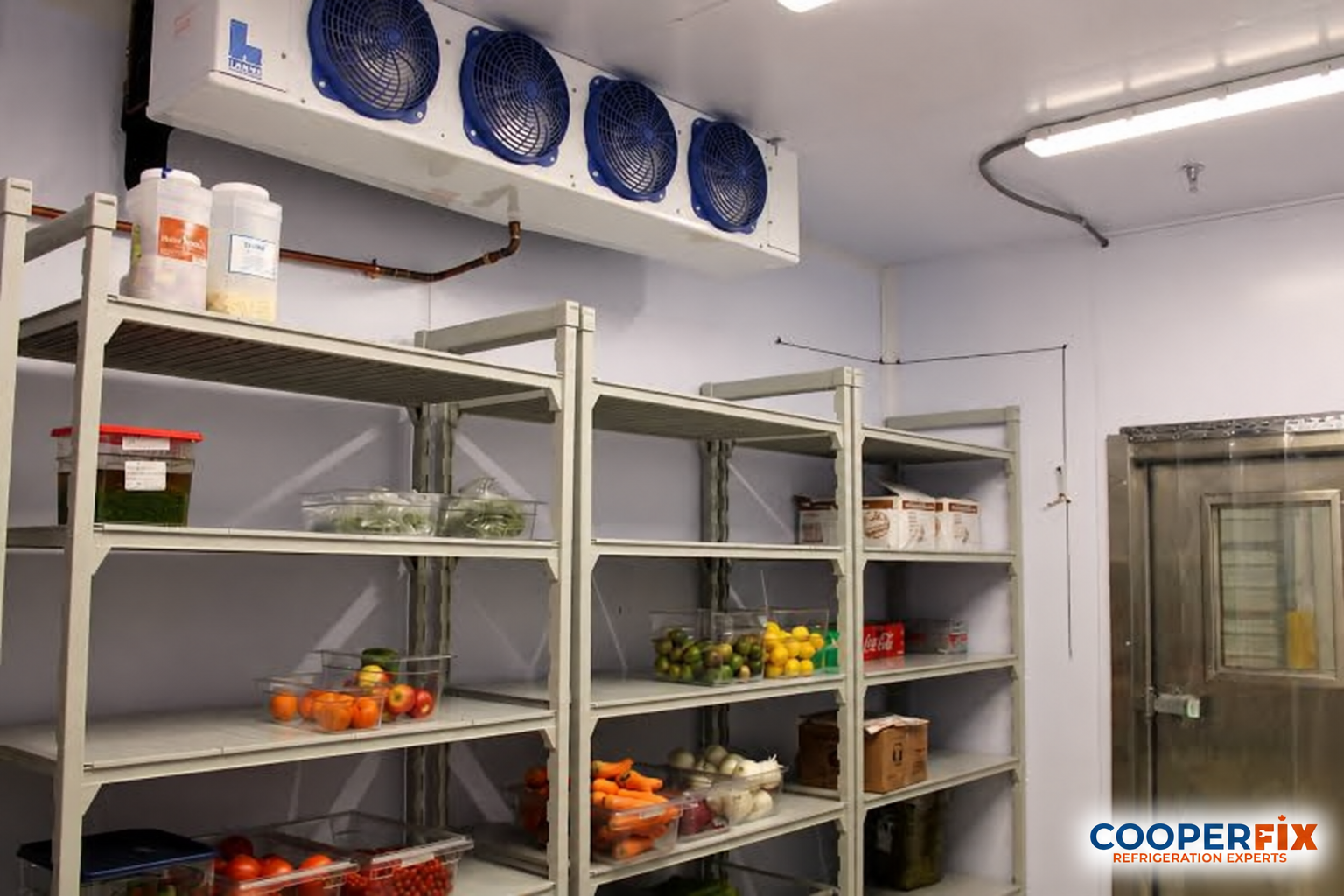
Walk-in cooler not reaching temperature
An unusually high room temperature can involve the control setting, an obstructed or iced coil, insufficient refrigerant feed or a mismatch between the product load and available capacity. Restrictions in the refrigerant circuit can also limit performance. These possibilities overlap at the level of the symptom; the displayed temperature cannot distinguish them.
The technician assesses the room condition and operating equipment together. A recommendation to adjust refrigerant feed should have supporting operating measurements. A recommendation involving capacity should explain the load being assessed. Neither should follow simply from the fact that the room is warm.
For the business, the history helps separate a new failure from a persistent limitation. Identify whether the cooler previously handled the same deliveries and usage successfully. If the stock volume or arrival condition has changed, include that change in the account. This gives the assessment a fair comparison with the cooler’s earlier performance.
Weak airflow and blocked circulation
Air leaving the evaporator needs a usable path through the room. Manufacturer guidance requires air coverage across the space and clearance between stored goods and the unit. Tall stacks directly in front of fans can interfere with distribution. The required clearances come from the installed equipment’s instructions; one universal distance is not suitable for every cooler.
A business may notice weak circulation, a warmer area behind a stack or a new problem after the storage arrangement changes. During diagnosis, the technician considers the air route, coil condition and fan operation together. The important distinction is between an obstruction affecting circulation and equipment that is failing to move air as intended.
A photograph of the stocked room can preserve that context if goods need to be moved before assessment. Include where the unusual reading was taken. An empty room seen later may not show the conditions present when the complaint developed.
Evaporator fans that stop, run unevenly or make noise
A stationary evaporator fan needs to be interpreted against the unit’s operating state. Fan supply, electrical connections, a failed motor and a control or timing fault can all require investigation. Defrost behaviour also differs: air-defrost arrangements can keep fans running, while other arrangements stop them during the cycle. The actual equipment determines what should happen.
The technician establishes whether the fan should be operating at that point, checks the relevant supply and control conditions, and assesses the motor. If several fans are fitted, identifying whether one or all are affected helps frame that investigation. A stopped fan is an observation, not proof that every motor needs replacement.
For a noisy fan, the repair also needs to respect its mechanical arrangement. Motor voltage, mounting and blade position are model-specific details. A replacement that merely turns is not the whole check; the assembly should operate correctly with its guards fitted. Avoid reaching into the fan area to investigate a noise.
Frost that keeps returning to the cooling coil
A service assessment should distinguish an obstructed coil from the reason it became obstructed. That means relating the visible condition to the equipment’s defrost operation, room conditions and refrigerant behaviour. The repair explanation should make clear which contributing condition was found and what remains to be observed after operation resumes.
Report how quickly frost returned after the last intervention. A condition that reappears during the next working period provides different evidence from gradual accumulation over several weeks. Do not chip the coil or use improvised heat to clear it; preserve accessible photographs and leave the equipment assessment to service personnel.
Defrost operation and control sequence
A medium-temperature cooler can use air defrost, where refrigeration pauses and the circulating room air helps the evaporator clear. For example, the Heatcraft intelliGen air-defrost sequence keeps evaporator fans operating and then returns the system to cooling. That is a model example, not a universal sequence for every walk-in cooler.
A technician needs to identify the installed control and defrost method before judging a pause or changing a setting. Whether a cycle starts, how it ends and whether cooling resumes are separate observations. Repeatedly extending defrost without establishing the problem can leave the original fault unexplained.
For the business, record whether the temperature complaint coincides with a displayed defrost state and whether recovery follows. A photograph of the controller and the time of the observation is more useful than describing all pauses as shutdowns. Keep any previous changes to control settings with the service history.
Warm-air entry and the added load on the refrigeration system
The refrigeration system serving a walk-in cooler has to remove the heat that enters during access as well as the heat from the stock and from the room itself. A persistent temperature problem therefore needs the access pattern described alongside the equipment behaviour.
Explain when the room is entered most, how long it stays open during receiving and whether the complaint follows those periods. Record the reading and the time together. A room that recovers during the quiet part of the day is reporting a load condition; a room that never recovers is reporting something else.
The technician can relate the access pattern to the temperature history and explain what the refrigeration equipment is able to do under those conditions. If both an operating condition and an equipment fault are present, the findings should distinguish them. Reducing one contributing factor does not by itself establish that the performance complaint has been resolved.
Water beneath the evaporator
Water escaping near the evaporator needs its own diagnosis. Manufacturer troubleshooting identifies restricted drainage, the unit’s drainage pitch and defrost duration among relevant checks. Where a drain heater is actually fitted, its operation may also matter. Heater checks should not be prescribed for a cooler that does not have that arrangement.
Staff can help by noting where water first appears and whether it follows an operating pause or defrost period. During assessment, the technician traces the water route and checks whether the collection and drain arrangement can carry water away correctly. A visible puddle alone cannot show where flow became restricted.
The repair should address the drainage condition that was established. Ask whether water flow was checked afterwards and whether the issue needs observation through a later cycle. If goods were moved away from the affected area, identify their previous position so the original complaint remains understandable.