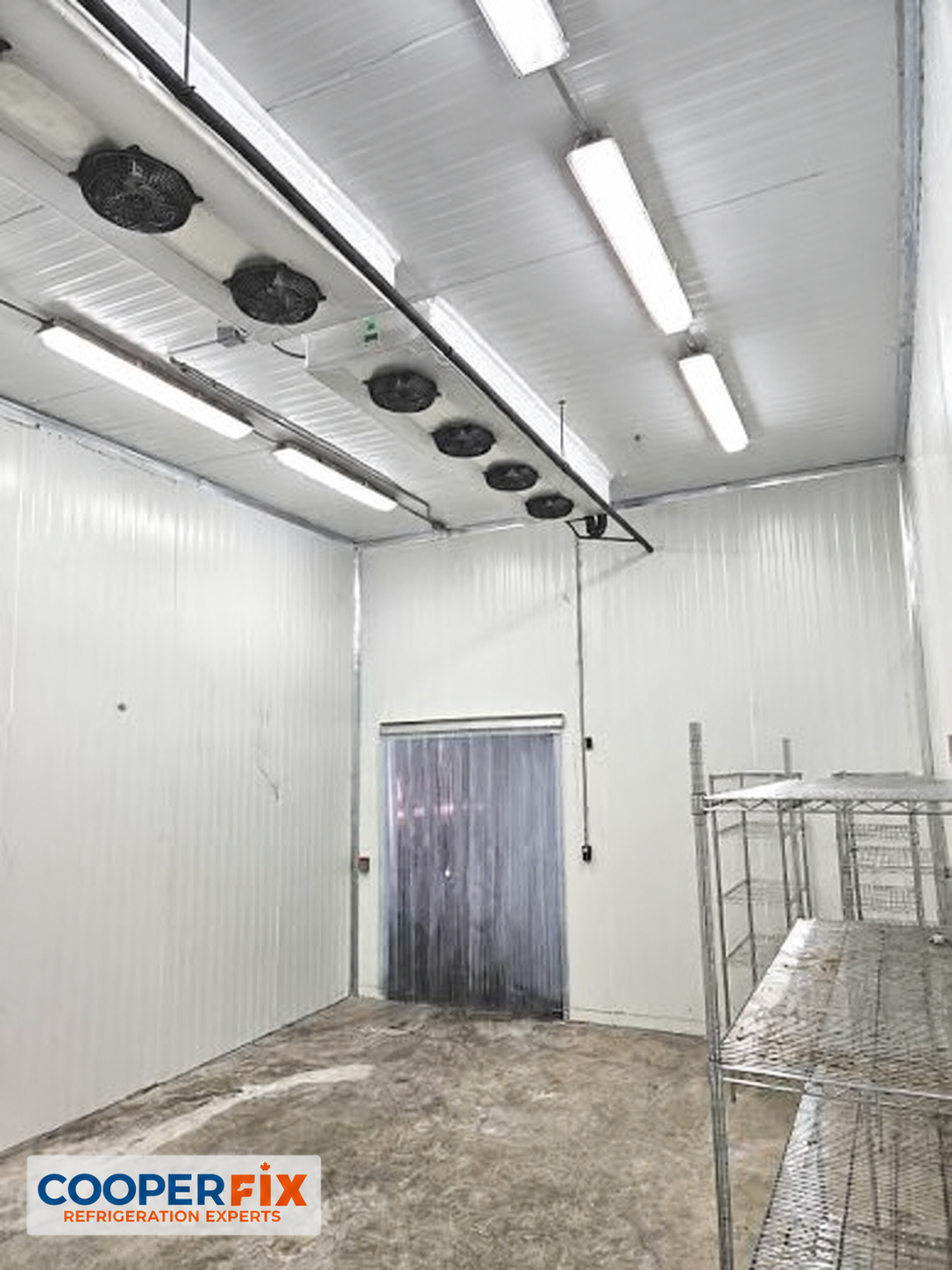
One warm area within a larger room
A local warm area does not by itself prove that the whole plant has lost capacity. The mechanic compares air entering and leaving the relevant evaporator, observes fan operation, checks the condition of the coil and measures how refrigerant is feeding it. A fan that has slowed, a control that is not calling for cooling, a solenoid that fails to open or a metering fault can reduce cooling in one zone while other zones continue to operate. Loading and airflow can also change the pattern, so the diagnosis must follow the actual installation rather than a generic symptom list.
The repair depends on the confirmed cause. CooperFix may repair or replace a failed fan motor or control component, correct a refrigerant-feed fault or restore the affected circuit after a leak repair. The technician then measures the zone again under operating conditions. The goal is to demonstrate that the repaired equipment is delivering cooling to the area that had been losing it, while the rest of the system remains stable.
Several rooms warm at the same time
When more than one room connected to the same equipment warms, the mechanic assesses shared components early in the visit. Condensing capacity, compressor operation, electrical supply, system pressures and controller history can show whether the problem sits upstream of the individual evaporators. A shared fault is one possibility; separate room faults can also coincide. CooperFix compares measurements at the common equipment with readings at the affected rooms before recommending a repair.
This distinction matters to a business with different products or workflows in each space. Repairing a single room circuit will not restore capacity if the fault is at the common condensing equipment. Conversely, replacing a shared component would be the wrong response to one circuit’s control fault. The service report explains which part of the installation was tested, where the fault was confirmed and what work was performed.
A cooler that recovers slowly after receiving or dispatch
An industrial cooler may handle a higher heat load while goods are being received, sorted or moved. The relevant question for a repair is whether the refrigeration system can recover as intended for the actual operating load. CooperFix examines how the room temperature changes during the work cycle and how the equipment responds. The mechanic can compare evaporator airflow, refrigerant feed, compressor operation and condenser conditions with the load the system is carrying.
Slow recovery may come from a failing fan, reduced condensing capacity, an incorrect control sequence or a refrigeration circuit that is not delivering its designed output. It can also reveal an installation or operating condition that a parts change alone will not resolve. CooperFix explains the difference. If a component has failed, the repair targets that component. If the system’s design or operating condition requires a separate decision, that is described rather than hidden behind a temporary adjustment.
Air conditions across a chilled industrial zone
An industrial cooler may have several evaporators serving a large storage area. Supply air, return air and the operating response in each zone help the mechanic determine whether the problem is local to one evaporator or shared across the refrigeration plant. CooperFix compares the affected zone with the rest of the installation and investigates the equipment supporting it. The repair recommendation can then distinguish an airflow fault from a refrigerant-feed or common capacity fault.
Refrigerant leaks and feed faults
A refrigeration circuit with insufficient charge can lose capacity gradually. A restriction or a metering problem can also leave an evaporator short of refrigerant, and the symptoms can look similar from the room. CooperFix uses pressure, temperature, superheat and subcooling readings where appropriate to the equipment to separate these possibilities. The mechanic confirms the refrigerant specified for the system before any circuit work.
When a leak is found, a top-up alone is not the repair. The leak is located and the repair scope is explained. After the appropriate circuit work, the system is checked for tightness, evacuated and charged according to the equipment and refrigerant requirements. Where the circuit has been opened, the technician considers the condition of components that protect it from moisture and contamination. The completed repair is assessed by operating measurements, not only by the amount of refrigerant added.
Fans, electrical parts and controls
Industrial coolers often have several fans and controlled branches. A failed evaporator fan can make the room uneven even when the refrigeration circuit is producing cold. A condenser fan or start component can limit capacity when the equipment is working hardest. A loose connection, contactor, sensor or controller fault can stop a circuit intermittently and leave little evidence by the time a mechanic arrives. CooperFix tests the relevant electrical and control components as part of the refrigeration diagnosis.
The service distinguishes a sensor that reports the wrong condition from equipment that is genuinely warming. The mechanic compares the controller’s indication with independent measurements and reviews its operating history when available. Replacing a controller without finding a failing probe, fan or refrigeration component would leave the original fault in place. Programming changes are documented against the equipment and the intended operating sequence.
The repair process at an operating site
The first contact establishes the location, the affected equipment and the business impact so the call can be assessed. Once on site, the mechanic identifies the circuits and measures the affected area and connected equipment. CooperFix explains the confirmed fault and the work required before carrying out the repair. If a part must be obtained or a larger intervention is needed, the business receives that information as a separate decision rather than an implied promise that every repair finishes in one visit.
After repair, the technician checks the relevant electrical, refrigerant and temperature behaviour as the system operates. A cooler that starts is not necessarily a cooler that has regained capacity. The report records the work performed and the measurements that show how the repaired circuit responded. Product-handling decisions remain with the business and its own procedures; CooperFix provides the equipment findings needed to make informed operational decisions.
Verify the Repaired Zone Against the Shared Cooler System
After an authorized repair, CooperFix verifies the affected industrial cooler zone in relation to the equipment it shares. The mechanic compares the repaired evaporator’s air response, fan operation and refrigerant feed with the other branches available during the visit, then confirms how the condensing equipment responds to the combined demand. This matters when a failed local component had forced the shared system to operate differently or when several zones appeared to have the same symptom. The record identifies the branch repaired, the measurements taken after the work and whether the common refrigeration source returned to its expected operating sequence. A separate fault found on another zone is reported as its own service decision.
Repair and planned maintenance serve different needs
Repair addresses a confirmed failure or loss of performance. Planned maintenance gives a business a recurring view of equipment condition before a fault interrupts storage. For a multi-evaporator cooler, that may include comparison of fan operation, control sequence, electrical condition and system performance across the branches. Findings can identify a developing problem that merits a separate repair decision.
CooperFix can discuss maintenance after the immediate fault has been resolved, especially when the site runs several connected rooms or relies on one shared condensing system. The repair page remains focused on restoring the present equipment fault. A maintenance plan is scoped to the actual equipment list and visit schedule; it is not assumed to be part of an emergency repair. Planned work on the same chilled storage is described on the industrial cooler maintenance page; a room that is warming without a confirmed fault can start with industrial cooler troubleshooting.