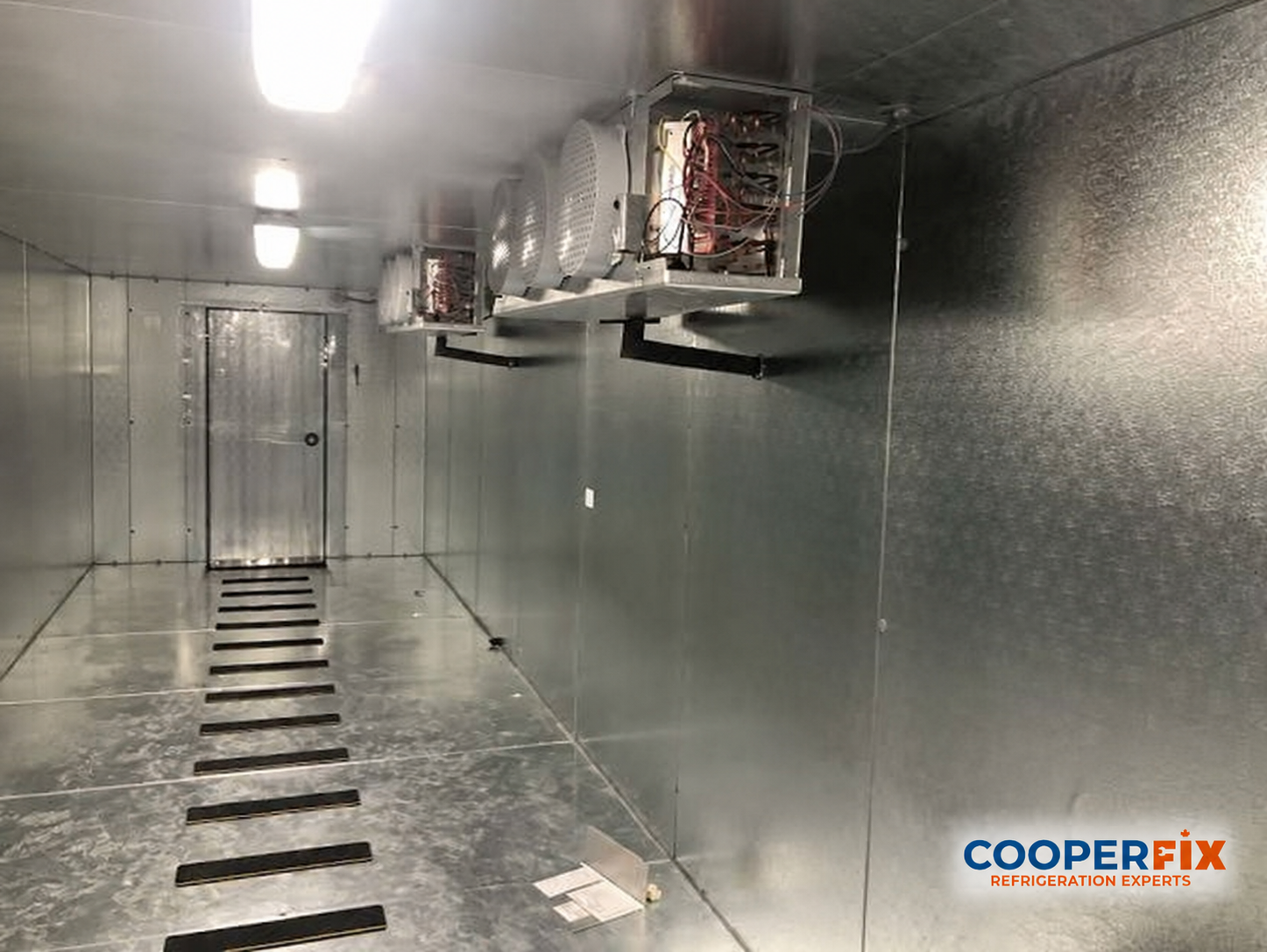
The freezer’s low-temperature sequence sets the context
An industrial freezer depends on coordinated cooling, defrost and protective controls. CooperFix establishes the sequence used by the installed system before interpreting a temperature rise. The timing of the reported change helps direct the investigation, but the mechanic still tests the relevant equipment. A fault after defrost and a loss of capacity during sustained cooling can lead to different repairs even when both make the room warmer.
A slow rise is different from a sudden stop
A gradual loss of freezer performance can follow reduced evaporator airflow, incomplete defrost, a refrigeration feed problem or declining common capacity. The system may continue running while the room loses ground under normal load. CooperFix examines the temperature trend available at the site, the evaporator condition and the operation of compressors, fans and controls. A slow rise does not automatically mean a refrigerant leak or a compressor at the end of its life. The mechanic tests the possibilities indicated by the equipment.
A sudden stop can point toward an electrical interruption, protective control, failed starting function or another discrete fault. CooperFix determines what commanded the equipment to run and what prevented it from doing so. A compressor that is not running may be held off by protection; a compressor that runs may still lack effective refrigeration. The distinction affects the repair and any decision about a major part. The business should hear whether the problem is currently active, intermittent or the consequence of an earlier cycle.
Compare evaporators without assuming a common fault
Several evaporators may share a freezer room yet show different frost and airflow responses. CooperFix measures the affected unit and compares it with the others under conditions available during the visit. The difference can help isolate a local defrost or refrigerant-feed issue. It does not mean every evaporator needs the same repair. The service finding identifies the equipment supported by the tests.
One evaporator ices while the others continue
An iced evaporator can stop moving air through its section of a large freezer. CooperFix checks the defrost initiation and termination for that branch, the condition of heaters where fitted, fan restart and the refrigeration feed. A sensor or control may report the wrong condition, or a failed component may leave the coil iced after the rest of the system has resumed. The mechanic compares the weak branch with the other evaporators and the common source. That comparison prevents one local sequence failure from being treated as a plant-wide compressor problem.
Visible ice is a symptom that can temporarily disappear. The professional work is to identify why it returns and verify the corrected sequence. Depending on the equipment, defrost may be controlled by time, temperature or another manufacturer-defined method. CooperFix uses the actual model and observed operation rather than a universal setting. The repair is complete when the supported cause is corrected and the relevant functions are checked, not when the coil merely looks clear.
Drainage and refreezing within freezer equipment
Defrost water needs a functional route away from the evaporator assembly. If a heater or drainage component associated with the refrigeration equipment fails, water can refreeze and affect normal operation. CooperFix traces the refrigeration-related path and checks the components the model uses. A frozen drain can be connected to an incomplete defrost or a separate heater failure; the mechanic distinguishes them before work. This page stays focused on the refrigeration system and its operation.
Where a freezer has several evaporators, one drain-related failure may be local while another section remains normal. CooperFix identifies the affected assembly and considers whether a shared control or power issue is involved. After corrective work, the defrost, drainage and return-to-cooling sequence are assessed together. Treating water and ice as separate cosmetic problems would not answer why the freezer lost performance.
Compressor protection, controls and an apparent startup failure
The compressor may be prevented from starting by a protective device or control command, or it may have a genuine electrical or mechanical fault. For the reported industrial freezer event, the mechanic compares the control command with electrical response, low-temperature pressures and the active defrost or fan sequence. On a larger low-temperature arrangement, the effect of one compressor depends on how the system is configured and whether other capacity remains. An alarm or silence at the condensing equipment is an important observation, but not enough by itself to authorize replacement.
Control history can help locate an intermittent event. The mechanic compares the recorded information with current measurements and the freezer’s observed sequence. A pressure trip may be the result of another condition that must be corrected. A fan delay after defrost may be intentional; failure to restart at the intended point is not. CooperFix explains the difference and recommends work on the confirmed failed function. The service account states when the reported event could not be reproduced during the visit.
A recurring shutdown after earlier work calls for a fresh assessment of the original failure and the system around it. A replaced part may be operating correctly while another protective condition remains, or the same symptom may now have a different source. CooperFix uses the current measurements and control history to distinguish those cases. The previous service record is context, not proof that one component has failed again. That distinction helps a facility understand whether the proposed work addresses a repeat condition or a new fault.
The common source and outdoor operating conditions
Industrial freezers with remote condensing equipment may depend on controls that maintain suitable operation across changing outdoor conditions. A problem may be most visible during a cold period, a high load or a transition in compressor staging. CooperFix checks the condensing equipment and relevant control response for the actual installation. A setting or part may be defective, but the symptom cannot be reduced to a general seasonal rule. The technician uses equipment data and current readings to establish what is happening.
If several freezer rooms or evaporators deteriorate together, a common source should be investigated. If only one branch is weak, the local evaporator, feed and controls remain central. The relationship between rooms determines the troubleshooting route. A business can describe which spaces are affected; CooperFix maps the technical relationship and tests the appropriate components on site.
Protection events need their operating context
A compressor or motor trip can be a response to electrical or refrigeration conditions elsewhere in the system. CooperFix examines the event with the connected controls and measured operating state before recommending component replacement. A reset or alarm history alone does not establish the cause. The business receives a description of the fault and of the work proposed for the part of the freezer system that was actually investigated.
The repair recommendation and its verification
After locating the fault, CooperFix describes the affected circuit, the measured evidence and the work proposed. It may be a defrost heater, fan, sensor, control, protective component, refrigerant-side part or compressor-related repair. The exact part is selected for the equipment. If a refrigerant leak is confirmed, the source is corrected before the circuit is tested and charged. If a specified component must be obtained, the business is told what is pending rather than given a claim of completed repair.
Verification follows the original failure pattern. For a repeated-ice complaint, the relevant defrost and fan-return sequence matters. For a startup fault, the compressor and controls are observed through an applicable operating period. For a slow room rise, CooperFix examines the direction of recovery and the repaired branch under the conditions available. A large loaded freezer may take longer than the visit to stabilize fully; the mechanic explains what was checked and what remains dependent on normal operation.