
Choose the page that matches the failed equipment
Choose the route that matches the equipment and its business use. If several systems are affected or the category is unclear, CooperFix routes the request from this hub. The mechanic confirms the installed circuit and controls on site before diagnosing the fault.
Walk-in rooms and their refrigeration systems
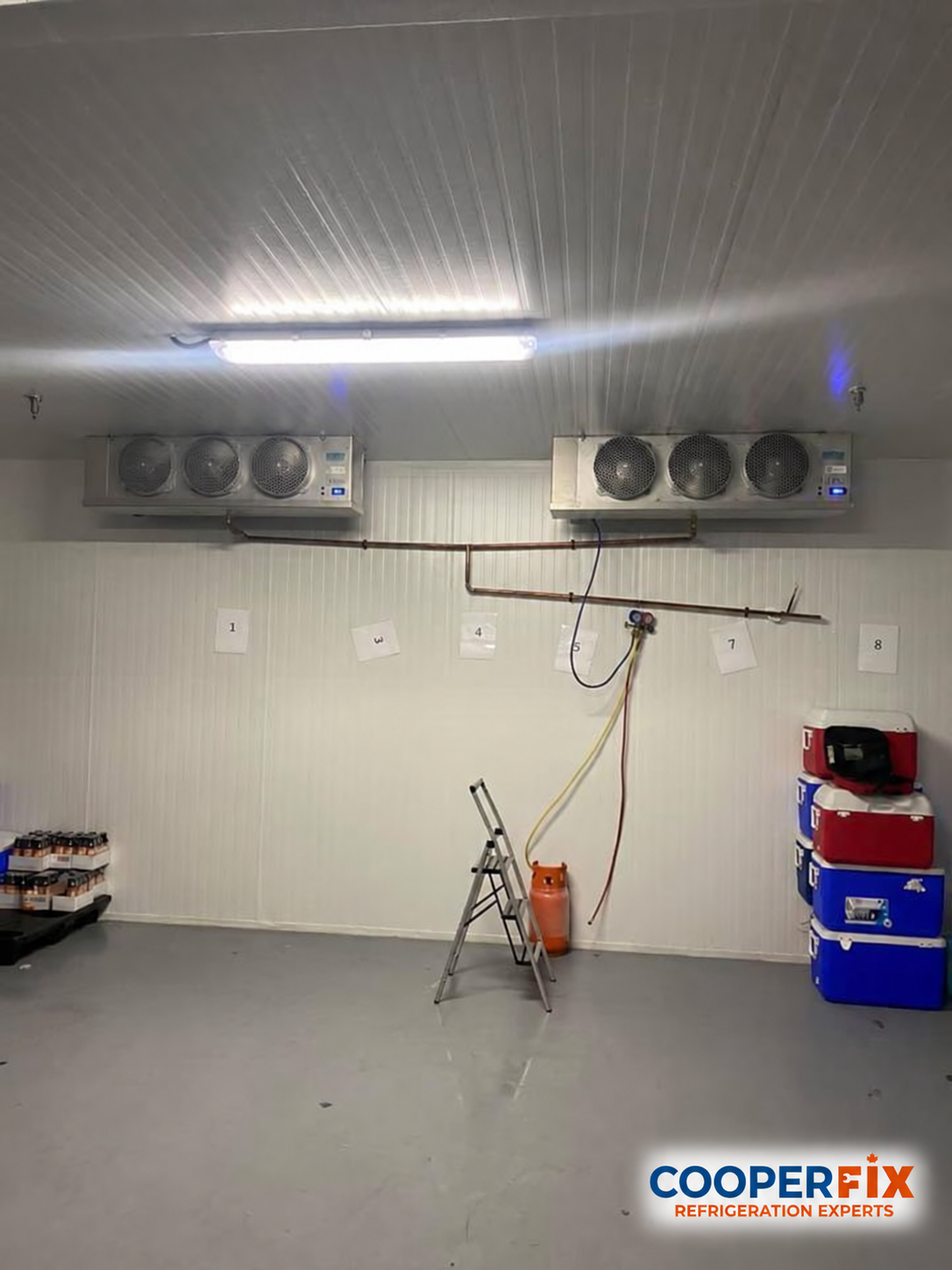
Walk-In Cooler Troubleshooting fits a chilled room that is not maintaining its operating condition. CooperFix considers evaporator airflow, refrigeration supply, controls and the load on the room. A cooler can have one weak area while other sections remain normal. The visit distinguishes a local component issue from a problem at the condensing source. Choose this path when the business problem is chilled storage in a walk-in cooler, not a small unit or display case.
Walk-In Freezer Troubleshooting fits a low-temperature room with warming, repeated evaporator ice or an interrupted operating cycle. The mechanic considers defrost, fan restart, control and refrigeration functions appropriate to the freezer. The cause may be local to an evaporator or linked to remote equipment serving the room. This route is specific to the freezer’s low-temperature operation rather than a general cool-room complaint.
Walk-In Fridge Troubleshooting fits a walk-in fridge used for commercial chilled storage when the symptom concerns the room’s temperature distribution or recovery. CooperFix checks how its evaporator, controls and condensing equipment work together. The page addresses the fridge as a complete refrigeration function serving the room. It helps a business that knows its equipment as a walk-in fridge reach the right service without selecting a component from an alarm.
Walk-In Refrigeration Troubleshooting focuses on the refrigeration circuit that serves a walk-in space. This is useful when the concern is clearly connected to the evaporator, condensing unit, refrigerant piping or controls, or when several components need to be assessed together. CooperFix identifies the actual circuit and tests it professionally. The room-type pages remain more specific when the business knows whether the affected space is a cooler, fridge or freezer.
Commercial units, coolers and freezers
Commercial Cooler Troubleshooting is the route for beverage and other commercial cooler units that are failing to cool or recover under normal business use. CooperFix assesses fans, controls, condenser performance and the refrigeration system for the specific unit. This page helps a bar, store or food-service operator find the cooler-specific diagnosis rather than assume the fault is the same as a walk-in room’s.
Commercial Freezer Troubleshooting is for reach-in, undercounter, chest or display freezer equipment with warming, repeated frost, cycling or local warm positions. Freezer defrost and low-temperature controls are central to the mechanic’s assessment. A unit may keep running while its product area loses useful cooling. The linked page explains how CooperFix separates airflow, control, starting and refrigeration-circuit causes before proposing a repair.
Commercial Fridge Troubleshooting is for reach-in refrigerators, preparation units and merchandisers. A prep zone can warm while the base remains cold; a merchandiser’s controller can disagree with product conditions. CooperFix first identifies the unit design and then tests the components serving the affected position. This route is useful when the business knows it has a commercial fridge but cannot tell why one section is underperforming.
Larger industrial storage systems
Industrial Cooler Troubleshooting is for larger chilled storage with several evaporators, remote condensing equipment or connected zones. One warm branch and a whole-room capacity shortfall require different investigation. CooperFix maps the relationship between the affected area and the common refrigeration source, then checks the relevant controls, feed and airflow. The page is built around chilled industrial storage under business load.
Industrial Freezer Troubleshooting is for low-temperature industrial storage. A slowly warming room, one iced evaporator, a frozen refrigeration-related drain or a compressor protective event can arise from different causes. CooperFix evaluates defrost, fan return, controls and common equipment in their low-temperature sequence. The link directs a facility to that specific diagnosis rather than carrying cooler assumptions over to freezer operation.