One business can have several refrigeration service routes
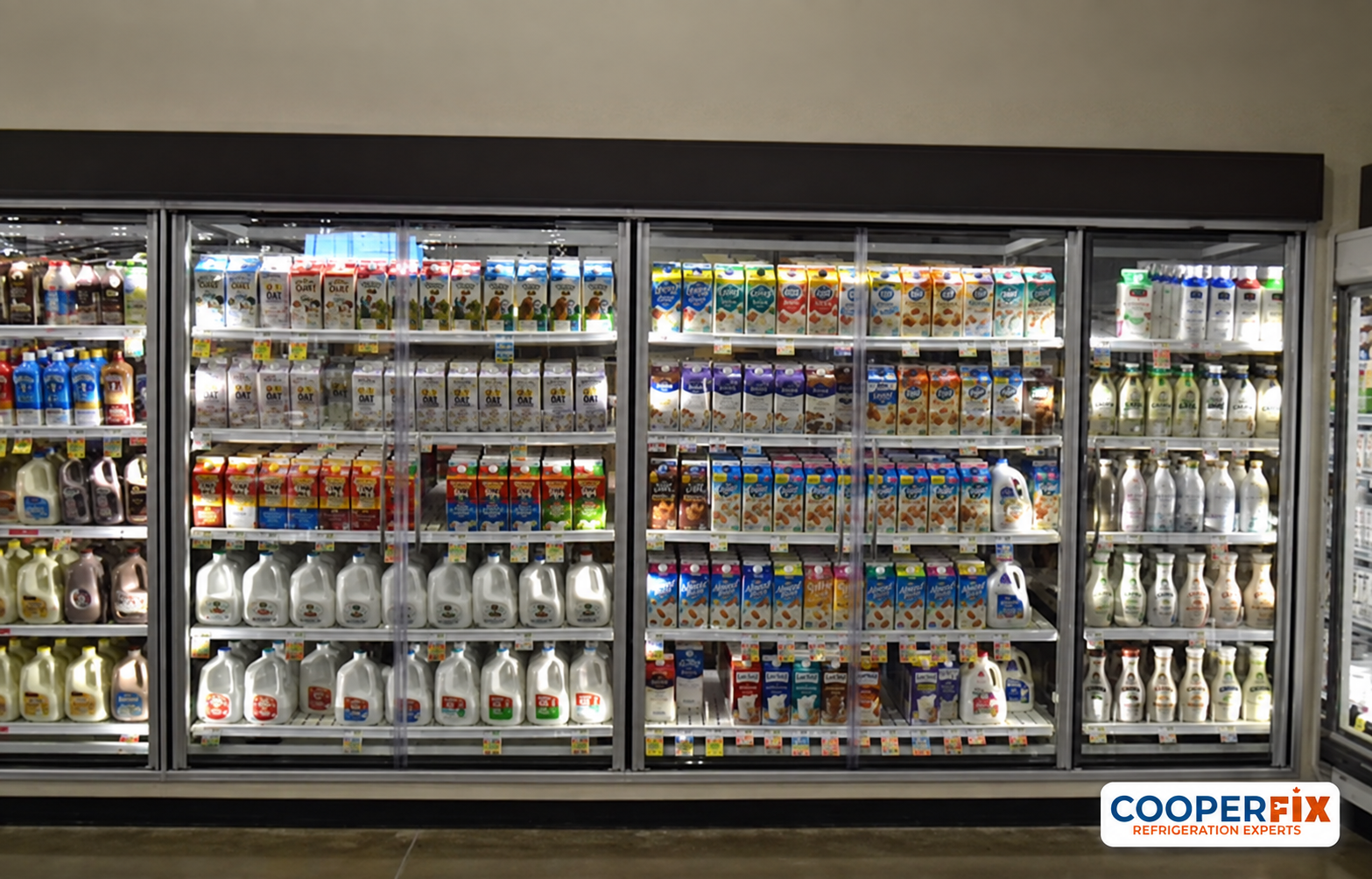
A retailer may use display cases on the sales floor, a walk-in room for stock and reach-in equipment close to daily operations. CooperFix identifies the equipment involved in the request before defining whether the visit is for an active failure, planned service or installation-related work. This prevents a broad commercial refrigeration enquiry from being routed as if every unit on the site needed the same task.
Three signals that lead to different work
A function has failed
The unit may have stopped cooling, lost a fan, developed an alarm or no longer complete its intended cycle. That is a repair diagnosis. CooperFix tests the system and explains the fault supported by the findings before replacing a part. A displayed temperature or one familiar noise does not identify the failed component. The service visit becomes a repair when there is a confirmed cause and an agreed corrective scope. The relevant fridge, freezer, walk-in or case page gives deeper detail for that equipment.
Performance is changing while the unit still runs
A case may recover more slowly after ordinary use, a unit may run longer than before or one product area may become weaker than another. These observations justify a service assessment even if the unit has not stopped. CooperFix checks the operating cycle, fans, controls, defrost and refrigeration conditions that apply to that equipment. A developing fault can then be identified and a specific repair or maintenance action recommended. The purpose is to explain the measured change, not promise that every future interruption can be prevented.
Equipment needs commissioning or adjustment
A controller replacement, new refrigeration component or changed installation can require settings and verification matched to the equipment it serves. CooperFix assesses the system data, the connected components and the intended operating sequence. A setpoint alone is not the full setup: defrost, fan, safety and refrigerant-side performance may also be relevant depending on the unit. This work needs its own scope and confirmation of observed operation. It is distinct from replacing a part because the equipment has failed.
What the mechanic establishes on a service visit
CooperFix examines the equipment and the conditions under which the concern appears. Temperatures at useful locations, fan and compressor operation, electrical current, controls, defrost and refrigerant-side readings may be assessed as indicated. A self-contained unit has a different test route from a remote walk-in or a display case connected to shared equipment. The mechanic interprets several observations together, because one reading can be normal while the product area is not, or a symptom may be caused by a separate component upstream.
The resulting explanation should identify what the unit was expected to do, what it actually did during the visit and which part of the refrigeration system accounts for the difference. If more than one fault is found, CooperFix distinguishes them. If the equipment operates within the observed conditions but the original complaint occurs only under a different load, the visit records that limit rather than presenting an unsupported repair. This gives the business a usable basis for the next decision.
Commercial refrigeration equipment covered
CooperFix services reach-in and undercounter refrigerators and freezers, preparation units, commercial beverage coolers, glass-front merchandisers, display cases, walk-in coolers and freezers, and the refrigeration equipment serving them. Each category has its own practical failure patterns. A prep unit may have separate product zones. A beverage cooler is judged by its unit performance under repeated use. A freezer has low-temperature and defrost demands. The mechanic uses the equipment’s configuration and identification, not a generic assumption based on its appearance.
When several units on a site share a remote condensing arrangement, CooperFix identifies that relationship. A local unit problem may need a unit repair, while a shared supply problem may require work at the common refrigeration source. A request involving a connected industrial-scale site can be routed to the industrial service page. The equipment description in a service request can be simple; the technical system map is part of the professional assessment.
Repair work after a confirmed finding
If a component has failed, CooperFix explains the proposed repair, checks the replacement against the equipment specification and carries out the agreed work. A fan motor, sensor, controller, start component, defrost part, valve or refrigerant-carrying component may be relevant depending on the diagnosis. A suspected leak is located and corrected before the circuit is charged appropriately. A compressor is assessed before replacement is proposed. The service does not equate a warm unit with one predictable part.
The part may be available for the visit or may have to be sourced. CooperFix explains what was established and what the next step requires. A separate installation project is possible if equipment replacement, rather than a repair part, is indicated. The business should receive a distinction between a completed repair, an assessment awaiting a specified component and a recommendation for wider work. Calling all three outcomes a finished repair would obscure the actual state of the unit.
Service observations belong to a named unit
The mechanic’s record is most useful when it identifies the equipment assessed, the condition observed and any next step recommended. CooperFix keeps that connection clear on a mixed commercial site. A finding at one case does not become a statement about another freezer or walk-in room that was not inspected. The business receives a service result it can use for its own equipment and location.
Planned work on operating equipment
A service visit can also address an operating unit before a failure is confirmed. The mechanic may find a fan or control that behaves inconsistently, a defrost sequence that no longer completes as intended or refrigeration performance that has less margin under normal load. CooperFix ties any recommended action to the measured condition. Commercial refrigeration maintenance provides the more focused path for scheduled upkeep across working units. A maintenance visit and a repair visit can both be valuable, but they have different immediate purposes.
The site should know which units were assessed and under what conditions. A planned check on one unit does not certify every refrigerator on the premises. A change in equipment use or ambient conditions can also affect performance and may require a service discussion rather than replacement of a part. CooperFix’s account of the visit separates a mechanical defect from an operating condition so that the customer can decide what work is justified.
Setup and commissioning where a component has changed
When a controller or refrigeration component has been installed, CooperFix checks how it interacts with the unit it serves. The correct sensor, control sequence and equipment-specific settings matter. On a remote system, the related condensing and evaporator functions must be considered together. Commissioning means observing that the installed equipment responds as intended under available conditions and recording relevant settings and readings. It cannot prove performance in every future season or load from one brief visit.
For a new system or larger equipment replacement, refrigeration installation is a separate project path. The load, connection, refrigerant circuit and commissioning requirements need a defined scope. This service page helps a business explain the need, while the detailed installation decision is based on the actual equipment and application.
A service record the business can use
CooperFix records what was measured, found and done during a service visit. That is useful when equipment has a recurring complaint or several people manage the same site. A record of the affected unit, observed operating condition and corrective work can distinguish a repeat of the same fault from a new one. It should also say when an additional part, different visit or broader scope remains pending. The record describes the service performed and the operating condition observed during the visit.
CooperFix brings 20+ Years of Experience to scheduled commercial refrigeration service; any repair separately authorized and completed during that work carries the 90-Day Parts & Labour Warranty under its terms. Its commercial refrigeration mechanics hold Ontario 313A licensing. The equipment-specific diagnosis and observed checks show what happened on the visit.