What brings businesses to CooperFix
A unit is running but product temperature is drifting
A unit may appear to operate while its cooling capacity falls short during the busiest part of the day. In a walk-in, warm areas may be isolated to one section of an evaporator or appear throughout the room. In a display case, one product position can be warmer than another. CooperFix relates operating conditions to product-level temperature, airflow, refrigerant behaviour and the control sequence. That distinction matters because the same visible warming can come from a stopped fan, a defrost fault, reduced refrigerant feed or a condensing problem.
Equipment stops, starts repeatedly or recovers too slowly
A system that cycles out on a protective control, restarts unpredictably or takes too long to pull down after normal use needs a diagnosis of why it cannot complete a stable cycle. The mechanic assesses compressor operation, motor circuits, controls, refrigerant conditions and heat rejection as applicable to that unit. A reset or a replacement selected from the symptom alone can leave the original fault in place. CooperFix aims to repair the cause that the test results support.
More than one system on site is affected
Several warm units on one premises do not automatically point to one failed part. They may share an electrical event, a remote condensing arrangement or a change in operating conditions; they may also have unrelated faults. CooperFix determines the relationship between systems before planning the repair. The visit can focus on the equipment that protects the most product, while still identifying what each affected unit needs. This is especially useful when a site has separate storage, preparation and sales-floor refrigeration.
Mapping several units on the same commercial site
One service request may involve a display case warming on the sales floor while a walk-in room still holds its operating condition. CooperFix identifies which equipment has its own refrigeration circuit and which components or controls are shared. That distinction determines whether one failed unit needs a local repair or whether the mechanics should investigate a common supply or condensing problem. A business receives a service recommendation tied to the affected equipment, rather than a broad assumption that every refrigeration unit has the same fault.
How a commercial refrigeration repair is diagnosed
The first step is to establish the equipment configuration and the actual failure. A mechanic examines the operating temperature and how it changes during the cycle, the status of fans and controls, and the performance of the refrigeration circuit. Electrical checks help distinguish a motor or starting problem from a controller instruction. Refrigerant-side readings help distinguish a feed restriction, low charge or heat-rejection problem when those readings are applicable. The mechanic interprets the measurements together; one pressure, sound or display value is not a complete diagnosis.
The repair plan follows the fault found. It may involve a fan motor, control component, defrost component, refrigerant leak, metering component or another part of the refrigeration system. CooperFix explains the reason for the recommended work before replacing parts. Where a refrigerant circuit is opened, the work includes the appropriate handling, leak assessment, evacuation and charge procedure for the equipment. Where the fault is electrical or control-related, the mechanic verifies the actual operating sequence after the repair. The aim is a functioning refrigeration system rather than a brief improvement in the displayed number.
A service decision that fits the business
An equipment failure affects more than the mechanical room. It can reduce usable stock space, interrupt preparation, limit products available for sale and force staff to shift work between units. CooperFix discusses the repair in the context of that operation. A retailer needs confidence in its sales-floor cases as well as its storage units. A food-service site may need to understand whether one affected unit can be isolated from a larger site issue. A cold-storage operation may need an explanation of whether the shortfall is local to one evaporator or common to the refrigeration plant serving the space.
The mechanic can explain what failed, what was repaired and what further work is indicated by the condition found. If a part is required, the specification must match the equipment. If an older system has multiple separate problems, the business needs that distinction rather than a claim that one intervention fixes every weakness. CooperFix’s commercial focus helps keep the service conversation on operating equipment, product exposure and the repair scope that the diagnosis actually supports.
Separate electrical response from cooling performance
A compressor that does not start, a fan that stops under load and a system that runs without enough refrigeration require different tests. CooperFix compares electrical response with refrigerant-circuit and airflow evidence before selecting a repair. The finding separates a control interruption or failed component from a capacity problem and identifies the affected equipment.
The main repair paths
Walk-in refrigeration
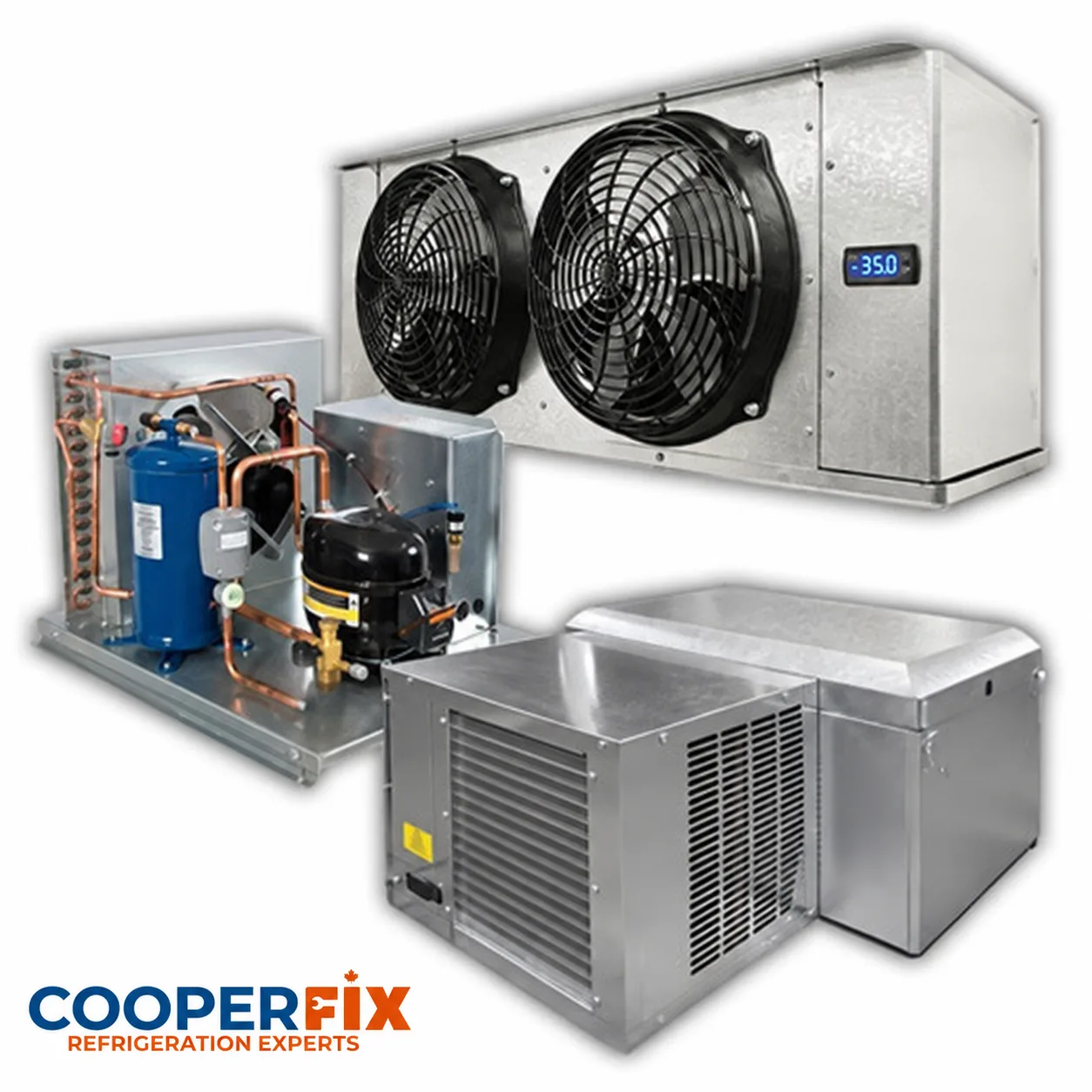
A walk-in cooler, fridge or freezer may use remote condensing equipment, multiple fans and a control sequence that cannot be assessed as a single unit. CooperFix checks the refrigeration system serving the room, including evaporator operation, defrost where applicable, controls and the condensing unit. The specific walk-in refrigeration repair page covers the circuit and its components in greater depth. Freezer and cooler pages address the different demands of their operating temperatures.
Self-contained commercial units
Reach-in fridges, prep tables, undercounter units and commercial freezers concentrate the refrigeration circuit and controls in a smaller unit. A unit may fail to cool, cool unevenly, cycle often or stop completely. The mechanic checks the unit’s actual operation before choosing between a local electrical repair and refrigeration-circuit work. The commercial fridge repair and commercial freezer repair pages explain those distinct equipment groups.
Cases used in customer-facing areas
Display refrigerators and beverage coolers must recover under frequent use while keeping product at the intended conditions. A display case may be warm in only one zone, while a beverage cooler may have a unit-wide cooling or fan problem. The correct repair accounts for the case type, its airflow design and whether it is self-contained or connected to a remote system. Our display refrigerator repair and beverage cooler repair pages treat those differences separately.
Repair, planned maintenance and installation are different requests
Repair starts with a present failure: the unit is not operating as intended, and CooperFix finds and corrects the fault. Commercial refrigeration maintenance is planned work on operating equipment. Its purpose is to assess condition and address developing issues before they become an interruption. Refrigeration installation concerns a new or replacement system that must be matched to its application, connected and commissioned. Each path has different questions, work and evidence of completion.