The service description gives context, not the diagnosis
A business may report that its walk-in cooler warmed overnight or recovered slowly after a delivery. CooperFix uses that information to identify the period and equipment to investigate, then performs the professional measurements. The reported pattern is not treated as proof of a failed thermostat, compressor or refrigerant circuit. The resulting service finding names the supported fault and keeps responsibility for diagnosis with the mechanic.
A room that never recovered overnight
An overnight loss can appear sudden to the business even if the refrigeration system was weakening through the previous day. CooperFix checks whether the controller called for cooling, whether the compressor and fans ran, and whether the circuit delivered cooling when called. Electrical and refrigerant-side measurements are interpreted together. A compressor that is off may have been stopped by a protective device or a control signal; a running compressor can still lack the capacity required to lower room temperature.
The repair follows the confirmed cause. A failed fan, control component, contactor, refrigerant leak or feed restriction leads to different work. The mechanic checks the effect of the repair on the cooler’s actual temperature movement and operating sequence. A brief restart alone is not evidence that the room has regained capacity. The report states what was demonstrated during the visit and what depends on continued operation under business load.
Recovery that slows after receiving or dispatch
Product movement can add heat to a chilled room. The service question is whether the installed system is responding as intended for the load it was designed to serve. CooperFix measures the refrigeration system while considering the pattern reported by the operator. The mechanic assesses evaporator airflow, refrigerant feed, condensing performance and control calls. A condenser fan that struggles in warmer conditions or an evaporator that is underfed can become more apparent when the load rises.
The diagnosis also distinguishes a repairable component fault from a broader equipment or operating limitation. If a motor or valve has failed, CooperFix defines the repair. If the equipment selection or installed arrangement appears unable to support the present business use, the mechanic reports that finding for a separate decision. Replacing parts without resolving the actual cause would give the business a false sense that the cooler is fixed.
A warm zone in an otherwise cool room
One section of a walk-in cooler may warm while another holds. CooperFix compares conditions near the affected evaporator and through the space, including fan operation and coil response. A local fan fault, control issue or refrigerant-feed restriction can produce a pattern that a single room sensor does not capture. The mechanic also considers the actual load and airflow conditions observed during the visit, without treating them as proof of a mechanical fault.
If several evaporators serve the room, each branch is evaluated in relation to common equipment. A local repair may restore one zone without changing a shared unit. Conversely, a problem in the common condensing equipment can weaken all branches. The service report names which circuit was tested, what evidence supports the diagnosis and how the repaired area responded afterward.
Compare the room reading with the equipment response
A displayed temperature may lag behind the condition of a particular part of the room. CooperFix relates the control reading to evaporator airflow, cooling call and the refrigeration equipment’s measured response. That comparison can show whether the system is actually losing capacity or whether the control information needs further assessment. The business receives an explanation tied to the cooler’s operation rather than a recommendation based only on the number visible at one sensor.
Frost, water and evaporator operation
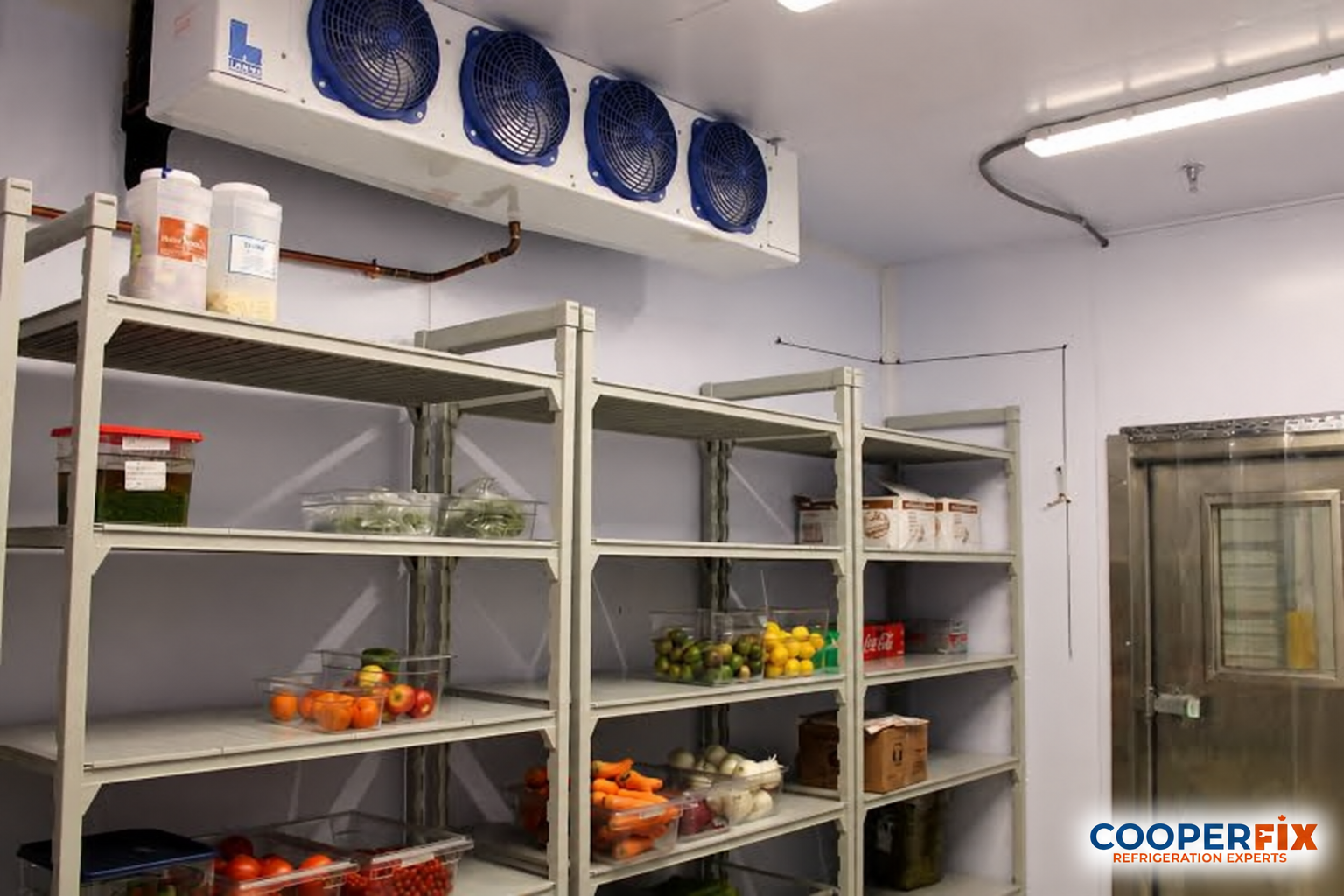
A chilled cooler can show frost on its evaporator when airflow, refrigerant feed, controls or defrost behaviour is wrong for the installed equipment. Water beneath the evaporator can have more than one equipment-related cause. CooperFix assesses the coil, fans, fitted condensate arrangement and operating sequence before deciding which component requires work. The visual symptom is a starting point for diagnosis, not a replacement instruction.
The mechanic checks whether the coil is transferring heat as intended and whether the controls let it complete its cycle. A stopped fan can create localized icing; a sensor or defrost problem can allow conditions to persist. Where a drain component belongs to the refrigeration system, its function is assessed as part of the observed fault. The page does not offer room-construction or customer cleanup service; the focus is the refrigeration equipment.
A shared condensing unit changes the investigation
If a walk-in cooler is connected to refrigeration equipment that serves another area, CooperFix establishes that relationship before defining a fault. One room warming while another remains stable can point toward a different investigation from several connected rooms changing together. The mechanic checks the applicable branch and shared components. The repair route reflects the actual system arrangement instead of assuming every warm room requires the same component replacement.
Compressor and condensing equipment that run continuously
A long-running condensing unit may be meeting a high load, working with reduced capacity or being called continuously by an inappropriate control state. CooperFix measures its electrical and refrigeration operation, evaluates condenser heat rejection and relates the result to the evaporator’s performance. One sound, pressure or controller reading is not enough to identify the cause. The mechanic looks for a coherent pattern across the system.
The repair can involve a fan, electrical control, refrigerant leak, metering component or another confirmed fault. If the equipment has a capacity or installation mismatch rather than a failed part, that is explained separately. CooperFix checks the system after work and records the observed improvement and its limit. The business receives a useful explanation rather than a generic statement that the unit was “running too much.”
Findings must support the proposed repair
Troubleshooting ends with a service decision that the business can understand. CooperFix identifies the equipment checked, the evidence supporting the diagnosis and the work proposed to correct the confirmed problem. If testing reveals more than one issue, the record distinguishes them. This gives the site a defined repair route and avoids presenting a parts guess as the outcome of professional refrigeration troubleshooting.