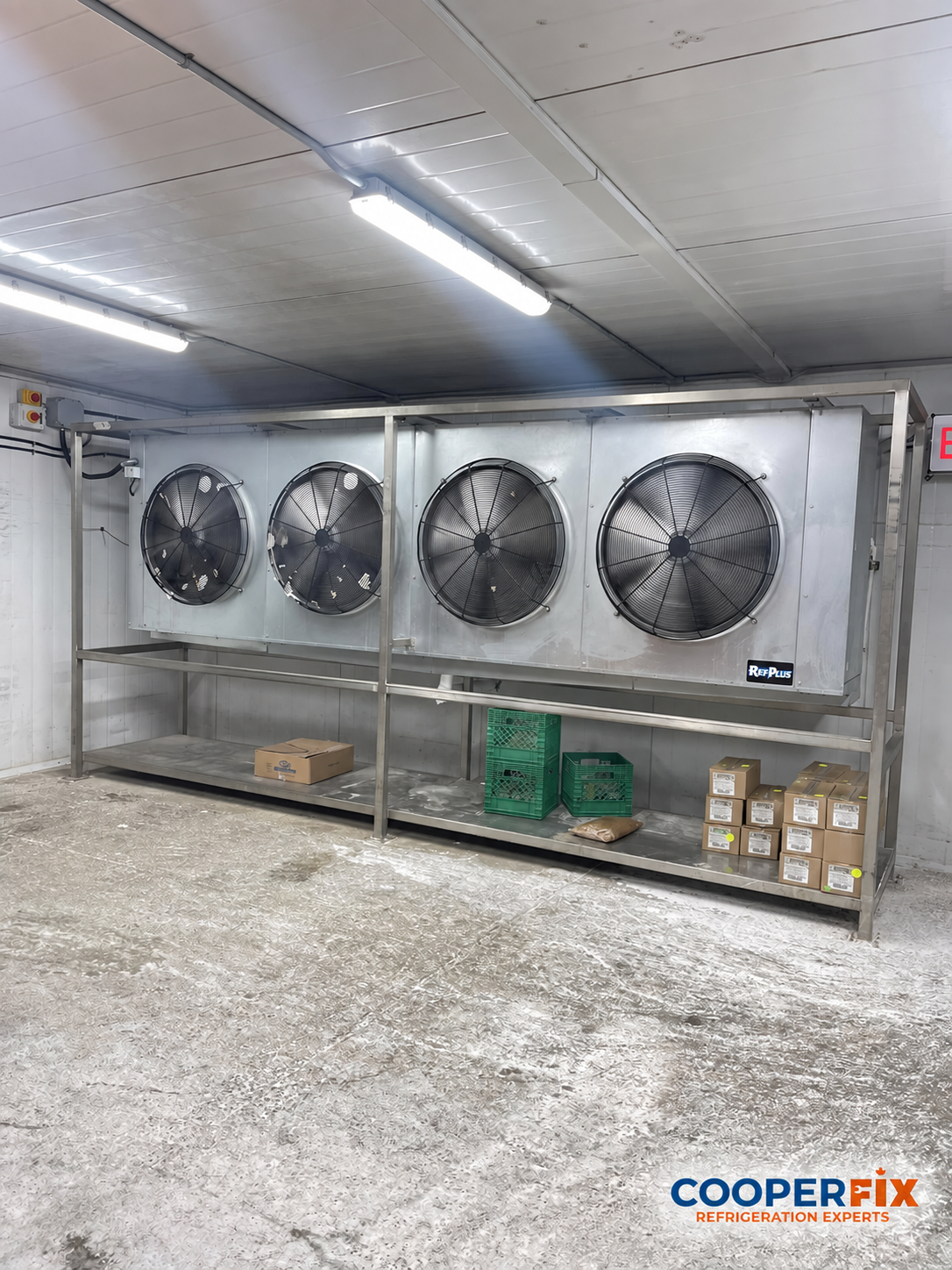
Several evaporators, different results
An industrial freezer may use more than one evaporator in a single space or serve several low-temperature areas from shared equipment. If one coil is heavily iced while another is clear, the mechanic assesses the affected branch: its fans, refrigerant feed, control signal and defrost sequence. If several coils fail to deliver cooling, shared components and controls become a priority. More than one fault can occur at once, so CooperFix compares branches rather than assuming a single cause.
The layout also affects how repair work is planned. A failed motor or solenoid on one branch may be addressed without treating the whole system as defective, subject to the installed design. A fault in common condensing equipment can affect every connected room. The mechanic identifies the relationship between the affected coil, the controls and the condensing side before defining the scope, and the service report records which components were tested.
Defrost must complete and cooling must resume
Electric defrost is a coordinated process. The controller has to call for defrost; the heaters have to operate; the cycle has to terminate as intended; and fans must restart in the correct sequence so the evaporator can return to cooling. A failure at one step may leave ice on the coil, repeated warming after defrost or delayed recovery. Simply removing accumulated ice does not establish why it formed.
CooperFix tests the actual sequence on the installed freezer. Heater current, termination control, sensors, fan delay and controller settings are assessed where applicable. The repair may involve a heater, sensor, contactor, fan or control component, depending on which step fails. Afterward the mechanic verifies that the system can complete the relevant part of the operating cycle and return to cooling. That check matters because an evaporator can look clear for a short time while the underlying sequence is still wrong.
Frozen condensate and drain-line heating
Defrost water needs a working path out of the evaporator area. On a low-temperature system, a failed drain-line heater or a blocked drain can let water refreeze before it leaves the equipment. Ice may build around the evaporator or return after each cycle, affecting airflow and service reliability. The technician examines the drain and any fitted heaters as part of the refrigeration system; a visible ice pattern by itself does not identify the failed component.
The repair can involve restoring the drain path, repairing an electrical heater circuit or correcting a defrost control problem that is sending excess water into the system. CooperFix confirms how the fitted components operate after the work. A drain-related symptom should be connected to the freezer’s defrost process and equipment design, rather than treated as an isolated cosmetic issue.
Compressor protection and starting faults
Low-temperature compressors work under conditions that make correct starting and protection important. A motor that does not start may have a failed start component, contactor, protection device, control signal or an electrical fault. A compressor that starts and then trips can be affected by load, pressure, electrical supply or its own mechanical condition. Replacing the compressor based on a sound or an alarm alone can leave the real cause untouched.
CooperFix checks the available operating readings and applies electrical and mechanical tests appropriate to the installed compressor and manufacturer limits. Current draw, control state, pressures and protection history may each contribute to the conclusion. A pump-down test is used only when it is suitable for that system and within the manufacturer’s operating envelope. If a compressor replacement is actually required, the mechanic also addresses the condition that led to the failure and the associated circuit work. If a different component is responsible, the repair targets that component.
Refrigerant circuit and loss of capacity
Reduced refrigerant charge, a restriction and poor heat rejection can all make a freezer struggle to reach its target. Each requires a different repair. CooperFix evaluates pressures and temperatures against the equipment, checks the feed to the evaporators and assesses the condensing side. The refrigerant and system configuration are confirmed from the equipment before circuit work is planned.
When a leak is established, the service is to locate and repair it and then complete the necessary tightness, evacuation and charging work. When a restriction or metering problem is confirmed, the relevant component and circuit condition are addressed. When condenser or fan performance is limiting capacity, the repair is on that side. The technician checks how the freezer responds after the repair instead of interpreting a brief drop in room temperature as proof that the whole issue is resolved.
Cold-weather operation of outdoor equipment
An outdoor condensing unit may face a very different operating condition in winter than it does in summer. A fault in the fitted low-ambient controls, fan cycling or pressure regulation can change refrigerant feed and freezer performance during cold weather. The same freezer may therefore show a problem only during particular outdoor conditions. CooperFix assesses the actual equipment and its controls rather than applying a standard winter explanation to every case.
The mechanic compares the control sequence and system readings with the conditions present at the visit and the equipment’s intended operation. A failed sensor, fan control or another component is repaired when testing establishes the cause. If the installation itself needs a separate design decision, that is identified for the business. This work concerns the refrigeration equipment serving the freezer, not a general promise about every possible environmental condition.
A repair after earlier work
A freezer that has not operated correctly since a previous intervention deserves a fresh diagnosis. The earlier part change may have been appropriate but incomplete, or the original cause may have remained. CooperFix reviews the available service information, identifies the current configuration and measures the system as it stands. Controller settings, fan direction, circuit condition and protection history are checked where relevant to the complaint.
An earlier service record gives useful history but the current fault needs its own assessment. The mechanic explains whether the problem is a new failure, an unresolved condition or a setting that does not match the equipment. If a repair is needed, the scope is based on the current findings. The resulting report gives the business a clearer account of what was verified and what the repaired system does afterward.
A freezer that reaches temperature but cannot hold it
A low-temperature system may recover after a quiet period yet drift during normal frozen-storage activity. CooperFix compares the refrigeration equipment’s operating response with the conditions under which the complaint occurs. The mechanic may find that capacity, defrost recovery or a protective control changes performance once the load increases. This service path differs from a freezer that never starts: the repair has to address the reason the installed system fails under its real operating demand.
Return the Affected Freezer Branch to Service
An industrial freezer repair is verified on the branch that failed and against any equipment it shares. CooperFix checks the repaired component through the refrigeration or defrost sequence relevant to the original fault, observes fan restart and control response where applicable, and compares the branch with the other evaporators available during the visit. On a shared system, the mechanic also confirms that the condensing equipment and protective controls respond to the restored load. The service record identifies the repair, the after-work readings and the operating result that could be observed. A condition on another branch is recorded separately so it is not silently folded into the completed authorization.