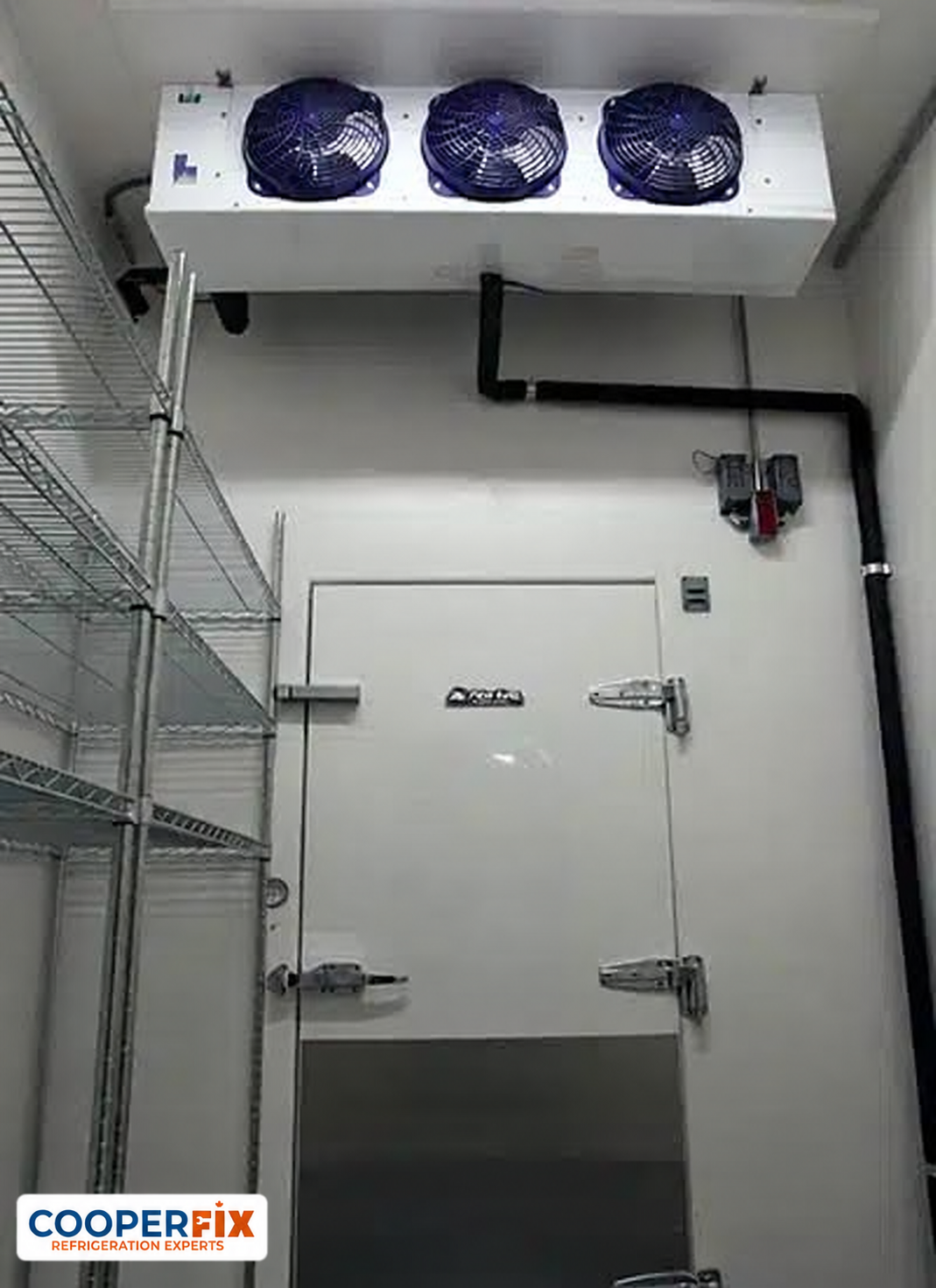
System arrangement sets the test sequence
A self-contained walk-in refrigeration unit and a remote condensing installation have different component locations and control paths. CooperFix identifies the arrangement before selecting tests. The mechanic then follows the cooling call through the equipment actually installed on the site. This prevents a generic troubleshooting list from standing in for a diagnosis and keeps the resulting repair recommendation connected to the right circuit.
Cooling call and electrical response
The controller or thermostat requests cooling, but the equipment may not follow. CooperFix checks the command and the actual response of contactors, protective devices, fan motors, compressor and solenoids as fitted. A missing command leads to control investigation; a present command with no motor response leads to a different electrical assessment. The mechanic does not bypass a protective device simply to obtain a brief startup.
An intermittent failure can be harder to reproduce. CooperFix reviews available history and measurements, then states whether the fault was demonstrated during the visit. A failed sensor, loose connection or starting component may respond differently under load. If the evidence is insufficient to select a replacement, the report defines what further observation or test is needed. Certainty is not claimed from a symptom that was not reproduced.
Compressor performance in context
A compressor can be running while the circuit is not delivering enough cooling, or be off because a control or protective device has stopped it. CooperFix assesses electrical operation and the pressure and temperature relationships appropriate to the installed refrigerant and load. The mechanic distinguishes a compressor problem from low charge, restricted feed, poor condenser heat rejection and inadequate evaporator airflow.
This matters because a compressor is a major component and its replacement does not fix an unrelated circuit fault. If testing supports compressor work, CooperFix explains the evidence, required circuit work and post-repair checks. If the compressor is sound but another component limits capacity, the repair is directed there. The business receives the reason for the decision rather than a parts list based on age or noise alone.
Condenser and heat rejection
The condenser must reject the heat removed from the walk-in space. CooperFix evaluates its fans, electrical components, operating condition and the surrounding installation as they affect the refrigeration circuit. A head-pressure change can reflect heat-rejection conditions, refrigerant state or control behaviour; the mechanic relates it to the rest of the system instead of assigning one universal meaning.
An outdoor unit may behave differently through seasonal conditions. CooperFix checks the installed controls and readings available at the time. If the reported failure occurs only in a different season, the report separates present evidence from what cannot yet be demonstrated. A condensing problem can reduce capacity across several evaporators, making system mapping important before a local repair is chosen.
Measurements need the operating load beside them
Pressure or temperature readings have meaning only in the context of the system’s condition during the visit. CooperFix relates those measurements to compressor operation, heat rejection, refrigerant feed and room load. A single number is not presented as proof that a component has failed. The mechanic builds a finding from the combined evidence and states which part of the walk-in refrigeration system the recommended work addresses.
The liquid line, filter drier and metering device
The refrigerant path from the condenser toward the evaporator can be affected by a restriction, valve fault or charge problem. CooperFix measures appropriate temperatures and pressures, examines fitted filter driers and metering components, and interprets them in the current operating state. A cold spot at one component can guide professional investigation, but the component is not condemned from touch or appearance alone.
If a filter drier, valve or line component is confirmed as the fault, the repair scope includes the circuit work required for that system. The mechanic considers contamination and moisture where relevant, performs appropriate pressure and tightness checks, evacuates and charges the circuit to the equipment requirements. The post-repair assessment looks at refrigerant feed and cooling response, not only at the replaced part.
Evaporator response and room airflow
At the evaporator, CooperFix assesses fan operation, coil behaviour, refrigerant feed and the way the room responds. An inlet section that cools while the remainder does not can have several causes, including feed conditions and load; a full coil that is cold while the room warms can direct attention toward airflow or other room-level equipment behaviour. The mechanic uses measurements and the actual coil design to distinguish these patterns.
For low-temperature freezers, defrost and fan delay are additional parts of the operating sequence. For chilled coolers, the relevant defrost and condensate arrangement follows the fitted equipment. This general walk-in refrigeration page connects the circuit components; walk-in freezer troubleshooting and walk-in cooler troubleshooting cover those specific operating applications. CooperFix does not apply a freezer diagnosis to a cooler simply because both use walk-in rooms.
Identify the installed refrigerant before choosing the method
Walk-in systems can contain different refrigerants and have different circuit designs. CooperFix verifies the equipment and refrigerant information relevant to the repair before selecting handling and testing methods. This matters when a past service note or an assumed charge does not match the installed system. The business receives a diagnosis and work scope grounded in the equipment on site, not in a generic refill procedure.
A leak is a repair, not a charge assumption
Reduced cooling and a low pressure can prompt investigation for a refrigerant leak, but neither alone proves one. CooperFix assesses the circuit and, when evidence warrants it, locates the leak professionally. A confirmed leak is addressed through an appropriate repair, tightness verification, evacuation and charging for the actual equipment. Merely adding refrigerant without resolving the loss is not presented as a completed repair.
The mechanic also considers whether a restriction or control condition explains the readings. The report identifies what was confirmed, which component was repaired and how the system responded. If the circuit needs a separate scope of work, the business receives that information before the fault is described as closed. For more on this service, see Refrigerant Leak Repair.