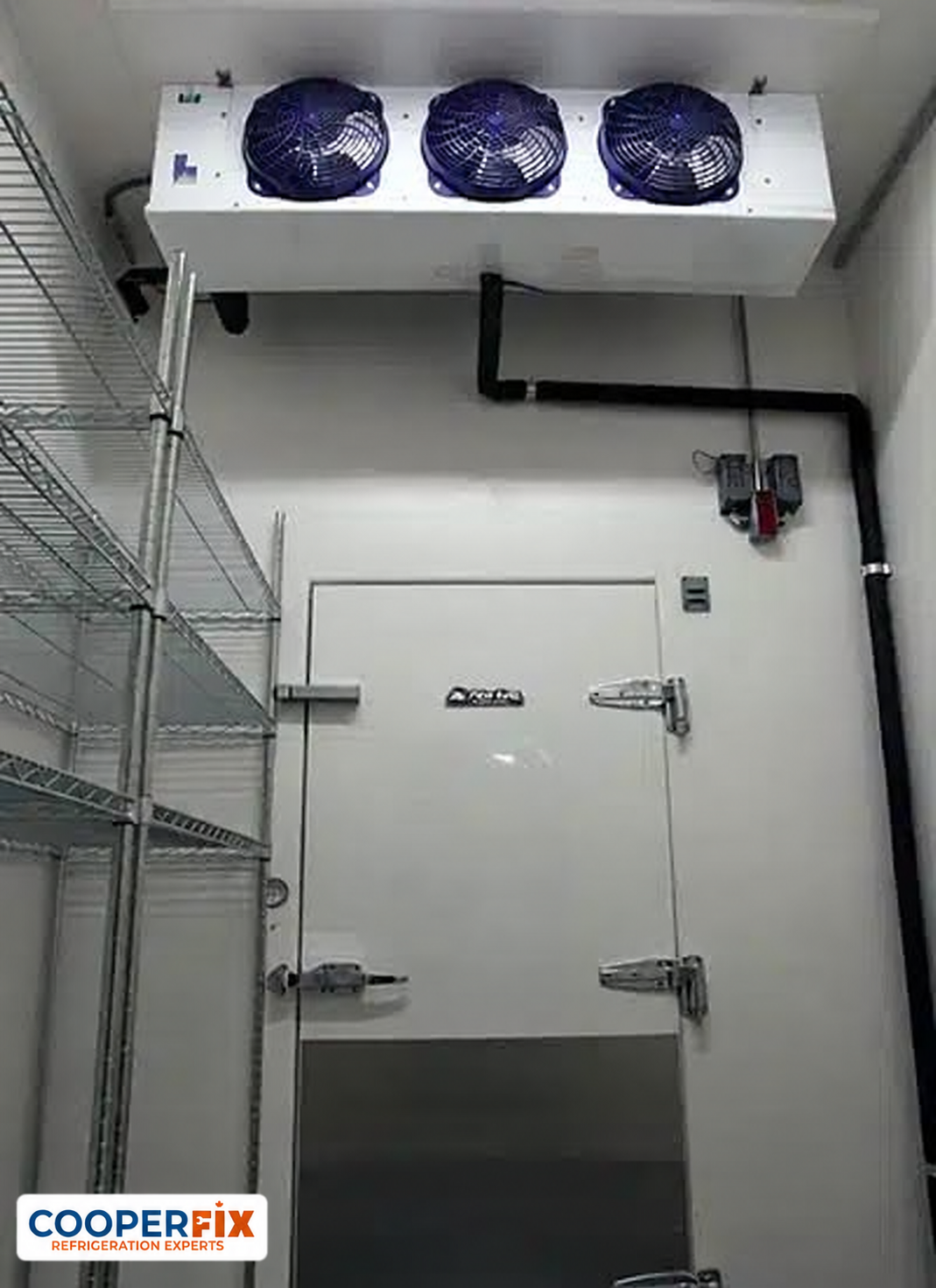
Defrost is an operating sequence, not one timer value
A freezer evaporator accumulates frost during normal operation. Its defrost system must start, clear the coil, terminate and allow cooling and fan operation to resume. CooperFix assesses the fitted defrost method and the related control sequence under the conditions available during maintenance. Heaters, probes, contactors and other components are checked where they are part of the installed system and the agreed scope.
The mechanic looks for evidence that one stage is incomplete. An evaporator that never clears may have a component or control fault; a coil that clears but cannot return to cooling points to a different issue. A timer adjustment without identifying the failing stage can mask the problem. The report says which parts of the sequence were observed and what requires a separate repair or further operating observation.
Defrost behaviour can also differ between evaporators in the same room. CooperFix identifies the circuit, controller and fitted components for each affected coil before drawing a conclusion about the wider system. A record of start, termination and return to cooling gives future visits a way to compare the same equipment. If only part of the sequence could be observed during maintenance, the report makes that boundary clear instead of treating an untested stage as satisfactory.
Compare low-temperature evaporators separately
One freezer room can have more than one evaporator, each with its own observable response during a maintenance visit. CooperFix identifies the equipment and records differences in fan operation, frost pattern or cooling response under the conditions present. The comparison is a prompt for professional diagnosis when warranted, not an instruction for the business to interpret the coils. It also prevents a single reading from representing the condition of every evaporator in the room.
Fan delay and airflow after defrost
Fans must distribute cooling without working against the freezer’s intended post-defrost sequence. CooperFix evaluates the controls and motors that determine when they stop and restart. A fan that remains off, resumes at the wrong condition or runs weakly can leave a local warm zone even while the compressor operates. On a multi-evaporator installation, the mechanic compares the affected branch with the others.
The maintenance record identifies the actual fan and circuit involved. Electrical condition and motor performance are interpreted alongside coil and room behaviour. A visible patch of frost or a temperature difference alone is not a complete diagnosis. If a motor, probe or control is failing, CooperFix explains the evidence and the proposed repair, then checks the result when that work is authorized and performed.
Condensate and fitted drainage components
Defrost produces water that must leave the evaporator area without refreezing in a way that disrupts operation. The installed drain arrangement and any fitted heating components belong to the low-temperature refrigeration assessment. CooperFix checks their relevant electrical and operating condition within the agreed scope. An icing pattern beneath one coil may relate to drainage, defrost termination or another issue, so the mechanic evaluates the sequence as a whole.
The page concerns the refrigeration system and its condensate handling. A maintenance finding describes the component and observed effect, not an instruction for the operator to clear ice or alter the equipment. If a repair is needed, the report names the affected circuit and the work to be authorized. This keeps the business informed without transferring technical risk or diagnosis to staff.
Protective controls form part of the operating record
Freezer compressors and motors depend on protective controls that respond to electrical and refrigeration conditions. CooperFix reviews their observed behaviour within the agreed maintenance scope and records any trip or abnormal response tied to the installed equipment. A protection event needs interpretation with the system’s actual operating data; it is not by itself a parts order. The record separates a developing concern from a repair that has already been authorized and completed.
Compare Maintenance Findings with the Same Freezer Over Time
A useful industrial freezer maintenance record preserves the conditions that give each measurement meaning. CooperFix identifies the equipment, operating state, outdoor conditions where relevant and the point in the defrost or refrigeration sequence when a reading was taken. At a later visit, the mechanic can compare the same freezer branch with its own earlier record instead of treating a difference between unrelated systems as a trend. A changed value prompts professional assessment of the connected components and current load before it becomes a repair recommendation. Confirmed defects are reported separately with the evidence and proposed scope, so the maintenance history remains distinct from authorized repair work.
Compressor operation and protection
Low-temperature compressors operate under demanding conditions. CooperFix assesses start and run behaviour, relevant electrical measurements, protective controls and refrigerant-side performance for the installed system. A compressor that cycles off may be responding to a protection device rather than being mechanically failed. Maintenance records the event and the measurements that support the next investigation.
The mechanic considers the evaporator load, condensing condition and controls before interpreting compressor readings. Repeated protective trips are not resolved by bypassing a device. If a contactor, start component, control or refrigerant condition is at fault, the recommendation identifies it. If a major component requires further testing or replacement consideration, CooperFix explains what is confirmed and what remains to be established.
The system before summer and winter
Warmer outdoor conditions can challenge heat rejection at the condensing equipment; colder conditions can affect head pressure and refrigerant feed if the installed controls do not operate as intended. CooperFix reviews the equipment’s seasonal provisions and measurements available at the time of the visit. A summer service call cannot directly prove every winter operating condition, and a winter visit cannot reproduce peak summer load. The report states the evidence and any seasonal limit.
Seasonal planning is meaningful only when it relates to the actual unit. A remote outdoor condensing unit has different exposure from equipment located inside a controlled space. The mechanic identifies the installed arrangement, assesses fans and controls, and notes developing issues that could affect the next season. The goal is a specific maintenance decision rather than a generic statement that the site is ready for all weather.
If a winter-related fault occurred previously, CooperFix reviews the repair history and the present condition of the relevant control or condensing equipment. If a summer overload was recorded, current condenser and electrical measurements provide context for the next warm period. The mechanic does not infer a seasonal repair from the calendar alone. A planned visit can identify a specific weakness, while the record remains honest about conditions that only a later season can demonstrate.
Defrost termination has to lead back to cooling
The useful question on a freezer is whether its full defrost sequence can return the refrigeration equipment to normal cooling operation. CooperFix assesses the applicable controls, fan delay and equipment response during conditions available at the visit. The record identifies what was observed and what could not be exercised. This provides a practical maintenance finding without suggesting that one timer setting describes the entire low-temperature system.
Refrigerant condition and freezer capacity
Reduced cooling can result from a leak, feed restriction, condensing problem, defrost fault or airflow issue. CooperFix assesses refrigerant pressures and temperatures where appropriate, comparing them with the low-temperature system’s state and load. A single reading does not establish that refrigerant should be added. A confirmed leak needs an identified repair scope and proper circuit work before the system is described as restored.
Maintenance records can make a gradual loss of capacity visible over time, but each finding still requires interpretation. A branch with a local feed fault can differ from a common charge issue. The mechanic explains which circuit is affected and what further diagnosis or repair is justified. For an active failure, industrial freezer repair is the appropriate service path.