Self-contained and remote coolers have different paths
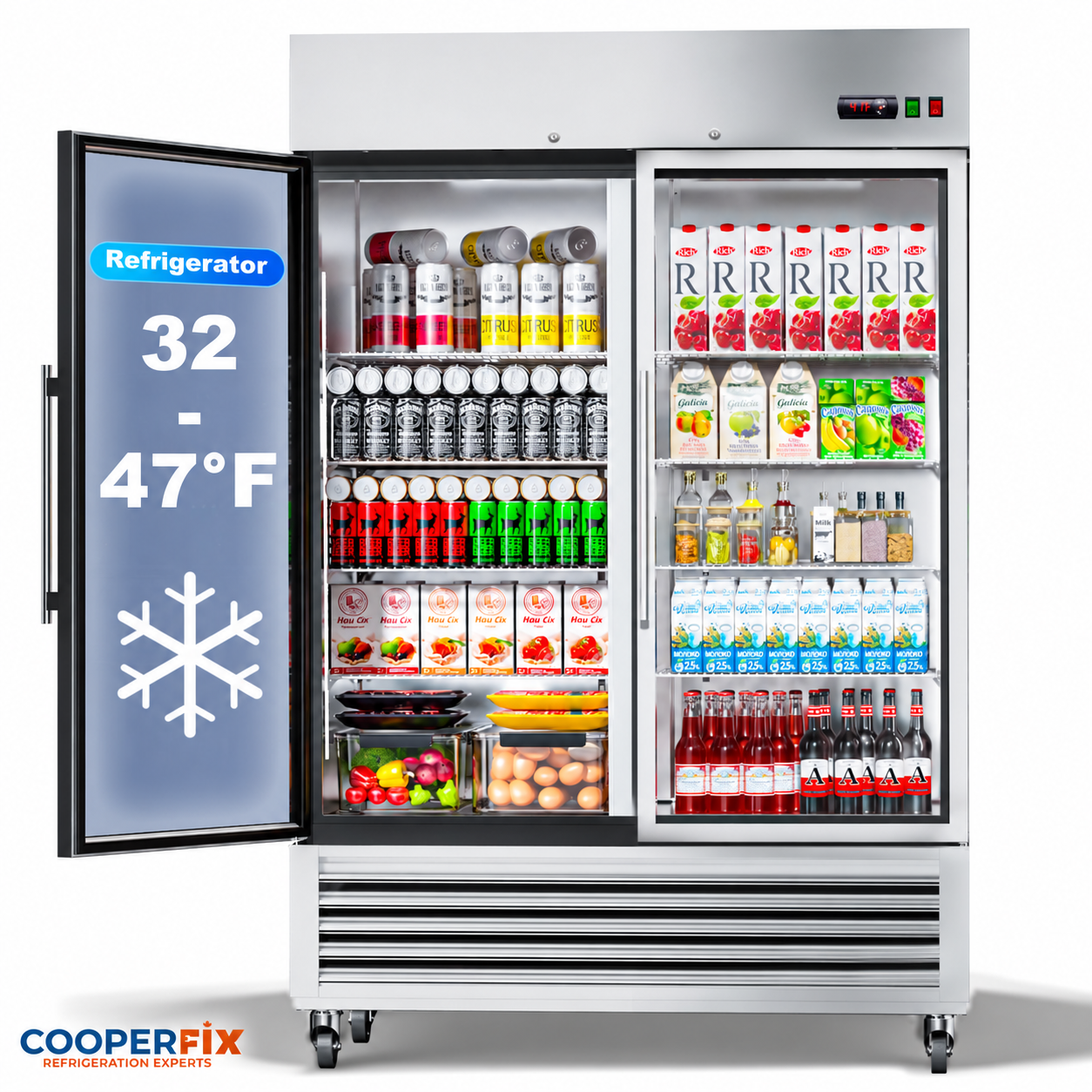
A commercial cooler may contain its condensing equipment within the unit or connect to a remote system. CooperFix identifies that arrangement before tracing a temperature complaint. The visible unit can be the place where the symptom appears while the cause lies elsewhere in the connected refrigeration circuit. The mechanic’s diagnosis follows the actual equipment configuration and gives the business a repair recommendation for the component that the evidence supports.
Cooler fine in the morning, warm by afternoon
A cooler that begins the day cold but cannot maintain its temperature under business activity may have lost capacity. CooperFix evaluates the load pattern and the system’s response: evaporator airflow, condensing performance, refrigerant feed and the controller’s calls. Ambient conditions and how the unit is used are considered, but they do not excuse a failed component. The mechanic seeks measurements that distinguish a repairable fault from a mismatch between equipment and present use.
A weakening condenser fan or intermittent electrical part may become evident only when the system is working harder. A control that stops cooling too soon can create a similar business complaint. CooperFix tests the applicable components and explains the result. If a repair is carried out, the cooler’s response is checked under the conditions available during the visit; a later peak load may still need normal operation to demonstrate its full performance.
The top shelf is warm and a lower shelf stays cold
Uneven shelves can indicate airflow, fan or evaporator performance issues. The controller may read a condition near its probe while a product position remains warmer. CooperFix compares independent unit measurements with the display and examines how air moves through the case. A local frost pattern can also guide assessment of the coil, fitted defrost and refrigerant feed. None of these visual clues is a standalone component diagnosis.
The mechanic assesses the specific cooler design before recommending a fan, probe or circuit repair. A weak fan can leave cold air near one zone without distributing it. A probe issue can alter when the controller stops cooling. An underfed coil can reduce capacity even with normal fan operation. The repair plan states which explanation is supported by the measured unit, and the post-repair check revisits the originally warm area.
Lights on, a click, but no cooling
Lighting is not proof that the refrigeration circuit has started. A clicking sound can arise from a control or starting sequence but does not establish that the compressor has failed. CooperFix checks the call for cooling, electrical supply to the refrigeration components, protective devices, start parts and compressor response as applicable. The mechanic also evaluates whether a controller is preventing operation for a valid or faulty reason.
If a start component or contactor is the fault, a focused electrical repair may restore operation. If further tests support compressor work, the business receives the evidence and a defined scope. A protective device is not bypassed to make the unit appear to run. CooperFix checks that the repaired cooler produces cooling and operates through the relevant sequence, rather than declaring success from the lights or display alone.
Frost or moisture around the cooling equipment
Frost on a cooler’s evaporator area can follow poor airflow, control or refrigerant conditions. Water near the unit can relate to condensate handling or another equipment issue. CooperFix examines the coil, fans, fitted drainage and control sequence to identify what the refrigeration system is doing. The appearance is interpreted with measurements and the installed design, not treated as a reason for staff to dismantle or clear components.
If the problem is within the cooler refrigeration system, the mechanic explains the component repair. If an unrelated site condition is involved, the report separates it from CooperFix’s work. The service is focused on restoring the cooling equipment. It does not expand into a general facility maintenance task because moisture happened to be visible near the unit.
Fan and control response deserve separate tests
A cooler can have an apparently active control while its fan or compressor does not follow the expected sequence. CooperFix tests the relevant outputs and component response rather than assuming that a lit display proves refrigeration is operating. This distinction is useful on a busy site where the only visible symptom is a warming unit. The service finding identifies whether the fault is in the control path, airflow or another tested part of the system.
Repeated starts, short runs or unexpected stops
A cooler can start and stop more often than expected because of a control setting, probe, protective trip, electrical part or refrigeration condition. CooperFix observes the unit’s cycle when possible and assesses the relevant measurements. The intended sequence for that model is the reference; a different cooler’s cycle length is not a reliable benchmark. Repeated starts are a symptom that calls for fault isolation, not an automatic controller or compressor replacement.
Intermittent faults may not occur during every visit. The mechanic reviews available controller history and tests the components that fit the reported pattern, then states whether the fault was demonstrated. If a part is confirmed, the repair is defined. If a longer observation is needed, that limitation is clear in the service report. The business receives an honest status of the equipment.
The distinction from display refrigerator repair
This page addresses commercial cooler troubleshooting, especially beverage and similar chilled units. An open refrigeration case has a different airflow and product-area arrangement. A commercial display refrigerator can require a wider case-level temperature assessment. CooperFix routes the service to the installed equipment rather than applying one unit diagnosis to every customer-facing unit.
The related beverage cooler repair page explains that repair service. If the business has several affected refrigeration types, commercial refrigeration repair provides the wider route. The first call can be simple: location, contact and the cooler that is failing. CooperFix performs the technical testing; staff are not asked to measure refrigerant conditions or reset protection devices.
Repair evidence and business continuity
A cooler that was repaired before and has warmed again
CooperFix reviews the earlier work and the present symptom as separate pieces of evidence. A unit can return with a different electrical fault, or an earlier repair may have restored only part of its capacity. The mechanic measures the current airflow, control and refrigeration response before deciding whether the same component is involved. A recurring complaint is taken seriously without assuming that the first replacement should simply be repeated. The new service report explains what changed and how the present work addresses it.
For a business with several similar units, the report also identifies which cooler was tested. A beverage display and a stock unit can develop unrelated faults. CooperFix distinguishes their individual circuits and post-repair responses. This lets the operator understand which unit is back in service and which may need a separate repair. The page remains focused on professional cooler diagnosis and the service decision supported by the findings.
Once the cause is established, CooperFix explains the work and checks the equipment after approved repair. The relevant evidence may include fan and control response, electrical operation, refrigerant circuit readings and the temperature trend at the affected product area. The report states what was observed and what remains dependent on the business’s normal load. A single cold reading is not a promise that all later conditions are covered.
CooperFix applies 20+ Years of Experience to commercial cooler troubleshooting. Its Ontario 313A licensed mechanics repair the cooler, with a 90-Day Parts & Labour Warranty on CooperFix’s work under its terms. A direct service request helps the business move from a symptom to a professional repair decision.