Industrial refrigeration repair · Toronto & GTA

Industrial Refrigeration Repair in Toronto & the GTA

When one part of an industrial refrigeration system fails, several storage or production areas can be affected.

CooperFix repairs larger commercial refrigeration arrangements in Toronto and the GTA, including remote condensing units, multi-evaporator cold rooms, industrial coolers, freezers and connected units. An Ontario 313A licensed mechanic traces the fault through the system that serves the affected space, explains the finding and recommends the repair supported by the tests. The aim is to restore the failed refrigeration function and show what was verified afterward. For an active loss of cooling, call (647) 483-3777 or request industrial refrigeration repair. Emergency calls are received and assessed 24/7. Availability and response depend on location, workload and the repair required.

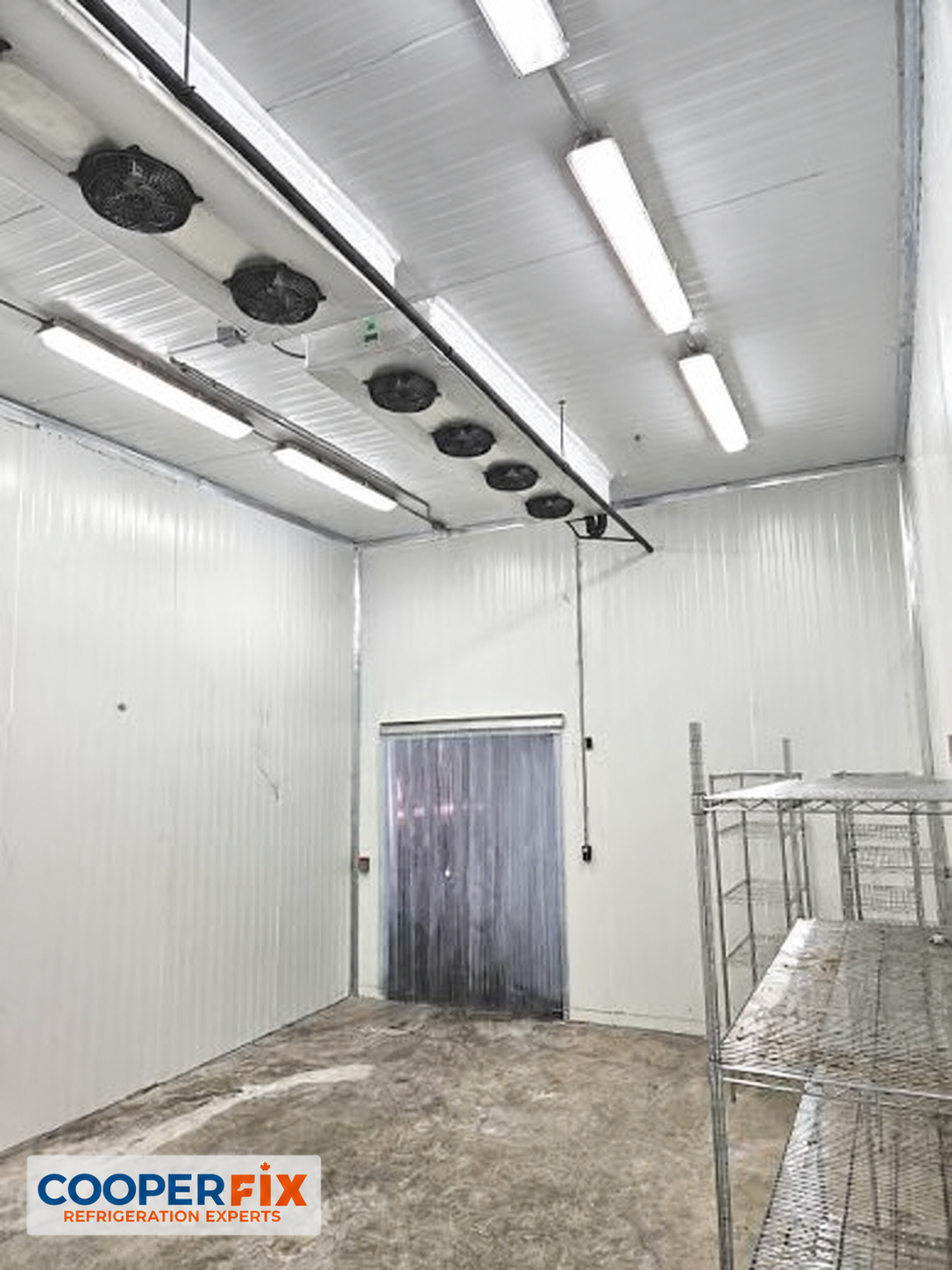
Walk-in cold room with ceiling-mounted evaporator equipment
Industrial refrigeration equipment.CooperFix · Toronto & GTA
Service request

Arrange Industrial Refrigeration Repair

647-483-3777

    Please prove you are human by selecting the truck.

    CooperFix services commercial refrigeration equipment only.

    What this service covers

    A connected system changes the repair question

    In a larger site, one compressor group or remote condensing unit may serve several evaporators. A local fault can leave one room warm while neighbouring spaces remain normal; a common fault can affect several rooms together. The diagnosis therefore starts with the actual circuit relationship. CooperFix identifies which equipment serves the affected area, which components are shared and which can be assessed locally. That prevents a failed room sensor from being confused with inadequate refrigeration supply to the entire site, or a common suction problem from being treated as several unrelated room faults.

    The service applies to cold storage and process-support refrigeration used by distribution operations, food plants, supermarkets and other commercial facilities. A warehouse may have receiving and holding zones. A food producer may operate a chilled room and a low-temperature room on distinct circuits. An industrial unit bank may rely on a remote condensing arrangement. Those contexts matter because the first repair decision should reflect what is actually affected and how the business uses the system, rather than assume every space can be assessed as an isolated reach-in.

    The failure patterns CooperFix investigates

    One area loses cooling while the rest of the site holds

    One warm evaporator among several can point to its own fan, control, solenoid, metering device, defrost sequence or refrigerant feed. CooperFix compares the affected branch with the system serving it. The mechanic checks whether refrigeration is available at the branch and whether the evaporator is able to use it. If the common plant is operating normally, a local repair may restore that area without changing the settings of every connected room. The conclusion follows measurements, not the location of the first alarm.

    Several rooms or cases warm together

    A shared reduction in capacity may be related to compressor operation, condensing performance, control logic, refrigerant condition or an electrical event. The mechanic establishes whether the affected areas use the same refrigeration source and whether the common equipment is meeting its operating demand. CooperFix then narrows the repair to the supported cause. Changing individual room components while the supply to all of them is weak would not address the site-wide problem.

    Performance changes with load or through a cycle

    Some faults appear only when receiving activity raises the load, when several evaporators call at once or when a system transitions through defrost. A room that eventually recovers may still be unable to protect its intended operating condition during normal work. CooperFix observes the behaviour in context, checks the relevant controls and compares readings before deciding whether the limitation is local or shared. The service report should state the conditions under which the finding was made.

    Operating history narrows the industrial repair question

    Changes that began after a control adjustment, component replacement or shift in site load can be relevant to an industrial refrigeration fault. CooperFix considers that history alongside measurements made at the equipment. The mechanic still establishes the present cause; a reported sequence does not replace testing. Linking the observed failure to the installed circuit helps distinguish a recurring defect from an unrelated change in one refrigerated area.

    Professional diagnosis across the circuit

    CooperFix identifies the equipment arrangement and the operating condition of the affected space. The mechanic assesses temperatures, electrical operation and refrigerant-side behaviour at points appropriate to that system. Compressor capacity, fan operation, liquid feed, valve response, controller commands and defrost may each matter, but the investigation is driven by the fault. Measurements on a common plant are compared with observations at the affected branch so the repair scope is tied to the right component. The mechanic also checks whether a visible symptom is a consequence of another problem—for example, an iced coil after a defrost fault rather than a need for a new coil.

    On a low-temperature system, the defrost and fan-restart sequence may be central. On a chilled storage circuit, reduced airflow or inadequate feed under load may dominate. On a shared condensing arrangement, compressor staging or a protective control may explain why several spaces lose capacity at once. CooperFix does not apply one universal pressure or temperature figure to every industrial system. Equipment data, refrigerant designation and the site’s configuration guide what a reading means.

    A branch fault and a shared-plant fault require different work

    Several industrial rooms may depend on common condensing or control equipment while retaining their own evaporator branches. CooperFix identifies where the fault is supported by evidence before defining a repair. A local branch issue can call for work on one part of the installation; a shared failure can affect several areas. The service recommendation identifies the actual circuit and component involved rather than extending a single repair assumption across the entire site.

    Repair work with a defined scope

    Once the cause is confirmed, the work may involve a fan motor, solenoid, pressure control, sensor, defrost component, refrigerant-carrying part, compressor-related component or another part of the refrigeration system. CooperFix explains which circuit is involved and why that repair addresses the observed failure. A component selected by model and specification must be compatible with the actual system. Where the circuit is opened, refrigerant handling, tightness testing, evacuation and charging follow the equipment requirements. Where the fault is electrical or in the controls, the relevant command and response are checked after work.

    An industrial repair may be completed with an available matching part, or the required component may have to be obtained. The time and method depend on the diagnosis and supply, so the first visit should not be sold as a guaranteed complete repair. If the equipment’s condition makes further repair impractical, CooperFix can explain the measured reason and discuss a separate replacement scope. That decision should reflect the system’s condition and the business’s requirements, not an automatic rule based on age or one isolated failure.

    Replacement components must fit the existing system

    Industrial refrigeration equipment is assembled from components with specific capacities, controls and refrigerant applications. When a failed part must be replaced, CooperFix considers its role within the installed system before selecting the repair method. A component that looks similar may not operate correctly with the connected circuit. The business receives an explanation of the repair scope and how the selected component relates to the fault found on site.

    What the business needs to know during the work

    A facility manager needs to understand the operational boundary of the fault. Is one branch affected, or is the source that serves several areas short of capacity? Which refrigeration functions can continue while the failed circuit is addressed? What work can be performed now, and what depends on a specified part? CooperFix communicates the finding in those terms, supported by the mechanic’s readings. The business remains responsible for its own product handling decisions; the refrigeration service explains equipment condition rather than promising a safe holding period for product.

    This distinction is useful on mixed sites. The industrial cooler may be critical to incoming stock while a freezer serves long-term holding. A display case may share remote equipment with storage rooms, but it has its own controls and air distribution. CooperFix separates the systems and the work so the customer can see how each repair relates to a business interruption. A single visit can reveal more than one issue, and each confirmed issue should be described rather than folded into an unsupported all-in-one claim.

    Restore operation and verify the repaired branch

    After the repair, CooperFix checks the component and operating sequence that failed. A fan repair calls for proof that airflow returns to the intended section. A control repair calls for the correct command and response. Circuit work calls for a tight system, an equipment-appropriate charge and readings consistent with the system’s operation. On a shared plant, the mechanic checks the affected branch and the common equipment as relevant; improving a common pressure without verifying the warm room would leave the central business question unanswered.

    Observed temperature recovery is interpreted in the conditions available during the visit. A large room under normal product load may require more time to reach its operating condition than the mechanic can observe on site. CooperFix explains what was measured before and after, what function was restored and whether a separate concern remains. That is more useful than presenting a part replacement as proof that all future operating conditions have been met.

    CooperFix · Refrigeration Experts

    Industrial repair tied to the failed circuit

    20+Years of experience
    313AMechanic
    ODP/ODSCertified
    Service request

    Request industrial refrigeration repair

    Provide the site address, a contact person, the kind of area affected and a short description of the change in operation. If several rooms or cases are involved, identify them in the request. CooperFix’s mechanic establishes their technical relationship on site, traces the applicable circuit and explains the fault supported by the tests. Call (647) 483-3777 or use the service form to request a repair in Toronto or an approved GTA service area.

    647-483-3777

      Please prove you are human by selecting the plane.

      CooperFix services commercial refrigeration equipment only.

      Record the repaired circuit for future service

      The post-repair record should identify which part of the industrial installation was worked on and what response was checked afterward. CooperFix distinguishes the completed repair from observations about other equipment that did not form part of the approved scope. This is useful to facility management when the site has several rooms or circuits and a later service visit needs to start with the right equipment history.

      Choose the more specific industrial repair path

      This page addresses active faults across larger refrigeration arrangements. The industrial cooler repair page focuses on chilled storage, industrial freezer repair on low-temperature systems, and industrial fridge repair on heavy-duty unit groups. The industrial refrigeration service page covers wider site service that can include planned assessment, repair and equipment work. These links help match the request to the equipment and the reason for the visit without repeating the same page under different names.

      CooperFix applies 20+ Years of Experience when tracing faults across connected industrial refrigeration equipment. Its 90-Day Parts & Labour Warranty covers the defined repair completed from that diagnosis under the applicable terms. Those facts accompany an equipment-specific diagnosis; they do not establish in advance which repair a connected system requires.

      Questions

      Industrial refrigeration repair questions

      What counts as an industrial refrigeration repair?

      It is work on a present fault in a larger commercial refrigeration arrangement, such as a remote condensing system, connected cold room or equipment with several evaporators. CooperFix establishes which branch or shared component is failing and repairs the confirmed cause. The term describes the system scale and work, not a promise that every site has the same equipment or requires the same parts.

      Can one failed evaporator affect only one room?

      Yes. A local fan, control, defrost or feed fault can leave one area warm while the common refrigeration source continues serving others. A common plant fault can create a similar complaint in several areas. CooperFix compares branch conditions with the shared equipment to identify which situation exists. The repair scope follows that distinction.

      What if several spaces lose cooling at the same time?

      The mechanic first establishes whether they depend on a common refrigeration source or site event. Compressor operation, protective controls, condensing performance, refrigerant supply and electrical conditions may be relevant. Separate units can also fail independently. CooperFix tests the relationship rather than assuming one cause from the timing alone, then explains the repair needed for each confirmed fault.

      Is a compressor automatically replaced when a system cannot hold temperature?

      No. Inadequate cooling can result from feed, airflow, controls, condensing or compressor problems. CooperFix evaluates compressor operation with tests appropriate to the system before recommending replacement. The mechanic also considers whether the affected room is receiving the refrigeration capacity available from the plant. A compressor decision should be supported by the measurements, not by a warm-room symptom alone.

      Can a repair be completed on the first visit?

      It depends on the confirmed fault, access and availability of a matching component. Some electrical, control or fan repairs may be addressed once the correct part is available. Other work requires a specified compressor, coil or valve, further circuit preparation or a separate visit. CooperFix explains the finding, the part or circuit work required and the proposed sequence of visits.

      How is a refrigerant leak handled on an industrial system?

      CooperFix identifies the actual circuit and locates the loss point. The affected component is repaired or replaced as indicated, and the circuit is checked for tightness before it is prepared and charged according to the equipment specification. Adding refrigerant without finding the source does not close a leak. The refrigerant leak repair page describes that service in detail.

      How do you check the result after a repair?

      The mechanic checks the failed component’s corrected function and the response of the affected circuit or room. Relevant temperatures, fan operation, controls and refrigerant-side readings are compared with the pre-repair finding. On a shared plant, the common source and the previously weak branch may both matter. CooperFix explains the conditions observed during the visit and any remaining concern.

      Is this the same as industrial refrigeration service?

      This page is for diagnosing and repairing an active fault. Industrial refrigeration service has a broader site-level scope that can include planned assessment, repair, maintenance and equipment work. A facility can need both, but the immediate loss of cooling calls for a specific repair diagnosis. The request can identify the present failure without deciding the technical cause.