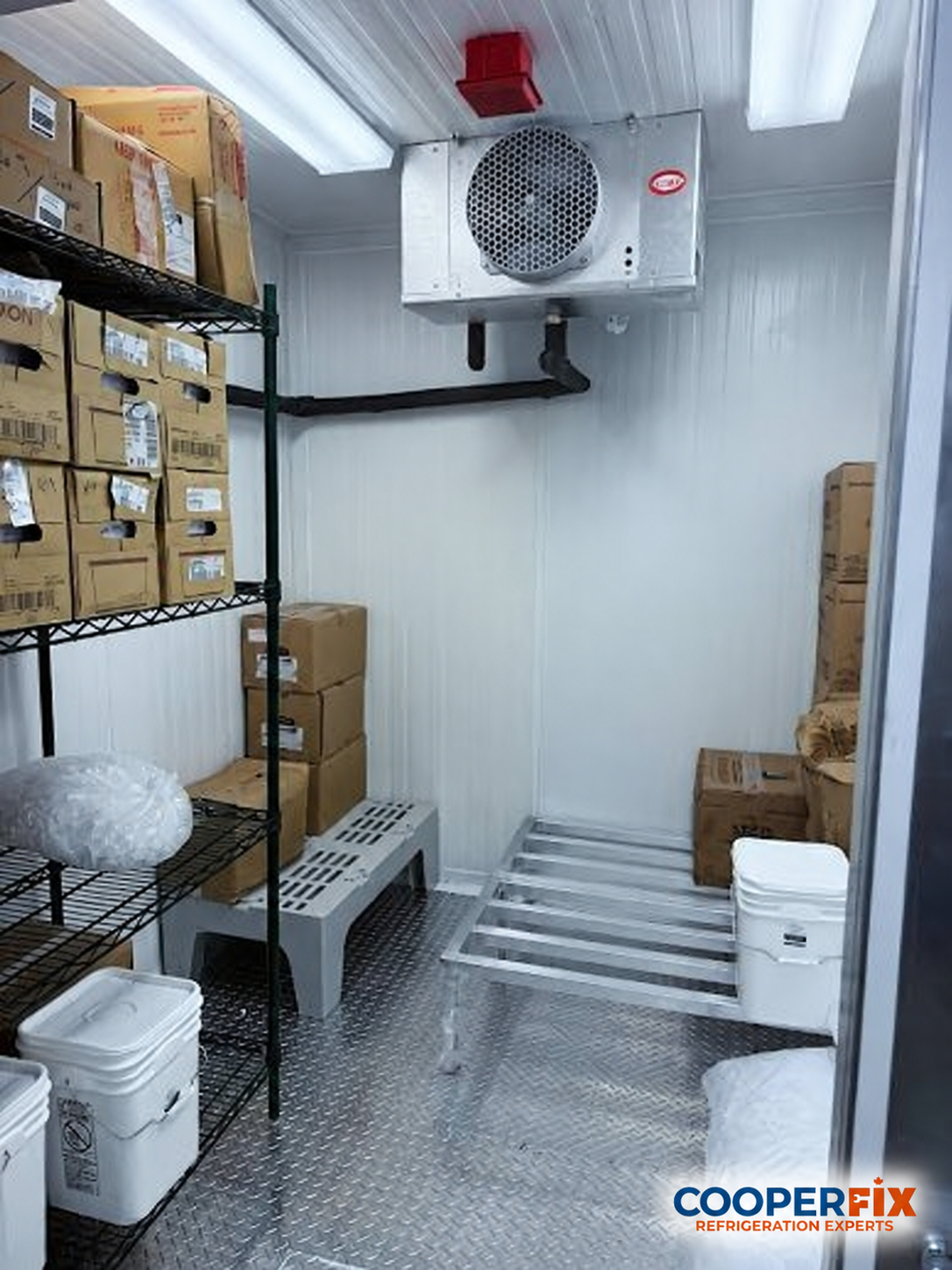
The room’s work pattern is part of the service history
A walk-in fridge serving frequent receiving activity can present a different complaint from one that remains closed for most of the day. CooperFix records when the change is reported and assesses the installed refrigeration equipment under available conditions. The work pattern helps place the symptom in time, but it does not replace measurements. The mechanic explains whether the fault lies in the cooling system, airflow or controls that were actually tested.
One area warms while the controller looks normal
The controller displays its sensor’s reading. Its location may not represent every shelf or storage zone. CooperFix compares independent measurements in the room with the controller indication and then assesses the airflow and equipment serving the warm area. A fan that is weak or stopped, an iced coil, a local refrigerant-feed issue or a probe problem can produce different patterns. The mechanic establishes which is present before selecting a repair.
If several evaporators serve the space, each branch is checked in relation to the common condensing unit. One local fault may leave the rest of the fridge operating. The report names the affected equipment and the observed difference. After work, CooperFix checks whether the repaired zone responds under the conditions available. A corrected display number without improved room behaviour would not close the original problem.
A fridge that struggles during a busy period
A room may receive warmer product or see more frequent use during a service or production shift. That load can expose reduced refrigeration capacity. CooperFix assesses how the evaporator and condensing equipment respond while considering the work pattern reported by the operator. Fan operation, refrigerant feed, electrical components and controller calls are evaluated together. The diagnosis separates a failed component from an installation or operating limitation that needs a different decision.
The mechanic does not label a room undersized just because it warms once during heavy use. Nor does a busy period excuse a failing motor or refrigerant leak. Operating measurements and equipment specifications guide the conclusion. If the system is repairable, the scope identifies the fault and post-repair check. If the installation no longer fits the load, CooperFix explains what was observed and what further assessment or equipment project would be needed.
Different stored products can reveal different patterns
A room used for produce may show a warm corner or moisture condition that draws attention to airflow and evaporator behaviour. A room used for beverage stock may face repeated load changes through the day. A prepared-food storage area may need a clear record of what the refrigeration equipment was actually doing when service arrived. CooperFix adapts the professional assessment to the site’s use without pretending that one product type proves a particular component failure.
The mechanic checks the fridge’s equipment and records the conditions relevant to the reported concern. A local airflow issue, inaccurate probe and reduced circuit capacity have different repairs even when the business describes all of them as “the room is warm.” This makes the troubleshooting page useful for multiple chilled-storage applications while keeping the recommendation tied to the actual installation.
Sensor location can obscure an uneven chilled room
One control sensor represents the condition at its installed location, not every stored-product position. CooperFix compares that reading with the room and evaporator response when diagnosing uneven cooling. The distinction is useful when the business reports a warm area despite an apparently normal display. The mechanic identifies whether the sensor, airflow or refrigeration equipment needs work, rather than asking staff to interpret the temperature pattern themselves.
A control reading and the refrigeration system disagree
When a controller says cooling is complete but independent measurements show a warm area, CooperFix assesses probe type and position, controller settings and equipment response. If the controller calls continuously while the room still warms, attention moves to the fans, refrigerant circuit, compressor and condenser. The mechanic distinguishes a command problem from a capacity problem. A new controller is appropriate only when the tests support control work.
An earlier programming change is useful history but not a diagnosis by itself. CooperFix records current settings and checks them against the installed equipment. The repair may be a probe, wiring or parameter correction, or it may be elsewhere in the refrigeration system. After work, the controller indication and the room’s observed behaviour are compared again. For a defined equipment control project, see Controller Installation & Programming.
Moisture and coil condition in a chilled room
Moisture or frost near an evaporator can accompany several different faults. CooperFix checks the coil, fans, fitted condensate components and operating sequence to determine whether the refrigeration system is clearing and draining as designed. Airflow and refrigerant feed are considered alongside any control or defrost function the particular unit uses. The visible pattern helps direct the inspection but does not by itself establish what should be replaced.
The service stays within the refrigeration equipment and its condensate handling. It does not become a room construction or staff cleanup instruction. If a component in the cooling system has failed, CooperFix defines the repair and checks the relevant operation afterward. If another site condition is implicated, the report distinguishes that from the refrigeration work that was actually performed.
Identify the room before tracing shared equipment
Several chilled rooms may be close together yet use separate refrigeration systems, or they may share condensing equipment. CooperFix maps the actual connections before treating simultaneous complaints as one fault. This step keeps the investigation tied to the installed equipment. A business receives a clear account of whether the problem belongs to one room, one branch or equipment serving more than one area.
Several fridges or rooms change together
On a larger site, one fridge may be connected to shared condensing equipment or a common electrical event. CooperFix maps those relationships before concluding whether the problem is local or shared. Separate rooms can also develop unrelated faults at the same time. The mechanic compares their equipment and operating readings, rather than assuming that identical symptoms mean one defective part.
A shared issue requires a different repair plan from one failed fan in one room. The report identifies the units tested, the common components considered and the evidence supporting the chosen scope. A business with multiple chilled spaces can then understand which systems were restored and whether another independent fault remains. This is a practical reason to diagnose the whole connected arrangement while keeping the work authorization specific.