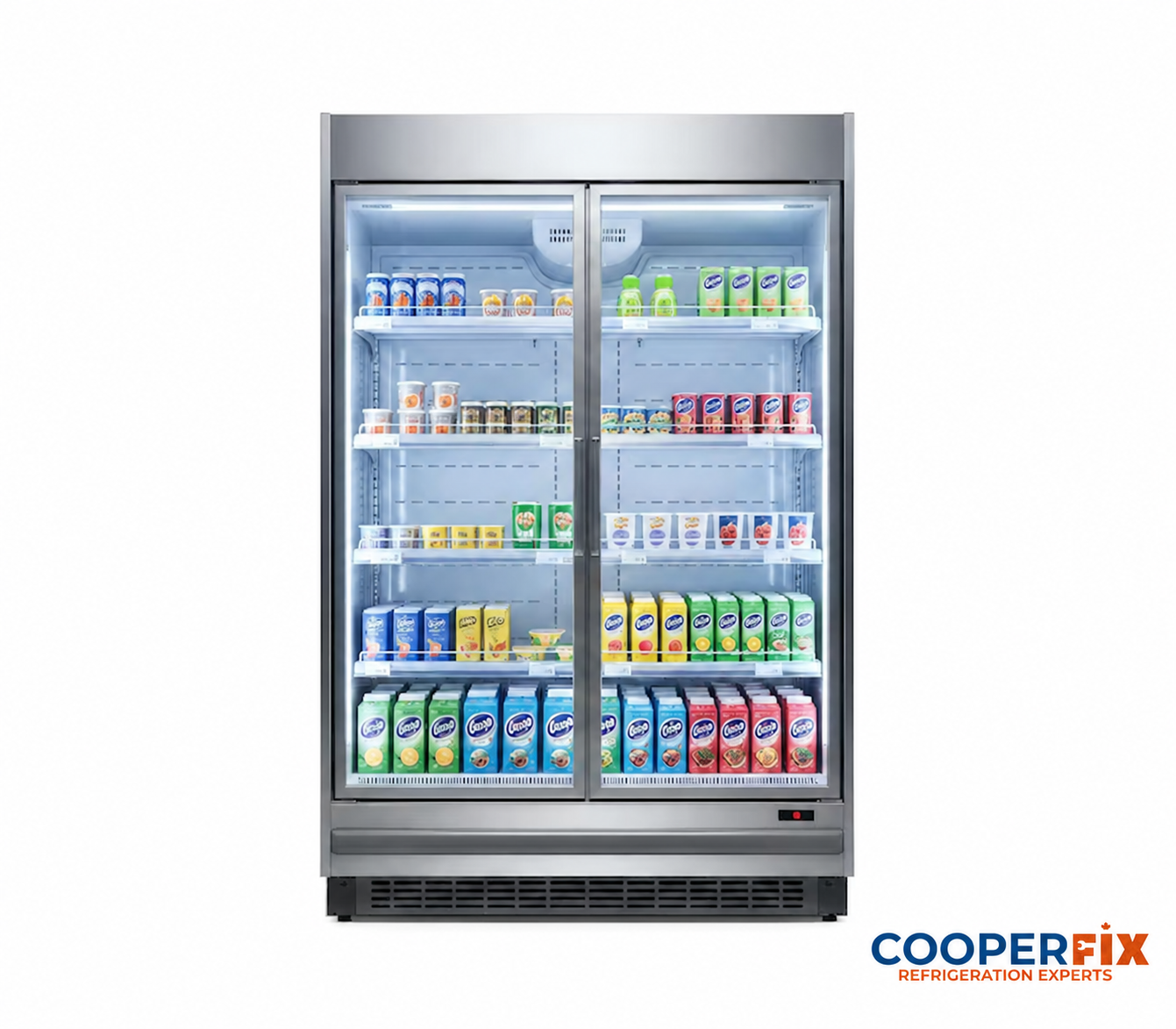
An independent fridge and a connected bank are not the same system
Some commercial fridges contain their own refrigeration equipment, while others form part of a bank served by remote components. CooperFix identifies the arrangement before tracing a warming complaint. A problem appearing in one unit can have a local control or airflow cause; several units changing together may require investigation of shared equipment. The mechanic’s service finding follows the real connections, not the outward similarity of the units.
Reach-in units that run longer and recover slowly
A reach-in may continue to run while its recovery after normal use gets weaker. The mechanic compares product-area conditions with the unit’s control reading and checks evaporator airflow, condenser heat rejection and the operating refrigeration circuit. A fan that slows under load can create warm sections while the compressor still operates. A control that reads an unrepresentative point can make the display appear normal. Reduced refrigerant feed or a confirmed leak is another possibility, but it must be distinguished from airflow and controls through testing.
For a business, this may appear as lost usable space rather than a complete breakdown. Product in one part of the unit may be moved while the rest seems cold. CooperFix’s troubleshooting identifies whether the issue is local to a section, common to the unit or influenced by the conditions in which it operates. The resulting repair recommendation names the cause and the affected component, not simply the observation that the fridge now runs longer.
Preparation units with more than one temperature zone
A prep table can serve a base section and a working section under different exposure and load. One area may hold while another drifts. CooperFix assesses how each area receives cooling, whether its fan and air path are functioning and whether the control sequence supports the unit’s intended use. The mechanic checks the actual refrigeration arrangement rather than assuming every prep unit has identical internal circuits. This helps distinguish a local distribution problem from a wider loss of unit capacity.
A business may first notice the problem during service, when the unit is opened and used more often. That timing is a useful clue about load and recovery, but it does not establish that customer use caused the fault. CooperFix considers the operating pattern and measures the equipment. Turning down a setpoint can make the base too cold while leaving a weak working zone unresolved; the proper service is to find the reason that area is not receiving enough effective cooling.
Merchandisers where the display and product disagree
Glass-front merchandisers can show a controller value that reflects one sensor while the front row or upper shelf is warmer. CooperFix checks product-level conditions across the relevant positions and relates the difference to fan operation, evaporator condition and the control sequence. Lighting and surrounding store load may affect the case’s heat demand, but the service decision remains tied to the refrigeration equipment’s performance. A unit that looks cold through the glass can still have a useful product-area complaint.
This category overlaps visually with display refrigerator repair, which focuses more deeply on case-wide distribution across glass-front, open and service cases. Here the merchandiser is one of several commercial fridge types. CooperFix routes the request according to the actual equipment and the reason for service, with no need for the business to choose the technical cause.
Control readings and product positions can diverge
A fridge controller reports the condition at its sensor, while the business may notice a problem in another part of the unit. CooperFix compares the control response with airflow and refrigeration operation across the relevant product positions. That professional assessment distinguishes a sensor or control problem from a loss of cooling capacity. The business receives a finding tied to the actual unit, not advice to change a setting based on one reading.
A warm shelf is not always a refrigerant fault
Airflow and sensor conditions can create local warming even when the refrigeration circuit is producing cooling. Conversely, a circuit with reduced capacity may affect the entire unit and become most visible at the highest-load position. CooperFix compares the pattern across sections with the fan, evaporator, controls and refrigerant behaviour. That differential diagnosis matters because a refrigerant addition cannot correct a stopped fan, and a fan replacement cannot repair a confirmed leak.
If a leak is found, the source is located and corrected, the circuit checked and the proper charge restored for the equipment. The refrigerant leak repair page explains that separate service. If the evidence instead points to a control or local airflow issue, the repair follows that finding. The business receives a clearer reason for the work than a generic claim that the fridge is low on cooling.
Water, condensation and an inconsistent cycle
Water within or beneath a commercial fridge can relate to condensate drainage, defrost or a separate refrigeration condition. CooperFix traces the source and checks the equipment components involved. The mechanic does not treat a visible wet area as proof of one universal failed part. A recurring alarm or stop-start pattern also needs its own operating assessment: the control’s instruction, the electrical response and the refrigeration circuit may not agree. Clearing the alarm or drying the area would not resolve a confirmed underlying fault.
These complaints often coexist with a temperature problem. A partially iced coil can affect both airflow and water behaviour. An intermittent fan can create uneven conditions that seem unrelated at first. CooperFix tests the relationship before defining the repair scope. The service account should make clear which observed symptom came from the diagnosed cause and whether a second issue was found.
A trading pattern is context for the mechanic
Reach-in and preparation fridges can experience different loads throughout a business day. CooperFix considers when the complaint occurs while testing the installed equipment. The pattern helps select the relevant operating conditions, but it does not itself identify a part to replace. The mechanic documents the measured cause and explains how the proposed repair addresses the performance change reported by the business.
What a professional fridge diagnosis includes
The mechanic identifies the unit and its refrigeration configuration, observes temperatures at meaningful positions and checks the components indicated by the complaint. Fan and compressor operation, electrical demand, control sensors, defrost and refrigerant-side readings may each be relevant. The sequence is guided by the equipment and evidence. One controller number or one pressure reading is not enough to describe the whole unit. CooperFix explains the cause supported by the combined findings before replacing parts.
The model information also matters to the decision. Two units that look alike may use different fans, sensors, refrigerants or control sequences. CooperFix matches the assessment and any replacement component to the unit that is actually installed. This prevents a familiar symptom on one brand or unit type from being treated as proof that another unit needs the same part. If a finding is uncertain under the conditions available, the service explanation should say what was observed and what further operating condition would be needed to confirm it.
After an agreed repair, the same affected zone and operating behaviour are reassessed. A fan repair should restore distribution; a control repair should restore the intended command and response; circuit work should improve the refrigeration performance as observed. The mechanic reports what was verified during the visit. A busy unit under changing product load may require continued normal operation before every long-term condition is known, so the service account should keep that limit clear.