Commercial refrigeration maintenance program · Toronto & GTA

Commercial Refrigeration Maintenance Program in Toronto & the GTA

A maintenance program is a working agreement around a business’s actual refrigeration equipment.

Its value depends on knowing which units are covered, when they will be assessed, what the mechanic will measure and how findings will turn into an authorized repair decision. CooperFix builds commercial refrigeration maintenance programs for Toronto and GTA businesses with walk-ins, units, freezers and display equipment. The arrangement is defined with the operator rather than assumed from the number of locations or a standard checklist. Request a discussion through the existing form or call (647) 483-3777.

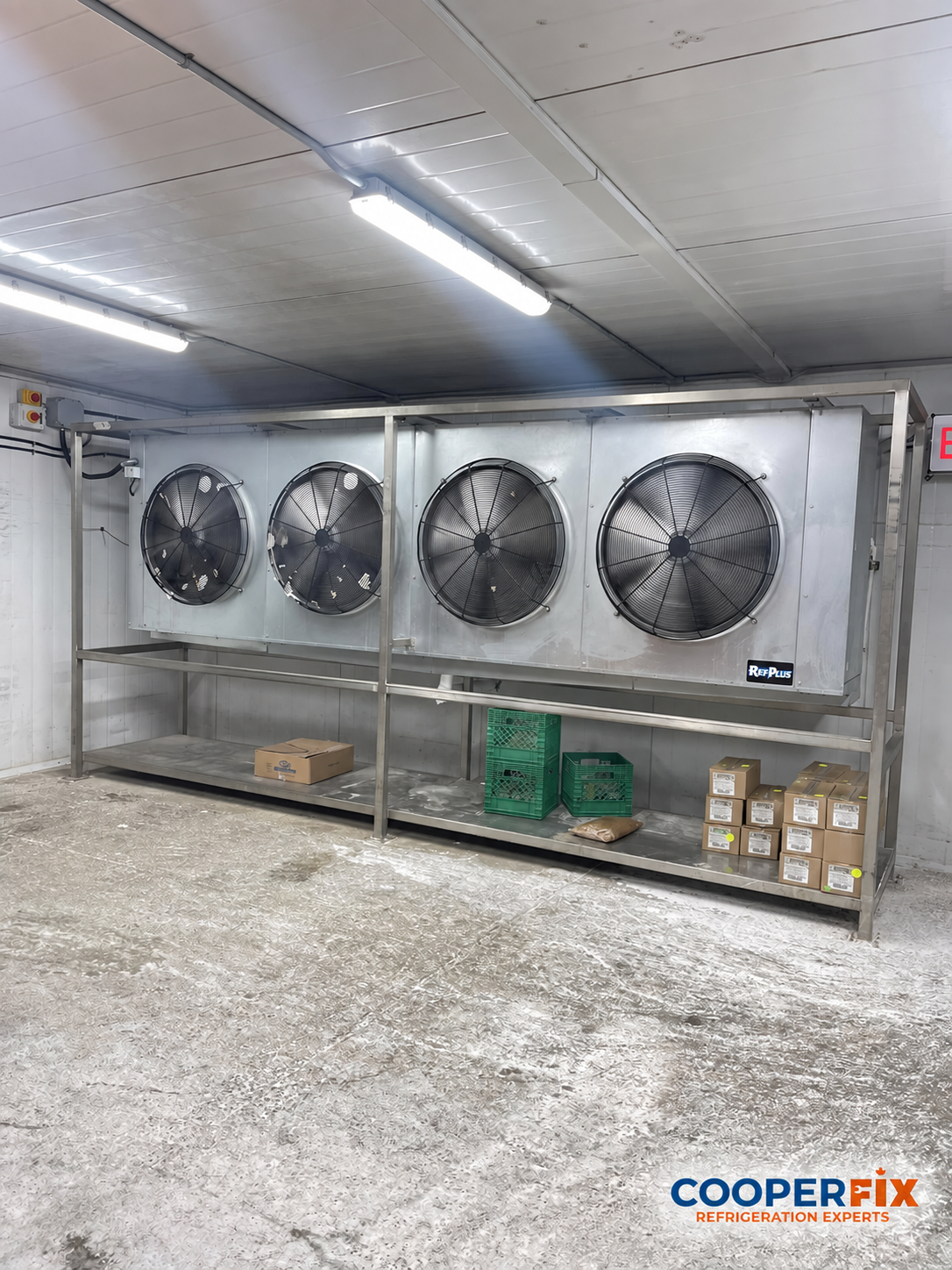
Ceiling-mounted refrigeration evaporator with four fans
Commercial refrigeration equipment in a planned maintenance program.CooperFix · Toronto & GTA
Service request

Book Refrigeration Maintenance Program Service

647-483-3777

    Please prove you are human by selecting the plane.

    CooperFix services commercial refrigeration equipment only.

    What this service covers

    Build the program around an equipment register

    The first step is to identify the refrigeration equipment to be covered. A single site may have a walk-in freezer, several chilled units and a customer-facing display case. A multi-site business may have similar units installed in different conditions. CooperFix records the relevant equipment and the relationship between systems, including where a remote condensing unit serves more than one space. The program can then say exactly what is included.

    An accurate register prevents two common problems: visits that miss a critical unit and reports that refer vaguely to “the fridge” when several exist. When equipment is added, removed or replaced, the register can be updated by agreement. The program should not silently expand to a new site or preserve checks for equipment that no longer exists. Each revision keeps the maintenance work linked to the business’s real installation.

    Agree on visit intervals and practical access

    Different businesses use refrigeration at different intensity and operate on different schedules. CooperFix discusses visit timing with the operator in the context of equipment type, operating demand and access. A freezer with a complex defrost sequence may warrant different attention from a small self-contained unit. The exact interval is agreed for the site; the page does not promise a universal schedule or imply that one frequency prevents every failure.

    Access and operating conditions affect what can be assessed during a visit. The program should identify how the mechanic reaches the equipment and who coordinates the visit. A unit that is off or unavailable cannot be assessed as though it were operating under its normal load. The report records such limits and, if necessary, proposes a suitable follow-up. This is more useful than marking an inaccessible unit as checked.

    A program is built from equipment-specific visits

    A maintenance program is more useful when each visit has a defined purpose for the equipment included. CooperFix distinguishes the checks suited to walk-in rooms, self-contained units and connected refrigeration systems. The agreed program can then identify which units are to be assessed, which observations will be recorded and how the results will be reported. It is a service framework for the business’s installed equipment, not a single checklist copied across unrelated machines.

    Define technical checks for each equipment group

    CooperFix sets the technical scope according to the units on the register. Walk-in cooler checks can focus on evaporator airflow, refrigerant feed, condensing performance and controls. A freezer adds the defrost sequence, fan restart and any fitted drainage components. Units and cases require attention to their own fans, controls and product-area temperature pattern. Electrical condition and refrigerant-side measurements are assessed where appropriate and accessible.

    The program documents the work expected at each visit while allowing the mechanic to respond to what the equipment actually shows. A rigid list cannot substitute for professional interpretation. A warm case may need diagnosis beyond the routine scope; a controller alarm may need a separate repair decision. CooperFix records those findings rather than treating the visit as proof that every fault has been corrected.

    Prioritize units by their role in the operation

    A site may rely on one walk-in room for central stock while several smaller units serve daily activity. CooperFix uses the equipment register and the agreed scope to make that difference visible in the maintenance record. The business can see which units were visited and how findings relate to their role on site. Priority in the program reflects the actual operation rather than the order in which equipment happens to appear on a generic list.

    Turn each visit into a useful record

    After a visit, the business needs to know which units were inspected, what was observed and what should happen next. CooperFix’s record identifies the equipment, relevant conditions, measurements and developing issues. It separates work completed within the agreed visit from work recommended for later authorization. This gives the operator a clear way to compare the condition of the same unit over time.

    A record can show that a fan’s electrical condition has changed, a freezer defrost cycle is not completing, or a case’s product area differs from the controller display. These are not interchangeable findings. Each needs the correct equipment context and a stated consequence. The business can use the report with its own operational decisions while CooperFix defines the refrigeration work required.

    The reporting method should also handle exceptions. A unit that was switched off, inaccessible or under separate repair cannot honestly be marked as fully assessed. CooperFix records the limitation and the reason, then defines whether a return visit or repair call is needed. On a multi-site account, the location and unit identification accompany the exception. This makes the program’s coverage visible and prevents an incomplete visit from looking like a clean result.

    At each scheduled visit, the report can distinguish a changed reading from a confirmed defect. For example, a higher condensing temperature has a different meaning when outdoor air and store load are also higher. CooperFix records relevant conditions with the measurement and compares them with the same unit’s earlier results. The record names any confirmed fault, the evidence for it and the next proposed action. This allows a facilities manager to review a trend without treating every variation as a parts order.

    Seasonal conditions change what a visit can show

    Outdoor conditions and business load can alter the observed behaviour of condensing equipment and refrigerated spaces. A maintenance program should identify the conditions present during a visit, especially when the installation has a history of seasonal performance changes. CooperFix uses that context when comparing records over time. A reading made during one operating period is not presented as proof of performance under every future condition.

    Repairs require a clear decision path

    Maintenance and repair are connected but not identical. A scheduled visit may uncover a component that has failed or a circuit that needs leak work. The program should say how that finding is reported and how the business authorizes the separate repair. CooperFix explains the evidence, proposed work and any effect on the operating unit. A record of a fault is not a claim that the fault has been removed.

    For an active loss of cooling, the business should request commercial refrigeration repair rather than wait for the next planned visit. A maintenance program supplies history and equipment identification that can make that call more precise. For a current breakdown, CooperFix assesses a separate repair request.

    Before a multi-site program begins, CooperFix and the operator can identify who receives each site’s report and who authorizes work beyond the agreed visit. If a mechanic finds a failed component, the finding is tied to that site’s equipment ID, model and measured condition. The proposed repair is explained to the appropriate contact before a part is ordered. A completed maintenance visit remains recorded separately from a later approved repair, so managers can see what was inspected, what was corrected and what still requires a decision.

    Keep multi-site records comparable without flattening differences

    Businesses with several locations need to know which equipment was assessed at each address. CooperFix can use a consistent reporting structure while still recording the model, system arrangement and finding that belong to the specific site. This makes recurring problems easier to distinguish from unrelated events at another location. A common format supports management decisions; it does not turn distinct refrigeration installations into an identical service scope.

    One location and several locations

    A single-site program can still cover systems with different priorities. A walk-in holding the business’s main stock may be more consequential than one secondary unit. CooperFix discusses the equipment list and the way each item serves operations, then defines checks and records accordingly. The operator remains responsible for its product-handling decisions; CooperFix provides the refrigeration findings and approved service.

    For a multi-location business within CooperFix’s confirmed service area, a program can identify equipment and contacts at each site. The business needs a report that names the actual location and unit, not a general statement that “all stores” were checked. Schedule and access are agreed with the operator for the locations included. The program does not imply a branch office or guaranteed response in every named area.

    CooperFix · Refrigeration Experts

    A maintenance program based on the equipment list

    20+Years of experience
    313AMechanic
    ODP/ODSCertified
    Emergency

    Emergency calls between program visits

    A program visit does not replace an emergency call when a unit is warming with product inside: 647-483-3777. Emergency calls are received and assessed 24/7. Availability and response depend on location, workload and the repair required. Program enrolment and the next scheduled visit go through the request form.

    Service request

    Request a Maintenance Program

    Discuss a maintenance program for the refrigeration equipment at your commercial site. CooperFix can map the included units, visits, findings and repair follow-up into a documented service scope.

    647-483-3777

      Please prove you are human by selecting the plane.

      CooperFix services commercial refrigeration equipment only.

      Review the program when the installation changes

      Refrigeration installations do not remain fixed forever. A business may add a display case, change a walk-in evaporator or replace a group of units. CooperFix can review the maintenance register and technical checks after such a change. New controls or a different refrigerant may change what a mechanic needs to verify. The revision should state when the new equipment entered the program and what record becomes its baseline.

      Program review can also use findings from prior visits. If the same circuit repeatedly shows a problem, simply writing the observation again is not an adequate plan. CooperFix identifies whether a defined repair, installation change or different maintenance scope is appropriate. The business decides what to authorize. The program supports informed decisions; it is not a substitute for them.

      A program request starts with the site, not a technical report

      The operator can provide the business location, contact and general types of refrigeration equipment. CooperFix can establish the detailed register and discuss visit scope, schedule and reporting with the business. Customers are not expected to measure pressures, interpret alarm histories or design the technical checklist. The mechanics perform that assessment as part of defining the service.

      At the start of a program, the parties can also agree how findings reach the person who can authorize work. A manager at the site may describe an equipment problem while a facilities contact approves a repair. The program should record the relevant contacts and the agreed communication route without assuming that every observation authorizes parts replacement. This keeps a technical maintenance visit, a proposal for further work and a completed repair distinct in both the report and the business’s records.

      A program can be reviewed after an equipment change or after the business finds that the original schedule no longer fits its operation. CooperFix can explain how the revised equipment list changes the technical visit scope. The operator decides whether to change the agreement. A recurring arrangement is useful because it can follow the real refrigeration installation, not because the original plan is frozen for the life of the business.

      The review can also examine how findings were closed. A recommendation to replace a failing fan may have been approved, deferred or superseded by a wider equipment change. The next report should state the current status instead of treating every old note as unresolved forever. CooperFix can show which work was performed and which recommendation still needs an owner decision. This makes the program a useful history of the installation, while preserving the difference between observation, authorization and completed repair.

      That history also gives a new site manager a clearer starting point. They can see which refrigeration units belong to the agreement, what condition was last observed and which repair decisions are pending. CooperFix can explain the technical findings without making the manager infer them from a collection of disconnected invoices. The program remains tied to the equipment rather than to one person’s memory of the site.

      CooperFix’s commercial refrigeration work is carried out by Ontario 313A licensed mechanics, and the company has 20+ Years of Experience. Its 90-Day Parts & Labour Warranty applies to CooperFix repair work under its terms. A program agreement states its maintenance and repair scopes separately. For details of an individual visit, see Commercial Refrigeration Maintenance.

      Questions

      Maintenance program questions

      What belongs in a maintenance program agreement?

      The covered equipment and locations, visit schedule, technical scope, access arrangements, reporting and route for authorizing repairs should be clear. CooperFix defines these with the operator for the actual installation. The agreement should not depend on an unnamed generic equipment list.

      Are the same checks done on every unit?

      No. Freezers, chilled rooms, display cases and self-contained units differ. CooperFix defines relevant checks for each group and records which unit was actually assessed. A common report format can still preserve equipment-specific findings.

      How is visit frequency chosen?

      CooperFix agrees on a schedule with the business using its equipment mix, operating demand and access needs. There is no single interval that suits every installation. The schedule can be revisited when equipment or business use changes.

      What will the business receive after each visit?

      A report identifies the units covered, observed conditions, relevant measurements and any repair recommendation. It distinguishes checks or work completed from an unresolved fault. Over time, those records can show how the same equipment’s condition has changed.

      Does the program include repairs?

      Only the work expressly included in the agreed scope is included. A separate component, leak or major system repair may need its own assessment and authorization. CooperFix explains the finding and proposed action so the business can decide.

      What if one unit fails between scheduled visits?

      The operator can request a repair call. The maintenance record may help identify the equipment and earlier findings, but the present failure requires a new diagnosis. CooperFix assesses the current failure as a repair request and confirms the available response after the call.

      Can a program cover more than one location?

      It can be discussed for multiple included sites within CooperFix’s confirmed service area. The agreement identifies the locations, equipment, contacts and visit arrangements. A program is not a claim that every site receives the same schedule or a guaranteed arrival time.

      How is a new unit added to an existing program?

      CooperFix and the business update the equipment register and determine the relevant checks and starting record. A new unit should not be reported as previously maintained before it enters the agreement. The revision makes the program match the current installation.