Step two: the readings
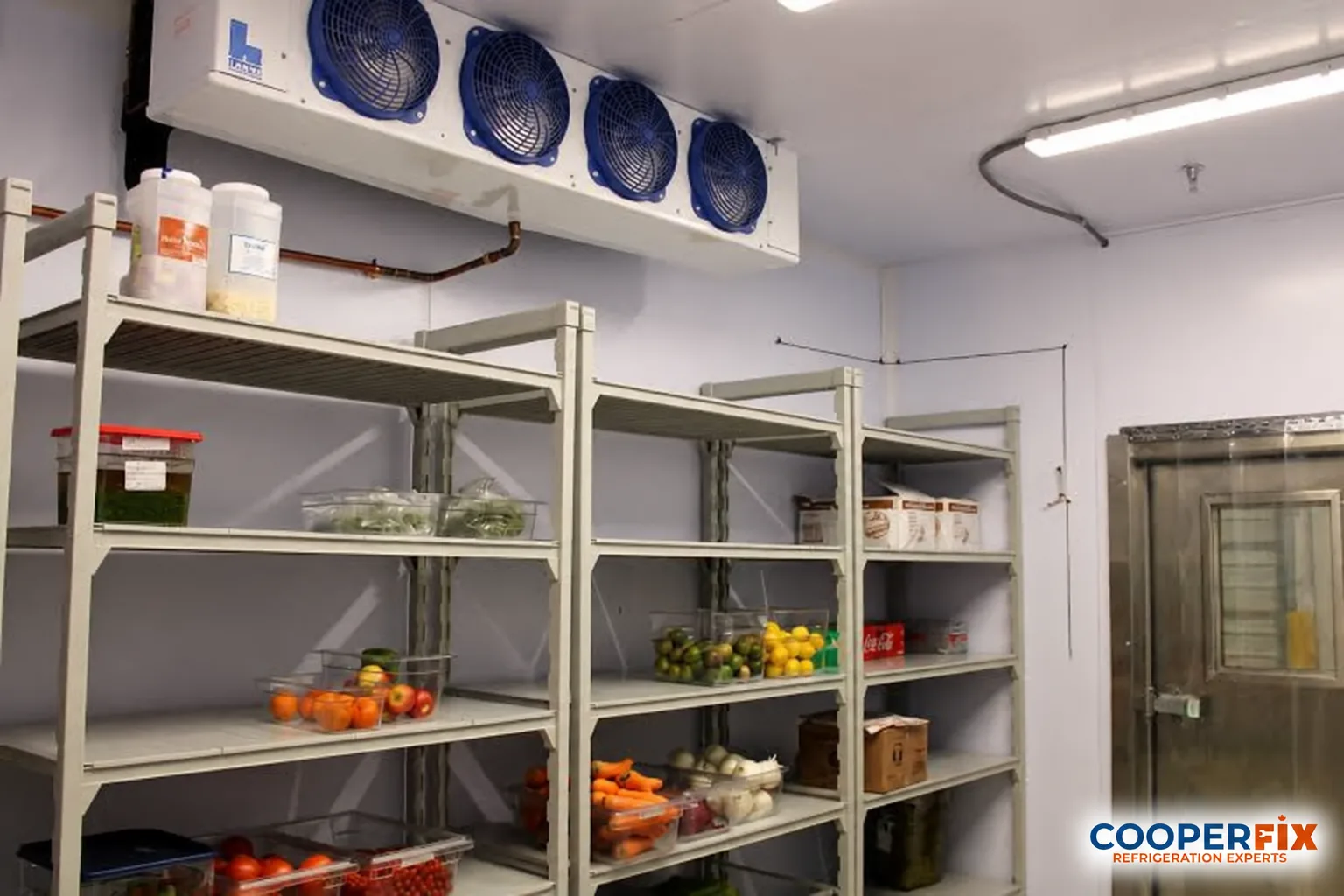
The mechanic starts inside the room: product temperature at several points, air temperature into and out of the evaporator coil, fan motor amperage, the condition of the coil and the drain. Then the condensing unit: suction and head pressure, superheat at the coil and subcooling at the condensing unit, compressor amperage, condenser fan, the controls. Together, those readings narrow the fault to the evaporator, condensing unit, refrigerant circuit or controls and determine the next test.
Step three: the repair
The fault is named from the readings and explained to you before anything is replaced. A fan motor, a start component, a stuck solenoid, a probe, a drain heater or a pressure control is repaired once the model is identified, the fault is confirmed and the matching part is available. A leak is found and repaired, the system is evacuated to the applicable service target, and the refrigerant charge is restored and verified by the method required for the installed system — nameplate quantity, receiver and sight-glass condition, subcooling, superheat and manufacturer data as applicable. A compressor is condemned only after the electrical and operating tests applicable to the installed compressor and system; pump-down is used only where the system design and the manufacturer’s operating envelope permit it.
Step four: proof
The same readings are taken again after the repair, and the room is watched through a full cycle. Both sets are recorded and handed over. That record is yours, and it is what the next visit is measured against.
Where a walk-in cooler loses its cold
- At the evaporator. Fans slowing or stopped, a coil partly frosted, stock stacked across the discharge or the return. Cold is made but not moved.
- In the refrigerant circuit. A charge low from a leak, a restricted filter drier, an expansion valve that has lost its bulb charge, a liquid-line solenoid that does not open. The coil starves.
- At the condensing unit. A condenser that cannot shed heat, a failed condenser fan, start components on their last legs, a low-ambient control not doing its job in a Toronto winter. The system has cold to make and cannot make it.
- In the controls. A probe that has drifted, a controller set wrong for the room, a pressure control off its setting, a fan-delay or defrost program that does not fit the equipment. The system works, but it is told the wrong thing.
One Warm Zone in a Multi-Evaporator Cooler
Some walk-in coolers use more than one evaporator to serve a long room or several storage zones. When one area warms while the rest of the room holds, CooperFix compares air entering and leaving each coil, fan operation, refrigerant feed and the control serving the affected branch. A local fan, solenoid or metering fault calls for different work from a shared condensing problem, and the mechanic separates those paths before a part is ordered. After the authorized repair, the affected branch is compared with the other evaporators during the operating conditions available at the visit. The service record identifies which circuit was repaired and whether the room-wide refrigeration source responded as intended.
Walk-in cooler faults CooperFix repairs most often
- The room will not hold 1–4 °C. Capacity is short: low charge, a starved coil, a blocked condenser or worn compressor valves. Gauges on the condensing unit separate these.
- The room warms after every delivery and takes too long to recover. Air into and out of the coil is measured; a failed fan or a starved coil is repaired; stock stacked across the airflow is reported as loading.
- Persistent or abnormal frost that does not clear as the installed defrost sequence requires. The mechanic identifies the defrost method and checks airflow, refrigerant feed, controls and the complete defrost sequence before naming the fault.
- Water dripping from the evaporator. A blocked drain, a drain out of pitch, a failed pan or drain heater where fitted. The drain path is traced and repaired.
- The compressor never stops. Short of capacity, or told to run by a fault — a control off its setting, a solenoid that does not close for pump-down. Suction pressure and the controls are checked.
- The compressor trips and restarts. Start relay, capacitor, overload on high head pressure, a pressure control on the edge of its setting.
- The cooler performs normally in warm weather but loses temperature control during cold outdoor conditions. The mechanic checks the low-ambient control, head-pressure control and crankcase heater on the outdoor unit.
- The display says 2 °C and the product says 7 °C. The probe has drifted or sits in the wrong place; it is checked against a reference, moved or replaced.
What the repair covers on a walk-in cooler
- Evaporator fan motors, blades, fan-delay controls and off-cycle defrost settings
- Drain pans, drain lines and drain heaters where fitted
- Expansion-valve and liquid-line control work matched to the walk-in cooler’s refrigerant circuit
- Leak location and repair on the cooler circuit, followed by evacuation and charging to the required weight
- Compressors, starting components, contactors and overload protection for walk-in cooler systems
- Condenser coil, condenser fan motor and head-pressure control repairs for the cooler’s condensing equipment
- Low-ambient head-pressure controls and crankcase heaters that support cooler operation through winter conditions
- Temperature probes, refrigeration controllers and cooler alarm functions
- Pressure controls and pump-down circuits
Coolers with electric defrost on medium-temperature evaporators are repaired on the same terms; the defrost type is confirmed from the equipment.
Why Toronto businesses call CooperFix for walk-in cooler repair
- Ontario 313A licensed and fully insured on every commercial walk-in cooler call.
- 20+ Years of Experience on walk-in refrigeration for restaurants, stores, florists and warehouses.
- A room climbing with product inside is treated as an emergency call; the emergency section further down this page says how those calls are handled.
- Readings before the repair and after it — the report shows both.
- All walk-in refrigeration makes: Heatcraft, Bohn, Larkin, KeepRite, Trenton, Master-Bilt, Copeland, Tecumseh, and Dixell, Carel, Danfoss and Elitech controls.
- The walk-in cooler report separates coverage for the installed part from coverage for CooperFix’s labour. The component retains the applicable manufacturer’s parts warranty, and the completed cooler repair is recorded under the 90-Day Parts & Labour Warranty subject to its terms.
Walk-in cooler repair for restaurants and food service
The restaurant cooler is opened hundreds of times a shift and restocked warm. A fault shows up as a room that recovers slower and slower until one day it does not. The mechanic separates a loading problem — reported as loading, not sold as a repair — from a failed fan, a starved coil or a condensing unit that has lost capacity. Whether stock can remain in place depends on measured room performance, access, the repair scope and the business’s product-safety procedures. CooperFix explains any interruption or stock-access requirement before authorized work begins.
Walk-in cooler repair for grocery, produce, floral and beverage storage
Produce and floral rooms run humid and need the evaporator temperature difference the room was designed for; a cooler that dries out the product is running its coil too cold. Beverage and keg rooms are opened all night and load the coil with humid air. Grocery back rooms often run several evaporators on one condensing unit — one warm coil is its own circuit, the whole room warming is the shared side. The mechanic measures each coil and repairs the circuit that failed. Where the installed piping, service valves, controls and repair scope allow safe circuit isolation, the other coils stay in service; if shared equipment must be stopped, the affected rooms are explained before authorized work begins.
Industries CooperFix serves with walk-in cooler repair
- Restaurants using walk-in coolers for chilled stock
- Grocery operators with back-room refrigerated storage
- Produce and floral wholesalers using chilled walk-in rooms
- Breweries and beverage distributors with keg-room refrigeration
- Catering commissaries operating walk-in cooler storage
- Meat and seafood businesses using medium-temperature rooms
- Hotels and event venues with walk-in cooler systems
- Institutional food-service facilities with chilled storage rooms
- Distribution sites operating refrigerated walk-in storage
- Convenience retailers with back-room walk-in coolers
Walk-In Cooler Repair Parts and Coverage
Fan motors, fan-delay controls, expansion valves, solenoids, driers, start components, contactors, probes, controllers, pressure and low-ambient controls, crankcase heaters — stocked for the models we see most; compressors, coils and condensing units are sourced for the model on the nameplate. Each component fitted during walk-in cooler repair retains the applicable manufacturer’s parts warranty. CooperFix’s completed work on the documented cooler fault carries the 90-Day Parts & Labour Warranty under its stated terms. CooperFix schedules walk-in cooler repair for approved commercial locations across Toronto, Vaughan, Markham, Barrie and the wider GTA service area. Related pages: walk-in cooler troubleshooting, walk-in cooler installation, walk-in refrigeration repair service and walk-in freezer repair.