Map the chilled-storage branches first
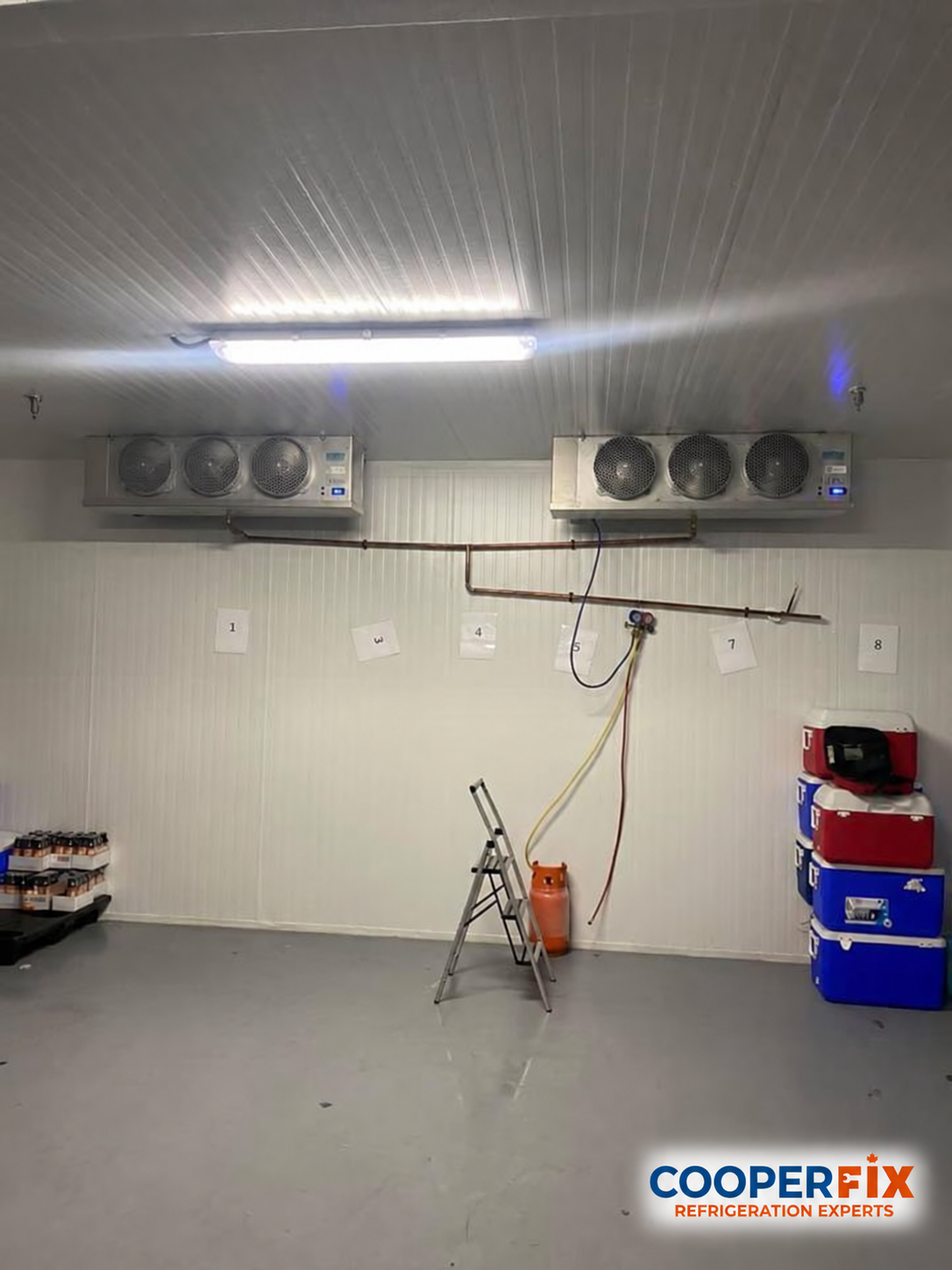
An industrial cooler can have multiple evaporators, rooms and controls linked to common condensing equipment. CooperFix identifies which branch serves the affected area before interpreting a warm-zone complaint. That map tells the mechanic where local measurements belong and which shared components should also be considered. The investigation is tied to the installed system, rather than to a generic list of cooler faults.
One evaporator is weak while others operate
When only one portion of the room warms, the mechanic compares the affected evaporator with the other branches. A local fan, solenoid, expansion device, sensor or defrost condition may be involved. The common refrigeration source is checked as context, but the repair should follow the component serving the weak area if the supply is otherwise sound. CooperFix measures the branch’s operating response and tests the control sequence rather than treating every evaporator as having the same failure.
The difference matters to an operation that uses separate receiving and holding zones within one room. A local shortfall may affect incoming product handling while another area remains stable. CooperFix describes what the measurements show about that local function. If the diagnosis instead reveals a wider source problem that first appears at the farthest branch, the repair scope changes. The location of the warm zone is a clue, not a final answer by itself.
Local weakness and shared capacity loss differ
When only one zone changes condition, CooperFix compares its equipment with the rest of the installation. When several zones drift together, the mechanic also investigates the components they share. The distinction affects the repair scope and the information the business needs for its storage operation. A common symptom does not justify declaring that every evaporator has failed; the finding follows the measurements from the relevant branches.
The entire room drifts when the load rises
A whole-room rise can appear when receiving activity, product movement or a busy operating period increases the heat load. CooperFix assesses how the refrigeration system responds during the relevant condition: whether compressor capacity is available, whether heat is being rejected, whether evaporators receive adequate feed and whether fans move air through the space. A room that eventually recovers may still be unable to support its ordinary business use. The mechanic compares the observed performance with the system configuration and explains whether a component fault, control issue or application condition is involved.
The fact that a compressor runs continuously does not establish that it has failed. It may be responding to load, a weak evaporator, a refrigerant-side restriction or another limitation. CooperFix tests the actual common equipment and the room-side components before recommending a repair. The business gets a distinction between a system that is short of capacity because of a fault and one whose operating demand needs a separate design or equipment discussion.
Compressor, oil and protection signals
Larger refrigeration arrangements can have compressor staging, protective controls and oil-management functions that affect the service diagnosis. An alarm related to these systems is not automatically a command to replace a compressor. CooperFix checks the state of the common equipment, the conditions that produced the alarm and the impact on the chilled room. The mechanic determines whether the issue is a control response, a component failure or a consequence of another refrigeration problem. Any compressor replacement recommendation is supported by testing appropriate to the actual system.
Oil observed outside its intended path or in a system reading can be a clue about circuit condition, but it needs professional interpretation. The mechanic evaluates what is happening in the affected equipment rather than asking staff to inspect piping or identify an oil fault. On a site with multiple compressors or circuits, the location and timing of the concern matter. CooperFix states which function was assessed and how that relates to the room complaint.
Controls, sensors and apparently conflicting readings
A large room can have several sensors and controllers: one may govern a refrigeration call, another may report conditions to an alarm or monitoring system. A displayed value can differ from the conditions in a particular product area. CooperFix compares the relevant readings with the physical response of the equipment. A sensor fault, control setting, fan sequence or actual cooling shortfall may explain the disagreement. The mechanic identifies which measurement describes which location and function before recommending changes.
Control work must fit the connected system. Adjusting one setpoint cannot repair a failed fan, and replacing a sensor will not restore capacity if the common source is weak. CooperFix tests command and response, then verifies the result after any repair or adjustment. The record can state what was observed under the conditions present during the visit and what remains to be seen during normal load.
Refrigerant feed and airflow at the affected branches
Chilled storage depends on both refrigeration reaching each evaporator and air moving through the served zone. A branch may receive inadequate refrigerant because of a valve or control problem, while another has correct feed but a failing fan. CooperFix uses appropriate pressure, temperature and electrical observations for the equipment to separate those possibilities. A visible frost pattern or warm area guides the investigation but does not prove a leak or a particular valve fault on its own.
If a refrigerant leak is confirmed, the source is found and repaired before the circuit is tested and charged to its specification. If airflow is the issue, the motor, controls and coil condition are assessed together. CooperFix selects the corrective work based on the circuit and the affected room. The business can then understand why a repair at one evaporator is expected to improve one area, or why a shared source repair is needed for the whole system.
A controller trend needs equipment evidence
Industrial controls may record alarms or changing temperatures, but those entries are evidence to interpret alongside the refrigeration circuit. CooperFix checks sensor response, control actions and the equipment they operate. The mechanic explains whether the recorded event reflects a control fault, an equipment response or a consequence of another failure. The business receives a supported finding rather than a repair recommendation based only on the alarm text.