Emergency refrigeration repair · Toronto & GTA

Emergency Refrigeration Repair in Toronto & the GTA

A failed walk-in, freezer, reach-in or refrigerated display can interrupt a business at the moment it needs that equipment most.

CooperFix receives urgent commercial refrigeration repair requests in Toronto and the GTA, identifies the affected equipment and assesses the call for a mechanic’s visit. Once on site, the mechanic diagnoses the cause, explains the work supported by the findings and checks the system’s response after repair. For an active loss of cooling, call (647) 483-3777 or use the emergency service request form. Emergency calls are received and assessed 24/7. Availability and response depend on location, workload and the repair required. The assessment and the repair are separate steps; the exact work becomes clear when the equipment is tested.

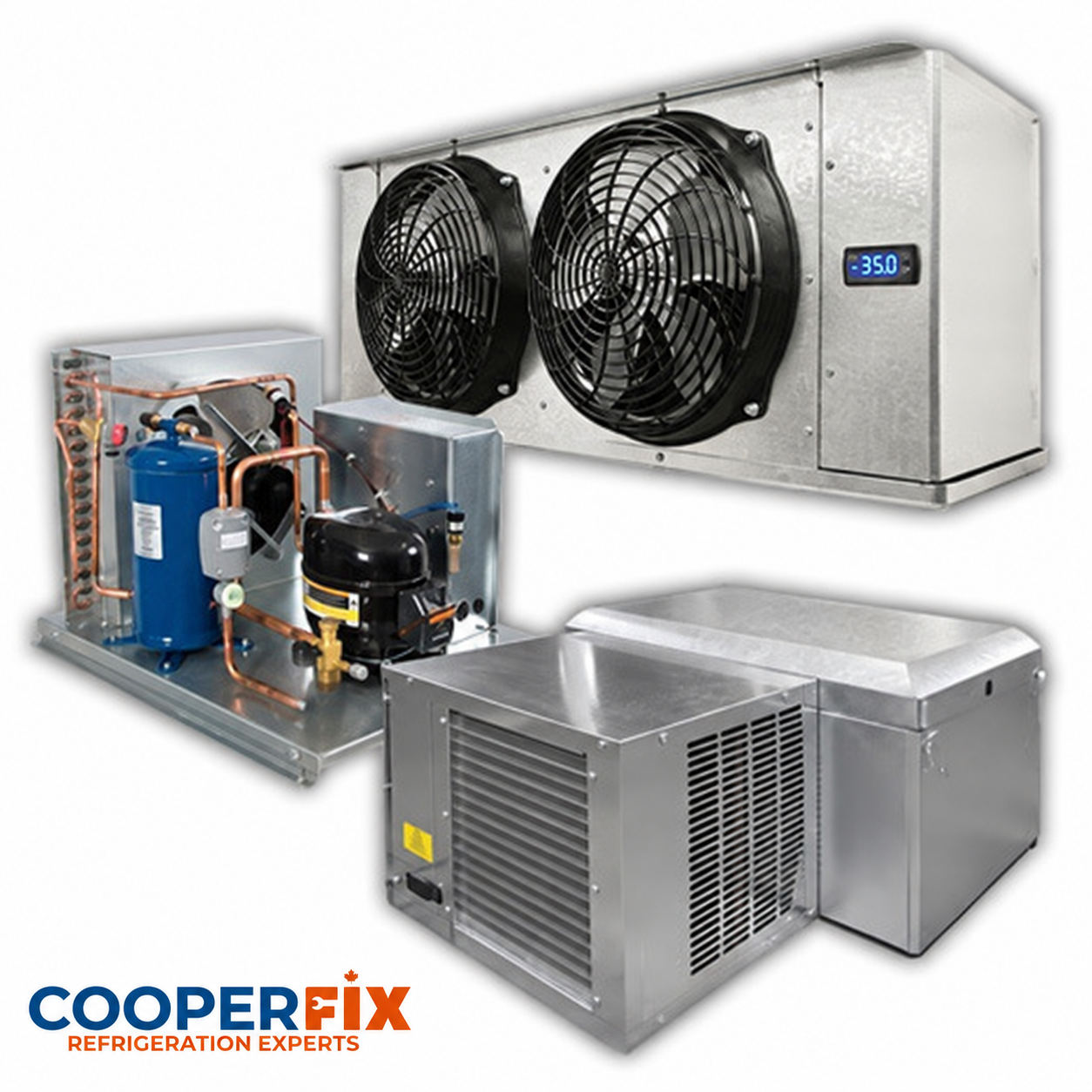
Illustration of commercial refrigeration equipment for emergency repair service
Emergency refrigeration equipment.CooperFix · Toronto & GTA
Service request

Book Emergency Refrigeration Service

647-483-3777

    Please prove you are human by selecting the key.

    CooperFix services commercial refrigeration equipment only.

    What this service covers

    What makes a refrigeration call urgent for a business

    An urgent call is about the operating effect of a failure, not only the sound or alarm that accompanies it. A walk-in freezer may stop maintaining its low-temperature condition. A refrigerator serving preparation may lose cooling during service. A display case may leave an important product section unusable. Several pieces of equipment may fail together. CooperFix asks what commercial system is affected, where the site is and how the fault is affecting the operation so the call can be assessed. The customer does not have to decide whether a compressor, sensor or refrigerant circuit has failed.

    The urgency can differ even when two units show a similar temperature. One site may have other operating equipment, while another depends on the failed unit. CooperFix’s call assessment considers the equipment and the reported business situation along with location and available workload. CooperFix confirms the response after assessing location and current workload. On site, the mechanic diagnoses the fault and explains the repair and part availability.

    The first conversation and the first site findings

    When you contact CooperFix, give the business address, the equipment type, a contact person and a short description of what changed. If more than one unit is involved, say so. That is enough to begin a useful call assessment. The mechanic will establish the technical condition. Staff are not expected to take pressure readings, interpret alarm codes, perform electrical checks or prepare a diagnostic record while the business is dealing with an interruption.

    At the site, the mechanic identifies the system and the affected area. Product-level temperature and the direction of temperature change may be measured where relevant; the operating sequence, fans, controls, electrical condition and refrigeration circuit are then examined according to the symptom. This establishes whether the unit has a local failure or is affected by equipment it shares with other rooms or cases. The first finding can also show that the immediate symptom is secondary—for example, coil ice after a defrost problem. CooperFix explains the cause supported by the assessment before selecting a repair.

    A changing failure needs a current assessment

    An urgent call may begin with one unit warming and develop into a wider operating problem before the mechanic arrives. CooperFix uses the current site condition and professional measurements to establish what has actually failed. The service is based on the equipment’s observed response, not solely on the first description received by phone. This helps the business understand whether the original request still describes the repair that is needed.

    Emergency faults across different equipment

    Walk-in coolers and freezers

    A walk-in can have a failed evaporator fan, defrost component, control, condensing unit or refrigerant-circuit part. The low-temperature demands of a freezer differ from a chilled room, so the mechanic checks the relevant operating sequence for that equipment. If one room warms while another on the same site holds, the service must distinguish a local branch fault from a common source problem. The walk-in cooler and walk-in freezer pages explain those specific systems.

    Commercial fridges and freezers

    A reach-in unit may fail because a motor, start component, controller or refrigeration circuit no longer performs its function. A warm unit does not prove that the compressor has failed, and a running compressor does not prove that refrigeration is reaching the product area. CooperFix checks the actual electrical and cooling behaviour before recommending a part. The commercial fridge repair and commercial freezer repair pages provide equipment-specific detail.

    Display and beverage cases

    A case serving customers can lose cooling across the whole unit or only at an exposed product position. Fan, airflow, defrost, controls and the condensing source may all be relevant. A self-contained unit and one connected to remote refrigeration require different tests. CooperFix establishes what part of the case is affected and how it is supplied before choosing the work. The immediate business problem may be lost use of a display area, even if the controller still shows a familiar number.

    Several affected systems require a clear sequence

    If a commercial site reports more than one failing refrigerated area, CooperFix identifies which systems are independent and which may share controls or condensing equipment. The mechanic then explains the faults supported by the investigation and the order of work proposed for the affected equipment. This gives the business a coherent service decision during a disruption without suggesting that one observed symptom proves a common cause for every unit.

    The repair decision after diagnosis

    The mechanic’s findings determine what can be done at the visit. A confirmed fault with an accessible, compatible part may support a repair followed by operating checks. A specified component may have to be obtained before the system can be restored. A failed major assembly or a circuit with several defects may require a wider discussion of repair and replacement options. CooperFix explains these distinct outcomes rather than presenting every emergency call as the same job. Parts, access and the condition of the refrigeration system affect the actual scope.

    The work addresses the supported cause. A leak is located and repaired before the circuit is prepared and charged to the equipment specification. A compressor is evaluated with appropriate tests before replacement is proposed. Ice on a coil directs attention to airflow, defrost and refrigeration conditions that allowed it to form. CooperFix may restore one function while identifying another issue that needs separate work; the business should hear that distinction clearly. A temporary return of cooling is not, by itself, proof of a finished repair.

    Access to the affected equipment shapes the visit

    Emergency refrigeration work may involve equipment in an active stock room, a receiving area or a customer-facing display. CooperFix coordinates the diagnostic and repair access required for the specific circuit while the business manages its own operations. The mechanic reports what equipment was assessed and any access limitation that affected the work. That record is especially valuable when a connected system has components in more than one part of the site.

    Clear information for operations during a failure

    A business manager needs to know which unit is affected, what was found and what the next service step is. CooperFix can explain whether the equipment is still producing cooling, whether the issue appears local or shared and whether further work depends on a part. The mechanic can report measured conditions during the visit. Those measurements are evidence about the refrigeration equipment, not a promise that products will remain within a safe range for a particular period. Product handling and safety decisions remain with the business and its own procedures.

    On a site with several units, CooperFix identifies the relationship between them before planning the work. If two cases share a source, one common fault may affect both; if they are independent, each needs its own assessment. The business can then understand which repair protects which function. This matters during an urgent interruption because a broad assumption can divert attention from the equipment that actually failed.

    Distinguish restored operation from full load performance

    A repaired system can be checked for the function that failed during the conditions available at the visit. That observation is different from claiming that every future product load or trading period has already been tested. CooperFix states what the mechanic measured and observed after the repair, including any remaining issue that needs a separate decision. The business receives a realistic service result rather than an unsupported promise about future operation.

    How the result is checked

    After the repair, the mechanic checks that the corrected component operates and that the system responds in the expected direction. For a fan, this includes the affected airflow and temperature trend. For a control or defrost component, the relevant sequence matters. For refrigerant-circuit work, tightness, charge and operating readings are assessed for that equipment. A walk-in room or loaded case may need more normal operating time than the visit provides to settle fully. CooperFix states what was verified on site and what further observation under normal load may show.

    If another concern remains, it belongs in the service explanation. A unit that starts again may still have a separate weak fan or control; a common system may have restored pressure while one branch remains warm. CooperFix gives the business an account of the work performed and its observed result. Ontario 313A licensed mechanics handle the refrigeration repair. CooperFix has 20+ Years of Experience; its 90-Day Parts & Labour Warranty applies to completed repair work under its terms. Each emergency diagnosis remains equipment specific.

    CooperFix · Refrigeration Experts

    An urgent call assessed around the affected equipment

    20+Years of experience
    313AMechanic
    ODP/ODSCertified
    Service request

    Request Emergency Refrigeration Service

    Call 647-483-3777. Say what the equipment is, what it is doing, what is stored in it and where you are. The rest is established on site. For emergency work that is authorized and completed, the fitted component retains the applicable manufacturer’s parts warranty. CooperFix’s completed repair carries the 90-Day Parts & Labour Warranty under its stated terms.

    647-483-3777

      Please prove you are human by selecting the heart.

      CooperFix services commercial refrigeration equipment only.

      The emergency visit creates a service history

      The work record should identify the affected equipment, the finding and the repair completed during the urgent call. If the mechanic identifies a second issue outside the immediate repair scope, CooperFix separates that recommendation from the work already performed. The business can use the record to decide whether further repair or planned service is appropriate. This preserves a clear account when several people manage the site across different shifts.

      After the immediate fault

      An urgent repair addresses a present interruption. If the mechanic also observes a developing condition elsewhere, that can be explained as a separate recommendation. Commercial refrigeration maintenance is planned assessment of working equipment; it does not replace the diagnosis of the failed unit. The commercial refrigeration repair overview helps route a wider site request, while the equipment-specific pages give depth for a particular unit. Keeping these scopes clear prevents a maintenance discussion from obscuring what the emergency call was meant to resolve.

      For the current failure, call (647) 483-3777. Give the location, affected equipment and a plain-language account of the impact. CooperFix will assess the call and tell you the next service step based on the conditions at that time. No technical troubleshooting by site staff is required to request help.

      Questions

      Emergency refrigeration repair questions

      Are emergency refrigeration calls received around the clock?

      CooperFix receives the urgent request, assesses the affected equipment and confirms the available response. The mechanic identifies the work needed after examining the system, and CooperFix explains the next service step.

      What should I say when I call about failed refrigeration?

      Give the business location, contact details, the type of commercial equipment affected and a simple description of the failure. Mention if several units are involved or if the fault has stopped an important operation. CooperFix’s mechanic tests the affected system on site, identifies the supported cause and explains the repair scope.

      Does an emergency call guarantee a completed repair at the first visit?

      No. The fault must first be diagnosed, and the required component and work depend on what is found. Some repairs can proceed when a compatible part and access are available; other repairs need a specified part or more extensive circuit work. CooperFix explains the actual scope and next step. The urgency of a request cannot determine the failed component in advance.

      What does the mechanic assess first on site?

      The mechanic identifies the equipment and the affected operating condition. Relevant product-level temperatures, temperature direction, fan and control status, electrical behaviour and refrigeration measurements are considered according to the unit. That assessment helps distinguish a local component failure from a shared system issue and supports a repair recommendation. The exact tests vary by equipment and fault.

      Can CooperFix tell us how long products will remain safe?

      CooperFix can report measured equipment and product-area conditions observed during the visit and explain whether cooling performance is improving or declining. It cannot turn a brief equipment reading into a universal product hold-time promise. The business uses its own product-safety procedures and applicable requirements to decide how to handle stock. The mechanic’s role is to diagnose and repair the refrigeration system.

      What if several units stopped cooling together?

      Tell CooperFix which units are affected. The mechanic checks whether they share a power event, control relationship or refrigeration source, or whether separate faults are present. A common problem can affect several units, but the timing alone does not prove one cause. CooperFix explains which system and repair scope applies to each confirmed finding.

      Is a warm display case handled differently from a failed walk-in?

      Yes. The urgent call is assessed on its business impact, but the technical investigation follows the equipment. A display case may have a local airflow problem or a shared remote source; a walk-in has its own evaporator, condensing and control arrangement. CooperFix identifies the system before choosing tests and parts. The relevant specialist page provides more detail once the type is known.

      What happens after an emergency repair is performed?

      The mechanic checks the repaired function and the system’s observed response. That may include control operation, airflow, refrigerant-circuit behaviour and temperature movement under available conditions. CooperFix explains what was verified and whether any separate issue remains. A future maintenance discussion can follow, but it is distinct from confirming that the present fault was addressed.