Planned and unscheduled visits begin differently
An industrial site may request a scheduled equipment assessment or call because a chilled area has already changed condition. CooperFix identifies which purpose applies before the visit so the mechanic can address the correct equipment and service scope. A planned visit builds an operating record; an active fault calls for professional diagnosis and a separate repair decision. The page explains both paths without presenting maintenance as a completed repair.
Three kinds of industrial service request
A current fault needs a repair diagnosis
When an industrial circuit has stopped or cannot meet its operating condition, the mechanic investigates the failed function. Electrical, control, refrigeration and airflow observations are compared with the affected rooms or cases. The work may involve a local branch or common equipment. The dedicated industrial refrigeration repair page treats the active failure in depth. This broader service page explains how that repair fits into a site with other connected systems and ongoing operating needs.
Working equipment needs planned assessment
Planned service considers equipment that is still operating. CooperFix can assess whether fans, controls, defrost, compressor operation and refrigerant-side conditions behave as intended for the system. A measured deviation can be discussed before it becomes a disruption. This is not a claim that every future fault can be prevented or that one checklist suits every installation. The refrigeration maintenance program addresses the ongoing arrangement, while this page helps a manager understand the industrial equipment included in that conversation.
Equipment work needs a defined installation scope
A new or replacement evaporator, condensing unit, controller or refrigeration circuit must be matched to the served load and connected to the rest of the installation. CooperFix’s industrial service includes refrigeration equipment installation and replacement within an agreed project scope. The work is scoped separately from a repair call: selection, piping, electrical connection, refrigerant preparation, controls and commissioning depend on the project. The refrigeration installation page gives that request its own landing path.
Equipment CooperFix assesses across a larger site
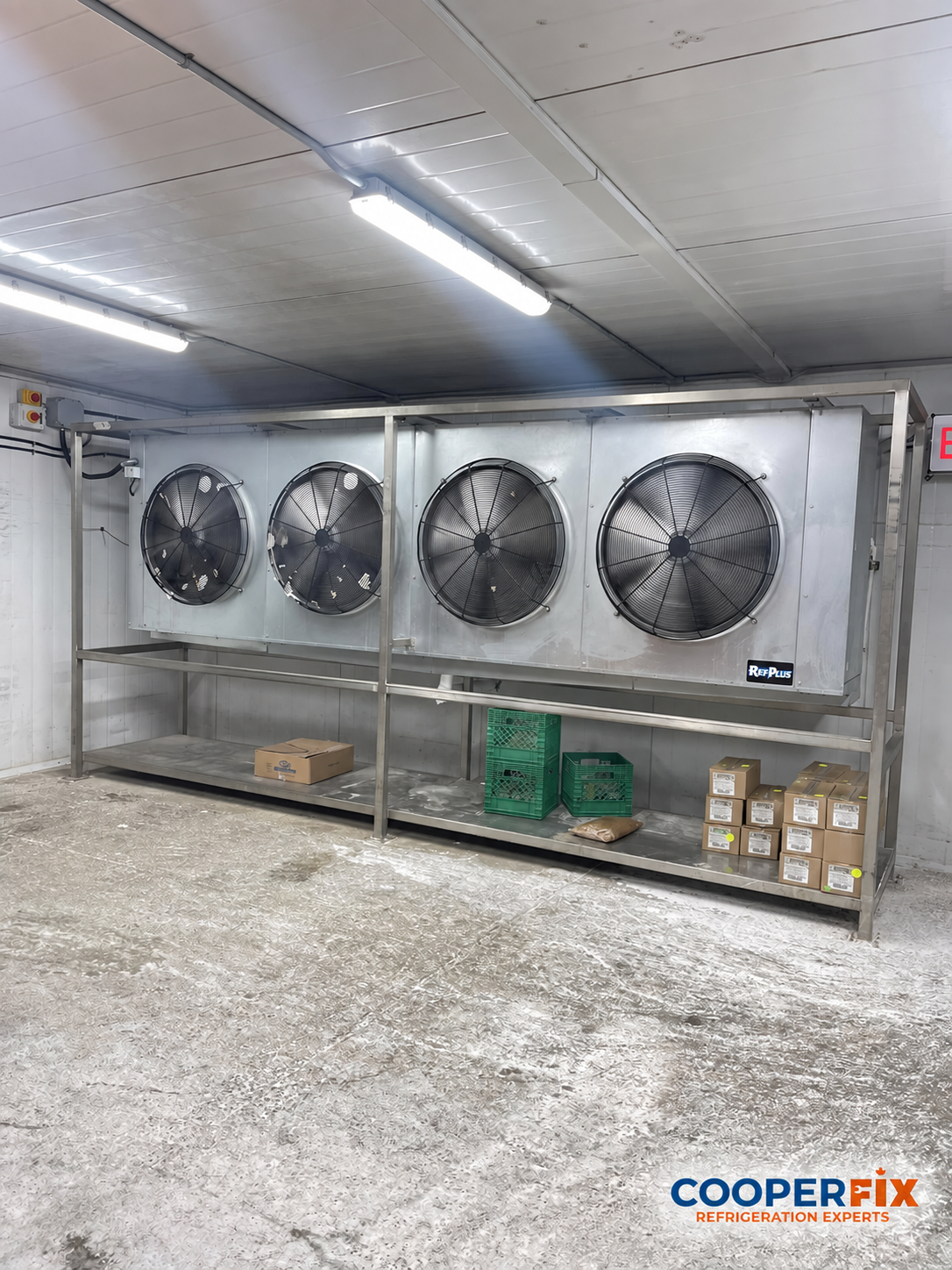
The service can involve remote condensing units, compressor groups, evaporators in several rooms, control panels, metering components and connected cases. A cold room may use multiple evaporators to serve one space. Low-temperature storage needs a defrost and fan sequence suited to its operating condition. An industrial unit bank may have local case controls but depend on shared refrigeration. The mechanic identifies what is present and which component actually serves the business area under discussion.
The equipment’s identification matters. Refrigerant designation, component specifications and control settings are taken from the actual system information rather than assumed from a familiar model. CooperFix checks readings in context: a pressure at the common source, for example, cannot alone explain product-level conditions in every room. A site service discussion should tie mechanical observations to each relevant space and to the operating state when the measurement was made.
Readings must be tied to the conditions observed
Industrial refrigeration performance changes with site load and outdoor conditions. CooperFix records measurements with the equipment and conditions present during the service visit. That context makes later comparison more useful than an isolated number in a report. When the mechanic observes a fault, the finding is connected to the relevant room, branch or shared equipment. The business can see what was actually assessed and what still requires a separate visit or repair.
Finding changes before they interrupt operations
On planned work, CooperFix can compare current operation with the equipment’s intended sequence and earlier available records. A fan drawing abnormal current, a control response that differs from its set command or a system that struggles under normal load deserves further assessment. A refrigeration circuit may still cool while a developing problem reduces margin. The mechanic determines whether that observation supports an adjustment, a specific repair recommendation or continued monitoring by the facility under its normal procedures.
This is professional service, not a task list for the customer. The manager can provide the site location, equipment list and business priorities; CooperFix performs technical measurements and explains the findings. A planned visit does not certify that every future operating condition will be normal. Its value lies in an evidence-based picture of the equipment at the time and clear recommendations tied to identified conditions.
When an industrial repair is part of service
An active fault may be found during a scheduled visit or may be the reason the business calls. CooperFix then narrows the problem to the affected circuit and component. On a multi-evaporator system, a local solenoid, expansion device, fan or defrost control can affect one area. On common equipment, compressor operation, electrical controls or heat rejection may affect several. The mechanic describes what failed, why the proposed work addresses it and which other site functions are connected to the repair.
If the correct part must be sourced, the business should hear what was established and what remains pending. If the condition of an older system raises a replacement question, the proposal should be based on its measured condition and the site’s requirements. CooperFix can distinguish a temporary operating observation from a completed repair. This keeps a broad industrial service engagement from blurring the exact status of a failed circuit.
Installation and commissioning on connected equipment
Industrial refrigeration installation is more than placing a component near a room. The replacement or new equipment must serve the intended load, interface with the existing refrigeration arrangement and operate with the applicable controls. CooperFix scopes the refrigeration components, piping, electrical and commissioning work as a project. A controller must be set for the equipment it governs. A new evaporator or condensing unit must be evaluated as part of the connected system. The exact design and parts depend on the project and are not established by a generic webpage description.
Commissioning includes checking that the installed refrigeration equipment responds as intended under the observable conditions, and recording relevant settings and readings. A visit at startup cannot prove every future seasonal or full-load condition; the business should understand what was tested and what the site will observe in operation. Installation is separately linked because it requires planning and agreement beyond an ordinary repair request.
Connected equipment needs an equipment-level record
A facility manager may oversee several evaporators, condensing units and controls serving different storage areas. CooperFix records which components were inspected and which findings belong to each one. This avoids treating a shared installation as one undifferentiated item. It also gives the business a practical reference when an issue later appears in one room while the remaining equipment continues to operate.