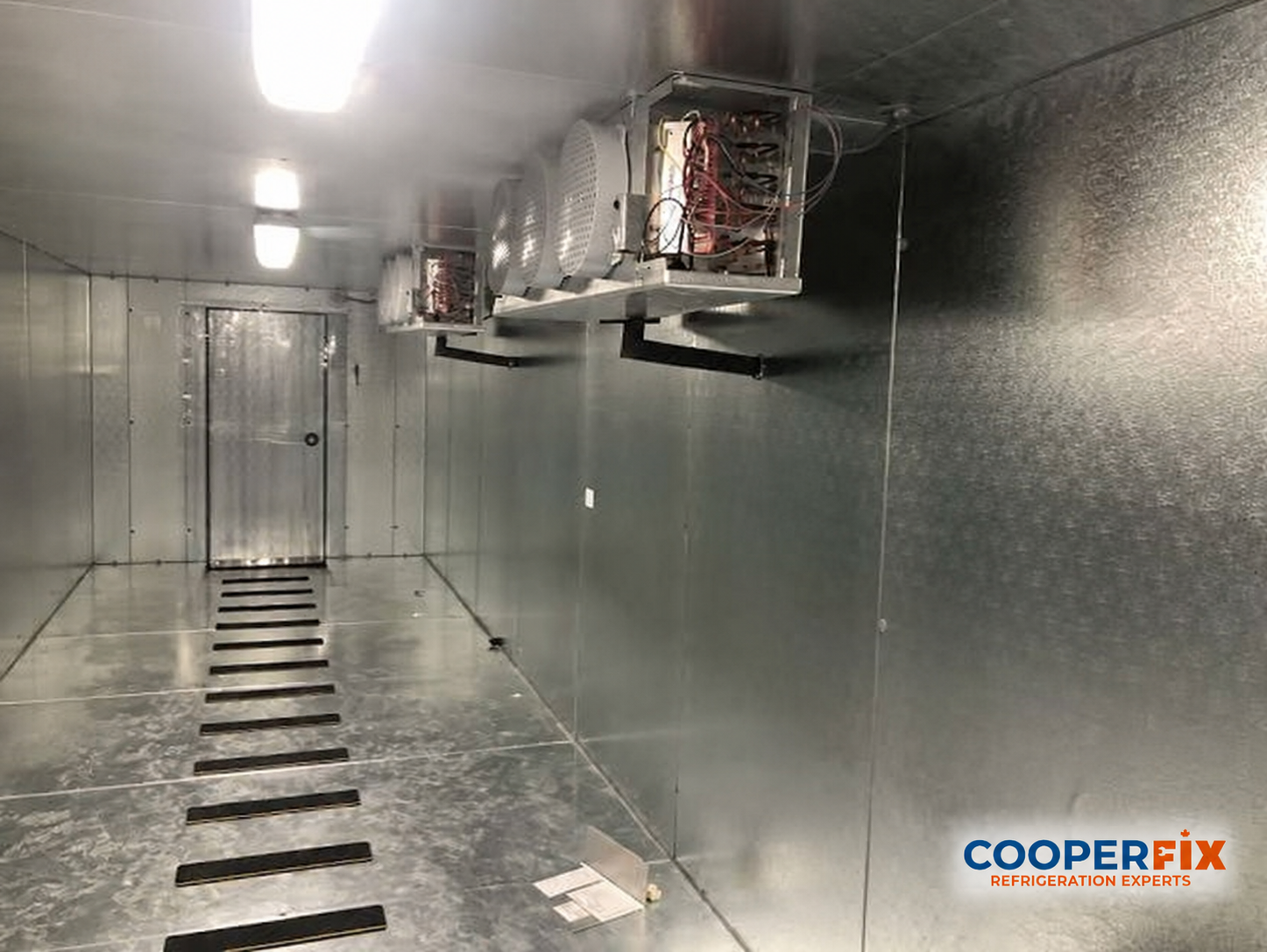
Identify each chilled-storage circuit in the visit record
An industrial cooler installation may serve more than one room or have several evaporators in one large zone. CooperFix identifies which components are included in the maintenance visit before measurements are interpreted. The record connects findings to the particular circuit, evaporator or shared condensing equipment assessed. This makes a later change in one storage area easier to compare with its own operating history rather than with a different part of the facility.
Condenser performance through changing loads
The condenser must reject heat collected from the chilled spaces. Its condition becomes especially important when several rooms call for cooling together. CooperFix assesses the unit’s operating temperatures and pressures where appropriate, fan response, electrical condition and the site conditions that affect heat rejection. An apparently normal room during a light load can hide reduced capacity that becomes visible during busy receiving or warmer ambient conditions.
The mechanic does not infer a refrigerant charge problem from one pressure reading. Condensing performance, airflow and control state are considered with the rest of the system. If a fan motor, contactor or protective component shows a developing issue, the report identifies the evidence and the equipment affected. The business can decide on a repair before the shared component interrupts several chilled spaces.
Evaporator fans and airflow by zone
An industrial cooler’s evaporators must move air through their coils and deliver cooling to the served zone. A fan can run slowly, intermittently or unevenly without stopping entirely. CooperFix assesses motor operation, electrical condition, coil response and temperature pattern across the relevant space. The mechanic compares branches when the installation permits, looking for a local issue that a common controller reading could miss.
The maintenance record separates equipment findings from business loading conditions. A crowded zone or a period of intense product movement may change airflow and temperature behaviour, but it does not prove a fan or refrigerant fault. CooperFix uses measurements under the observed conditions and states the limit of those observations. If a repair is needed, it is described as a specific motor, control or circuit scope, rather than a vague recommendation that the room needs “more cooling.”
Comparing the same evaporator on later visits gives the mechanic a better basis for interpreting a change. A temperature difference or electrical reading taken under one load should be compared with care against a reading from another operating condition. CooperFix records enough context to avoid treating an ordinary load change as a failed component. Where the trend is supported by several measurements, the report identifies the affected branch and the next professional test or repair that would resolve it.
Refrigerant feed and metering components
Each evaporator needs refrigerant feed suited to its load and control sequence. Expansion devices, solenoids and other fitted components can influence one branch while the shared plant continues to run. CooperFix evaluates the pressure and temperature relationships appropriate to the system, along with valve response and coil behaviour. Superheat and subcooling can be useful measurements when interpreted with the equipment design and current conditions; a single value is not a universal pass or fail.
A change in readings may point toward a restriction, control issue, low charge or condensing problem. Maintenance documents the evidence and determines whether further diagnosis is required. If a leak is confirmed, the correct next step is a defined refrigerant leak repair, including circuit checks and suitable charge afterward. A routine top-up cannot be reported as a complete repair to a leaking system.
Electrical components that carry the load
Industrial refrigeration motors and controls can cycle many times as the site’s load changes. Contactors, starters, protective devices, wiring and motor currents are assessed within the agreed maintenance scope. CooperFix looks for evidence of wear or an intermittent condition and relates it to the actual system behaviour. A component that has not yet stopped may still show measurements that justify a targeted repair discussion.
The mechanic distinguishes a control command from a device that fails to respond. A controller may call for cooling while a solenoid or fan remains off; an electrical interruption may stop several components at once. Recording that distinction helps the business authorize the right work. If an electrical condition cannot be fully reproduced during the visit, the report says what was and was not confirmed.
Controls deserve a sequence-level review
A controller reading alone does not describe how the cooler starts, stops or responds across its zones. CooperFix reviews the applicable control sequence and the equipment it operates during a maintenance visit. The mechanic records an observed mismatch or abnormal response if one appears. This connects a control finding to a specific unit and keeps a future repair request grounded in the installed system rather than in a code or display value taken out of context.
Probes, controllers and operating history
The controller’s displayed value reflects its sensor, which may not represent every part of a large chilled room. CooperFix compares indicated and independent measurements where a discrepancy matters. The mechanic assesses whether probes, control settings and outputs produce the intended cooling sequence. Controller history and alarms can provide context, but they are interpreted with current equipment checks rather than passed to the operator as a self-diagnosis exercise.
If programming has changed since the previous visit, CooperFix records the current setting and its effect. A setting that works for one cooler may be wrong for a different evaporator or load. Any adjustment made during maintenance is tied to the installed equipment and documented. A failed controller or probe that needs replacement becomes a defined repair or controller installation decision.
Seasonal comparisons need the weather and load context
Outdoor conditions and incoming product loads can change the demands on an industrial cooler. CooperFix records the conditions under which a maintenance reading was obtained and compares it with prior visits only where that comparison is meaningful. A summer visit and a quiet winter visit may not show the same response. The resulting history helps the business recognize a developing performance change without promising an identical result in every season.