Medium-temperature and low-temperature systems need different assessment
A system intended for refrigerated storage and one intended for frozen storage should not be assessed against the same operating assumptions. Manufacturers offer condensing-unit models and configurations for medium-temperature or low-temperature duty. The model selection, approved refrigerant and intended application determine the technical information relevant to the repair.
Tell CooperFix what the system is expected to maintain and whether its use has changed since its last satisfactory operation. If the business inherited the equipment, provide whatever commissioning or service records are available. A setting currently shown on a display does not, by itself, establish what the equipment was designed to do.
The assessment should retain this distinction when reviewing replacement components and control configuration. A part that fits physically is not sufficient evidence that it suits the system’s duty. Compatibility needs to be considered before a replacement is presented as the solution.
Fans are running, but the walk-in is getting warmer
Separate power and control arrangements can produce an apparently contradictory symptom. On documented QRC systems, the evaporator and condensing unit have separate main supplies. Seeing an active display or hearing circulation therefore does not prove that the compressor-side equipment is powered and responding correctly.
A qualified technician needs to establish the cooling demand, the state of the control circuit and the response at the condensing unit. The useful question is where the expected sequence stops. That approach distinguishes a missing command from an electrical fault in equipment that has received the command.
Describe which sounds or displays changed and whether the loss of cooling began suddenly. If staff noticed the fans continuing after another part stopped, keep that observation in the fault report. There is no need to decide in advance whether the problem belongs to the controller, compressor or a connection between them.
Compressor cycling, shutdowns and pumpdown
A compressor stopping is not automatically a malfunction. Some systems close the refrigerant valve and complete a pumpdown before entering their off cycle. Documented controls also use minimum run and off periods. These sequences need to be distinguished from a shutdown while cooling is still required.
For a recurring start-stop complaint, record the interval and whether the storage temperature is being maintained. Mention any alarm, protective trip or recent power interruption. The operating state during the event can be more informative than the fact that the compressor restarted later.
Ask the technician to explain whether the observed stop was commanded by normal control, caused by protection or associated with a failed component. Repeated resets should not substitute for that distinction. A repair recommendation is easier to assess when it identifies the cause of the interruption and the conditions under which operation was checked.
Poor heat rejection at the condensing unit
The refrigeration circuit depends on the condensing equipment releasing heat. Manufacturer troubleshooting associates high discharge pressure with several possible conditions, including a stopped condenser fan and restricted heat transfer at the condenser coil. Those possibilities must be checked in context alongside the refrigerant circuit and its controls.
For the business, the visible result may be interrupted cooling or a temperature that rises during certain operating periods. Provide the time of day and whether the pattern changes with outdoor conditions when the condensing unit is outdoors. Avoid attributing the problem to weather alone simply because both occurred together.
The proposed correction should identify the equipment condition that was found. If condenser performance is satisfactory during the visit, the report should preserve the unobserved part of the complaint. An intermittent problem should not become a confirmed diagnosis merely because one possible explanation sounds plausible.
Refrigerant delivery and expansion-control faults
The expansion device controls refrigerant entering the evaporator. A system can underperform when that delivery is unsuitable, but the valve itself is only one part of the assessment. Heatcraft’s technical guidance describes recurring restrictions associated with moisture in a refrigeration system, illustrating why replacing an expansion valve without establishing the cause can leave the problem unresolved.
Other electronic systems combine expansion control with temperature and defrost functions. The controller evaluates operating information and adjusts the valve accordingly. A control-input problem can therefore affect refrigerant delivery even when the valve has no obvious external defect.
Diagnosis belongs with qualified refrigeration personnel using the documentation for the installed components. The business-facing explanation should state whether the finding concerns the valve, its input information, a restriction or another verified circuit condition. These descriptions are more useful for authorizing work than an unsupported statement that the system simply needs refrigerant.
Readings must agree with the actual equipment condition
A controller’s displayed pressure or temperature is information to verify, not an automatic description of every part of the system. Heatcraft’s Mohave diagnostic guidance compares sensor readings with independent measurements and checks sensor connections and location. Where a reading is unreliable, the resulting control response may also need investigation.
Retain the exact display message and identify the controller that produced it. A remote notification, an alarm relay and a local display may present different levels of detail. For example, a general alarm output can signal a problem without identifying its cause; the local operating information is still needed.
If monitoring records are available, include the period before the alarm as well as the alarm itself. The earlier trend may show whether the event followed a gradual loss of performance or appeared abruptly. Keep observations separate from any diagnosis suggested in a previous conversation.
Multiple evaporators and control coordination
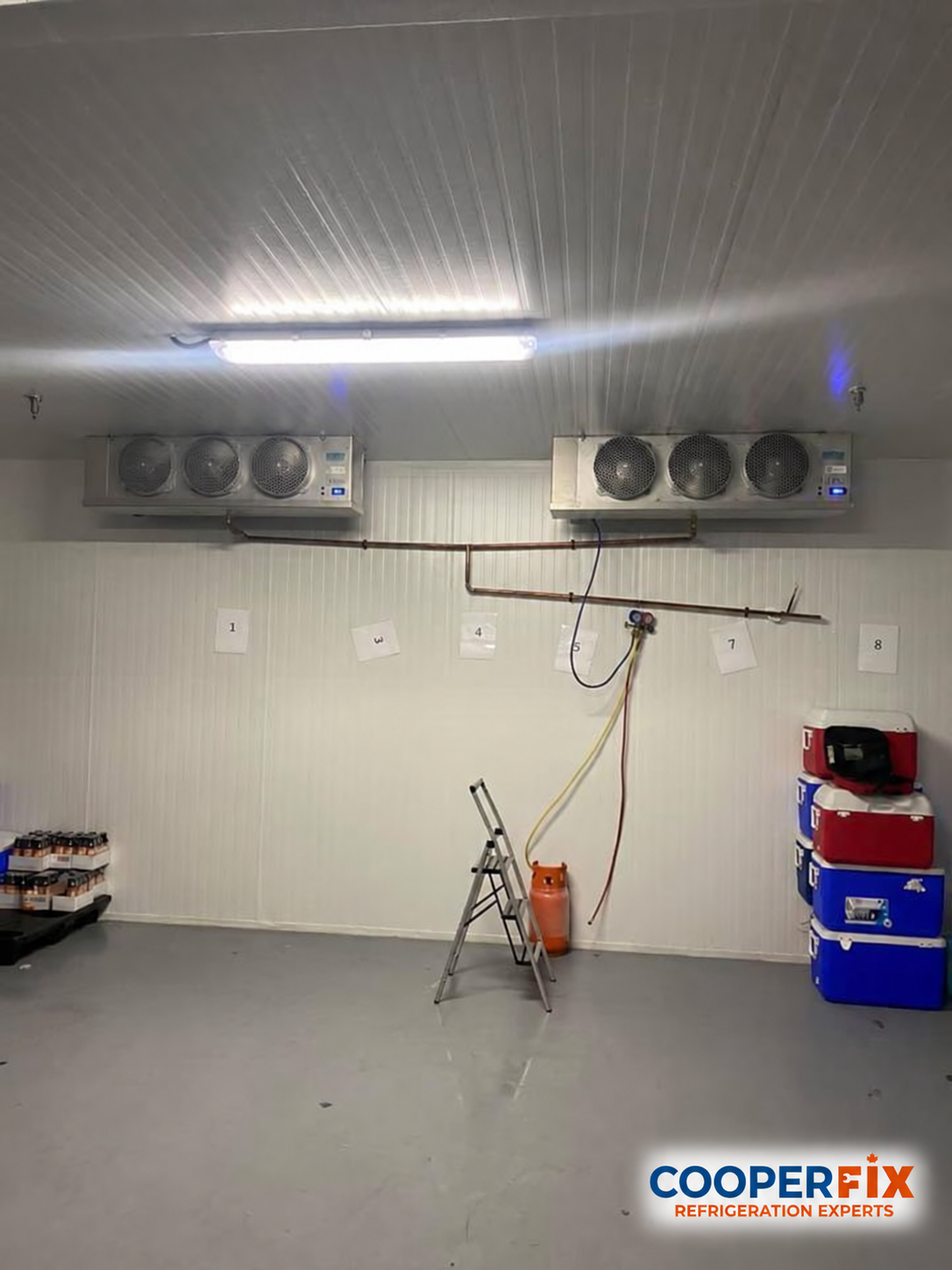
Where several evaporators share a system, their individual condition and their coordination both matter. Heatcraft’s intelliGen architecture supports connected evaporators under a common system arrangement. A local fault report should identify which unit is affected instead of describing every evaporator as one interchangeable assembly.
Electronic configurations may assign different control roles to the connected units. Following a controller replacement or other service work, the technician needs to consider the documented configuration as well as the replacement hardware. The fact that each display illuminates does not establish that the connected equipment is operating together correctly.
Tell us whether all affected units changed at once, whether one area remains warmer and what work preceded the change. That information helps separate a shared-system concern from an individual evaporator problem. It also supports a repair scope that identifies the equipment actually requiring attention.