Equipment configuration matters
Top, bottom, and rear-mounted systems require model-aware service planning.

Atosa commercial refrigeration service
Atosa refrigeration appears in several operating positions: above or below a reach-in cabinet, behind a preparation table, beneath a working counter, or at the base of a glass-door merchandiser. CooperFix identifies the installed configuration, evaluates the affected refrigeration system, and explains the work supported by professional findings.
Service is available for confirmed Atosa reach-in refrigerators and freezers, refrigerated preparation tables, glass-door merchandisers, and undercounter or worktop units. The page connects each request to the equipment’s operating role without asking the business to identify a failed component.

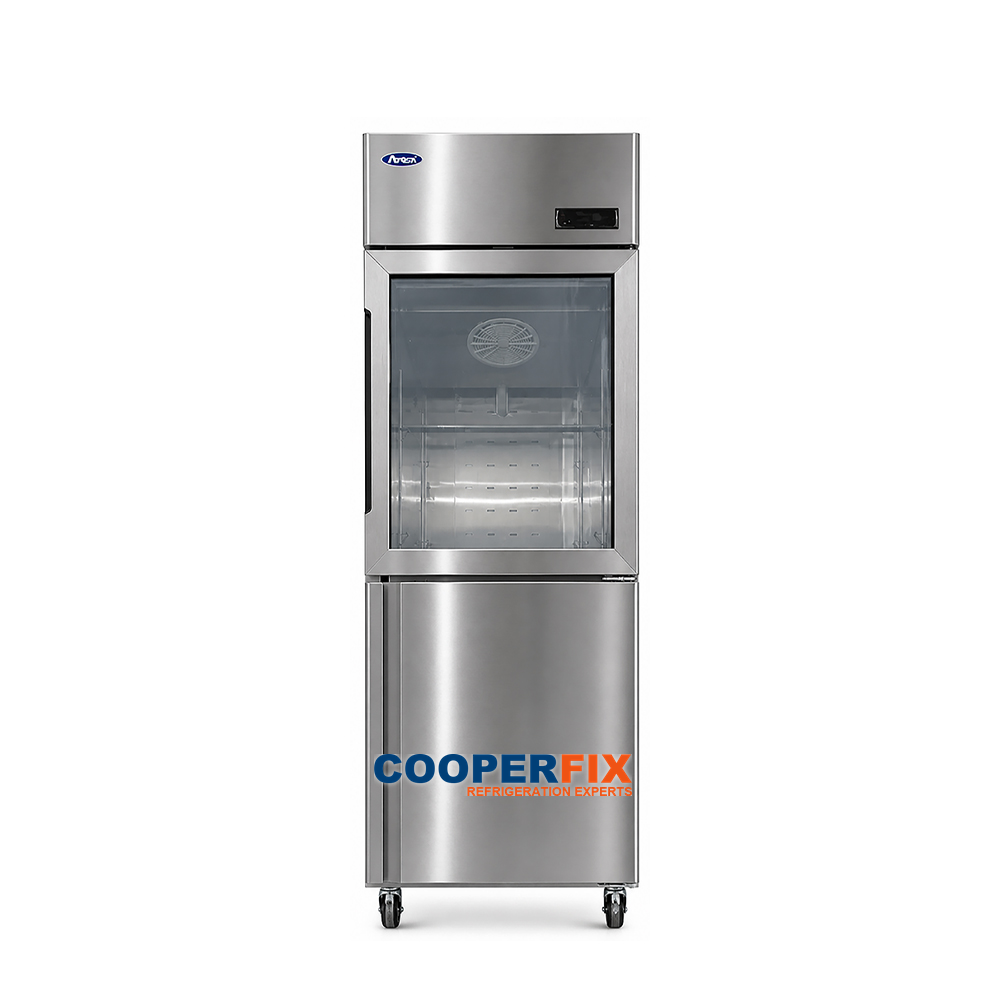
Top, bottom, and rear-mounted systems require model-aware service planning.
Storage, preparation, display, and point-of-use roles stay distinct.
Professional cause-finding determines the applicable work.
Start an Atosa service request
Open the request with a contact name, telephone number, email address, and a plain-language note about the Atosa cabinet. CooperFix then organizes the visit around the cabinet type and its operating role, whether it is a reach-in, preparation table, merchandiser, or compact undercounter unit.
A model number can be included when it is already available. CooperFix handles equipment identification, technical measurements, component testing, cause-finding, and repair planning. No panel removal or customer-created diagnostic report is required to start.
Start with contact details and a brief description of the affected cabinet. Technical assessment remains CooperFix’s work.
Refrigeration by operating role
Atosa’s current manufacturer catalog separates reach-ins, refrigerated preparation tables, glass-door merchandisers, and undercounter or worktop refrigeration. CooperFix follows that distinction because cabinet layout, airflow path, system location, access, and business use affect how professional service is planned.
Atosa lists both top-mount and bottom-mount reach-in refrigerators and freezers. The current range includes full-door, divided-door, solid-door, glass-door, and dual-temperature configurations. The MCF8607G1, is identified by Atosa as a top-mounted reach-in freezer with one glass section and one solid section.
CooperFix evaluates the configuration actually installed, not a generic upright-cabinet profile. Depending on the verified condition, the assessment can cover temperature control, air movement across the evaporator, fan behaviour, model-relevant defrost functions, condenser-side heat removal, and circuit performance. The relationship between upper and lower cabinet sections is included where the model uses divided storage arrangements.
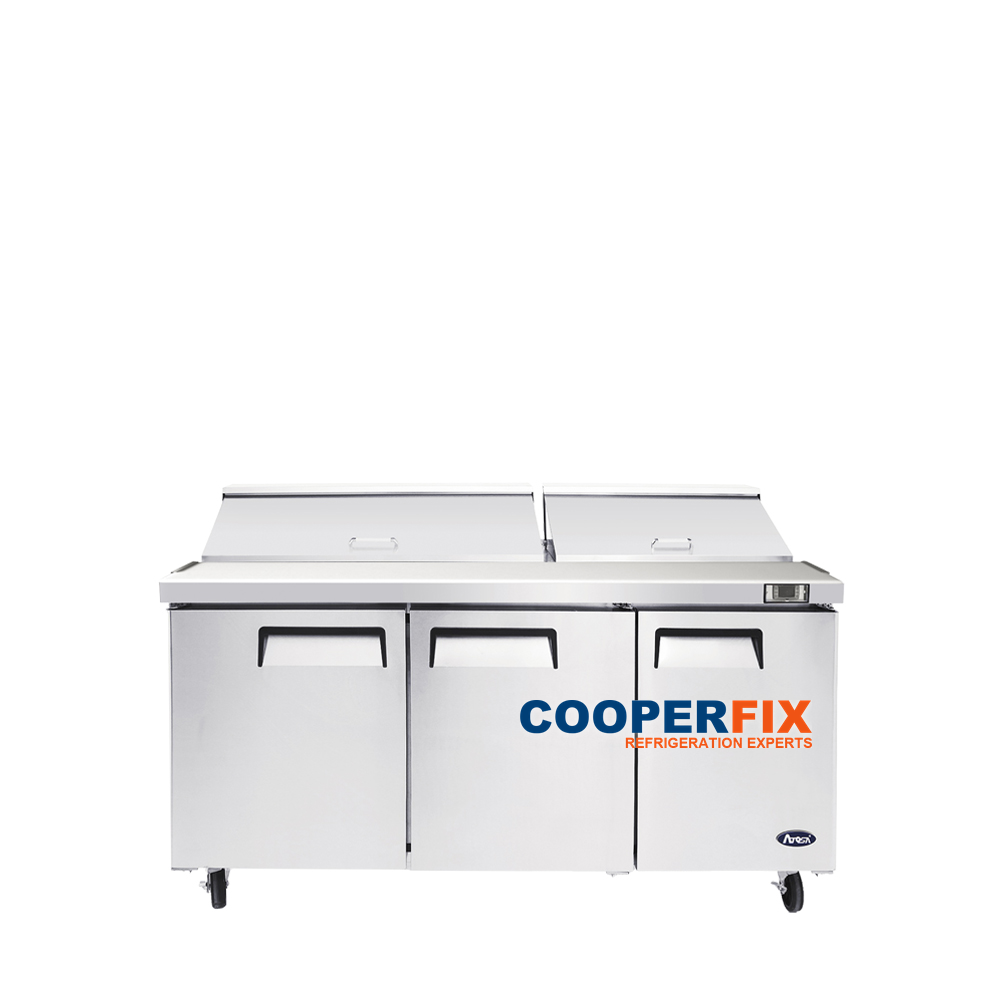
Atosa’s refrigerated preparation-table range includes standard-top and mega-top sandwich tables as well as pizza preparation tables. The MSF8308GR is a manufacturer-confirmed 72-inch mega-top sandwich preparation table with refrigerated pan airflow and a lower cabinet.
That combination makes the upper ingredient zone and refrigerated base separate parts of the same operating system. CooperFix evaluates the section affected, how cooling is distributed, control response, fan performance, and overall refrigeration operation. A visible change in one zone does not automatically establish that the other zone has the same condition.
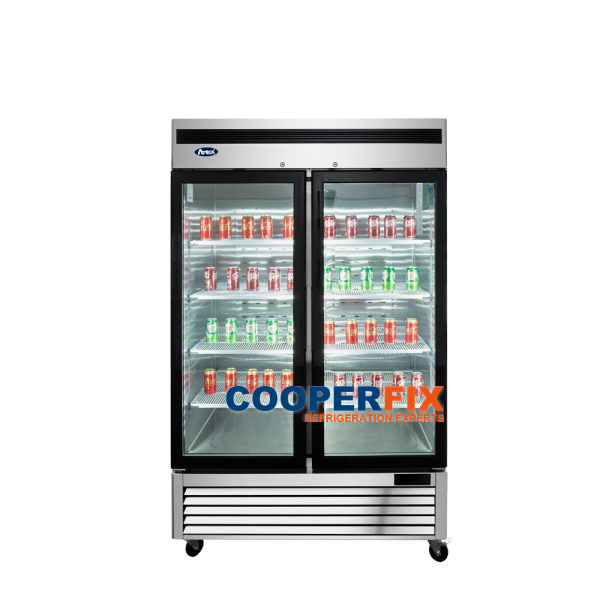
Atosa lists glass-door merchandiser coolers and freezers in stainless and black cabinet configurations. The MCF8707GR is identified by the manufacturer as a two-glass-door merchandiser cooler with bottom-mounted refrigeration.
Merchandisers combine product visibility with frequent access and a larger display surface. CooperFix assesses the cabinet’s refrigeration performance, airflow distribution, control operation, fan behaviour, and recovery as a connected commercial system. The repair recommendation follows verified equipment condition rather than an assumption based on the display reading alone.
Atosa’s catalog includes undercounter and worktop refrigerators and freezers in door and drawer configurations. The AUR48SD is a current 48-inch, two-door undercounter refrigerator. Compact units support point-of-use storage while fitting into a more constrained installation than a full-height reach-in.
CooperFix considers the model, installed position, service access, airflow, compartment performance, controls, and refrigeration system. The service scope stays connected to that compact unit even when larger Atosa equipment operates elsewhere in the same business.
What professional service addresses
CooperFix assesses the complete upright cabinet, compares affected sections where applicable, and evaluates the refrigeration functions relevant to the model before recommending corrective work.
A divided-door or dual-section arrangement requires section-specific cause-finding. The technician relates airflow, controls, applicable defrost operation, and refrigeration performance to the area affected.
The upper zone and lower cabinet are evaluated as related but distinct operating areas. CooperFix determines how the verified condition connects to airflow distribution and refrigeration operation.
A glass-door display cabinet can experience changes in recovery, airflow, fan operation, controls, or refrigeration performance. Professional findings determine which service area requires attention.
Compact refrigeration may affect the workflow around a small but frequently used storage point. CooperFix evaluates the installed unit and defines work specific to its condition.
Operational changes do not identify one failed part by themselves. The technician tests the applicable systems and connects the repair recommendation to confirmed findings.
One brand, several operating roles
Atosa reach-ins support larger storage capacity; preparation tables connect refrigeration to production workflow; merchandisers combine storage with visible presentation; undercounter and worktop units put cold storage close to active work. CooperFix organizes service around those distinct roles.
When several Atosa cabinets operate at one location, each unit receives its own equipment identity, reported condition, findings, and recommended scope. This helps the business distinguish an urgent loss of performance from planned maintenance and prevents one cabinet’s condition from being generalized across the entire equipment group.
The result is a clearer service record: the equipment assessed, the condition found, the approved work performed, and any separate recommendation remain tied to the correct unit.
Clear records for equipment groups
Businesses often operate more than one reach-in, preparation table, or compact cabinet. Similar appearance does not mean the units share the same configuration, age, duty, or technical condition. CooperFix keeps the model information, service concern, findings, parts decision, and completed work connected to each individual unit.
This approach supports clearer repair approval and future maintenance planning. It also allows an immediate service need to be addressed without turning every cabinet at the location into the same assumed problem. When work is staged, each completed or pending scope remains identifiable.
From cabinet identity to repair recommendation
CooperFix connects the request to the Atosa cabinet type, operating role, and affected section. If several units are involved, they are separated at the beginning rather than combined into one general complaint.
The technician identifies the model and system position, then plans assessment around the installed arrangement. Top-mounted, bottom-mounted, rear-mounted, and compact configurations have different access and operating relationships.
Applicable controls, airflow, fan operation, defrost operation, heat rejection, electrical operation, and refrigeration-circuit performance are evaluated. Technical measurements and testing remain technician work.
CooperFix explains the condition found and the repair supported by that evidence. After approved work, the technician reviews operation within the service scope and records the work against the correct Atosa unit.
Professional refrigeration work
Depending on the verified condition, CooperFix may address controls, electrical operation, evaporator airflow, fans, applicable defrost operation, heat rejection, condensate conditions, or refrigeration-circuit performance. The presence of these systems in an assessment does not mean every area requires repair.
Maintenance can include professional inspection and service of accessible heat-transfer areas, together with an operating review and records tied to the individual cabinet. A confirmed fault is separated from broader maintenance observations. This gives the business a clear corrective work scope and a distinct basis for any planned equipment care.
Equipment-specific business decisions
Atosa equipment can place refrigeration above, below, behind, or beneath the working cabinet. That configuration affects access and assessment, but it does not determine the repair by itself. CooperFix first establishes the condition that is affecting performance and defines the corrective work supported by professional measurements and inspection.
Any broader maintenance observation remains separate from the immediate fault. This distinction allows the business to approve work for the affected cabinet without treating every inspected component as a repair requirement. It also preserves a clear record when several Atosa units are included in one service request.
For a preparation table, the record identifies whether the confirmed condition involves the upper ingredient area, refrigerated base, or a shared part of the refrigeration operation. For a divided reach-in, merchandiser, undercounter, or worktop unit, the findings remain connected to the configuration and operating section assessed. Completed work, pending recommendations, and later equipment-care decisions are not blended into one unsupported scope.
The same separation remains important after approved corrective work. CooperFix reviews the operation that relates to the confirmed fault and records what was observed during that service visit. A preparation table may require a review of recovery in the section that was affected, while a merchandiser or reach-in may require confirmation across the cabinet arrangement involved in the complaint. The applicable review follows the installed Atosa unit; it is not a generic promise about every future load or operating condition.
This equipment-specific record also improves later service decisions. If the same unit returns with a different performance change, the technician can distinguish the earlier confirmed work from the new complaint. When several Atosa cabinets are included in one request, the business can see which unit received corrective work, which unit received maintenance attention, and which recommendation remains pending. Clear separation supports approval and planning without turning similar-looking equipment into one assumed technical history.
Configuration-specific assessment
Atosa equipment places refrigeration systems in different positions across its current product range. Reach-ins may use top-mounted or bottom-mounted arrangements; the MSF8308GR preparation-table model uses rear-mounted refrigeration; and the MCF8707GR merchandiser uses a bottom-mounted system. These layouts change access, airflow, heat-rejection conditions, and the way operating sections relate to one another.
CooperFix identifies the installed model and system position before defining the assessment path. A top-mounted reach-in freezer is not approached as though it were a rear-mounted preparation table. A bottom-mounted merchandiser is evaluated in relation to its display cabinet and airflow pattern. This configuration-first approach keeps technical work relevant to the actual Atosa unit and prevents a model name from becoming a substitute for diagnosis.
For each Atosa cabinet, record the model, refrigeration position, affected section, reported change, measured findings, approved work, and completion details so later decisions remain attached to the correct equipment.
Atosa service FAQ
CooperFix services confirmed Atosa reach-in refrigerators and freezers, refrigerated preparation tables, glass-door merchandisers, and undercounter or worktop refrigeration. Service is matched to the model, cabinet configuration, refrigeration-system position, and operating section affected.
System position affects access, airflow, heat rejection, and the relationship between refrigeration components and the cabinet. CooperFix identifies the actual arrangement before testing and repair planning. The position helps define the service approach; it does not establish the failed component by itself.
Yes. The upper ingredient area and lower refrigerated cabinet are assessed as distinct zones within one piece of equipment. CooperFix evaluates the condition in context and determines how airflow, controls, fan operation, and refrigeration performance relate to the affected area.
Commercial Atosa glass-door merchandisers are within the confirmed page scope. CooperFix connects the assessment to the specific cooler or freezer model, its refrigeration configuration, and the operating condition found. Visible display features do not replace professional cause-finding.
Yes. Several units can be listed in one request, while their identities and service histories remain separate. CooperFix records findings and recommended work by cabinet so a condition confirmed on one unit is not automatically applied to another.
Ordinary contact details and a short description of the affected unit are enough to begin. An available model number can be included. Customers are not expected to remove panels, take technical measurements, test components, interpret controls, or determine the cause before requesting service.
Request Atosa refrigeration service
Share contact information and a short description of the affected Atosa unit. CooperFix will connect the request to the correct equipment group and organize the professional assessment.
The request does not predetermine a failed component, parts requirement, schedule, or repair outcome. The installed configuration and confirmed findings guide the recommendation.
Identify the affected cabinet in ordinary terms. CooperFix handles the technical assessment and repair recommendation.
A service path tied to the equipment
CooperFix identifies the configuration, assesses the condition, and explains the work supported by the findings.