
Commercial freezer repair in Aurora
A commercial freezer that is losing temperature, repeatedly stopping or showing an alarm needs an assessment of the installed equipment. CooperFix provides commercial freezer repair in Aurora, covering refrigeration systems used for commercial frozen storage. The technician connects the reported change with measured operating conditions before recommending work.
This service page concerns commercial freezer equipment rather than the refrigeration system of a walk-in room. Give the unit’s location and describe what staff have noticed. A useful request does not depend on naming a failed component or deciding in advance whether the problem is electrical, control-related or within the refrigeration circuit.

Report the affected commercial freezer clearly
Give CooperFix the Aurora service address, affected equipment, observed change and contact who can provide access.
- Directions to the evaporator, condensing equipment, defrost controls and electrical disconnect and the authorized access contact
- Setpoint, compartment temperature, alarm, frost pattern, water and run time, with the time observed
- Equipment label, make and model when safely visible
Request commercial freezer service in Aurora
The business is not expected to perform technical tests. Include a phone number and email address for service coordination.
Identify the freezer before planning the work
Give CooperFix the Aurora service address, a contact number and the location of the affected freezer. An equipment label or model number is helpful when it can be read safely. If it cannot, a clear description of the unit and its position lets the request begin without asking staff to move equipment or remove covers.
An Aurora freezer request should distinguish the first alarm or frost observation from the condition staff see now. The steps below help preserve that history and arrange an assessment of the installed unit.
Explain the actual complaint
Describe a temperature change, alarm, unusual running pattern or visible condition and when it began. Say whether the freezer still operates and whether another unit is affected. Keep observations separate from a suggested part name so the technician receives the history rather than a presumed diagnosis.
Arrange access to the installation
Identify who can admit the technician and authorize access to connected refrigeration equipment. Explain restrictions around the freezer and any remote components. The site contact can coordinate the visit without asking staff to carry out tests or open service compartments beforehand.
Review the confirmed finding
CooperFix explains what the assessment established and the proposed work. Ask which work has been completed and whether another component, investigation or appointment is still required. Keep that information with the freezer’s identity so subsequent contact refers to the right unit.
Commercial freezer arrangements and service access
Freezer equipment varies in its layout and how the refrigeration components are reached. The installed model, application and connections determine the relevant work. Describe the actual arrangement at the property rather than choosing a service category from one unusually high or low reading.
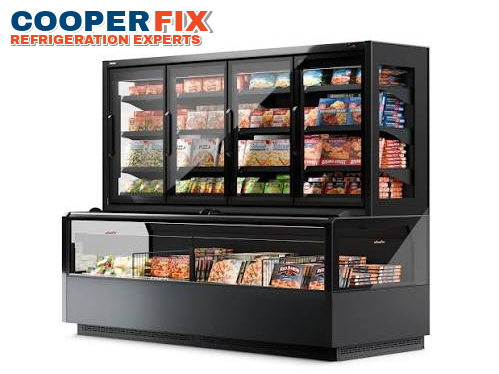
Large commercial freezer cabinets
A freezer cabinet can present different conditions across its storage area. Tell CooperFix whether the complaint concerns the whole unit or a particular section. Record where a temperature change was observed and whether the controller showed a corresponding change, without treating either reading as a complete diagnosis.
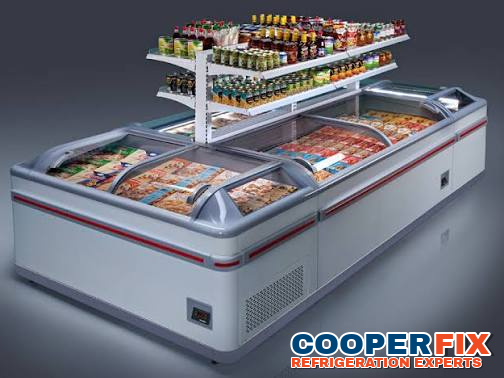
Freezers with integral refrigeration equipment
Where the refrigeration equipment is part of the freezer assembly, the technician needs suitable access to its service areas. Explain the unit’s position and any practical restriction. Staff should leave fixed equipment in place and avoid opening compartments to locate a component before the visit.
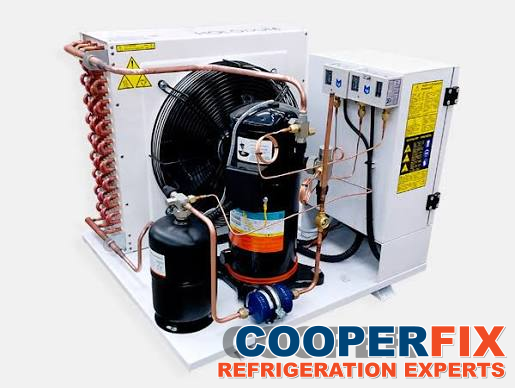
Freezers connected to remote equipment
Some installations require access beyond the freezer cabinet to connected refrigeration equipment. Identify a remote unit when known and explain how authorized entry is arranged. CooperFix confirms the connection before assuming that a particular condensing unit serves the freezer reported in the request.
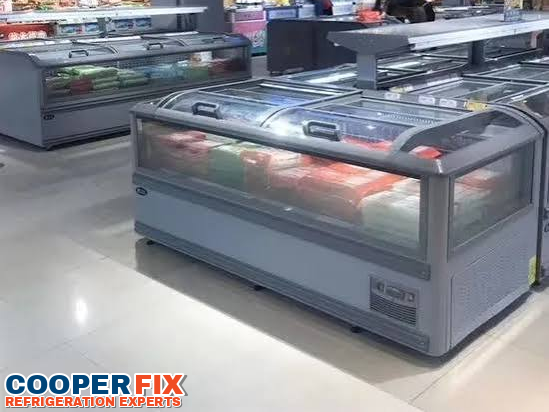
Several freezers at one address
Give each freezer its own label or location description. Similar-looking units can have different models, service histories and current symptoms. A grouped visit still needs a separate account of what has changed on each unit and which interruption is most significant to the business.
CooperFix at work: assess the freezer in its normal application
An Aurora commercial freezer assessment begins with the unit’s intended frozen-storage role and the operating change that prompted the request. The technician reviews accessible equipment information and the available history, then selects checks suited to the installation. A previous part replacement is relevant background, not a conclusion about the current fault.
Temperature behaviour, airflow, fan operation, controls, defrost and refrigeration conditions can provide related pieces of evidence. CooperFix considers them together where relevant. The explanation of proposed work should make clear which condition has been established and whether anything further needs to be investigated before selecting a component.
Retain an existing alarm message, temperature record or service report if available. Explain when the freezer was last observed operating normally and whether it was adjusted or reset afterward. Staff do not need to remove a cover, attach an instrument or reach behind the unit to prepare for service.
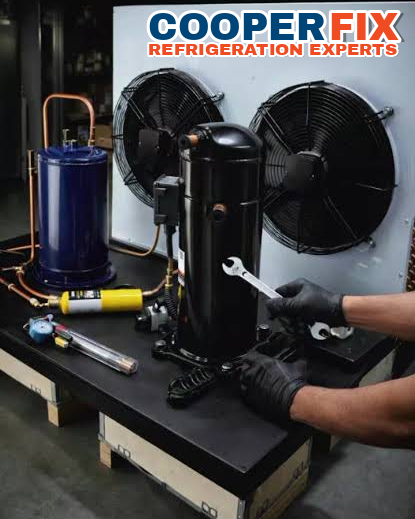
Make useful observations available without testing the equipment
State the building, suite, equipment label and route to any remote components. Point out known controls, disconnects and remote components without opening protected equipment.
Commercial freezer repair and longer-term service needs
CooperFix separates the immediate fault from other findings and planned work. A repair addresses a confirmed condition; maintenance, component replacement and complete equipment replacement may involve different requirements. The business should understand the scope before further work proceeds.
Repair a confirmed component or system fault
The proposed repair follows the technician’s findings and the installed equipment information. Relevant work can involve controls, sensors, fans, defrost components, electrical components or the refrigeration circuit. After the work, the record should identify what was addressed and the operating condition checked, not simply list a part without its context.
Review condition through planned maintenance
Report gradual changes as well as complete interruptions. A freezer that runs differently or develops recurring frost may still be in use when maintenance is requested. CooperFix considers those observations and the service history, identifying any current fault that requires a separate repair scope.
Plan replacement around the required application
Replacement planning considers what the freezer must do, its confirmed condition and the information available about its components. Explain any intended change in storage needs. Replacing one component and replacing the complete unit are different proposals, with different access and installation considerations to establish before work begins.
Check the refrigeration installation after work
Installation or refrigeration-system replacement is followed by checks appropriate to the equipment and intended use. CooperFix explains what has been put into service and whether further observation or work remains. The site contact should retain the handover information with the correct freezer’s records.
Identify which reading changed and where it was taken
Identify which reading changed and where it was taken
When reporting a temperature concern, distinguish the freezer’s displayed value from readings recorded by another device. Give the time and location associated with each observation. If staff normally log temperatures, retain the sequence rather than replacing it with a single reading taken just before the service call.
Identify which reading changed and where it was taken: operating context
The technician compares the account with the freezer’s sensor arrangement and current operation. A controller may appear unchanged while the reported condition concerns another part of the storage space. Describing that difference accurately helps the assessment without asking the business to identify the faulty component.
Describe how the freezer behaves after normal loading
Tell CooperFix whether the change follows loading, persists during quieter periods or occurs without an obvious change in use. Include any recent change in the type or amount of stock being handled. This provides operating context, but it does not establish that loading caused the problem.
Describe how the freezer behaves after normal loading: operating context
A freezer that no longer behaves as it did under familiar conditions needs that change explained clearly. The technician considers the intended application, controls, airflow and refrigeration operation. Do not repeatedly adjust the setting to compensate without recording what was changed and the effect staff observed.
Record the location and recurrence of frost
Visible frost can prompt a freezer service request while the cabinet is still operating. State where it is concentrated, when it was first noticed and whether it has returned. Include any accompanying temperature, fan-sound or running change. A photograph taken from normal safe access can preserve the observation. Identify whether the same location was affected on an earlier occasion or whether this pattern is new.
Do not remove guards or break frost away from machinery to expose a component. CooperFix assesses the relevant defrost, fan, control and refrigeration functions for the installed freezer. If the condition changes before attendance, add the update and its time instead of discarding the earlier account.
Keep frozen-stock decisions with the responsible business contact
Explain whether the affected Aurora freezer carries current stock, reserve inventory or material needed for a particular operation. Identify another suitable frozen-storage arrangement only if one is actually available. Keep the business monitoring record with the alarm or temperature change that prompted the call, including the source and time of each observation.
The responsible site person follows the business product-handling procedures while CooperFix examines the freezer. A cleared alarm or a temporarily improved reading is not a decision about stored goods and does not establish the technical cause. Report any reset and what happened afterward. The technician provides equipment findings; the business decides how to handle its stock under its own procedures.
Identify the freezer, stock effect and access contact
Give the Aurora address, freezer location and the person who can admit the technician. Explain whether the affected unit carries normal frozen stock or serves as reserve capacity, and whether another suitable storage arrangement exists. These facts describe the interruption without assigning a technical cause. Include the equipment label if it is visible without moving stock or opening a protected area.
Follow the business’s own product-handling and temperature-monitoring procedures while service is arranged. Describe any restriction on reaching the cabinet or connected equipment and keep protected assemblies closed. CooperFix assesses the installed freezer; the business’s product decisions remain separate from the technician’s equipment findings. If access depends on another contact, provide that person’s role during booking.
Use earlier work as history, not a repeat diagnosis
If this freezer has been serviced before, retain the earlier date, finding and completed work with its equipment reference. Record how it operated afterward and when the present change appeared. Distinguish a continuing condition from a concern that arose after normal operation. Include any alarm or reading that was recorded before the earlier visit only as dated history.
The current assessment should be based on the freezer’s present condition. A prior part replacement is background, not proof that the same part now needs work. Keep outstanding items and any later observations in the record so the next contact can see what was completed and what remains unresolved.
Commercial freezer service information for Aurora
These answers explain what to include in a commercial freezer request and how the technician establishes the work required. They do not replace an assessment of the actual installation.
Does this service cover commercial freezer cabinets in Aurora?
Yes. Describe the commercial freezer, its location and the operating change. CooperFix assesses the installed refrigeration equipment and explains the work supported by the findings. Use the separate walk-in freezer page when the affected equipment serves a walk-in room.
What should I do if the display and another reading differ?
Record each reading with its source, time and location, and include the difference in the service request. The technician compares the observations with the freezer’s sensor arrangement and operating condition. Neither reading alone establishes which component requires work.
Can I request service when the freezer is still running?
Yes. Explain the change that concerns you, including a temperature trend, recurring alarm or unusual operating pattern. Equipment does not need to stop completely before an assessment is requested. Report how the current behaviour differs from normal use.
Should I remove frost before the technician arrives?
Do not disturb the equipment or remove guards to investigate. Describe the frost’s location and development, and retain a photograph taken safely if available. CooperFix determines the checks required for the installed freezer and its defrost arrangement.
What if the alarm clears after a reset?
Tell CooperFix the original message, when it appeared and what happened after the reset. Keep any existing record. The current operating condition and earlier interruption both matter; clearing the message does not establish why it occurred.
Can several freezer units be included in one service request?
Yes. Give each unit its own location or equipment reference and describe its symptoms separately. Include whether the changes began together. The technician confirms the equipment arrangements rather than assuming similar freezers have the same fault.
How do I request urgent commercial freezer service in Aurora?
Call (647) 483-3777 with the address, a contact number and the freezer’s present condition. Explain the effect on the business and any access restrictions. CooperFix assesses the request and discusses the available next step.
Request commercial freezer service in Aurora
Call CooperFix with the Aurora service address, affected unit and contact who can provide access.
Emergency calls are received and assessed 24/7. Availability and response depend on location, workload and the repair required.
Send the Aurora service details
State the building, suite, equipment label and route to any remote components.