
Commercial freezer repair in Barrie
Frozen stock softening in a reach-in, an undercounter unit drifting above its setpoint, or a display freezer icing faster than usual are reasons to contact CooperFix in Barrie. Explain what staff noticed and which part of operations relies on that cabinet.
A Barrie freezer service request is clearer when staff describe the temperature trend, alarm history and visible frost as separate observations. Identify whether the change affects an entire cabinet or a single door, drawer or display section.

Tell us about the commercial freezer that needs attention
Start with the Barrie address, an on-site contact and whether the unit is an upright, undercounter or display freezer, plus the main symptom. When several cabinets are warming, describe each separately and say which one holds the stock you can least afford to lose.
- Measured and target temperatures, frozen-product condition, frost, alarms, sound, defrost and pull-down time
- Freezer data plate details readable without moving anything
- Location of the cabinet and any separate condensing unit
Request commercial freezer service in Barrie
Provide a phone number and email address where CooperFix can confirm the equipment, site and access details.
What happens after you contact CooperFix
Each freezer visit builds on the notes staff send in, then moves to the cabinet and whatever equipment keeps it frozen.
Describe what changed
Keep electrical and refrigeration covers closed and stick to what can be seen or heard. Useful notes: the freezer reading, any alarm message, ice on shelves or vents, water underneath and nonstop running. Mention any reset and its result.
Confirm the address and access
Give the Barrie address and suite number and name the person who will greet the technician. If the freezer’s condensing unit sits on the roof or in a locked mechanical room, say so, plus any landlord or property manager who controls entry.
Review the diagnosis and next step
Once the freezer and connected components are checked, you hear what failed, what was fixed, which repair choices remain and whether parts are needed. Advice rests on that finding, not on the warm reading alone.
Commercial freezer equipment we service in Barrie
A soft-product complaint from a glass-door merchandiser and one from an undercounter drawer may have nothing in common. Name which freezer is involved and where its compressor or condensing unit is installed, so the technician can plan around that layout.
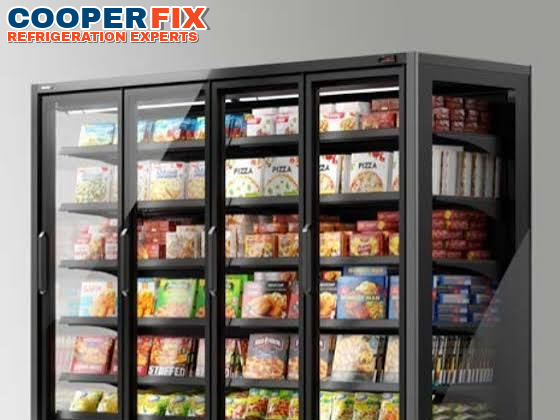
Upright commercial freezer cabinets
Identify the upright freezer and compare its setting, display and readings from different compartments. Note loading, recent door use, fan sound and where frost first appeared. Record whether the temperature continues rising while the cabinet remains closed. A timed record from normal operation helps the technician understand the pattern before testing begins.
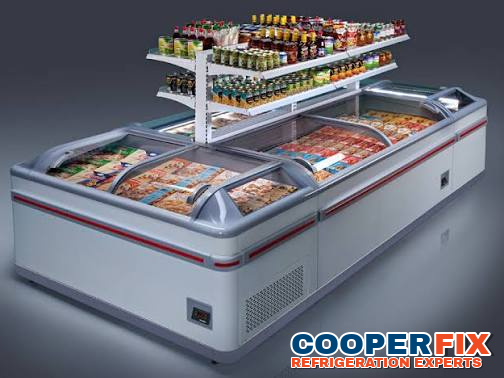
Horizontal frozen-food display equipment
Name the affected horizontal display section and report its temperature trend, water or frost and the condition of adjacent wells. Keep stock within the marked loading area and preserve access to installed refrigeration components without opening or adjusting them.
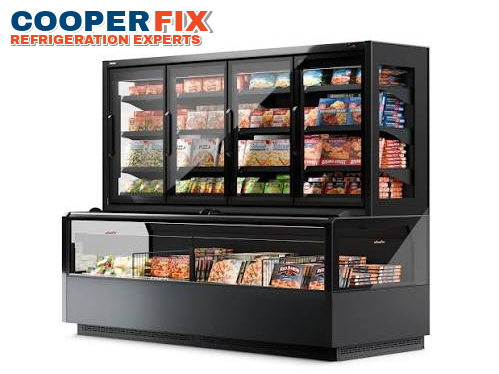
Glass-front frozen-food display cabinets
Give the case or door number, measured temperature, alarm text, frost location and any change in run time. If several glass-front units show similar symptoms, record each separately. The Barrie technician confirms whether their causes are related through on-site testing.
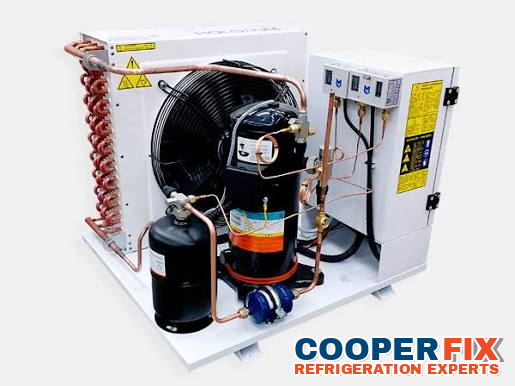
Condensing equipment serving commercial freezers
Explain where the condensing section is installed and how staff reach it. Include unusual sound, frequent stopping and whether the cabinet’s defrost behaviour changed. Access to the freezer and its connected equipment is required before a major component or other repair can be recommended.
How the technician follows the commercial freezer beyond the first symptom
Ice on a shelf or a warm display well shows where trouble appears, not always where it starts. The technician traces how that cabinet is controlled, then checks fans, sensors, wiring, drain line and the refrigeration circuit.
The technician begins by reading recent freezer temperatures, stored controller codes and staff notes. At the cabinet, lid or door closure, air movement past product, evaporator ice, defrost heaters, fans and the probe are checked. Then the work moves outward to the condenser, compressor and electrical supply.
Looking at the whole freezer circuit keeps a single warm reading from driving the decision. The technician goes over the cause, what was done, parts or follow-up pending and which readings staff should watch.
A commercial freezer relies on regular defrost cycles to keep the evaporator coil clear. If defrost does not start, frost builds until air stops flowing; if it does not end correctly, the cabinet warms during each cycle. The technician checks the full defrost sequence before replacing a part.
Electric defrost in many freezers depends on a timer or controller, a termination sensor and a drain line that must stay clear. When one of these fails, the symptoms can look similar, so each part of the sequence is tested in the installed unit.
Arrange access to the complete system
Staff only note readings, alarms and running changes; no covers come off and nothing is measured. Before the visit, clear access to the cabinet, its power disconnect and any remote condensing unit, and name who approves the work.
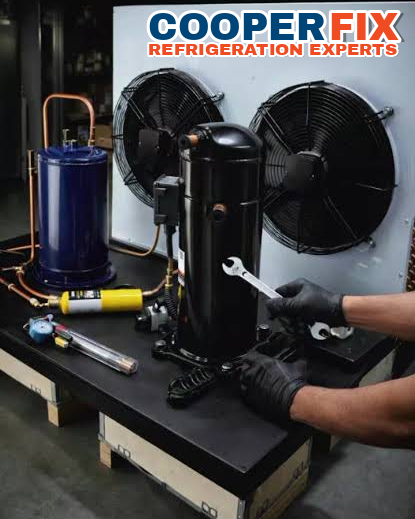
Common commercial freezer faults and how repair recommendations are made
Whether a freezer gets a repair, part swap or replacement talk depends on its age, workload, condition and on-site diagnosis.
Temperature and recovery problems
Provide the cabinet’s setting, temperature trend and time needed to recover after ordinary loading or opening. Airflow, controls, defrost, electrical components and the refrigeration circuit can all affect recovery. Measurements at the freezer determine which cause applies.
Frost, defrost and drainage
Describe the position and timing of frost or water, including whether it changes after defrost. The technician checks heaters, sensors, controls, fans and drainage as a sequence. Staff should leave the evaporator cover and other panels closed.
Electrical and control faults
Write down controller alarms, stopped-fan observations and any device that tripped. Avoid repeated resets and explain what happened after the one already attempted. Testing of the actual circuit distinguishes a control problem from a wiring or refrigeration fault.
Recurring faults and replacement planning
Earlier service records should show the work performed and how long the freezer then operated normally. Include any change in loading pattern, location or operating schedule since that visit. Present readings, cabinet condition, capacity, electrical supply and daily workload support a fresh diagnosis and any later comparison of repair with replacement.
Frost on product packaging can come from warm air entering the cabinet, from frequent openings or from product loaded before it was fully frozen. These causes are different from a refrigeration failure, and the technician reviews how the freezer is used before recommending work.
Information Barrie businesses should provide before a refrigeration visit
Describe the kind of business operating at the Barrie address, whether a grocery store, restaurant, clinic, school or distribution space, and which freezer is involved. Add what staff have seen, how the warming is disrupting sales or frozen storage, and who can arrange entry for the technician.
Record the warming sequence
Write down when the alarm appeared, the displayed reading at that time and any later reading from the same location. Include whether the cabinet was in ordinary use, recently loaded or left closed.
Locate softening product reports
State which shelf, basket or display area led staff to notice a problem and whether adjacent sections appear unchanged. Follow the business’s own product procedures rather than testing food for service purposes.
Describe frost at doors and drains
Report the location and extent of visible frost or water without chipping, applying heat or dismantling anything. Mention whether it interferes with safe door closure or staff access.
Identify recurring controller events
Preserve alarm codes and times from the display or site log when available. A repeated message is useful history but does not identify the failed part by itself.
Record observations without opening the equipment
Copy the freezer’s displayed reading and, if the business keeps its own probe thermometer, note it too. Add the time, whether the lid or door was just used and whether new stock went in. Photograph the data plate only if it is visible where the unit stands.
When a breaker trips or a safety control stops the freezer, avoid resetting it again and again. Tell CooperFix which device was reset, how many times it was reset and how the freezer behaved afterward. That record gives the technician a clear starting point for electrical testing.
Note whether frost appears evenly across the evaporator area or in one patch. A small frost patch near one end can suggest a different cause than a coil that is completely covered, so a simple description of the pattern is useful even without a photograph.
Use your food-safety procedures while service is being arranged
A repair visit sits alongside, not in place of, the business’s own food-safety procedures. Whoever is responsible for frozen product decides when it must be relocated, and readings continue meanwhile. Keep lids and doors shut where you can and avoid stacking stock against the air outlets.
Meltwater on the floor, frost spreading onto a walkway or a burning smell near the freezer are reasons to keep customers and staff clear. Mention these hazards when calling to plan safe access.
Arrange access to every part of the affected refrigeration system
Send the complete Barrie address, unit or suite, freezer location, known remote-component location, parking or loading instructions and the contact authorized to open secured or rooftop areas. If the cabinet belongs to a bank of similar cases, include its aisle or case number and keep the affected service area safely controlled.
Shift loose boxes, carts and spare stock away from the freezer when safe, but leave built-in equipment in place. Keep the on-duty contact available to identify the correct cabinet, describe what staff observed and review the findings.
Confirm what was found, what was repaired and what still needs attention
Before the technician leaves, confirm what caused the freezer problem, what was corrected and what is still advised, including any part on order or second visit. Check that the cabinet is running again, which temperatures staff should track in the coming days and where the written service report goes. Ask whether any fix is temporary rather than final.
Keep the model and serial numbers, alarm history, readings and service report together for the exact freezer section. If a symptom returns, state the prior visit and what changed after it. Follow the cabinet’s return toward normal temperature without unnecessary door openings, and time-stamp new frost or water observations. Note whether normal loading occurred before each comparison.
What to know before requesting commercial freezer service
The answers below cover freezer details worth sending and how scheduling works; no repair is confirmed until the technician has examined the cabinet.
Can Barrie businesses get reach-in and display freezers repaired?
CooperFix handles requests for commercial freezer service in Barrie. Describe the affected cabinet or display, its target and measured temperatures, frost or controller warning and the effect on frozen stock or operations. Testing at the business establishes which repair is appropriate.
What should we report when frozen goods in a cabinet begin to soften?
Record the measured and target temperatures, product condition, frost location, controller alarm, fan sound, defrost timing and recovery. Say when the change began, what loading or door use occurred and whether other sections remain normal. Follow the site’s food-safety process while the freezer is awaiting service.
Does heavy coil ice mean a freezer part failed?
Not necessarily. Ice can build from blocked airflow, a door left ajar, a defrost cycle that stops early, a plugged drain or control issue. Note where it collects, photograph only if safe, and keep covers shut.
What should we tell CooperFix about getting to the freezer?
Share the street address, suite, the hours someone can let the technician in, and exactly where the freezer stands. Flag locked storage rooms, rooftop condensing units, loading dock rules or security sign-in so they are sorted out before arrival.
We have several freezers failing; do we send separate requests?
No, one request is enough. Number each freezer, give its location and describe its symptom on its own, then point out which unit puts the most frozen stock or daily sales at risk. CooperFix plans the visit around all of them without blending their faults.
Which photos of a commercial freezer help CooperFix prepare for a visit?
A clear shot of the data plate, one of the controller screen showing any code, and a wider view of the freezer’s surroundings are useful, provided nothing has to be moved or unscrewed. They aid planning but cannot name the failed part.
A freezer we had repaired is acting up again; what earlier records help?
Share the date of the previous visit, what was replaced or adjusted, and how long the freezer ran without trouble. Describe the new symptom and when it was first spotted. Past work guides the technician, but the cause is checked again from scratch.
Request commercial freezer service in Barrie
Send the address, which freezer is affected, its present reading or alarm, the frozen stock at stake and who handles entry. For urgent situations, phone (647) 483-3777 with those details handy.
Commercial Refrigeration Repair in Barrie Commercial Freezer Repair service overview
Emergency calls are received and assessed 24/7. Availability and response depend on location, workload and the repair required.
Send your Barrie service request
Describe the affected equipment and provide the Barrie service address.