
Commercial freezer repair in Caledon
When a reach-in freezer, undercounter freezer, frozen-food display case or other commercial freezer is no longer holding temperature, tell CooperFix what changed and how the problem is affecting the business. We arrange on-site assessments of commercial freezers for businesses in Caledon.
A Caledon commercial freezer request should start with the exact address, cabinet and affected section. Preserve the temperature and alarm sequence while reporting frost and water as separate observations.
Tell us about the commercial freezer that needs attention
Provide the Caledon service address, the best on-site contact, the equipment type and the symptom staff can see. If several units are affected, list each separately and state which problem is creating the greatest risk to frozen inventory, production planning, display stock or service continuity.
- Displayed and target temperatures, product condition, frost location, alarm, fan sound, defrost timing and recovery
- Make and model, if the label is safely visible
- Access details for the unit and any remote equipment
Request commercial freezer service in Caledon
Provide a phone number and email address where CooperFix can confirm the equipment, site and access details.
What happens after you contact CooperFix
Commercial freezer repair starts with what staff observed and continues with an assessment of the equipment serving the affected space or cabinet.
Describe what changed
Report only what staff can observe safely, without opening electrical or refrigeration components. Note temperature, alarms, frost, water, noise and changes in run time. If someone reset a controller or breaker, state what was reset and what happened afterward.
Confirm the address and access
Provide the full Caledon address, unit or suite and the person who can meet the technician. Say whether equipment is on a roof or behind a restricted service area, and whether access must be coordinated with a landlord, facilities contact or another tenant.
Review the diagnosis and next step
After inspecting the installed system, the technician explains the fault found, any work completed, the repair options, parts required and whether another visit is needed. The repair recommendation follows the diagnosis rather than the symptom alone.
Commercial freezer equipment we service in Caledon
Similar temperature symptoms can begin in different parts of the installed system. Identify the exact cabinet, case or room and any connected component location. The technician uses equipment arrangement, model information and operating symptoms to decide what needs to be inspected.
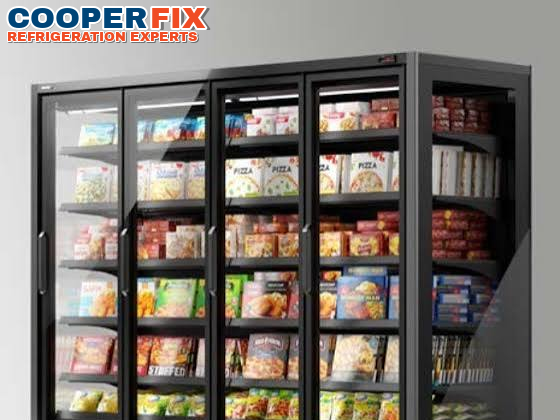
Upright commercial freezer cabinets
Identify the upright freezer, intended storage temperature and current reading. Report whether all compartments are affected, whether the fan sound has changed and whether visible frost is increasing. Note normal loading and door use so the technician can review the temperature history.
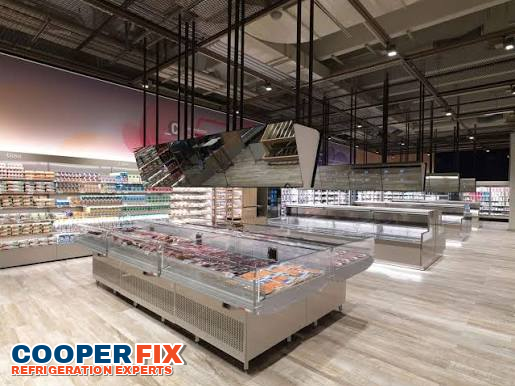
Horizontal frozen-food display equipment
Name the affected horizontal display compartment and report the temperature trend, visible frost or water and changes after restocking. Explain whether neighbouring compartments are also affected. Keep product clear of marked air paths and leave refrigeration components accessible for the technician.
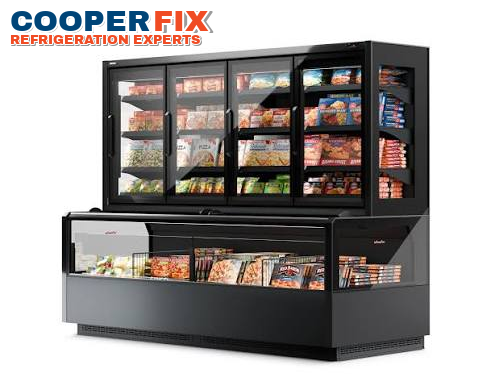
Glass-front frozen-food display cabinets
Identify the glass-front freezer section and whether the symptom affects one cabinet or several. Record temperatures and visible frost before and after normal use. Tell CooperFix about controller alarms or changes in run time without assuming that similar symptoms have the same cause.
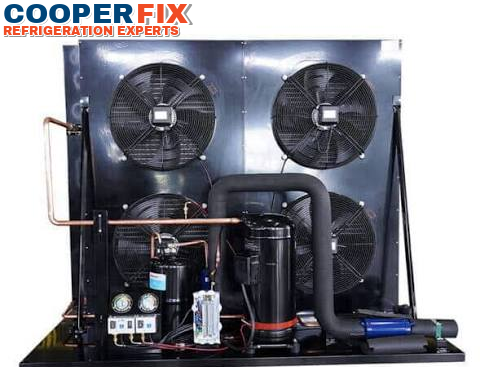
Condensing equipment serving commercial freezers
A freezer temperature problem can involve the cabinet, defrost operation or connected condensing equipment. Describe where the components are installed, any unusual operating sounds and repeated stopping. The technician needs access to the complete system to identify the fault and explain the repair options.
How the technician follows the commercial freezer beyond the first symptom
The visible symptom may appear at the cabinet or room even when the fault begins elsewhere. The technician first confirms how the affected equipment is connected, then follows the relevant airflow, controls, electrical components, drainage and refrigeration circuit.
The assessment starts with temperature history, controller messages and changes noticed by staff. At the unit, the technician checks relevant conditions such as airflow, door closure, frost, drainage, fans, sensors and defrost operation. The inspection then continues to the condenser, compressor, electrical controls and refrigeration circuit as required.
Checking the complete system helps prevent a repair recommendation based on one symptom alone. The technician explains the fault found, work completed, parts or return visits still required and what staff should monitor afterward.
Arrange access to the complete system
Staff can record temperatures, alarms and operating changes without removing panels or taking technical measurements. Before the visit, arrange access to the unit, electrical disconnect and any remote equipment, and identify the person authorized to review the findings.
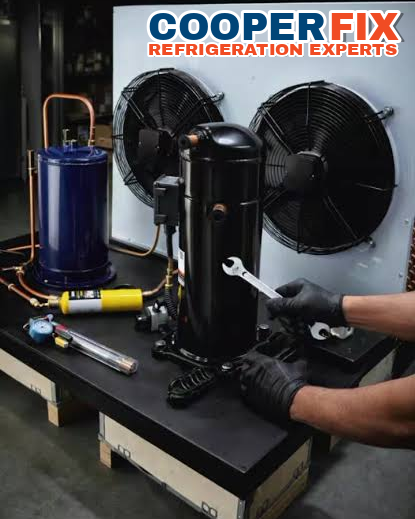
Common commercial freezer faults and how repair recommendations are made
The right next step depends on the equipment, its condition, how the business uses it and what the technician finds.
Temperature and recovery problems
A freezer that runs without reaching setpoint can have airflow, control, defrost, electrical or refrigeration causes. The technician compares cabinet temperature, operating cycle and equipment data before recommending work.
Frost, defrost and drainage
Heavy frost does not identify one failed part. Its location and timing are considered with heaters, sensors, controls, fans, door use and drainage. Staff should photograph the pattern only when it can be done without opening a panel.
Electrical and control faults
A tripped device, controller alarm or stopped fan requires testing of the installed electrical circuit. Do not repeatedly reset a breaker or safety control; report what was reset and what happened afterward.
Recurring faults and replacement planning
Service history can show how long the freezer operated normally after earlier work. Current condition, capacity, duty, electrical supply and diagnosis guide whether repair, monitoring or replacement should be discussed.
Information Caledon businesses should provide before a refrigeration visit
Caledon’s Official Plan provides Town-wide direction for settlement, commercial and employment planning. A refrigeration request should identify the exact property type, affected equipment and operational effect rather than infer site conditions from a Town-wide designation. Also report what staff observed, how the temperature change is affecting the operation and who can coordinate access.
Tie the alarm to one freezer
Record the cabinet identifier, controller message, displayed temperature and time together. When several units alarm, create a separate sequence for each.
Locate the temperature difference
Name the shelf, drawer, basket, door or case section where the first change appeared. Use the same measurement source for later comparisons.
Describe safe access around frost
Report whether frost or water interferes with the door, aisle or service side and where it is visible. Follow site safety controls without dismantling the cabinet.
Keep product handling factual
State what the responsible site person did with product and when. Do not use that decision to infer compressor, control or refrigerant failure.
Record observations without opening the equipment
Write down the displayed temperature and compare it with any separate thermometer the business normally uses. Note the time, whether doors were recently opened and whether product was just loaded. Photograph the model label only if it is visible without moving the unit or removing a panel.
Do not keep resetting a tripped breaker or safety control. Tell CooperFix what was reset, how many times and what happened afterward. This history helps the technician plan electrical and control checks without repeatedly operating a device that has already shut the equipment down.
Use your food-safety procedures while service is being arranged
Refrigeration service does not replace the business’s food-safety procedures. Keep monitoring temperatures and move product when the person responsible for food safety determines that its current storage is no longer suitable. Keep doors closed where practical and do not block the evaporator or return-air path with stock.
If water, frost or an electrical concern makes the area unsafe, keep staff and customers away. Describe the condition when you call so access and immediate risks can be discussed before work begins.
Arrange access to every part of the affected refrigeration system
Provide the full service address, unit or suite, cabinet or room and remote-equipment locations, parking or loading instructions, and the person who can authorize entry to any restricted, shared or roof area. Also identify the affected commercial freezer, any connected remote equipment and the electrical disconnect. Provide building and unit details for the Caledon freezer and identify the authorized route to any remote condenser or disconnect. Mark the affected section so normal site activity does not make it ambiguous.
Move ordinary stored items away from the service area when it is safe, but do not move fixed equipment. Keep the on-site contact available to identify the correct unit, explain what staff observed and review the technician’s findings.
Confirm what was found, what was repaired and what still needs attention
Ask the technician to explain the fault found, the work completed, any work still recommended and whether a part or return visit is required. Confirm whether the equipment is operating, which temperatures or operating changes staff should monitor and who will receive the service report. Ask the technician to distinguish any temporary measure from a completed repair.
Keep model and serial numbers, controller messages, temperature records and service notes with the equipment record. If the symptom returns, provide the earlier visit date, the work performed and what changed afterward. Log the same section’s temperature, alarm status and visible frost after service. Include ordinary loading or door activity that occurred before each follow-up reading.
What to know before requesting commercial freezer service
This information explains what to report and how a visit is arranged. The technician must still assess the installed equipment before confirming the repair.
Does CooperFix service commercial freezers for businesses in Caledon?
Yes. CooperFix accepts requests for commercial freezer repair in Caledon. Identify the reach-in freezer, undercounter freezer, frozen display case or low-temperature storage cabinet, the displayed and target temperatures, any controller alarm and the business activity affected by the problem. The installed equipment must be assessed before a repair is confirmed.
What should I report when the commercial freezer is not holding temperature?
Record displayed and target temperatures, product condition, frost location, alarm, fan sound, defrost timing and recovery. Include when the change began, recent loading or door use and whether the condition affects the whole unit or only one section. Continue following the business’s food-safety procedures while service is being arranged.
Can frost show which commercial freezer component has failed?
No. Frost can be related to airflow, doors, defrost, drainage, controls or refrigeration conditions. Photograph the pattern only if it is safe, report where it appears and leave electrical and refrigeration panels closed for the technician.
What information is needed to arrange service at a Caledon business?
Provide the full address, unit or suite, on-site contact, access hours and exact equipment location. Mention any restricted room, roof access, parking or loading restriction, security procedure or property contact that must be arranged before the visit.
Can one request include more than one commercial freezer?
Yes. List each affected unit and its location in one request, then state which condition is creating the greatest risk to frozen inventory, production planning, display stock or service continuity. CooperFix can review the full scope while keeping the symptoms for each unit separate.
What model and photograph details are useful for commercial freezer service?
Send a readable model label, controller display and wider equipment view when they can be photographed without moving the unit or removing a guard. Those details help identify the equipment and plan the visit, but they do not prove which component failed.
How is an urgent commercial freezer request in Caledon handled?
Call (647) 483-3777 and provide the affected equipment, current temperature or alarm, product risk, Caledon service address and on-site access contact. CooperFix uses those details to assess urgency, confirm current availability and coordinate site access.
Request commercial freezer service in Caledon
Provide the business address, affected unit, current temperature or alarm, product risk and the person who can arrange access. If the problem is urgent, call (647) 483-3777 and have these details ready.
Emergency calls are received and assessed 24/7. Availability and response depend on location, workload and the repair required.
Send your Caledon service request
Describe the affected equipment and provide the Caledon service address.