
Commercial fridge repair in Barrie
CooperFix repairs commercial refrigerators for Barrie businesses: reach-in cabinets, undercounter fridges, prep counters, beverage coolers and chilled display cases. If shelves run warm, an alarm appears or product stops staying cold, describe the symptom and its start so a visit can be planned.
For a commercial refrigerator in Barrie, report whether the displayed temperature agrees with the shelf or product-area thermometer the business normally uses. Note which door or compartment is affected and whether the cabinet recovers during a normal closed-door period.

Tell us about the commercial fridge that needs attention
List the street address, an on-site contact, the kind of refrigerated unit and what staff have noticed. When more than one cabinet is warming, describe each unit’s problem separately and rank them by their likely impact on stock, prep work or customer-facing displays.
- Setpoint difference, product-zone readings, controller display, closing condition, sound, water and temperature recovery
- Data plate details, if readable without moving the refrigerator
- Route to the cabinet and any remote condensing unit
Request commercial fridge service in Barrie
Provide a phone number and email address where CooperFix can confirm the equipment, site and access details.
What happens after you contact CooperFix
Each fridge repair begins with the staff report, then moves to an inspection of the cabinet and the cooling equipment connected to it.
Describe what changed
Staff should observe from outside the unit and leave covers, wiring and refrigeration parts alone. Write down shelf temperatures, alarms, ice buildup, pooled water, odd sounds and longer compressor running. Mention any controller or breaker reset and its result.
Confirm the address and access
Give the street address in Barrie, including the suite or unit number, and name who will greet the technician. Explain whether condensing equipment sits on the roof or in a locked mechanical room, and whether a landlord, property manager or neighbouring tenant controls entry.
Review the diagnosis and next step
Once the refrigerator and connected equipment are checked, the technician reports what failed, what was done, which options remain and whether parts must be ordered for a return trip. Recommendations rest on test results, not guesswork.
Commercial fridge equipment we service in Barrie
Two refrigerators with the same warm-shelf complaint may have quite different causes. Tell us which cabinet, counter or display is affected and where its condensing unit is located, if known. Layout, model details and the symptom pattern guide what the technician inspects first.

Upright commercial refrigerators
For an upright refrigerator, provide the controller reading, intended setpoint and temperatures from the affected shelf and a comparison shelf. Mention changes in fan sound, visible water and recovery after routine door use. Staff should not move the cabinet or open a service panel to collect this information.

Glass-door beverage and dairy displays
Name the exact door or display section that is running warm and note how its reading changes through a normal service period. Describe stocking, shelf clearance and condensation separately. A model number and timed temperature notes give the Barrie technician useful preparation details.
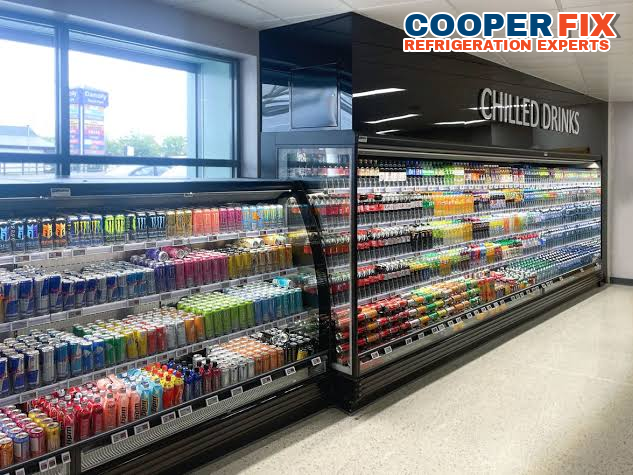
Open and enclosed refrigerated display cases
Explain whether the temperature change covers the entire case or follows a particular shelf, compartment or open-air section. Include recent merchandising or restocking and any new sound. Report the connected equipment location if known, while leaving grilles and fixed components undisturbed.
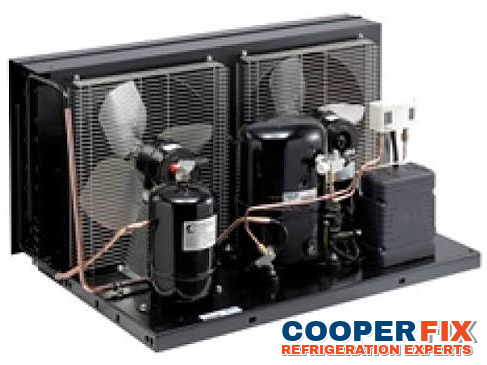
Condensing equipment serving commercial refrigerators
Tell CooperFix whether the condensing unit is built into the refrigerator, installed in a service area or mounted remotely. Note abnormal noise, short cycling or unusually long operation. The visit requires safe access to the cabinet and the equipment that serves it.
How the technician follows the commercial fridge beyond the first symptom
A warm cabinet is where staff notice trouble, but the cause can sit in a fan, sensor, drain line or remote condensing unit. The technician traces how the refrigerator is wired and piped, then tests each part.
Work begins with the temperature log, alarm codes and what employees saw change. Inside the refrigerator, the technician looks at shelf airflow, coil frost, fan motors, the drain, the probe and defrost timing. Testing then moves outward to the condenser coil, compressor, relays, wiring and refrigerant circuit.
Looking at the whole refrigerator rather than one part avoids replacing components that were never faulty. Before leaving, the technician reviews the diagnosis, the repair performed, outstanding parts or visits and readings to watch.
In a reach-in refrigerator the evaporator fan circulates cold air from the coil through the cabinet. If the fan slows or stops, the coil can stay cold while the shelves warm, which is why the technician checks air movement inside the cabinet before looking at the refrigeration circuit.
Open multideck display cases hold temperature with a curtain of cold air across the front. Product placed past the load line or shelf edges, or strong air movement in the store, can break that curtain and warm the lower shelves even when the refrigeration system is operating normally.
Arrange access to the complete system
Employees only note readings, alarms and changes in how the fridge runs, with no tools involved. Before the appointment, make sure the technician can reach the cabinet, its power disconnect and any remote condensing unit, and name who approves work.
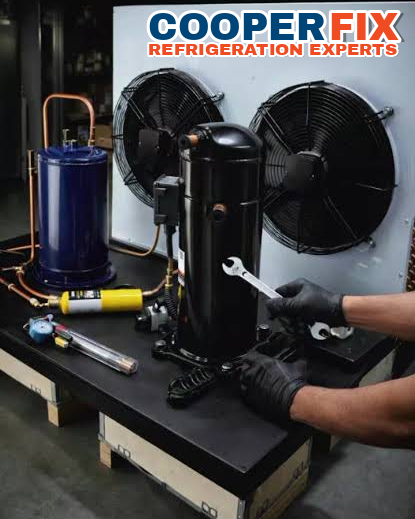
Common commercial fridge faults and how repair recommendations are made
Each recommendation reflects the refrigerator’s age and condition, its daily workload in the business and the results of on-site testing.
Uneven cabinet temperatures
Temperature differences within one cabinet can result from stock placement, airflow, a closing problem, a fan, a sensor or the refrigeration circuit. The technician compares zones under the conditions found on site before deciding whether a component or operating condition needs attention.
Airflow and refrigeration performance
Report where the refrigerator is warm, how the fans sound and whether frost or an obvious airflow blockage is visible. Conditions around a door may be recorded because they affect heat and moisture, but this service covers refrigeration components and does not offer structural door work.
Controls and refrigeration components
An alarm code or inaccurate display can involve the controller, probe, wiring, relay, fan or another refrigeration component. Save the exact message and its timing. The Barrie assessment tests the installed circuit before any part is selected for repair or replacement.
Repeated warming and replacement planning
If the cabinet has been serviced before, share what was done and the length of normal operation that followed. The technician considers that record together with present readings, equipment condition, application and capacity before outlining repair choices or longer-term replacement planning.
Medium-temperature refrigerators often defrost by stopping the compressor while the fans keep running. If frost builds on the coil anyway, the cause may be airflow, humidity, a control setting or a refrigerant problem, and the technician separates these possibilities before selecting a repair.
Information Barrie businesses should provide before a refrigeration visit
A useful refrigeration request describes the kind of business on site, which refrigerators are affected and what the warm temperatures are disrupting, such as prep work, beverage sales or display stock. Add what employees noticed first, the readings they took and who can open restricted areas.
Compare display and shelf readings
Use the site’s usual thermometer location and record it beside the controller display at the same time. Do not change the setpoint simply to force a different displayed value.
Follow one door or drawer
Identify a door that rebounds, gaps or needs extra force to close and note whether the nearby section is warmer.
Separate rail and base temperatures
On a preparation table, report the ingredient rail and lower cabinet as different zones. Include recent pan loading and cover position because those are observable operating details.
Report heat around self-contained units
Describe unusual heat or noise around a self-contained fridge and any recent change to surrounding clearance. Do not pull the unit forward or remove a grille to investigate.
Record observations without opening the equipment
Note the controller reading and the reading from the thermometer staff usually trust, with the time of each. Mention recent restocking or heavy door traffic, since both can briefly raise shelf temperatures. Photograph the data plate only if nothing needs to be pulled out or unscrewed.
When a breaker trips or a safety control switches the refrigerator off, avoid turning it back on again and again. Let CooperFix know how many resets were tried and how the fridge behaved each time, so electrical and control testing can be planned safely.
If the refrigerator has more than one section, note which section or shelf area is warm and whether the others are normal. Differences between sections help the technician see whether the problem lies in air distribution or in the cooling system as a whole.
Use your food-safety procedures while service is being arranged
A repair visit works alongside, not instead of, the food-safety procedures your business follows. Keep logging temperatures, and relocate product whenever the person in charge of food safety decides the refrigerator is unsuitable. Limit door openings and leave space around the coil and air return.
Keep people clear of any spot made unsafe by pooled water, ice on the floor or an electrical hazard. Mention these conditions on the call so safe access can be agreed before the technician starts.
Arrange access to every part of the affected refrigeration system
Send the full Barrie service address, unit or suite, cabinet location, known remote-equipment location, parking or loading instructions and the name of the person who can open restricted areas. Make the correct refrigerator easy to identify, provide safe access to its service side and note any customer-area traffic that must be controlled.
Clear loose boxes, crates and supplies from around the refrigerator if safe, but leave built-in equipment in place. Have someone on site who can point out the right unit, describe the symptoms and go over results.
Confirm what was found, what was repaired and what still needs attention
Before the technician leaves, ask for a summary of what failed, what was repaired and what work is still advised, including any part on order or second visit. Check that the refrigerator is running, which readings staff should watch and who gets the written report. Ask whether anything done is a short-term fix rather than a finished repair.
Store the data-plate details, controller messages, temperature records and technician’s notes under the cabinet’s site identifier. If warming returns, give the earlier service date and describe the new change. Monitor the same shelf and controller points after normal stocking so recovery, condensation and fan behaviour can be compared consistently.
What to know before requesting commercial fridge service
These answers cover what to tell CooperFix and how a refrigerator visit is organized. A firm repair plan only follows on-site testing.
Can CooperFix repair refrigerated prep tables and coolers in Barrie?
A Barrie business may contact CooperFix about a commercial refrigerator that will not hold temperature. Name the reach-in, prep table, undercounter unit, beverage cooler or display involved, then share its readings, alarm and effect on the business. On-site testing determines the required repair.
Which readings and details help the technician understand a warming refrigerator?
Write down the setpoint, controller display and readings from the warm area and an unaffected area. Include the alarm text, door condition, fan behaviour, recent stocking and the time needed to recover with the cabinet closed. These observations help organize testing but do not identify the failed part.
Does a frosted coil reveal which refrigerator part has failed?
Not on its own. Coil or cabinet ice can come from blocked air movement, a short defrost cycle, a clogged drain or a control fault. Note where it builds up, photograph it if safe and leave covers on.
Which site details should a Barrie business share before the technician arrives?
Send the street address with suite number, the on-site contact, hours when the refrigerator can be reached and where it stands. Note locked rooms, roof equipment, parking limits, loading dock rules or security sign-in steps.
Can several refrigerated units be listed in a single request?
Yes. Name every refrigerator that needs attention, where it is located and what each one is doing wrong. Then say which problem matters most, whether that is warming prep ingredients, warm drinks or a display that cannot be stocked. Each unit’s symptoms are reviewed separately.
Which photos help CooperFix identify a commercial refrigerator before the visit?
Useful photos show the data plate, the controller screen and the whole cabinet, taken without sliding the refrigerator out or removing covers. They help confirm the equipment type and prepare for the visit, yet they cannot show which part has failed.
What should we share if a previously repaired refrigerator starts warming again?
Give the date of the last repair, what was replaced or adjusted and how long the refrigerator ran normally afterward. Then describe today’s symptom and when staff spotted it. The earlier record gives the technician context for current testing; it does not establish that the previous problem has returned.
Request commercial fridge service in Barrie
Send the address, the refrigerator affected, its present reading or alarm, what stock is at risk and who can let the technician in. For urgent problems, call (647) 483-3777 with that information at hand.
Commercial Refrigeration Repair in Barrie Commercial Fridge Repair service overview
Emergency calls are received and assessed 24/7. Availability and response depend on location, workload and the repair required.
Send your Barrie service request
Describe the affected equipment and provide the Barrie service address.