
Commercial fridge repair in King City
CooperFix provides commercial fridge repair in King City for chilled-storage equipment and large refrigerated displays. The complaint may be inconsistent conditions, a new running sound, an alarm or a refrigerator that continues to run without performing its normal storage role. Describe the change in service rather than choosing a part to replace.
The assessment considers the refrigeration arrangement behind the cabinet or display. A technician connects staff observations with relevant measurements, identifies the established condition and explains the work it supports. Include the equipment’s ordinary use and any recent relocation, reconnection or extended period out of service, so the request reflects the installation as it now operates.

Report the affected commercial refrigerator clearly
Give CooperFix the King City service address, affected equipment, observed change and contact who can provide access.
- Equipment label, make and model when safely visible
- Directions to the integral or remote condenser, controls and electrical disconnect and the authorized access contact
- Setpoint, shelf or rail temperature, controller message, door closure, condensation and fan sound, with the time observed
Request commercial fridge service in King City
A photograph is useful only when it can be taken safely. Include a phone number and email address for service coordination.
Describe the refrigerator’s performance in its current installation
A fridge-service request should explain what the equipment is expected to do and what it is doing differently. Provide the King City service address, unit location and access contact. Include a recent change to the installation when relevant, but leave the technical explanation to the assessment rather than assigning the change as the cause.
For a King City refrigerator returning to use, describe its known idle period and current storage role. These steps keep the present complaint distinct from remote-machinery observations and any future replacement proposal.
Describe the storage or display complaint
Identify whether the concern affects the complete refrigerator or a particular area. Explain how the present condition differs from normal operation. If staff already have a reading or alarm record, give its time and source without converting it into a diagnosis of a sensor, fan or compressor.
Explain changes to the installation
Mention a relocation, reconnection, altered use or return to service that actually occurred. Supply existing records when available and distinguish what staff know from what remains uncertain. The technician needs the current equipment arrangement, not an assumption that it still matches an earlier location or service record.
Review the condition and proposed work
CooperFix explains the findings on the installed refrigerator and the work required. Identify any additional check, component or access requirement before treating the job as complete. Keep the equipment reference with the service account so subsequent updates concern the same refrigerator and configuration.
Commercial chilled-storage and display refrigeration
Large refrigerated installations differ in layout, controls and where their mechanical equipment is located. The technician confirms those features during assessment. A visible cabinet can describe the storage function, but it does not by itself reveal the complete connected refrigeration arrangement or the cause of a change in performance.
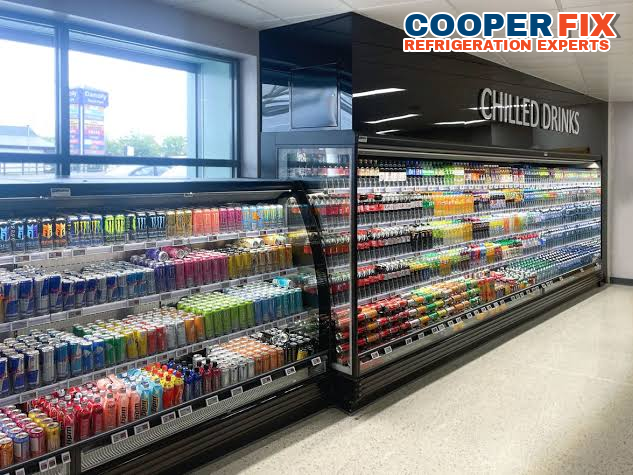
Large glass-front refrigerated storage
Describe the normal purpose of a glass-front storage installation and the specific area that has changed. Report whether the condition is steady or varies during ordinary operation. CooperFix assesses the refrigeration serving that installation, considering its actual configuration rather than applying a diagnosis from another cabinet with a similar appearance.

Extended beverage displays
A long beverage display needs the affected section identified clearly. Tell CooperFix whether the change follows one position or appears across the installation. The technician relates that account to the refrigeration and controls serving the display. Staff do not need to decide whether the finding will concern one component or a connected system.
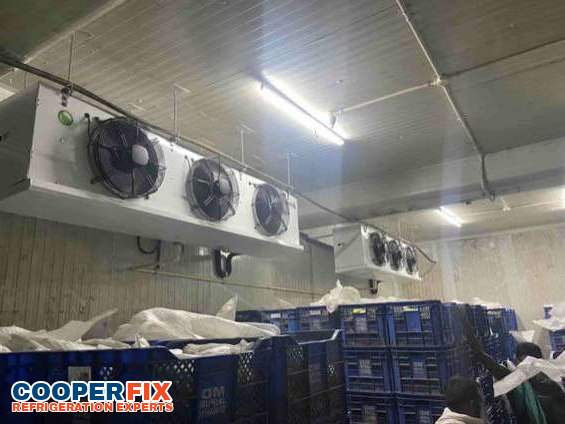
Evaporators serving refrigerated storage areas
An evaporator observation may concern sound, air movement or visible frost rather than the display value. Identify the assembly by its location and describe the observation separately from any temperature record. The technician checks the relevant equipment functions and assesses how they relate to conditions in the refrigerated storage area.
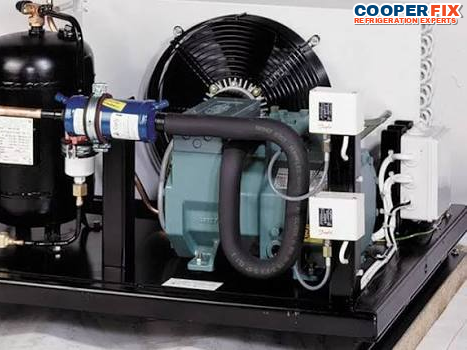
Remote refrigeration condensing equipment
The condensing equipment may occupy a different area from the refrigerator used by staff. Provide its known location and who can arrange access. CooperFix confirms the connection and assesses relevant electrical and refrigeration conditions before explaining whether a reported sound or interruption belongs to the affected storage installation.
CooperFix at work: assess the refrigerator as it is installed now
For a King City commercial fridge visit, the technician identifies the equipment’s present arrangement and the performance concern. Previous records are useful, but a relocated unit, changed connection or altered storage use can make an old description incomplete. The assessment begins with the installation that is actually operating at the service address.
CooperFix checks the relevant temperature response, airflow, fans, sensors, controls, defrost, electrical operation and refrigeration circuit as the equipment requires. The findings are considered together before work is proposed. A running fan, a controller value or the sound of the condensing equipment is an observation within that assessment, not a complete account of refrigerator performance.
Provide available model information, earlier work records and details of an installation change. Explain if a label or component cannot be reached safely. Staff should leave fixed equipment and protected assemblies undisturbed; the request can proceed from a clear equipment description and a contact who can coordinate access.
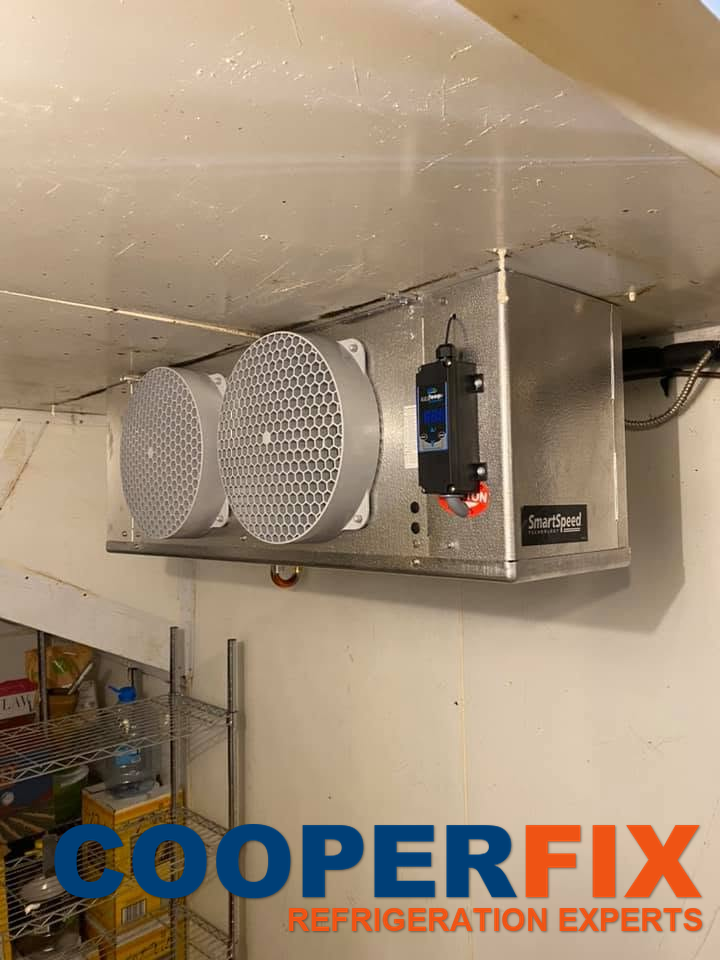
Make current records available without disturbing equipment
Name the person who can lead the technician to the unit, controls and remote equipment. Point out known controls, disconnects and remote components without opening protected equipment.
Work defined for the refrigerator’s present condition
A refrigerator can need assessment while the business considers maintenance, renewed use or replacement. CooperFix distinguishes those purposes. The proposed scope describes the confirmed condition and intended function, so work on the refrigeration system is not confused with an assumption that the entire installation must be replaced.
Repair a confirmed performance fault
The repair follows findings on the identified refrigerator. Relevant work can involve controls, sensors, fans, electrical or defrost components and the refrigerant circuit. CooperFix explains the connection between the finding and proposed action. The service record identifies completed work and checks, with remaining requirements stated separately rather than included in a general completion statement.
Review operating equipment through maintenance
Maintenance planning uses the actual installation, its normal use and available service history. Identify recurring performance changes even if the refrigerator has continued to run. This allows the technician to consider an active concern distinctly from routine condition review and to record what needs attention on the equipment included in the agreed scope.
Assess replacement for the intended storage function
Replacement planning considers what the refrigerator must do, the condition established and the existing connections. A replacement component and a different refrigerator are separate proposals. Explain any intended change in the storage or display role so the discussion concerns the required function, not only the dimensions or appearance of the equipment being considered.
Install and commission a defined refrigeration arrangement
Installation work establishes the equipment, connected components and operating requirements of the proposed arrangement. Commissioning checks relevant operation after the work. Retain the installation and handover record with the refrigerator reference, including what was checked and any follow-up requirement, so later service begins with the configuration that was actually completed.
Running equipment can still need a refrigeration assessment
Running equipment can still need a refrigeration assessment
Staff may hear a fan or other equipment operating while the refrigerator no longer maintains its usual conditions. Describe both observations. Avoid reducing the request to either ‘it is running’ or ‘it is stopped’ when the actual complaint is a difference between operation and the storage performance the business normally observes.
Running equipment can still need a refrigeration assessment: operating context
The technician checks the installed functions and takes relevant measurements before establishing the cause. Say whether the changed condition is continuous or appears at particular times during ordinary use. Existing records can help describe the pattern without requiring staff to expose machinery or carry out an operating test.
Include a recent relocation or reconnection in the history
If equipment has been moved or reconnected, describe when that happened and when the performance concern began. Provide the earlier location or connection information only where it is known. A change in timing is relevant history, but it does not by itself establish that the relocation caused the reported fault.
Include a recent relocation or reconnection in the history: operating context
CooperFix assesses the refrigerator in its current setting and confirms the relevant equipment arrangement. Retain records of work already performed so the technician can distinguish existing components from a changed connection or setup. Do not move the equipment again solely to demonstrate the complaint or to make it resemble its former installation.
Describe the refrigerator’s current use and observed change
Identify the King City refrigerator or display and its present chilled-storage function. If it has returned to use after a long idle period, state the approximate period out of service, what staff know about the restart and when the current concern appeared. Missing history should remain identified as missing.
Keep a controller value separate from another reading with its source, position and time. Describe a new sound at remote machinery as a separate observation until the connection is confirmed. CooperFix checks the installed system rather than relying on an assumed earlier condition.
Explain the effect on chilled stock and daily operation
Tell CooperFix what the affected fridge holds or displays and whether another suitable chilled unit is available. A cabinet can sound as though it is running while staff still observe changed storage conditions. Report both facts without deciding that the sound proves adequate cooling.
The business continues its own monitoring and product-handling procedures. A recent move, reconnection or loading change may be useful history when its timing is known, but it does not establish the fault. The technician assesses the current equipment and explains work supported by findings.
Arrange access to the cabinet and any remote machinery
Provide the King City service address, the refrigerator’s position and a contact who can admit the technician. If machinery away from the cabinet may be connected, describe its known location and who controls entry. Identify uncertain equipment connections as uncertain.
Staff should not trace piping or open control compartments to resolve that uncertainty. Existing labels and service records may help CooperFix identify the arrangement during the visit. Explain any access restriction before attendance so the technician can reach the relevant equipment.
Keep current findings distinct from a future replacement
After assessment, retain the refrigerator’s identity, confirmed finding and work completed. A component still required, further investigation or another appointment should remain open in the record. State how the unit operated after the visit if a later concern is reported.
If the business is also considering a different storage arrangement, document that proposed use separately. Assessment of the existing fridge does not mean a future replacement has been specified or installed. CooperFix can explain which findings concern the current equipment and what information a replacement proposal would require.
King City commercial fridge service information
The information below helps describe a performance concern and the current installation. Technical findings and the work needed are established from the refrigerator itself, with the available history considered as supporting information.
Can a refrigerator need service while it still sounds as though it is running?
Yes. Describe what staff hear and the storage or display condition that has changed. CooperFix checks the relevant functions and measurements on the installed equipment. The sound of operation alone does not establish whether the refrigerator is performing as required.
Should a recent move or reconnection be mentioned?
Yes. Give the timing of the change and the first known performance concern. Include existing work records when available. The technician assesses the current arrangement without assuming that a move or reconnection is necessarily the cause of the complaint.
What information helps when equipment has been unused for a long period?
State the known period out of use, what happened when operation resumed and the present condition. Identify gaps in the history rather than guessing. Explain the intended current storage function so the assessment addresses how the business now plans to use the refrigerator.
What if we hear a new sound at machinery away from the display?
Report its location and time separately from the display complaint. Say whether the equipment connection is known. CooperFix confirms which refrigeration system the machinery serves before relating the sound to the affected refrigerator or recommending work.
How should we report conflicting observations from different staff?
Keep each account with its equipment location, time and known circumstances. Distinguish a controller value from a reading taken elsewhere. The technician compares the information with relevant measurements rather than asking staff to choose which account should replace the other.
Can the current refrigerator be assessed while we consider replacement?
Yes. Describe the present complaint separately from the proposed future use. CooperFix distinguishes findings on the existing equipment from requirements for a replacement arrangement. The service record should not treat an uncompleted proposal as work already carried out.
How do we request urgent fridge service in King City?
Call (647) 483-3777 with the operating address, equipment location and current performance concern. Explain the effect on the business and provide an access contact. CooperFix assesses the information and discusses the next available step for the affected refrigerator.
Arrange commercial fridge repair in King City
Call CooperFix with the King City service address, affected unit and contact who can provide access.
Emergency calls are received and assessed 24/7. Availability and response depend on location, workload and the repair required.
Send the King City service details
Name the person who can lead the technician to the unit, controls and remote equipment.