
Commercial refrigeration repair in Concord
A refrigeration service request is easier to act on when everyone refers to the same equipment and the same change in operation. CooperFix provides commercial refrigeration repair in Concord for commercial refrigerators, freezers, large refrigerated displays and the refrigeration systems serving walk-in rooms. The service starts with identifying the installation that needs attention.
Tell us where the equipment is and what prompted the call. A technician checks the relevant system, connects measurements with the reported condition and explains the work required. The person arranging service does not need to interpret an alarm or select a replacement part before making contact.

Report the affected commercial refrigeration system clearly
Give CooperFix the Concord service address, affected equipment, observed change and contact who can provide access.
- Directions to the evaporator, condensing equipment, controls and electrical disconnect and the authorized access contact
- Displayed temperature, controller message, frost, water, sound and run-time change, with the time observed
- Equipment label, make and model when safely visible
Request commercial refrigeration service in Concord
Do not disturb wiring, tubing or fan guards. Include a phone number and email address for service coordination.
Keep the request, equipment and site contact connected
For service in Concord, provide the operating address rather than only a company name or office address. Include a contact number and the person who can identify the affected equipment. If someone else observed the fault, retain their account so the technician can distinguish what was seen from what has been assumed since.
Name the equipment and its location
Describe the unit or refrigerated space, its position at the property and the change in operation. An existing equipment label is useful when available. For several units, keep separate descriptions so a complaint about one is not accidentally attached to another.
Coordinate access and authorization
Confirm who can admit the technician, point out remote components and discuss the proposed work. Explain restricted access periods or other arrangements that actually apply. If different people handle access and authorization, provide a clear way to reach each responsible person.
Keep findings and next steps together
The technician explains the established condition and the proposed scope. Retain the equipment reference with completed work, remaining parts and any further visit requirement. This keeps an internal handover from turning a partial service update into an assumption that every issue has been resolved.
Find the Concord service page for your equipment
A Concord business should select the equipment-specific page before describing the fault. Use fridge repair for chilled cabinets and displays, freezer repair for frozen-storage cabinets, and walk-in freezer repair for the refrigeration serving a room.
 Glass-door refrigeration for commercial meat display.chilled commercial equipmentCommercial fridge repair in Concordreach-in refrigerator, preparation table, undercounter fridge, beverage cooler or display case.
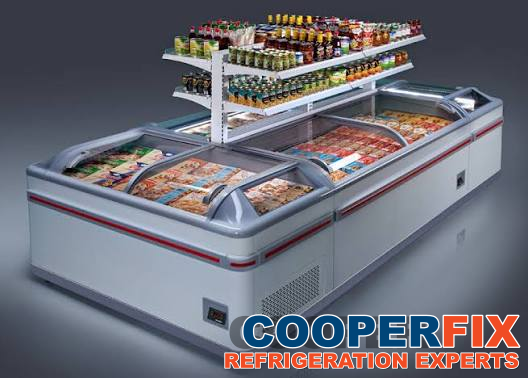 Island frozen-food display.frozen-storage equipmentCommercial freezer repair in Concordreach-in freezer, undercounter freezer, frozen display case or low-temperature storage cabinet.
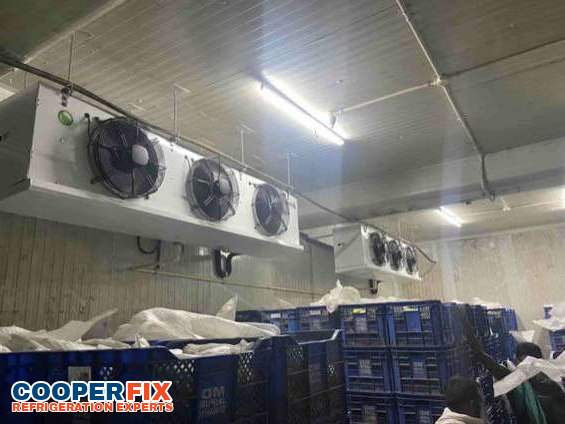 Twin evaporators serving a commercial cold room.walk-in freezer equipmentWalk-in freezer repair in Concordevaporator, condensing unit, controls, defrost components, drain and refrigeration lines serving the freezer room.
Commercial refrigeration equipment and connected systems
The equipment’s normal application determines the service category, while its installed arrangement determines access and testing. These photographs show refrigeration configurations; they do not identify a particular Concord site. The technician confirms the actual system before applying observations from one part of it to another.
Large beverage refrigeration installations
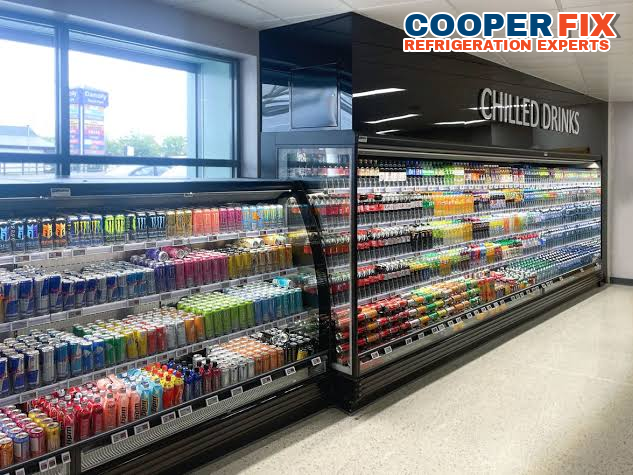
A long beverage installation can include several sections used differently during the day. Identify which section prompted the request and whether the others show the same change. The technician checks the connected arrangement instead of assuming that every visible section has its own independent fault.
Cold-room refrigeration assemblies
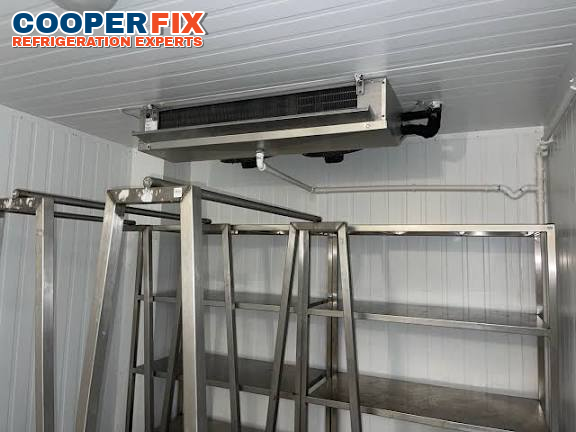
A room can contain more than one evaporator assembly, with connected equipment elsewhere on the property. Report the location of the operating change and any visible difference between assemblies. CooperFix assesses the refrigeration components serving the room and establishes how they operate together.
Commercial food-display refrigeration
A refrigerated display needs the symptom described by position as well as temperature. A concern at one end, a particular shelf area or the full display provides different starting information. Include the ordinary use of the affected section and any recent change without treating either as the confirmed cause.

Condensing equipment away from the storage area
The condensing unit may not be beside the equipment used by staff. Identify its location when known and arrange authorized access. CooperFix confirms which unit serves the affected refrigerator, freezer or room before assessing its electrical and refrigeration operation.
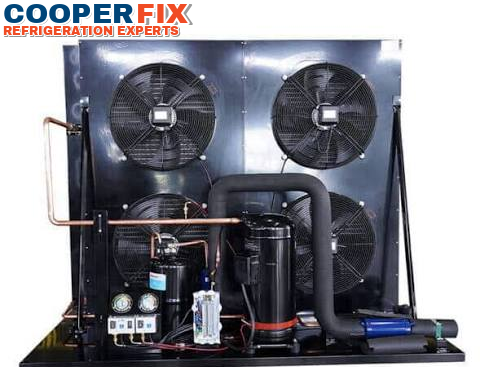
CooperFix at work: follow the complaint through the installation
At a Concord service visit, the technician first relates the reported condition to a clearly identified installation. The equipment staff use and the components that support it may occupy different parts of the property. A helpful service account keeps those connections clear rather than stopping at the nearest controller.
The relevant investigation can involve sensors, fans, airflow, defrost, electrical operation and the refrigeration circuit. CooperFix selects checks for the installed equipment and considers the findings together. A component is proposed because the assessment supports that work, not because its name was repeated during the booking process.
When a supervisor or another staff member arranges the visit, include the account of the person who noticed the change. Preserve an existing alarm message or recorded reading when available. Explain any adjustment or reset already made; an accurate history is useful even if the present condition differs.
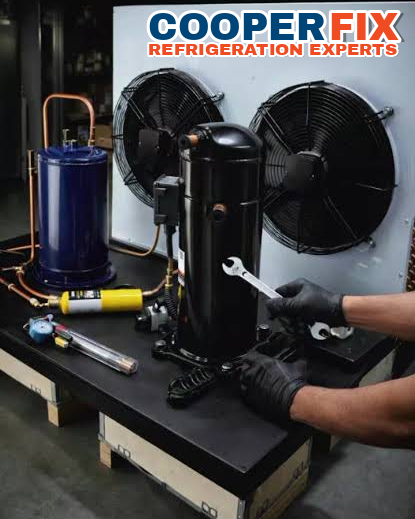
Keep the original observation available
Identify loading, security or roof-access arrangements before the visit. Point out known controls, disconnects and remote components without opening protected equipment.
Choose a defined scope for repair and maintenance
A current fault, planned maintenance and an equipment replacement are related but separate service needs. CooperFix explains the confirmed findings and distinguishes work that can proceed from work that depends on further information, a component or another visit.
Repair established refrigeration faults
Repairs address the condition found on the identified equipment. The work can involve relevant electrical components, controls, fans, sensors, defrost components or the refrigeration circuit. The explanation should connect the proposed action with the findings and identify the operating checks made after the work is completed.
Use maintenance to document condition
A planned maintenance visit provides an opportunity to review current operation, recurring observations and prior service findings. Explain a gradual change even if staff have adapted their routine around it. An active fault needs to be identified separately rather than hidden within a general maintenance request.
Assess replacement against the intended use
Replacement planning considers the equipment’s confirmed condition, available component information and the refrigeration function the business requires. Tell CooperFix about a planned change in use before a proposal is developed. A replacement component and a complete refrigeration-system replacement involve different scopes and arrangements.
Install and commission refrigeration systems
For installation or replacement work, establish the equipment arrangement, required connections and intended operating application. Commissioning includes relevant checks of the installed refrigeration system. The handover should state what work was completed and whether another task or period of observation remains outstanding.
When the person booking is not beside the equipment
When the person booking is not beside the equipment
An office contact may arrange service from a description supplied by staff at the property. Preserve that description and identify who can clarify it. Say whether a temperature was recorded, an alarm was seen or the equipment simply sounded different. These are separate observations and should remain distinguishable in the request.
When the person booking is not beside the equipment: operating context
Provide the actual Concord service address and an on-site contact, even when another office manages authorization. A company name alone may not identify the right location or installation. A clear handover allows the technician to begin with the reported condition instead of reconstructing which unit the request concerns.
One interruption can involve several separate systems
When several units change behaviour, list each affected unit and whether the changes began together. Do not combine a stopped freezer, a warmer display and a room alarm into one presumed equipment failure. Their timing may be related, but the technician needs to establish the actual electrical and refrigeration arrangements.
One interruption can involve several separate systems: operating context
Identify which units continue to operate normally as well. This information can help define the extent of the interruption without proving its cause. Explain the effect on storage or display operations and any suitable alternative capacity, while keeping the technical diagnosis separate from the business’s response to the interruption.
Identify the equipment and the change before naming a cause
At a Concord property with more than one refrigerated installation, give each affected cabinet or room its existing label or clear location. Record its own temperature change, alarm, sound or interruption and when staff noticed it. If the person booking is not beside the equipment, identify who made each observation. Where several staff members use different names for one installation, include the existing label and the name used on site so the complaint remains traceable.
Explain whether separate changes began together and whether other units remained in normal operation. An operator can describe the effect on stock and service without knowing which component failed. CooperFix confirms the equipment and technical relationship during assessment rather than assuming one complaint explains every installation.
Describe changed use and the effect on stored product
A change in loading, storage arrangement or ordinary access may coincide with a refrigeration concern. State when that change occurred and how the equipment behaved before and afterward. Include any temperature-monitoring record already maintained by the business. The timing is context, not proof that the new routine caused the fault.
The business should continue its own product-handling procedures while arranging service. Explain which operation is interrupted and whether suitable alternative capacity is available. CooperFix evaluates the installed equipment and measured conditions; an operating decision about stock is distinct from the technician’s finding about a refrigeration system.
Plan entry to the cabinet and connected equipment
Tell CooperFix where the affected unit is located and who can authorize access. A remote condensing unit, controller or electrical disconnect may be elsewhere on the Concord property. Identify the known locations and any controlled-entry requirement before the visit.
Do not assume that opening the storage area grants access to the entire installation. Staff should not enter restricted machinery areas or remove guards to collect booking details. Explain any access limitation, including a time when equipment cannot be reached, so the service visit can be arranged around the actual site conditions. An existing site plan or service record can help identify a remote unit when one is already available to the contact.
Leave a handover the next contact can use
Retain the equipment reference, confirmed finding and completed work together. Record a part still required, additional investigation or a return visit separately from finished work. Identify the person coordinating the next step so another staff member can understand the current position without relying on memory.
Continue the business’s normal monitoring and product procedures. If the equipment changes again, add the time and observed condition to the history. The previous service record informs assessment but does not establish that the same component is responsible for a new interruption. This distinction also prevents an outstanding component from being described to the next shift as though the installation had already been restored.
Concord commercial refrigeration service information
These answers cover coordination, equipment identification and the scope of a refrigeration request. The technical assessment is based on the actual installation and its condition when examined.
Can our office arrange refrigeration service for a Concord property?
Yes. Provide the operating address, the affected equipment and a contact at the property. Explain who can authorize work if that person is elsewhere. Keep the original account of the equipment problem available so the request is not reduced to a presumed part name.
What if staff cannot identify the model safely?
Describe the unit and its location, and include an existing equipment label if available. Staff do not need to move fixed equipment or remove covers before making the request. The technician confirms relevant equipment information during assessment.
Can a request include both chilled and frozen-storage equipment?
Yes. Identify each affected installation separately, with its location and reported change. Explain whether the changes began together. CooperFix assesses the relevant systems rather than assuming that different equipment at one address shares the same fault.
Does access to a cold room cover the whole service visit?
Not necessarily. Connected refrigeration equipment may be in another location. Tell CooperFix about known remote components and the person who can arrange authorized access. The technician establishes which parts of the installation need to be examined.
Should we report a change in loading or equipment use?
Yes. Explain what changed and when, together with the equipment’s behaviour before and afterward. This provides context for the assessment without establishing the cause. Include any setting changes already made and the effect staff observed.
What if the equipment operates normally again before service?
Update CooperFix with the time it resumed normal operation and any reset or adjustment that preceded it. Retain the original observations and available records. Current behaviour and the earlier interruption are both relevant to an intermittent complaint.
How do we request urgent refrigeration service in Concord?
Call (647) 483-3777 with the service address, the equipment’s current condition and the effect on the operation. Identify a contact who can arrange access. CooperFix reviews the request and discusses the next available step.
Request commercial refrigeration service in Concord
Call CooperFix with the Concord service address, affected unit and contact who can provide access.
Emergency calls are received and assessed 24/7. Availability and response depend on location, workload and the repair required.
Send the Concord service details
Identify loading, security or roof-access arrangements before the visit.