
On-site commercial refrigeration repair for North York businesses
Commercial Refrigeration Repair in North York
A walk-in room, a display case and a preparation unit can affect different parts of the operation. CooperFix first identifies the affected unit, the performance change staff actually observed and the practical route to the installed system.
For a North York business with several affected refrigeration units, identify which unit needs attention first and keep its symptoms separate from the others. The CooperFix technician assesses the installed commercial refrigeration equipment, connects test findings to a supported fault, then explains the repair scope for that specific unit.

Service planning for business operations
Prioritising several refrigeration units without combining symptoms reported for different units
In North York, a commercial refrigeration repair request may come from multi-tenant commercial properties, food retailers, restaurants and service counters. The resulting disruption may affect stock, preparation, merchandising or the availability of a working storage area, although urgency by itself cannot establish the technical cause.
For this North York commercial refrigeration equipment, CooperFix assesses the installed arrangement as a connected system. The operator receives a finding tied to the inspected unit, not an assumption drawn from a single outward symptom. The responsible contact receives an explanation linking the observed condition to the proposed work; product handling and operating decisions remain under the operator’s control.
Request service
Start the North York commercial refrigeration repair request with the affected equipment
Start with the service address, the on-site contact and a clear identification of the commercial refrigeration equipment. Record the change in ordinary operating terms. Include a model, serial number or internal equipment label only when staff can read it without opening equipment, and describe loading-area timing, property-desk authorization and equipment located beyond customer-facing areas.
Share your name, phone number, email address, service address, equipment type and the field “Tell us more about the issue”. Add model or serial details only when they are already accessible. CooperFix handles technical diagnosis.
How the assessment proceeds
From a clear North York commercial refrigeration repair request to an equipment-specific decision
North York Commercial Refrigeration Repair: Identify the equipment and operating change
The North York service brief identifies the exact commercial refrigeration equipment, its location and the condition that changed. Where several units are involved, record a separate symptom, time pattern and effect on operations for every unit. That separation keeps one cabinet’s report from being assigned to a different unit.
North York Commercial Refrigeration Repair: Assess the fitted refrigeration arrangement
Assessment may follow controls and sensors, fan and airflow functions, compressor and electrical operation, the connected refrigerant circuit for this North York commercial refrigeration repair request. Test order follows the fitted equipment and the evidence available on site; staff are not asked to take technical measurements or bypass protective controls before the visit.
North York Commercial Refrigeration Repair: Connect the finding to an authorized repair
For this North York unit, CooperFix connects the proposed work to the condition found. Compatible parts, safe working access and the unit’s operating role define the scope. The service record should distinguish the finding, the authorized work and the operating response observed afterward.
Choose the appropriate equipment service page
North York commercial refrigeration services by equipment type
For North York service, select the option that matches the affected equipment: commercial fridge, commercial freezer or walk-in freezer refrigeration. Each service page explains the relevant equipment and the information needed for the request.

Commercial Fridge Repair in North York
Use this route when the request concerns reach-in refrigerators, preparation tables, undercounter units and refrigerated displays.
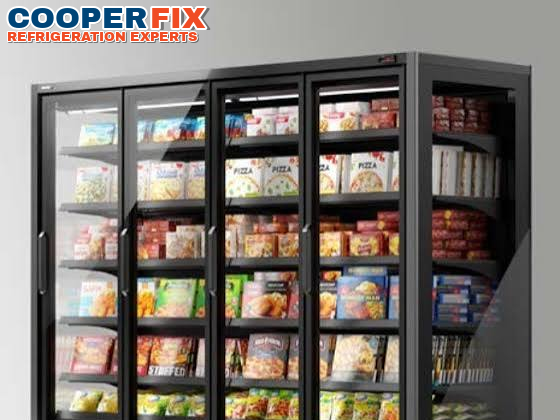
Commercial Freezer Repair in North York
Use this route when the request concerns standalone low-temperature cabinets used for commercial frozen storage.
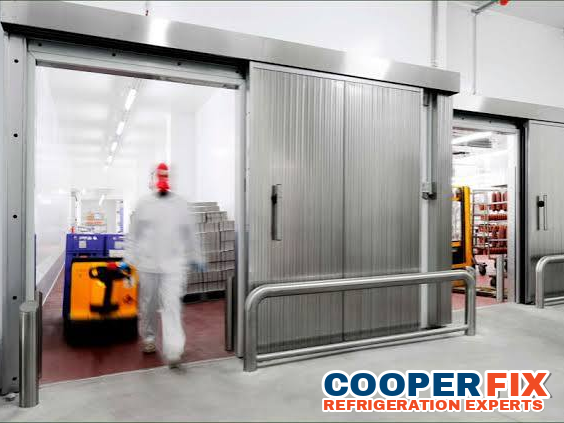
Walk-In Freezer Repair in North York
Use this route when the request concerns the connected refrigeration equipment serving a walk-in frozen room.
Equipment scope
What this North York commercial refrigeration repair page covers
The North York scope remains within CooperFix assessment and repair of commercial refrigeration systems. It does not extend to unrelated systems, and staff are not expected to name the failed component. These categories help identify the unit before the technician confirms how the installed unit is built.
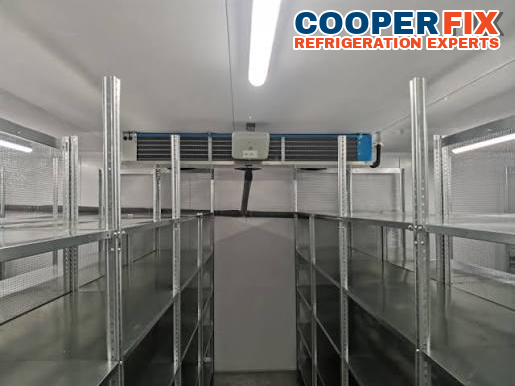
North York — walk-in refrigeration systems
For walk-in refrigeration systems in North York, record the exact unit or room, an accessible model or equipment label and the first repeatable change staff noticed. Note whether the observation follows deliveries, restocking, preparation or customer-service demand. CooperFix assesses the installed arrangement before defining repair scope; staff should not remove panels, bypass controls, handle refrigerant or choose replacement parts.
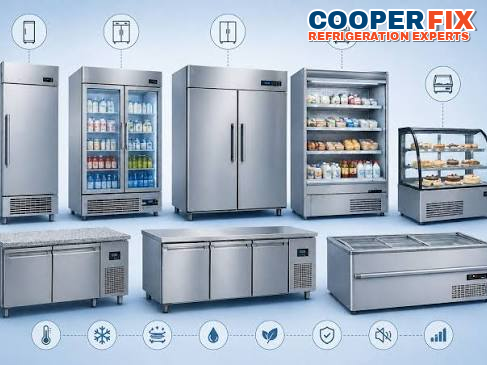
North York — reach-in and undercounter cabinets
Describe the reach-in and undercounter cabinets by its position on the property and its role in the operation. Keep door activity, loading pattern, displayed messages and recovery behaviour as separate observations. The technician tests the functions relevant to that unit and explains the supported work. Site staff should provide safe access, not perform electrical or refrigeration-system tests.
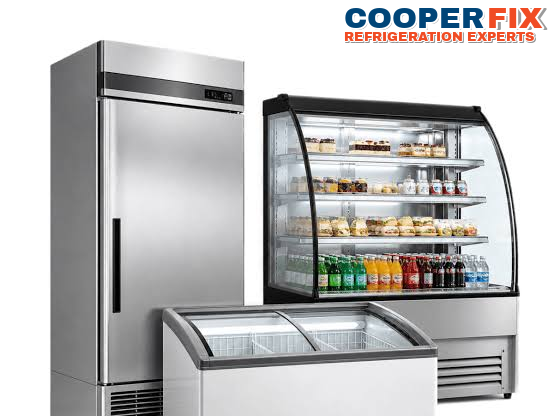
Commercial freezers for contained frozen stock
Commercial freezers have a different duty from fridges. Their role in a business may include frozen inventory, staged orders or products needed for later preparation. A freezer interruption can therefore disrupt plans beyond the immediate service period. CooperFix assesses the unit’s refrigeration and control functions as installed before proposing a repair. A compressor is not assumed defective merely because a freezer is not performing.
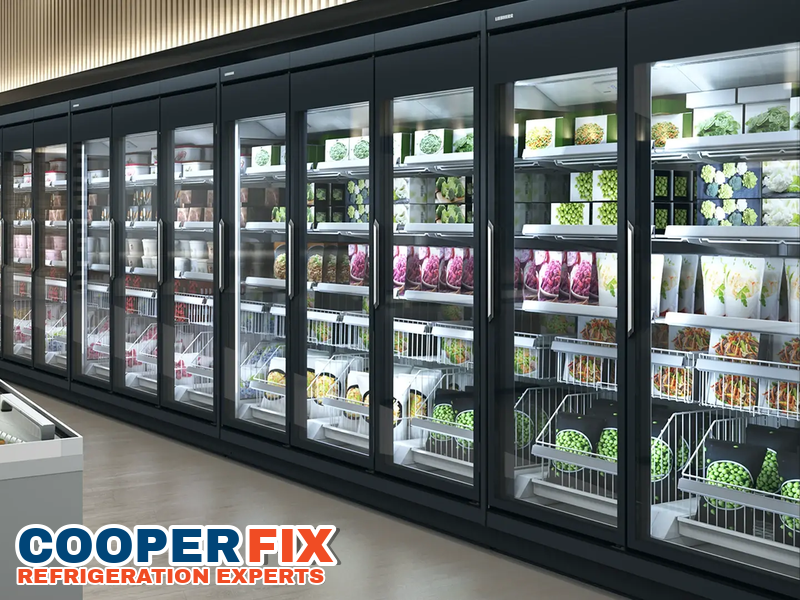
North York — display and merchandising cases
For display and merchandising cases, note where the unit is installed, when its behaviour changed and how that change affects the North York operation. The technician confirms the fitted configuration and any component compatibility before recommending work. Leave covers closed and do not disturb wiring, controls or the refrigerant circuit while preparing the service request.
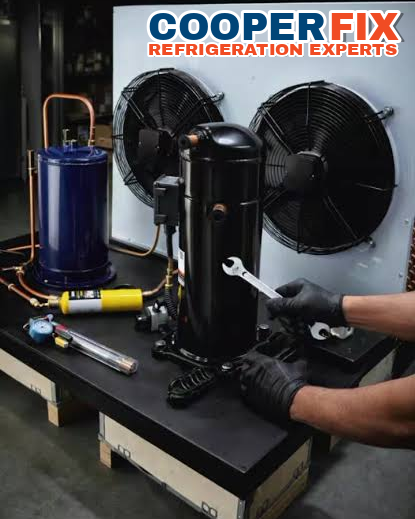
CooperFix at work
North York diagnosis follows the installed commercial refrigeration equipment, not a generic symptom
Identify each affected refrigeration unit at the property and explain which one is disrupting operations most. Keep observations separate because similar symptoms can have different causes. CooperFix examines the relevant controls, electrical functions, airflow, compressor response and refrigerant-circuit behaviour as supported by the fitted equipment.
Technical measurements and their interpretation remain the technician’s responsibility. The North York business contact contributes operating history, safe access and the way the problem affects current work. Any resulting scope remains linked to the unit actually assessed.
Repair scope
North York repair work is based on the fault established at the commercial refrigeration equipment
For the North York commercial refrigeration equipment, a control alert, frost pattern, unusual sound, protective stop or slow recovery may provide useful evidence, but no single observation justifies an automatic parts order. CooperFix distinguishes adjustment, repair and compatible component replacement by relating the symptom to the installed system and its condition.
Before work proceeds on the North York commercial refrigeration equipment, the responsible contact should understand the component or function involved, why the evidence supports that scope and whether a part must be sourced for the exact model. After authorized work, the technician evaluates the relevant operating response under the conditions available at the visit.
Business refrigeration scenarios
Different North York operations create different commercial refrigeration repair priorities
A North York site with several similar commercial refrigeration units
Unit labels, accessible model details and separate observations keep findings assigned to the correct unit. A walk-in room, a display case and a preparation unit can affect different parts of the operation, so the service record should preserve that distinction.
Managed access for the North York commercial refrigeration equipment
Access to the North York commercial refrigeration equipment may depend on loading-area timing, property-desk authorization and equipment located beyond customer-facing areas. The request should name the person who can arrange access and identify restrictions without sending staff into a protected area merely to trace equipment.
North York Commercial Refrigeration Repair operating timing as service context
For the North York commercial refrigeration equipment, delivery periods, restocking, preparation and customer-service hours can place different demands on separate units. Time patterns can help reproduce or interpret the complaint, but they remain context rather than proof of a failed component; current equipment evidence controls the recommendation.
Effect on business operations
Describe what the North York commercial refrigeration equipment change means for the business
A useful North York request explains whether the commercial refrigeration equipment issue affects storage, preparation, a customer-facing display, access to a frozen room or the availability of backup equipment. That context supports triage and visit planning without transferring the operator’s stock decisions to CooperFix.
For a North York request covering several refrigeration units, keep each location, symptom and business impact in a separate record. The service conversation should keep the operational consequence alongside the technical finding, not use that consequence as proof that a particular component has failed.
Before the visit
Prepare North York identification and access without dismantling the commercial refrigeration equipment
For the North York commercial refrigeration equipment, record the unit or room location, accessible model information, displayed messages and the time pattern staff observed. If recent work was completed, include the date and the part of the equipment that was addressed. Leave panels, wiring and refrigerant components untouched; a service brief does not need staff-led testing.
For North York, an on-site contact can identify the affected unit and explain which access arrangements apply to that part of the property. Mention clearance around the cabinet and permission to reach associated equipment when it applies. If connected equipment has not been located, say so and allow the technician to trace the arrangement safely on site.
Repair recommendation
Keep the North York commercial refrigeration repair recommendation proportional to the evidence
The North York diagnosis may support a targeted electrical, control, fan, defrost or refrigeration-circuit repair. It may also show that more operating evidence is needed before a final component decision. CooperFix documents the condition identified and explains the next step for the installed commercial refrigeration equipment.
Availability, parts and the ability to observe the complaint depend on the location, workload, equipment and repair required. Those limits keep the B2B decision practical and evidence-based.
Repair is not always the only possible recommendation, but replacing equipment or a component should follow a reasoned assessment. The mechanic can explain how the installed unit, intended use and technical requirements affect a proposed replacement. Where a walk-in freezer refrigeration system is to be installed or changed, commissioning and start-up belong to a separately defined professional scope. The business should understand what is included and what must be verified after the work. CooperFix does not present a new unit as the automatic answer to a fault that has not been investigated.
What to expect from service
Professional North York assessment with clear commercial refrigeration equipment boundaries
CooperFix provides North York commercial refrigeration repair assessment and repair within the scope described on this page. The 90-Day Parts & Labour Warranty applies to covered completed CooperFix repair work under its applicable terms; it does not automatically cover unrelated equipment, stored goods or a later independent fault.
For an urgent North York request, provide the address, affected commercial refrigeration unit, operating impact and access contact so availability can be assessed. Do not attempt electrical or sealed-system work while waiting for a response. CooperFix confirms current availability after reviewing the service address, equipment and operating impact.
FAQ
North York Commercial Refrigeration Repair FAQ
Which types of commercial refrigeration equipment can CooperFix assess in North York?
In North York, this page covers walk-in refrigeration systems, reach-in and undercounter cabinets, refrigerated preparation equipment and display and merchandising cases within CooperFix commercial refrigeration scope. A technician confirms the installed configuration before recommending work; the equipment name alone does not establish current condition.
What information makes a North York commercial refrigeration repair request easier to plan?
Provide the North York address, exact commercial refrigeration equipment, on-site contact, accessible model or equipment label and observed operating change. Add known access needs such as a roof key, escort or separate service-room entry. Technical diagnosis remains with CooperFix.
Does equipment triage across one busy property identify the failed component?
No. For the North York commercial refrigeration equipment, that observation guides assessment but cannot identify one component. CooperFix tests the functions relevant to the reported symptom before defining the repair scope, then explains the supported repair before work is authorised. Staff should not reset controls repeatedly or open protected equipment.
Can several North York commercial refrigeration equipment units be listed in one request?
Yes. For North York commercial refrigeration equipment, give every unit its own location or equipment label, symptom and operating impact. Do not combine separate cabinets or rooms into one assumed fault; findings and proposed work stay attached to the equipment assessed.
What access information matters for this North York commercial refrigeration equipment?
Name the person who can provide entry to the North York commercial refrigeration equipment and note whether the technician may need loading-area timing, property-desk authorization and equipment located beyond customer-facing areas. If the connected equipment location is unknown, say so rather than enter restricted space. This supports visit planning without assuming the system arrangement.
Can maintenance be discussed during a commercial refrigeration repair assessment in North York?
Yes. For North York commercial refrigeration repair, separate the active repair concern from operating equipment considered for maintenance. CooperFix assesses the reported fault first, then can discuss maintenance for the identified unit, condition and access.
How are emergency commercial refrigeration repair calls handled for North York?
Urgent requests are reviewed from the service address, equipment condition and operating impact. For the North York commercial refrigeration equipment, provide the address, operating impact and access contact. The business controls stock and operations while availability is assessed.
Arrange assessment
Request Commercial Refrigeration Repair for a North York business
Tell CooperFix which North York commercial refrigeration equipment needs attention, what staff observed and how the unit supports the operation. Include the address, responsible contact and any known access coordination. Staff can submit the request without first identifying the technical cause.
Emergency calls are received and assessed 24/7. Availability and response depend on location, workload and the repair required.
Provide your name, phone number, email address, service address, equipment type and what changed in the field “Tell us more about the issue”. Do not perform technical tests before submitting the request.