
Walk-in freezer repair in Barrie
If a Barrie walk-in freezer room starts warming, icing heavily or showing a controller alarm, describe the change and its effect on frozen stock or operations. CooperFix can arrange an on-site assessment of the evaporator, controls and condensing equipment serving the room.
For Barrie walk-in freezer service, identify the room, evaporator and condensing unit as connected but separately located parts of one installed system. Report the room reading, fan sound and visible frost before making any assumption about the source of the loss of temperature.

Tell us about the walk-in freezer system that needs attention
Send the Barrie address, the on-site contact and a note on what staff see inside the freezer room. Where several walk-ins are involved, describe each room on its own line and say which one puts the most frozen stock or output at risk.
- Measured room temperature, target, control alert, coil condition, sound, water, doors and condensing equipment
- Condensing-unit or evaporator nameplate data, when safely readable
- Route to the roof, mechanical room or outdoor condensing unit
Request walk-in freezer service in Barrie
Provide a phone number and email address where CooperFix can confirm the equipment, site and access details.
What happens after you contact CooperFix
A walk-in freezer call begins with staff notes, then moves to the evaporator, condensing unit and controls that keep the room frozen.
Describe what changed
Stay out of electrical and refrigeration enclosures and write down what the room is doing: the displayed reading, any alarm, ice on the coil, water by the drain, new noises and longer compressor running. Note any reset.
Confirm the address and access
Give the address with unit or suite, and name who will walk the technician to the freezer room. Mention whether the condensing unit sits on the roof or in a locked mechanical area, and whether a landlord or other tenant controls that route.
Review the diagnosis and next step
Once the evaporator, condensing unit and controls have been checked, you hear what failed, what was done, which parts remain and whether a second trip is required. Nothing is recommended on a warm reading alone.
Walk-in freezer equipment we service in Barrie
A warm freezer room can trace back to the coil overhead, the condensing unit outside or the controls between them. Name the affected room and where each part is installed. Layout, nameplate data and symptom behaviour guide what gets inspected first.
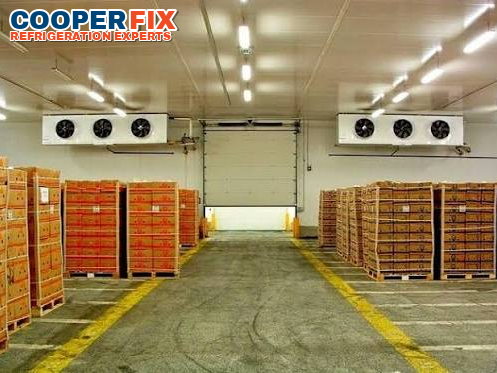
Refrigeration system serving the freezer room
Provide the room identifier, target and current temperatures and the known layout of its refrigeration system. Include the evaporator, controller and condensing-unit locations. The service offered covers those refrigeration components and excludes structural work on insulated panels, floors, thresholds, doors or hardware.
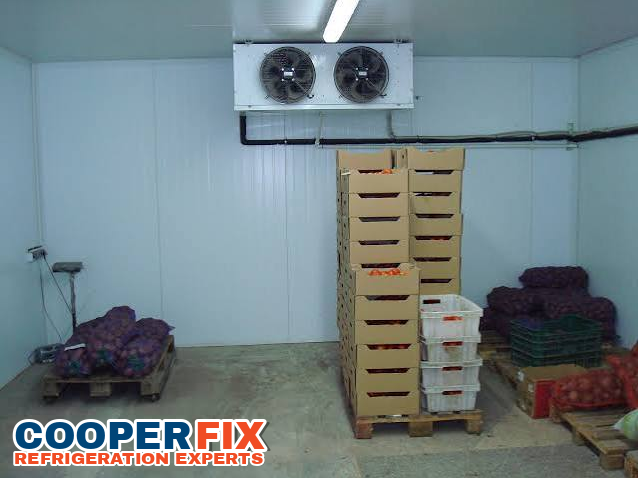
Evaporator, fans and defrost components
Describe visible coil frost, fan sound, water, controller messages and the timing of recurrence after defrost. Observe from a safe position and leave the fan guard and coil untouched. The technician checks the airflow and defrost sequence before identifying a refrigeration-system fault.
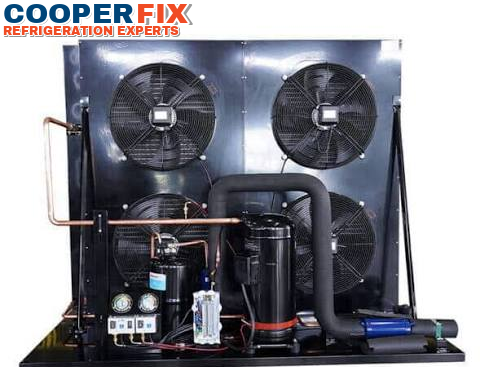
Remote condensing equipment
State where the remote unit is installed, how it can be reached and whether staff noticed new noise, frequent cycling or longer operation. The compressor, condenser and refrigeration circuit require measurements at the installed equipment before a major repair or replacement is considered.
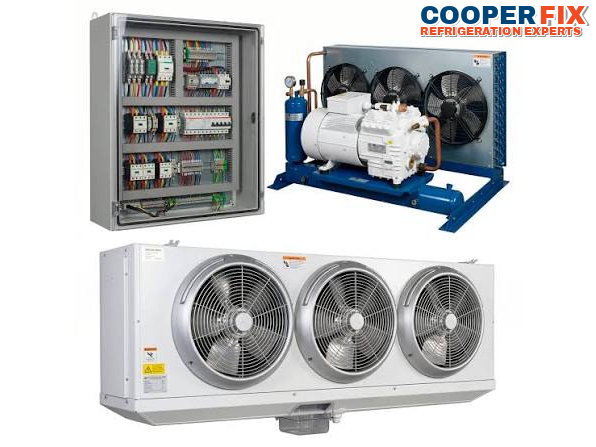
Connected controls and refrigeration components
Report the exact alarm, displayed temperature and any electrical safety shutdown. Leave enclosures closed and do not repeatedly reset a stopped system. The assessment compares controller operation, wiring and refrigeration response across the connected equipment before work is selected.
How the technician follows the walk-in freezer system beyond the first symptom
Ice or rising temperature shows up inside the room, yet the cause may sit at the condensing unit, a sensor or the drain line. The technician first traces how the parts connect, then works along the circuit, wiring and airflow.
Work begins with the room’s recent readings, controller codes and what staff noticed changing. Inside the freezer, the technician looks at coil frost, fan operation, sensor position, defrost heaters, the drain line and airflow. The check then extends to the compressor, condenser, wiring and circuit pressures where needed.
Following the system from coil to condensing unit avoids replacing a part because one sign pointed at it. You learn what failed, what was fixed, what parts remain and which readings to watch.
In a walk-in freezer the evaporator usually hangs from the ceiling and moves air across stored product. Shelving placed too close, stacked boxes or plastic sheeting in front of the fans can short-circuit that airflow, so the technician checks the air path inside the room before testing components.
Arrange access to the complete system
Staff only log readings, alarms and changes; no covers come off and no meters are used. Before the visit, clear the way to the freezer room, the disconnect and the condensing unit, and name who will hear the results.
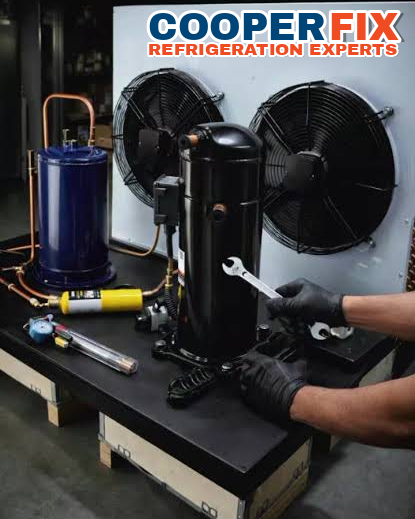
Common walk-in freezer faults and how repair recommendations are made
For a walk-in freezer, the recommendation rests on how the room is loaded, the state of the system and the findings.
Room-wide temperature change
Give the room-temperature trend, recent entry or loading activity, airflow observations and control or defrost information. A warm room can reflect several refrigeration causes. The evaporator and condensing equipment are tested as one installed system before a recommendation is made.
Frost and drainage problems
Note where frost and water appear and how the pattern changes through defrost. Fans, heaters, sensors, controls and the refrigeration drain path are checked together. Staff should not chip ice or alter the room structure; CooperFix’s scope here is the refrigeration system.
Fan, control and electrical faults
Copy controller alarms and report stopped fans or a tripped protective device without opening a guard, panel or disconnect. Include what happened after any reset already made. Testing determines whether the issue lies in controls, wiring or another refrigeration component.
Recurring problems and replacement planning
When the issue has happened before, provide the service date, completed refrigeration work and duration of normal operation. The technician reassesses capacity, equipment condition, room duty and present measurements before discussing repair, monitoring or refrigeration-component replacement.
A drain line that freezes is a common cause of water and frost problems in walk-in freezers. Meltwater that cannot leave after defrost refreezes on the coil or the floor, and repeated cycles make the build-up worse until airflow is blocked.
Information Barrie businesses should provide before a refrigeration visit
Whether the walk-in freezer supports a restaurant, a grocery store, a warehouse or an institution, the request should name that type of property and the affected room. Explain what the warm room is doing to deliveries, storage or production, what staff saw, and who can open each area.
Document room recovery
Record the temperature when normal loading or entry ends and again after the door has remained closed for the site’s usual period. State whether the trend is stable, rising or returning toward the setpoint.
Identify the evaporator position
Say which evaporator serves the room and where staff can safely see frost, water or a stopped fan. Do not stand beneath falling frost or open the fan housing.
Preserve defrost observations
Note controller messages, scheduled defrost timing and water seen near the drain before anyone clears the display. These observations help distinguish the sequence without asking staff to test components.
Coordinate condensing-unit entry
Confirm whether the remote unit is in a service room, outdoors or on a roof and who controls that access. Report sound or repeated stopping from a safe location and leave disconnect operation to authorized personnel.
Record observations without opening the equipment
Copy the reading shown on the freezer controller and check it against the thermometer staff use. Add the time, whether a delivery was put away and whether the room was entered often. Photograph a nameplate only when it can be read without climbing or removing a cover.
When a breaker or safety switch on the freezer system trips, avoid resetting it repeatedly. Tell CooperFix which device was reset, how often and how the compressor or fans behaved next. That record focuses electrical checks without forcing a protective device to operate again.
Note whether frost or condensation appears near the entrance of the room. Warm, humid air entering during use can create frost at the entrance and on nearby product, which helps the technician distinguish an airflow issue from a refrigeration fault.
Use your food-safety procedures while service is being arranged
A refrigeration visit works alongside the business’s food-safety procedures, not in place of them. Keep checking the room, and relocate frozen stock when the person in charge of food safety decides the room can no longer hold it. Limit entries and leave space before the evaporator fans.
Ice underfoot near the freezer room, pooled meltwater or a burning smell near the controls means people should stay clear of the area. Mention these when you call so the hazards can be planned for.
Arrange access to every part of the affected refrigeration system
Send the complete Barrie address and unit, freezer-room name, evaporator and remote-unit locations, site-entry instructions and the person who can open every restricted area. Keep the doorway and safe working area below the evaporator clear while preserving visible frost, and identify the refrigeration disconnect without operating it.
Where safe, shift cartons and carts away from the evaporator and the path to the condensing unit, but leave fixed equipment in place. Have the on-site contact ready to point out the room, share observations and hear the results.
Confirm what was found, what was repaired and what still needs attention
Before the technician leaves, ask what caused the problem, what was done, what further work is advised and whether a part must be ordered or a follow-up booked. Check that the evaporator and condensing unit are running, which readings staff should watch and who gets the report. Ask whether anything done is temporary rather than final.
Retain nameplate information for the evaporator and condensing unit, controller messages, room logs and service notes under one room identifier. If trouble returns, share the previous visit and work performed. Compare room temperature, fan sound and refrigeration drainage during ordinary door use and defrost.
What to know before requesting walk-in freezer service
These answers cover what to tell CooperFix and how a walk-in freezer visit is set up. Repairs are confirmed only after an on-site inspection.
Can a Barrie business request CooperFix service for a walk-in freezer system?
Yes. CooperFix receives commercial walk-in freezer refrigeration requests from Barrie businesses. Describe the room, evaporator, condensing unit, controller, defrost system and connected refrigeration drainage, plus the displayed and target temperatures and the effect on business operations. The complete installed refrigeration system is checked before repair work is confirmed.
What details help when a walk-in freezer room in Barrie starts running warm?
Record room and setpoint readings, controller alarms, evaporator frost, fan sound, refrigeration drainage and condensing-unit operation. State when the temperature began rising, recent entry or loading and whether the change covers the whole room or one area. Follow the site’s food-safety procedures while waiting for service.
Does ice on the evaporator coil identify the fault?
No. Heavy ice on the coil may come from blocked airflow, a defrost problem, a frozen drain line, a sensor or the circuit itself. Photograph it if safe, note where it builds up and leave every cover closed.
What should a Barrie business send before a walk-in freezer visit?
Send the address with unit or suite, the on-site contact and opening hours. Say where the freezer room and condensing unit are, and note roof access, locked mechanical areas, loading-dock rules, security sign-in or a property manager approving entry.
How should a Barrie business list several walk-in freezer systems that need attention during the same visit?
List each freezer room separately with its location, evaporator or controller identifier and symptoms. Add the known condensing-unit location for each system, and rank the rooms by risk to stock, deliveries or production. CooperFix can then plan one visit without combining the diagnostic details.
Which photos help CooperFix prepare for a walk-in freezer visit?
Useful photographs include the controller screen, the nameplate on the condensing unit or evaporator and a wide view of the mounted equipment, taken without climbing or removing a guard. They help identify the system and plan safe access, but the fault must be confirmed on site.
What should staff report when a walk-in freezer problem in Barrie is urgent?
Send the current room temperature or alarm, the affected refrigeration equipment, the risk to frozen stock, the Barrie service address and the access contact. CooperFix reviews those facts to assess urgency, confirm availability and coordinate entry to the freezer room and remote equipment.
Why should earlier repair records be shared when a walk-in freezer fails again?
Earlier records should show the last visit date, the work completed and how long the room held temperature afterward. Describe the current condition and record when it was first observed. The technician uses that history as context for new testing, not as proof that the same fault has returned.
Request walk-in freezer service in Barrie
Tell us the business address, which freezer room is affected, the current reading or alarm, the frozen stock at risk and who can open the site. For urgent problems, call (647) 483-3777.
Commercial Refrigeration Repair in Barrie Commercial Walk-In Freezer Repair service overview
Emergency calls are received and assessed 24/7. Availability and response depend on location, workload and the repair required.
Send your Barrie service request
Describe the affected equipment and provide the Barrie service address.