
Walk-in freezer repair in Bradford
A Bradford walk-in freezer room that is warming, frosting over or alarming may need its refrigeration system assessed. Tell CooperFix what staff observed, when it began and how frozen storage or production is affected so an on-site visit can be arranged.
For a Bradford walk-in freezer, report the individual room and system layout at the service property. Separate the room-temperature trend from observations at the door, evaporator, drain and remote condensing unit.

Tell us about the walk-in freezer system that needs attention
Send the Bradford service address, the on-site contact and a short note on the freezer room, including what staff notice at the evaporator, controller or condensing unit. If several walk-in freezers are involved, describe each room separately and name the one holding stock most at risk.
- Setpoint difference, controller warning, evaporator frost, fans, drainage, access-opening use and compressor-side operation
- Condensing-unit or evaporator nameplate details, where readable from the floor
- Condensing-unit location and who can unlock that area
Request walk-in freezer service in Bradford
Provide a phone number and email address where CooperFix can confirm the equipment, site and access details.
What happens after you contact CooperFix
A walk-in freezer visit begins with staff notes about the room, then moves to the evaporator, controls and condensing unit keeping it frozen.
Describe what changed
Tell us how the room reading has moved, whether the evaporator is icing or dripping, and whether the condensing unit sounds different. Staff only look and listen. If anyone reset the controller or a breaker, say when and the result.
Confirm the address and access
Give the full Bradford street address and unit number, and name who will walk the technician in. A walk-in freezer often has its condensing unit on a roof or in a mechanical room, so say where and whether a landlord holds keys.
Review the diagnosis and next step
Once the evaporator, controls and condensing equipment are checked, the technician explains what failed, what was done, which parts are needed and whether a second trip is required. Recommendations follow those findings, not the first symptom.
Walk-in freezer equipment we service in Bradford
A freezer room running warm may have a fault at the evaporator inside, the controller on the wall or a distant condensing unit. Describe where each sits and share any nameplate details, so the technician knows what to check first.
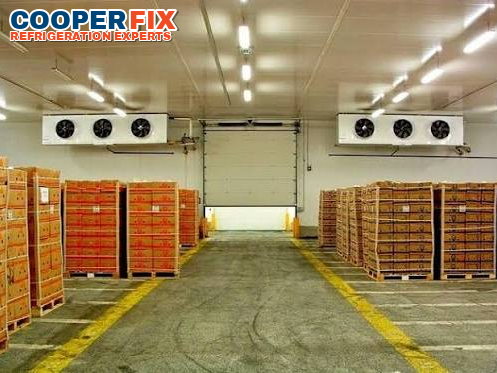
Refrigeration system serving the freezer room
Name the freezer room, intended temperature and present reading, then identify the evaporator, controls and condensing equipment known to serve it. CooperFix diagnoses and repairs that refrigeration system. Insulated enclosures, floors, panels, structural doors and their hardware are outside this service.
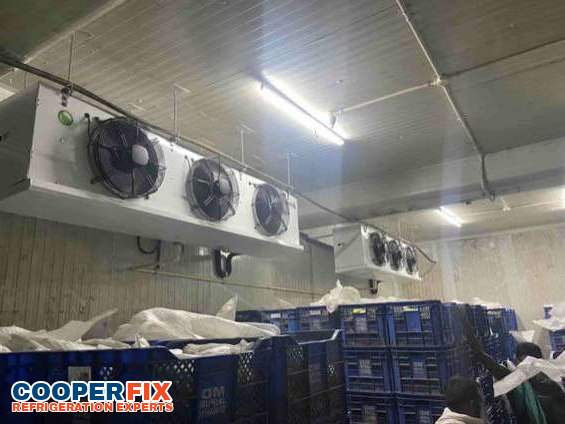
Evaporator, fans and defrost components
From a safe staff position, record coil frost, fan operation, water, controller messages and what occurs after defrost. Keep hands away from the evaporator and leave guards in place. The technician tests airflow, sensors and the full defrost sequence with the connected system.
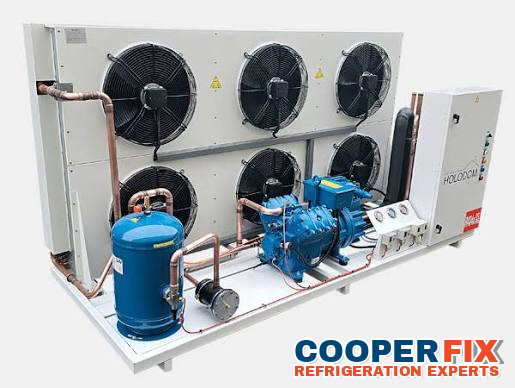
Remote condensing equipment
Explain where the condensing unit is installed, who grants access and whether its sound, cycling or run time changed. Do not climb or approach unsafe equipment for a closer look. Measurements of the compressor, condenser and circuit support any major-component recommendation.
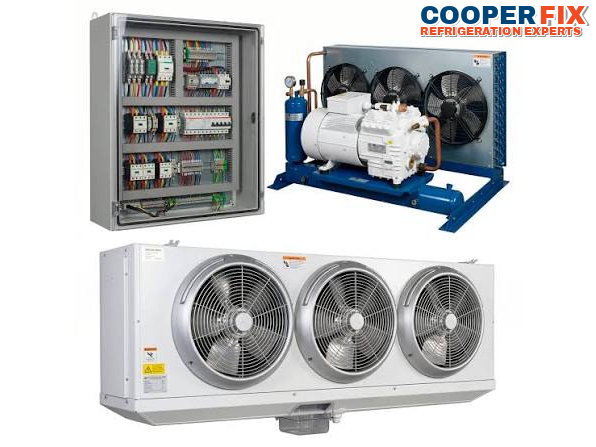
Connected controls and refrigeration components
Provide the controller’s exact message, room reading and history of any safety shutdown. Avoid further resets and keep electrical covers closed. The technician checks how the controls, wiring and refrigeration components respond as part of the complete walk-in freezer system.
How the technician follows the walk-in freezer system beyond the first symptom
In a walk-in freezer, trouble shows in the room, while the cause may sit in the evaporator, controls or condensing unit outside. The technician traces how these parts link, then checks wiring, fans, drain lines and the refrigerant circuit.
Work begins with room readings, alarm codes and what staff noticed. Inside, the technician looks at coil frost, fan motors, sensor placement, defrost timing and the drain line, and whether frequent entries let cold air escape. Outside, the compressor, condenser coil and electrical controls are tested as needed.
Looking at the whole walk-in system keeps the recommendation from resting on one sign. Before leaving, the technician reviews what failed, what was fixed, which parts or follow-up visits remain and what staff should watch.
Walk-in freezers often share electrical supply or control wiring with other equipment. A tripped circuit or a loose connection elsewhere can stop the evaporator fans or the condensing unit, so the technician follows the electrical supply as part of the system check.
Arrange access to the complete system
Staff need no tools; noting room readings, alarm codes and changes in fan or compressor sound is enough. Before the visit, make sure the freezer room, its disconnect and the condensing unit are reachable, and name who approves work.
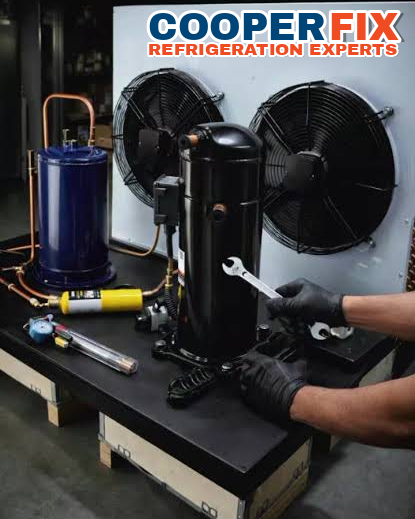
Common walk-in freezer faults and how repair recommendations are made
Each walk-in freezer fault is handled by what the inspection shows, how the room is used and its equipment’s state.
Room-wide temperature change
Describe the room-temperature trend and normal loading or entry, then list observations about airflow, defrost, alarms and condensing-unit operation. The technician compares both sides of the refrigeration system instead of treating a warm room as proof of one failed part.
Frost and drainage problems
Record the location and timing of frost and water, including their relation to defrost. The installed heaters, probes, fan operation, controls and refrigeration drainage are tested in sequence. Do not remove ice from structural surfaces for diagnostic purposes.
Fan, control and electrical faults
Note stopped fans, controller codes and any breaker or safety device that operated. Leave guards and electrical panels closed and report the result of any prior reset. On-site electrical and refrigeration testing identifies the failed control or component.
Recurring problems and replacement planning
Send the previous service record, the period of normal room operation and the present symptom. Each recurrence is diagnosed again. Refrigeration capacity, equipment condition, room duty, access and current measurements guide repair, monitoring or replacement of refrigeration equipment.
High pressure at the condensing unit, often caused by dirty coils or failed fans, forces the compressor to work harder and can trip safety controls in warm weather. The technician checks these conditions, especially when problems appear during the hottest part of the day.
Information Bradford businesses should provide before a refrigeration visit
Walk-in freezers in Bradford support very different operations, so tell us what yours serves: a restaurant’s frozen stock, a grocer’s backroom, a distributor’s receiving area or a production line. Describe the property type, which freezer room is affected and how warmer readings disrupt work. Add what staff saw at the evaporator or condensing unit, and name who can coordinate entry to the room and any roof equipment.
Identify every controlled location
Name the freezer room, controller, disconnect and known condensing-unit location in terms used by the property. If one area is shared, state who can grant access.
Record entry and recovery times
Note room temperature at the end of ordinary loading or entry and after the usual closed-door interval.
Describe overhead conditions safely
From a safe position, report evaporator frost, fan sound, water and any controller message. Keep people away from loose frost and do not open the fan guard.
Keep remote-unit observations separate
Report unusual sound or stopping at the condensing equipment with its own time and location. Do not combine it with the room symptom as though one proves the other.
Record observations without opening the equipment
Read the freezer room display and check it against the thermometer the business already relies on, writing both down with the time. Note whether stock was just delivered or the room was busy. If an equipment nameplate can be photographed from where you stand, take that too.
If a breaker or the controller’s safety cutout trips, leave it off after the first reset and call. Tell CooperFix how many resets were tried and how the walk-in system responded. That record guides electrical testing and spares the compressor more strain.
If frost builds on product or shelving near the evaporator, note how far it extends and whether it returns after defrost. This simple observation shows the technician whether frost is limited to the air path or is spreading through the room.
Use your food-safety procedures while service is being arranged
A refrigeration visit works alongside, not instead of, your own food-safety procedures. Keep logging the room temperature, and let the person responsible for food safety decide when frozen stock should go elsewhere. Limit trips into the freezer and keep cases clear of the evaporator fans.
Melting frost, pooled water on the freezer floor or a burning smell near electrical parts can make the area hazardous, so keep people out. Mention any such hazard when calling so entry is planned.
Arrange access to every part of the affected refrigeration system
Provide the Bradford street address and unit, room label, evaporator and known condensing-unit locations, access directions and the contacts for secured or rooftop areas. Confirm a safe route from the meeting point to both equipment locations, and identify the refrigeration disconnect without asking staff to operate it.
Clear boxes, carts and loose stock away from the evaporator and condensing unit when safe, but leave fixed equipment where it stands. Keep someone available who knows which freezer room is affected and can discuss findings.
Confirm what was found, what was repaired and what still needs attention
Before the technician leaves, ask what failed in the walk-in freezer system, what was repaired and what work is still advised. Find out whether a part must be ordered or a return trip booked, which readings and alarms staff should watch, and who receives the written report. Ask whether anything done is temporary rather than finished.
Keep evaporator and condensing-unit data, controller history, room-temperature records and technician notes together for the confirmed system. If the fault returns, share the earlier service date and new symptom. Log room temperature, fan sound and refrigeration drainage through routine entry and defrost periods, with each observation tied to the same room label.
What to know before requesting walk-in freezer service
These answers cover what to tell CooperFix about a walk-in freezer problem and how a visit is set up. Any repair depends on on-site inspection.
Can CooperFix assess walk-in freezer systems for a business located in Bradford?
Yes. CooperFix accepts commercial walk-in freezer refrigeration requests at Bradford business locations. Identify the room and its evaporator, condensing unit, controls, defrost components and connected refrigeration drain. Include temperature readings, alarms and the risk to stock and business operations. Repair is confirmed after the installed refrigeration system is assessed.
Which details help when a walk-in freezer room starts running warmer than its setpoint?
Write down room and target temperatures, controller alarms, evaporator frost, fan operation, refrigeration drainage and condensing-unit behaviour. Add the start time, normal entry or loading and whether one area or the entire room is affected. Keep following established food-safety procedures while arranging the visit.
Does evaporator ice alone identify the walk-in freezer fault?
No. Ice on the evaporator coil can come from airflow trouble, frequent entries, defrost or drain faults, controls or the refrigeration circuit. Photograph it only from a safe spot, note where it builds and keep covers closed.
What site details should a Bradford business share before a freezer visit?
Give the street address and unit number, the on-site contact and the hours the freezer room can be reached. Also say where the condensing unit is mounted, whether roof access is needed, and any parking or security steps.
If two walk-in freezer rooms are affected at a Bradford property, may both be included in one service request?
Yes. List every affected freezer room in one request and give the location of each room and its condensing unit. Identify which condition creates the greatest risk to frozen stock or operations. CooperFix can plan the combined visit while recording each system’s symptoms separately.
Which photos of a walk-in freezer system are worth sending ahead?
Useful shots are the equipment nameplate, the controller screen showing its reading or alarm, and a wide view of where the equipment sits, taken without climbing or removing guards. They help with identification and planning but cannot confirm the failed part.
Which details help CooperFix assess an urgent walk-in freezer call in Bradford?
Describe the urgent refrigeration condition, current room reading or alarm, frozen-stock risk, Bradford address and person who can provide complete access. CooperFix uses this information to assess urgency and availability and to coordinate entry to the room, controls and any remote condensing equipment.
If a walk-in freezer system fails again, what earlier service details should we share?
Share the date of the last visit, what was repaired and how long the freezer room then ran normally. Describe the present symptom and when staff first noticed it. Earlier records guide the new diagnosis but do not prove the fault returned.
Request walk-in freezer service in Bradford
Send the business address, the affected freezer room, its current reading or alarm, what frozen stock is at risk and who can open the site. For urgent problems, call (647) 483-3777 with those details.
Commercial Refrigeration Repair in Bradford Commercial Walk-In Freezer Repair service overview
Emergency calls are received and assessed 24/7. Availability and response depend on location, workload and the repair required.
Send your Bradford service request
Describe the affected equipment and provide the Bradford service address.