
Walk-in freezer repair in East Gwillimbury
CooperFix provides walk-in freezer refrigeration service in East Gwillimbury. The work concerns the refrigeration system serving the frozen-storage room: evaporators, condensing equipment, the refrigerant circuit, controls and associated electrical functions. Describe a temperature change, recurring frost, an alarm or an interruption in operation without trying to identify the failed part.
A walk-in request should connect the affected room with the equipment serving it. Give the operating address, room location and any known location of separate refrigeration components. The technician establishes the installed arrangement, investigates the reported condition and explains the supported work before a component or further visit is arranged.

Report the affected refrigeration system serving the walk-in freezer clearly
Give CooperFix the East Gwillimbury service address, affected equipment, observed change and contact who can provide access.
- Room temperature, controller alarm, ice pattern, water, fan sound and run time, with the time observed
- Equipment label, make and model when safely visible
- Directions to the evaporator, condensing equipment, controls, refrigeration lines and electrical disconnect and the authorized access contact
Request walk-in freezer service in East Gwillimbury
Leave pressure, electrical and control measurements to the technician. Include a phone number and email address for service coordination.
Connect the room, the equipment and the service contact
For a walk-in freezer visit in East Gwillimbury, information about the equipment and access should describe the same installation. Staff can start with the room they use and the change they noticed. CooperFix confirms the technical relationship between that space, its controls and the refrigeration equipment.
For an East Gwillimbury walk-in freezer, identify the room before trying to link a remote unit or evaporator to the complaint. The steps below connect observations, authorized access and the work proposed after assessment.
Name the affected frozen-storage room
Use the room’s existing name or location and describe its present condition. Include the last normal observation and the first known change. If there are several refrigerated rooms at the property, distinguish this one clearly so the request does not combine separate operating histories.
Describe access to connected equipment
Tell CooperFix whether the condensing equipment or controls are in a separate area and who can arrange access. Unknown details can be confirmed during assessment. Staff should not enter restricted areas or open protected assemblies to supply information that is not readily available.
Agree on the work supported by findings
The technician examines the actual refrigeration arrangement and explains the findings relevant to the complaint. Distinguish completed work from parts, access or further checks still required. Keep the room reference with the service record so the next update identifies the same installation.
Refrigeration components serving a walk-in room
Walk-in freezer refrigeration can combine ceiling-mounted evaporators with separate condensing equipment and controls. The technician identifies how these components serve the room and confirms the installed model and operating application. Understanding those connections allows an observation inside the room to be assessed against the operation of the complete refrigeration system.
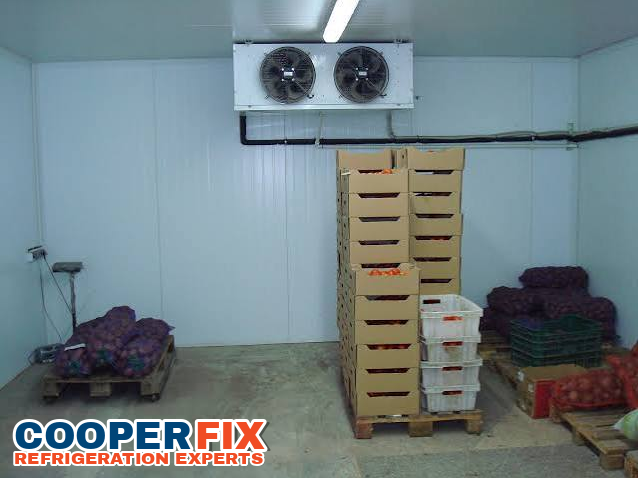
Ceiling-mounted evaporator assemblies
An evaporator assessment connects the room complaint with the installed fans, controls and refrigeration response. Describe a visible change or unusual sound from an ordinary accessible position. CooperFix checks the relevant functions for that assembly rather than assuming that a fan, sensor or other component has failed from its appearance alone.
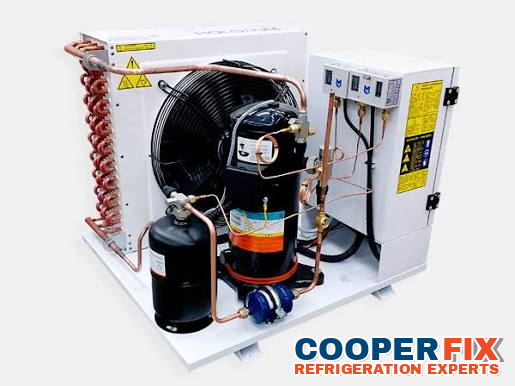
Separate compressor and condensing equipment
Where the condensing equipment is separate from the room, identifying its location helps establish the visit’s access requirements. The technician confirms which equipment serves the affected space and assesses its operation. Do not infer that the nearest outdoor unit is connected to the room without an existing reliable identification.
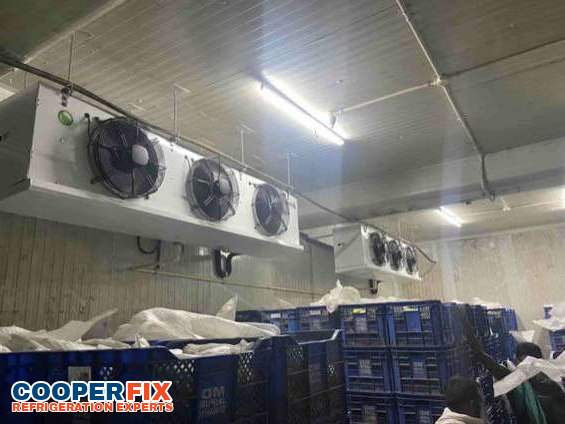
Larger multi-fan evaporators
A larger evaporator may give staff several places to notice changes in sound, frost or air movement. Identify the location of the observation without reaching into the assembly. The technician considers the installed arrangement and applicable controls before relating a difference between areas to the room’s reported condition.
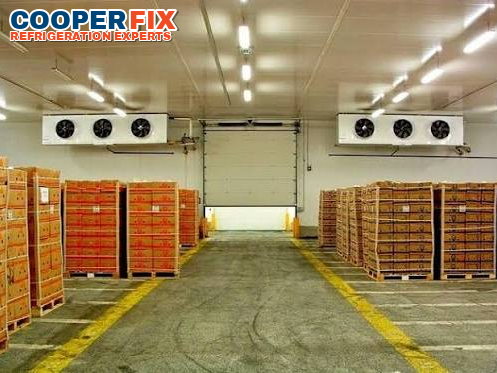
Rooms containing more than one evaporator
When several evaporators are visible, describe which assembly or room area appears different. Their presence does not establish how the refrigeration circuits or controls are connected. CooperFix identifies those relationships during assessment and keeps observations about separate components distinct until the evidence supports a shared finding.
CooperFix at work: follow the refrigeration system through the installation
A walk-in freezer complaint begins inside a room, but the relevant refrigeration equipment may extend beyond that space. During an East Gwillimbury service visit, the technician identifies the connected equipment and considers the available operating history. Access to the room alone may not provide access to every component that needs assessment.
The checks depend on the installed system and can include temperature response, fans, sensors, defrost, controls, electrical functions and the refrigerant circuit. CooperFix explains how the findings relate to the complaint. Where access or information limits the assessment, that limitation remains part of the record rather than being treated as a completed check.
Name the person who can admit the technician and identify any separate contact responsible for restricted equipment areas. Explain appointment or escort requirements during booking. These are access arrangements, not a request for staff to investigate the machinery; technical checks remain with the technician attending the installation.
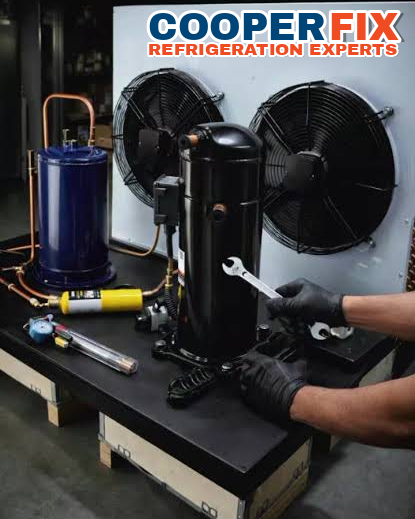
Coordinate the people who control access
Give directions from the site entrance to the equipment and identify who can open restricted areas. Point out known controls, disconnects and remote components without opening protected equipment.
Set a clear scope for walk-in freezer refrigeration work
The room’s refrigeration may need fault repair, planned attention or an agreed replacement project. These are different scopes, even when they concern the same installation. CooperFix uses the confirmed equipment condition and intended use to explain the work, its boundaries and any requirements that remain outstanding.
Repair the established refrigeration fault
A repair addresses findings on the connected refrigeration system. Depending on the assessment, work may involve an evaporator component, control, electrical function or refrigerant circuit. The record identifies what was done and which operating checks followed. A separate unresolved concern stays visible rather than being included in an assumed complete resolution.
Plan maintenance around the actual installation
Maintenance planning starts with the equipment serving the room, its history and the access needed to inspect it. Include recurring alarms or changes noticed between visits. The technician can distinguish a present fault from planned maintenance needs and record any follow-up requirement against the correct room and refrigeration equipment.
Review refrigeration replacement requirements
A replacement discussion needs the intended frozen-storage use, existing arrangement and confirmed equipment condition. Replacing one component differs from replacing the refrigeration system. CooperFix establishes the relevant connections, controls and operating requirements before defining the proposed scope, with a clear distinction between retained equipment and the work being considered.
Install and commission the agreed system
Refrigeration installation and commissioning follow the established system requirements. Coordinate equipment access and any agreed interruption with the responsible site contact. After the work, retain the scope and commissioning record, including operating checks and unresolved items. A completed installation record should describe what was actually tested, not simply that equipment was switched on.
Identify the room before linking it to remote equipment
Identify the room before linking it to remote equipment
An existing room name, equipment label or service record can help connect a complaint to the correct system. Preserve those references when requesting service. If labels are missing or disagree, report that uncertainty. A matching colour, nearby position or similar sound does not establish which condensing unit serves a particular room.
Identify the room before linking it to remote equipment: operating context
For properties with several rooms, provide a simple account of which space changed and which spaces appear unaffected. Keep each observation with its location. The technician confirms the refrigeration connections and controls before explaining whether the findings concern one installation or a relationship between several components.
Consider air movement across the storage arrangement
A room needs air circulation beyond the space directly beneath an evaporator. The technician considers the position of the equipment, shelving and stored material when assessing an uneven condition. A newly affected corner should be identified separately from a change across the entire room.
Consider air movement across the storage arrangement: operating context
Tell CooperFix about recent stock-layout changes and where the difference appears. Leave machinery and fixed fittings undisturbed. This gives the assessment a specific location to investigate without assuming that the stock arrangement alone explains the complaint.
Record an evaporator change without disturbing it
Identify the East Gwillimbury walk-in freezer room and the evaporator that appears different by position or existing reference. Describe frost, water or fan sound from normal safe access and note when it was observed. If the room temperature also changed, give the reading source and time separately.
Leave guards and covers in place; do not remove frost or reach into the assembly to investigate. Existing safe photographs may preserve an observation. CooperFix assesses the applicable defrost, airflow and refrigeration functions before identifying the technical cause.
Explain the stock effect of a planned interruption
If agreed refrigeration work requires an interruption, identify who can authorize it and who manages the business’s frozen-stock arrangements. State whether the affected room is in ordinary use and any timing restriction that the service contact already knows. A planned interruption and an active fault are different matters.
The business follows its own product-handling procedures while CooperFix defines the technical scope. A fan pause or a change in room loading may be relevant history, but neither alone proves a motor fault or identifies every requirement for repair.
Coordinate access to the room and remote machinery
Provide the room location, known condensing-equipment area and contacts who can authorize entry to each. The person admitting the technician may differ from the person who approves an interruption or proposed work. Explain controlled access and site restrictions before attendance.
Staff should not trace piping through restricted areas or bypass controls to establish a connection. CooperFix confirms the installed arrangement and checks its operating sequence. If a relevant area cannot be reached, record the limitation so the service plan reflects what can actually be assessed.
Separate current findings from future replacement planning
After a visit, retain the room and connected-equipment identity, confirmed findings, completed work and any outstanding requirement. Do not describe a proposed replacement or future installation as work already carried out. Identify who will coordinate a needed component or further visit.
If the intended storage use is changing, record the planned function separately from the active complaint. CooperFix can assess the present installation and identify information needed for a proposal; that discussion does not by itself confirm that existing equipment meets a different duty.
East Gwillimbury walk-in freezer service information
These answers explain the refrigeration scope and the information that helps arrange a visit. Findings about the installed system come from the technician’s assessment, not from a room photograph or a booking description alone.
Which part of a walk-in freezer does CooperFix service?
CooperFix services the refrigeration system serving the room. The scope can include evaporators, condensing equipment, the refrigerant circuit, controls, defrost and associated electrical functions. Repair, maintenance or installation work is defined against the actual equipment and confirmed requirements.
What if we do not know which outdoor unit serves the room?
Identify the affected room and provide any existing labels or service records. State that the equipment connection is unknown instead of choosing a nearby unit. The technician confirms the arrangement, with access coordinated for the relevant equipment locations.
Can we report changes at two evaporators in one room?
Yes. Describe each assembly by location and record what staff noticed at each one. Do not assume they share a circuit or the same fault. CooperFix checks the installed relationships and considers the observations together with the measured condition.
Does a stationary evaporator fan always need replacement?
No. Some systems include a controlled fan delay. CooperFix checks the equipment’s design and operating sequence before identifying a motor fault.
Should staff remove frost before the technician arrives?
Do not disturb an assembly to investigate the cause. Describe the visible frost and its location from a safe position, leaving protected equipment closed. CooperFix assesses the applicable refrigeration and defrost functions for the installed system.
Who should coordinate a visit involving restricted equipment areas?
Name the site contact who can arrange entry and any additional person responsible for the machinery area. Explain escort or appointment requirements during booking. If access is unavailable, identify the limitation so it can be considered when arranging the refrigeration work.
Can a replacement project be discussed during fault assessment?
Yes. Explain the current complaint separately from the intended future use. CooperFix assesses the present equipment condition and identifies the information needed for the proposed replacement. The completed repair scope and any future installation proposal remain separate in the record.
How do we request urgent walk-in freezer service in East Gwillimbury?
Call (647) 483-3777 with the operating address, room identification and current condition. Include an access contact and describe the effect on the business. CooperFix assesses the request and discusses the next action based on the information and availability.
Arrange walk-in freezer refrigeration service in East Gwillimbury
Call CooperFix with the East Gwillimbury service address, affected unit and contact who can provide access.
Emergency calls are received and assessed 24/7. Availability and response depend on location, workload and the repair required.
Send the East Gwillimbury service details
Give directions from the site entrance to the equipment and identify who can open restricted areas.