
Newmarket Walk-In Freezer Refrigeration System Repair
A walk-in freezer may sit behind a busy food operation while the refrigeration equipment serving it occupies another part of the property. When performance changes, the business needs to know which system serves the room, what failed and what repair can be authorized. CooperFix provides professional walk-in freezer refrigeration system repair in Newmarket.
The operating context matters. A Historic Main Street business may plan stock around deliveries; a mixed-use tenant along Yonge Street or Davis Drive may have separate contacts for the room, equipment area and approval. The business provides its address, identifies the freezer and gives contacts for access and authorization. CooperFix handles diagnosis without asking employees to trace equipment.
CooperFix brings 20+ Years of Experience to commercial refrigeration work. The 90-Day Parts & Labour Warranty can be discussed for authorized repair under its applicable terms.
Arrange Newmarket walk-in freezer refrigeration repair.

Report the affected refrigeration system serving the walk-in freezer clearly
Give CooperFix the Newmarket service address, affected equipment, observed change and contact who can provide access.
- Equipment label, make and model when safely visible
- Directions to the evaporator, condensing equipment, controls, refrigeration lines and electrical disconnect and the authorized access contact
- Room temperature, controller alarm, ice pattern, water, fan sound and run time, with the time observed
Request walk-in freezer service in Newmarket
Avoid opening refrigeration or electrical compartments. Include a phone number and email address for service coordination.
A Repair Process That Fits the Property and the Business
A Newmarket walk-in request should connect the affected room to its known controls and condensing equipment and identify who can provide access. The technician confirms the installed relationship before explaining a supported repair scope.
1. Establish the affected room and decision path
The first discussion identifies the site, affected freezer and person who can approve work. Equipment in a shared or restricted area may require a separate property contact for access. CooperFix keeps access permission and repair approval distinct. Entry to a service space does not authorize component replacement or identify the correct system in a multi-unit property.
2. Match the installation to the room before isolating the fault
Some properties have multiple units or rooms. CooperFix confirms the serving installation rather than treating the nearest unit or most visible alarm as the answer. The technician relates the evaporator, controls, condensing equipment and connecting circuit, then tests functions relevant to the reported concern. An unrelated unit’s condition must not become the basis for repair.
3. Agree on the repair and hand over a precise account
CooperFix explains the failed function, proposed repair and evidence limits before work proceeds. We clarify any separate access or approval requirement. After authorized repair, the technician evaluates the relevant response and reports what changed and whether another issue remains. An additional problem is not silently included in the original scope.
Know Which Equipment Actually Serves the Walk-In Freezer
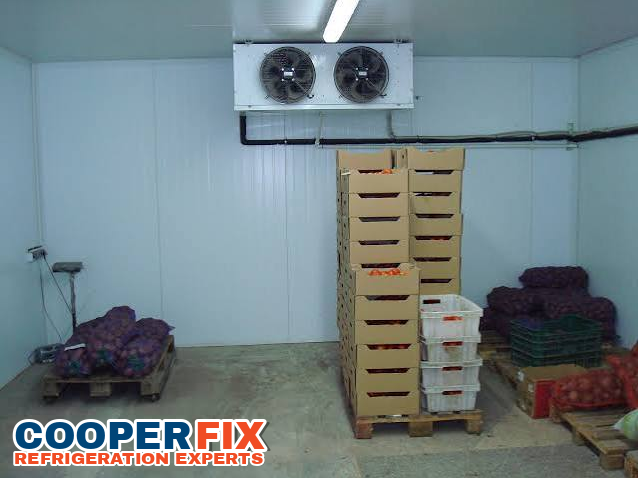
The room-side evaporator and air delivery
The evaporator and its fans help distribute the system’s effect through the freezer room. A concern noticed there may originate in the evaporator, controls or equipment elsewhere. CooperFix examines room-side response against the complete installation to distinguish failed air delivery from a system that is not commanded or supplied as required. The proposal names the affected function, not merely the location of a symptom.
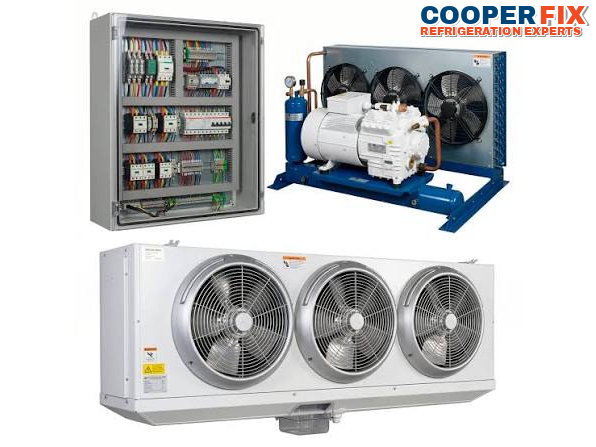
Controls that call for operation and manage defrost
Controls, sensors and defrost devices govern the operating sequence. A disruption can resemble a mechanical failure although the repair belongs elsewhere. CooperFix examines control response alongside connected equipment. A controller indication is evidence, not an instruction to replace the displayed component. The distinction matters when several controls interact.
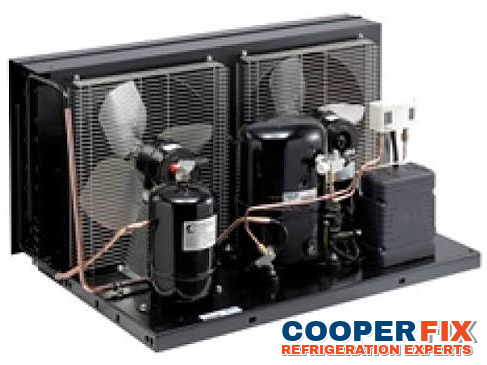
The condensing assembly and compressor starting
Condensing equipment may be away from the room and require separate access. CooperFix examines its response to a system call, including electrical starting and compressor behaviour. A unit that does not start, cycles unexpectedly or runs without the expected effect presents different faults. The technician relates findings to the evaporator and controls before recommending major-component work. Silence alone does not prove compressor failure.
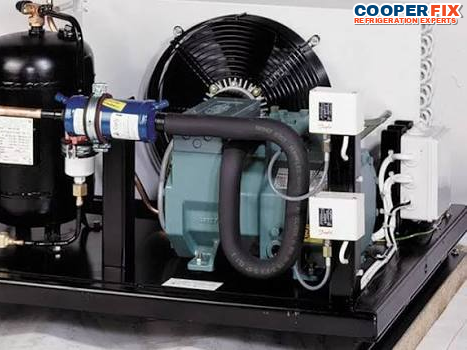
The connecting circuit and installed configuration
Refrigerant lines connect the room-side and condensing equipment, sometimes along a route not obvious from the freezer room. CooperFix establishes the configuration and evaluates circuit behaviour when evidence points there, considering command, starting and air delivery as well. Room condition alone does not establish a circuit fault. Parts must fit the installed system; a superficially similar component is not automatically interchangeable.
CooperFix at Work: Identify, Test, Explain and Repair
Consider a Newmarket property with two refrigerated rooms and more than one condensing assembly. The technician’s first technical obligation is to connect the affected walk-in freezer with its actual serving equipment; the room’s location does not settle that question.
At a Newmarket property with several refrigerated rooms, CooperFix confirms which condensing assembly serves the affected walk-in. The technician then relates the room’s observation to that equipment’s response before discussing repair or an open finding.
Retain the visit date and post-service observations with the equipment record. No guard or electrical panel needs to be removed by the customer.
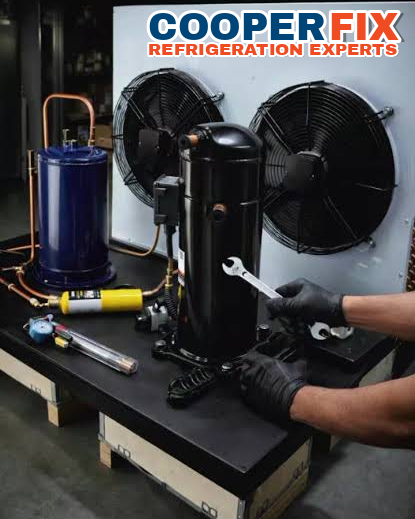
Make the complete system accessible
Confirm the service entrance, equipment position and contact who can coordinate access. Point out known controls, disconnects and remote components without opening protected equipment.
Repair the Confirmed Refrigeration-System Fault
Equipment type, application, operating history and current findings all affect the next step for a refrigeration system serving the walk-in freezer.
Restore a failed operating command or start
When a walk-in freezer system does not begin the expected operating sequence, CooperFix determines whether the issue lies in the demand from controls, the electrical starting path or the equipment responding to that demand. Those distinctions can lead to different repairs. We identify the failed function and the component implicated by testing, explain the proposed scope and obtain authorization.
Repair interrupted evaporator air delivery
If the system is operating but the room-side equipment is not delivering as it should, CooperFix examines evaporator and fan functions in their installed context. A fan motor, electrical response, control condition or another connected fault may be involved. We do not treat the location of a complaint as proof of the component to replace.
Correct a defective defrost or sensing function
Defrost and sensing issues can interrupt the relationship between an operating call and the freezer’s actual performance. CooperFix assesses the relevant sequence and the installed devices rather than relying on a brief snapshot or alarm alone. A supported repair may concern a sensor, control or defrost component, depending on what the technician confirms.
Repair supported compressor or circuit faults
Compressor-related or refrigerant-circuit work requires a diagnosis consistent with the entire connected system. CooperFix weighs starting and control response, condensing operation, room-side equipment and circuit behaviour before recommending that scope. The technician discusses the work and any component compatibility question with the authorized contact. Approved repair is followed by a relevant system assessment and an account of its limits.
Newmarket Decisions a Walk-In Freezer Fault Can Complicate
Stock commitments around Historic Main Street
Historic Main Street is a Newmarket district where local business and visitor activity meet. If a food operator there relies on a walk-in freezer, an interruption can affect orders planned for a later service period. CooperFix does not decide whether products can be used, moved or accepted.
Access and authority at Yonge and Davis mixed-use sites
The Town of Newmarket identifies the Yonge Street and Davis Drive corridors as areas with mixed-use development. In a property with a tenant-operated freezer and separately controlled equipment space, service may involve more than one contact. CooperFix confirms who can provide access, which installation serves the room and who can authorize the repair.
A proposed part that must fit the installed system
Repair authorization is especially significant when a component is not a simple like-for-like decision. The system’s control arrangement, equipment model and installed circuit can affect compatibility. CooperFix explains what the findings support and what information is needed to select appropriate work.
A technical handoff before the next business period
A walk-in freezer may be used by one team and relied upon by another later in the day. The next manager needs to know which system was addressed, what work was authorized and what remained open, not a vague statement that the room was “looked at.” CooperFix communicates the confirmed fault and the function evaluated after repair.
Record the Walk-In Concern Before the Next Business Period
Identify the Newmarket freezer room, when staff first saw the change and whether it appeared during receiving, storage or the next opening period. Report visible alarms and controller messages without tracing the system. CooperFix establishes the installed refrigeration circuit and tests the functions relevant to the complaint; the operator’s timeline supplies context rather than a diagnosis.
Plan Stock and Deliveries from the Known Equipment Status
A walk-in interruption may affect a delivery or a scheduled use of frozen stock. The business makes product and timing decisions under its own procedures. CooperFix explains what has been established technically and what remains open. A proposed part must fit the installed system; neither a preliminary finding nor a planned replacement should be described as a completed release of the freezer.
Separate Room Entry, Equipment Entry and Authorization
A Newmarket tenant may have one contact for the storage room, another for an equipment area and a different person approving repair. Give CooperFix those roles and the relevant locations when requesting service. Staff can show the known controls and equipment route without opening panels. The technician confirms how the components belong to the walk-in system.
Provide a Technical Handoff Before Operations Resume
The account should state the assessed system, fault found, work approved, work performed and operating response observed. If compatibility, parts or an additional condition requires another step, identify it explicitly. The operator then makes its own product and schedule decisions. A clear technical handoff is more useful than a general statement that the room has been checked.
Newmarket Walk-In Freezer Refrigeration Repair FAQ
These answers explain what to report and how access is planned. The installed system still requires an on-site assessment.
How does CooperFix confirm which system serves our freezer?
The technician identifies the affected room and traces its relationship to the installed controls, evaporator, condensing equipment and connecting circuit. That is particularly important if a property has several rooms or units. CooperFix does not assume that the closest visible machine serves the freezer in question. Testing then focuses on the correctly identified installation and the reported operating concern.
Who needs to approve work if the freezer and equipment are in different areas?
The person who arranges access may not be the person who can authorize a repair. CooperFix clarifies both roles with the Newmarket business and property contacts. We explain the proposed technical scope to the appropriate decision-maker before performing it. A tenant may identify the operating impact while a property representative controls entry to another area; those arrangements vary by site.
What if a replacement component must match older installed equipment?
CooperFix evaluates the confirmed fault and the installed configuration before recommending a component. Model details, controls and circuit arrangement can matter when determining a compatible repair. If the available information is insufficient to specify a sound replacement, we explain that limitation and the further professional work required. The business can make an informed authorization decision based on the proposed scope.
Can work proceed while other activities continue at the property?
That depends on the installation, access, safety requirements and the repair being proposed. CooperFix coordinates with the site contact about the affected equipment and the area needed for professional work. We explain any scope or access constraint relevant to the refrigeration-system repair. The business decides how to organize its other activities and product handling under its own procedures.
What if the technician finds a different issue after the initial approval?
CooperFix distinguishes the authorized repair from a newly discovered condition. The technician explains the additional finding, its relationship to the walk-in freezer refrigeration system and the further work it may justify. The appropriate contact can then consider a separate authorization. A changed scope is not silently treated as part of an earlier approval.
What will the next manager know after a repair visit?
CooperFix provides an equipment-specific account of the system assessed, the fault supported by testing, the work authorized and the function evaluated afterward. If a separate condition was not resolved, that limitation is stated. This allows a manager who was not present during the visit to understand the technical status without asking employees to recreate the diagnosis.
What is enough information to request Newmarket service?
Give CooperFix the Newmarket address, identify the affected walk-in freezer and provide contacts for access to the serving equipment and repair authorization. A short explanation of the business interruption is useful, but no technical report is required from your staff. CooperFix identifies the installed system, performs the professional assessment and explains repair supported by the findings.
Who can a Newmarket business call about a refrigeration system serving the walk-in freezer?
CooperFix accepts walk-in freezer requests from businesses in Newmarket. Explain the effect on frozen inventory, storage access, production scheduling or business continuity; organize the request around the first observable change and its current effect on the operation. A repair is confirmed only after the installed equipment is assessed.
Request Newmarket Walk-In Freezer System Repair
Call CooperFix with the Newmarket service address, affected unit and contact who can provide access.
Emergency calls are received and assessed 24/7. Availability and response depend on location, workload and the repair required.
Send the Newmarket service details
Confirm the service entrance, equipment position and contact who can coordinate access.