
Walk-In Freezer Repair in Woodbridge
A walk-in freezer can lose dependable frozen storage when its refrigeration and defrost functions stop working together as intended. Frost around an evaporator may be visible, or the business may only know that the system no longer supports its storage duty. Neither report identifies the failed component. CooperFix repairs walk-in freezer refrigeration systems in Woodbridge.
Municipal planning material describes Woodbridge Avenue as a mixed-use area with mixed-use development around it. A business in Woodbridge may have frozen reserve behind a public offer or storage serving another operation; the actual system determines the repair scope. CooperFix brings 20+ Years of Experience to commercial refrigeration work. Covered completed repair work is subject to the 90-Day Parts & Labour Warranty under its applicable terms.

Report the affected refrigeration system serving the walk-in freezer clearly
Give CooperFix the Woodbridge service address, affected equipment, observed change and contact who can provide access.
- Room temperature, controller alarm, ice pattern, water, fan sound and run time, with the time observed
- Equipment label, make and model when safely visible
- Directions to the evaporator, condensing equipment, controls, refrigeration lines and electrical disconnect and the authorized access contact
Request walk-in freezer service in Woodbridge
Keep hands and tools away from protected components. Include a phone number and email address for service coordination.
Trace the Freezer Through Refrigeration and Defrost
A Woodbridge walk-in request should describe the room’s changed duty and any frost or defrost behaviour observed safely. CooperFix traces controls, evaporator fans, heaters and condensing response before identifying a supported refrigeration-system repair.
1. Establish the system and the storage interruption
CooperFix confirms the Woodbridge location, the walk-in freezer affected and the contact who can authorize work. The operator may explain how the storage interruption affects stock or a planned business activity. The technician identifies the refrigeration equipment that serves that specific space, including any remote condensing unit and the evaporator and controls inside the system.
2. Assess how the operating modes interact
The technician evaluates control demand, condensing-unit response, refrigerant feed, evaporator air movement and defrost sequence as relevant to the installed design. A walk-in freezer must move through its operating modes and return to frozen duty. A fault in one stage can appear as an issue elsewhere in the system. CooperFix distinguishes a defrost or control failure from a refrigeration-circuit problem when the evidence allows.
3. Define work and demonstrate the relevant response
CooperFix explains the supported repair and obtains authorization for the refrigeration-system scope. After work, the technician assesses the function repaired and reports what operating response could be demonstrated. A suitable component, remote-equipment access or further observation may be necessary before the system can be fully evaluated. The service account keeps those dependencies visible.
Walk-In Freezer Equipment That Determines the Fault Path
Evaporator and fan assembly
The evaporator and its fans move air through the frozen storage space. CooperFix examines their response in relation to the system’s refrigerant feed and controls. Frost may interfere with airflow, but it does not automatically mean the fan, defrost control or another single component has failed. The technician evaluates the installed arrangement and explains the finding that supports repair.
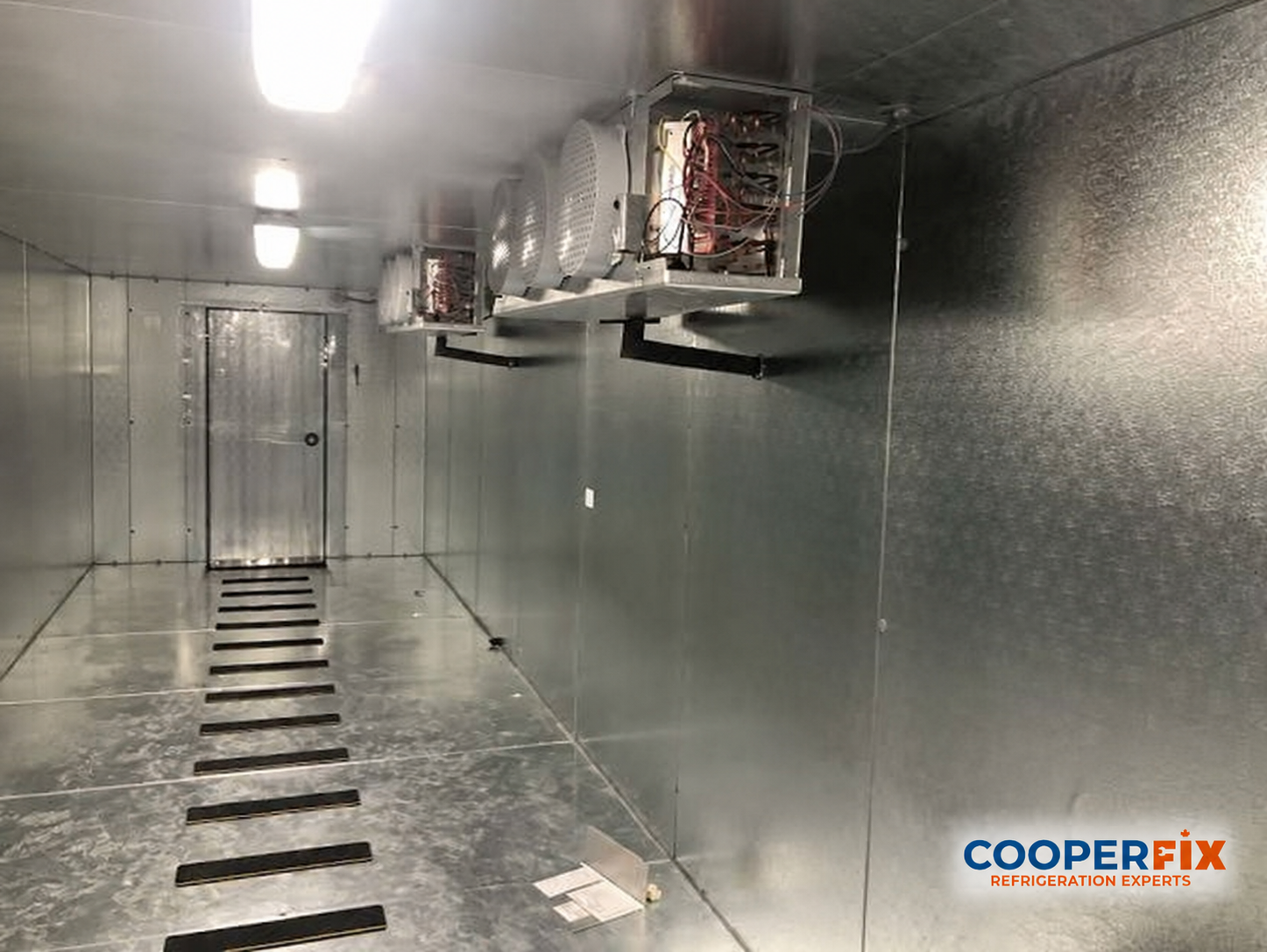
Evaporator condition during the defrost sequence
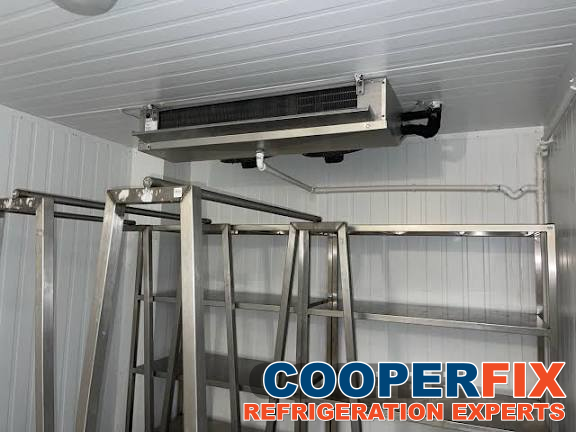
The evaporator is one part of the refrigeration system affected by the defrost sequence. This photograph illustrates cold-room evaporator equipment; it does not identify a heater or termination fault. Report any recurring frost, airflow change or alarm for the actual installation. CooperFix determines which defrost and refrigeration checks are relevant from the equipment and findings.
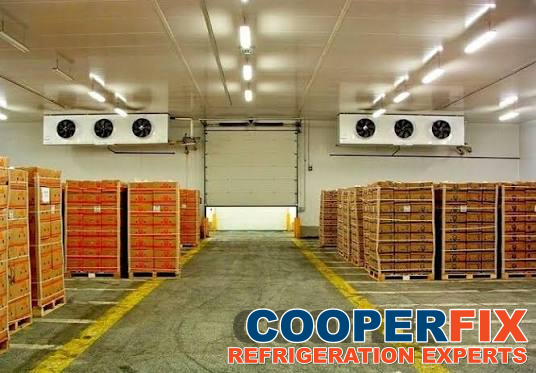
Controller and temperature sensors
The controller calls for refrigeration and coordinates relevant operating modes; sensors provide inputs to its decisions. A displayed value may be useful, but it cannot by itself describe every system function. CooperFix evaluates the control arrangement alongside actual equipment response. An apparent control problem can be an effect of a refrigeration fault, or a verified sensor or controller fault may need specific repair.
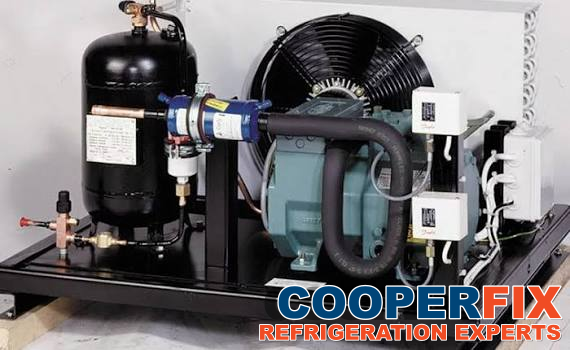
Condensing unit and refrigerant circuit
The condensing equipment and refrigerant circuit support the evaporator’s operation. CooperFix assesses these parts when the system cannot sustain its intended frozen duty or when a control transition exposes a capacity concern. A running compressor does not guarantee that refrigerant feed and evaporator response are correct. The technician explains the supported circuit or component finding and the work it requires.
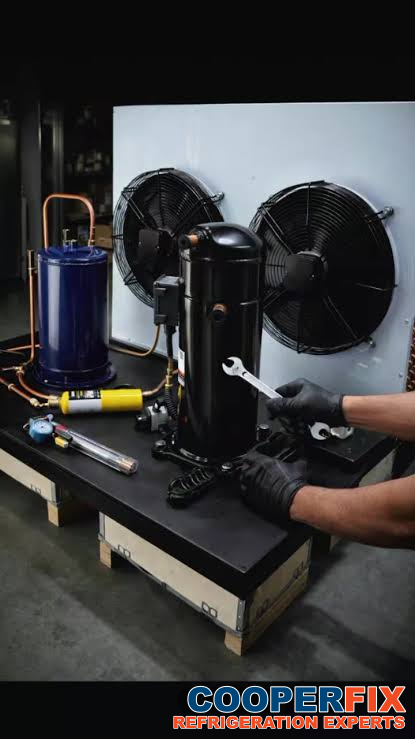
CooperFix at Work: Identify the Fault Between Operating Modes
A walk-in freezer may have condensing equipment that runs while the evaporator is affected by frost, or a defrost sequence that appears to operate but does not return the system to its intended duty. CooperFix traces the relationship among controls, refrigerant circuit, evaporator fans and defrost components. The technician determines which function is actually failing, what evidence supports that conclusion and what repair should be authorized.
A Woodbridge walk-in may have a defrost interruption despite active condensing equipment. CooperFix records which sequence failed, what work was authorized and whether the evaporator and refrigeration functions returned as observed during attendance.
Keep temporary measures distinct from a completed repair in the site record. A controller message is evidence to report, not a diagnosis.
Make the complete system accessible
Describe the route to both the product area and the equipment serving it. Point out known controls, disconnects and remote components without opening protected equipment.
Defrost-Related Conditions with Different Repairs
Equipment type, application, operating history and current findings all affect the next step for a refrigeration system serving the walk-in freezer.
Frost accumulates because defrost is not initiated
If the installed system fails to begin a required defrost sequence, evaporator frost can build and affect performance. CooperFix examines the controller, electrical path, sensors and defrost components as appropriate. A frost-covered evaporator does not by itself prove which part prevented initiation. The technician identifies the supported cause and explains the authorized repair.
Defrost begins but does not end as intended
An incorrect termination condition can interfere with the walk-in freezer’s return to normal refrigeration. CooperFix evaluates the installed termination sensing and control sequence in relation to the actual equipment response. The visible symptom may resemble a problem with the condensing unit or general capacity, so the technician must establish the underlying function before recommending work. After repair, the transition between modes is assessed where it can be demonstrated.
Evaporator fans do not resume the expected duty
Some systems control fan operation around defrost. If the fans do not return to the intended response, air exchange within the frozen space may be affected even when other components appear active. CooperFix examines the relevant fan, electrical and control functions for the installed design. The technician determines whether a local fan fault or a wider control issue is supported.
Refrigeration capacity remains limited after defrost
If the system returns to refrigeration mode but cannot support frozen duty, CooperFix assesses the condensing unit, refrigerant circuit, evaporator and controls together. The preceding defrost event may help define the complaint but does not necessarily cause the low-capacity condition. A repair is scoped to the fault the evidence supports. Where the system cannot be fully observed under normal demand during the visit, that limit is communicated.
Woodbridge Business Decisions Around the Walk-In System
Frozen reserve supports a public-facing offer
A business may hold frozen reserve in a walk-in freezer while serving customers in another part of the premises. A system interruption can affect later replenishment even if the public area appears unchanged. CooperFix assesses the refrigeration equipment serving the storage space and reports what repair is supported.
A mixed-use property separates equipment access
In a mixed-use premises, the operator may manage the frozen stock while a property contact controls access to remote condensing equipment. CooperFix identifies the contacts needed for access and authorization, then keeps the technical scope on the refrigeration system serving the walk-in freezer. A property arrangement does not prove any component failure.
A planned stock period follows an unresolved defrost concern
If a business has a planned stock movement or trading period, an unresolved defrost complaint makes equipment status important. CooperFix assesses the installed sequence and communicates a supported repair or open limitation. The operator can plan its own inventory actions using that technical account.
Several staff groups rely on one storage system
Different people may use the same walk-in freezer for stock, preparation or order planning. CooperFix’s service account identifies the serving refrigeration system, the affected function and the state after assessment or repair. This helps the business avoid one group’s report being mistaken for proof of a different technical condition.
Separate the walk-in finding from sales decisions
Frozen reserve may support a Woodbridge public offer, but the operator decides what can be presented or sold. Name the freezer room and reported change. CooperFix identifies the refrigeration-system condition and the authorized technical work, keeping product decisions outside the repair finding.
Record access dependencies at a mixed-use property
The freezer room, condensing equipment and controls may require access through different parts of a property. Identify who can open each area. The service record should state which equipment was assessed and whether an access limit remains, so coordination is not mistaken for completion.
Trace defrost evidence despite stock pressure
An upcoming stock period may make a defrost concern urgent, but timing does not prove a sensor, heater or control has failed. CooperFix checks the installed sequence and explains the supported finding. After authorized work, the report describes the system response actually observed.
Share one clear system status across staff groups
Several teams may rely on one walk-in freezer. A handoff that names the system, repair and remaining limitation lets them coordinate without interpreting codes or testing components. Product and workflow decisions remain with the operator; diagnosis and refrigeration repair remain with CooperFix.
Woodbridge Walk-In Freezer Repair: Frequently Asked Questions
These answers explain what to report and how access is planned. The installed system still requires an on-site assessment.
What part of a walk-in freezer does CooperFix repair in Woodbridge?
CooperFix repairs the refrigeration system serving the walk-in freezer. Depending on the installed configuration and fault, that can involve the condensing unit, refrigerant circuit, evaporator, defrost arrangement and controls. The technician identifies the equipment and explains work supported by professional findings. The operator can describe the frozen-storage interruption without naming a component. The service account records the authorized refrigeration-system scope and what was demonstrated afterward.
Does visible evaporator frost identify a defrost part to replace?
No. Frost may be associated with defrost initiation, termination, fan response, refrigerant feed or another system condition. CooperFix examines the installed operating sequence and identifies which function is actually failing when the evidence allows. A repair recommendation follows that finding. The technician reports what defrost or refrigeration response could be demonstrated after work. Staff are not expected to interpret frost appearance or conduct technical checks before requesting service.
Can a defrost sequence run but still leave the freezer underperforming?
Yes. The sequence may not terminate as intended, fans may not return to their normal response or a separate refrigeration issue may remain. CooperFix assesses the connected functions and distinguishes the supported cause from a symptom that happens to follow defrost. A control display alone cannot establish complete system performance. The service report identifies the work authorized, the response demonstrated and any unresolved question relevant to the original complaint.
Why are condensing equipment and evaporator assessed together?
The condensing unit and evaporator are parts of the same refrigeration circuit. A storage effect seen near the evaporator may involve the remote equipment or a control between them; a running compressor may not prove that the evaporator is receiving the intended refrigerant feed. CooperFix identifies the installed relationship and evaluates the functions relevant to the complaint.
Can CooperFix assess a system that only sometimes shows the problem?
CooperFix assesses available evidence and the installed control and refrigeration sequence. If the reported condition cannot be reproduced or a full transition cannot be observed, the technician explains that limit. A repair is proposed where a finding supports it; an uneventful interval is not described as a verified resolution.
How can a Woodbridge business request emergency walk-in service?
Contact CooperFix with the Woodbridge location, the affected walk-in freezer and a business contact authorized to discuss repair. Explain the storage interruption in ordinary terms and identify any practical access arrangements. CooperFix assesses the refrigeration system and communicates the supported scope or an open dependency. Staff do not need to conduct defrost or electrical tests to request service.
How does the 90-Day Parts & Labour Warranty apply?
The 90-Day Parts & Labour Warranty applies to covered completed CooperFix repair work under its applicable terms. It is not a general assurance about every system component or goods in storage. The service record identifies authorized work performed and any question still open. A distinct later fault requires its own assessment. CooperFix relates warranty coverage to the actual completed repair rather than using the phrase as a substitute for a professional system finding.
Can CooperFix assess a refrigeration system serving the walk-in freezer for a business in Woodbridge?
A repair is confirmed only after the installed equipment is assessed. Describe in plain operating terms the evaporator, fan, condensing unit, control, defrost component or refrigeration circuit and include the room temperature, controller alarm, ice pattern, water, fan sound and run time. Explain the effect on frozen inventory, storage access, production scheduling or business continuity; connect the visible symptom to the correct cabinet, room, controller and remote-equipment location.
Request Walk-In Freezer Refrigeration-System Repair in Woodbridge
Call CooperFix with the Woodbridge service address, affected unit and contact who can provide access.
Emergency calls are received and assessed 24/7. Availability and response depend on location, workload and the repair required.
Send the Woodbridge service details
Describe the route to both the product area and the equipment serving it.