
Commercial refrigeration compressor service
Copeland Compressor & Condensing Unit Repair
Copeland is often the name found on the compressor or condensing unit serving commercial refrigeration equipment made by another manufacturer. CooperFix provides professional diagnosis, repair, and maintenance for Copeland refrigeration scroll, reciprocating hermetic, semi-hermetic, and Discus compressor families, as well as applicable indoor and outdoor condensing units. The service decision follows the exact installed model, its application, the equipment it serves, and the operating condition confirmed by a technician.
- Compressor and condensing-unit service tied to the installed refrigeration system.
- Electrical, control, and operating conditions assessed before parts are selected.
- Repair or replacement recommendations based on confirmed findings and compatibility.

Commercial refrigeration focus
The service request remains connected to the Copeland compressor or condensing unit and the refrigeration equipment it serves.
Model and application matter
The complete model, operating range, and system configuration guide testing and parts decisions.
Findings before replacement
A unit that does not start or hold temperature is assessed before compressor replacement is recommended.
Request Copeland refrigeration service
Start with the equipment label and the operating change
Share a contact name, telephone number, email, and a brief description of the affected refrigeration equipment. If the Copeland model is visible, include it together with the name of the cabinet, case, preparation unit, or refrigerated system it serves. A customer does not need to identify a failed component. CooperFix establishes the equipment relationship, performs the applicable professional checks, and explains the work supported by the findings.
Contact and access — Ordinary contact details allow service communication and access coordination.
Two equipment identities — The Copeland label and the manufacturer of the served equipment can both be relevant.
Professional cause-finding — Measurements and operating tests remain the technician’s responsibility.
Request Copeland Service
Share ordinary contact details and a brief description of the Copeland compressor or condensing unit and the refrigeration equipment it serves.
Copeland commercial refrigeration equipment
Service scope follows the compression platform and the system it serves
Copeland’s commercial refrigeration portfolio includes several compressor architectures and complete condensing-unit arrangements. These products may support reach-ins, refrigerated displays, preparation equipment, and walk-in refrigeration systems. CooperFix first identifies whether the service request concerns a compressor installed within another manufacturer’s system or a Copeland condensing unit that combines the compressor with additional controls and heat-rejection components.
Refrigeration scroll compressors
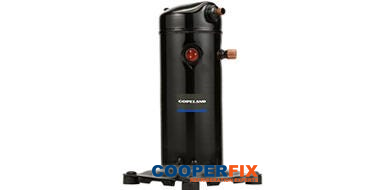
Copeland lists low-, medium-, and extended-medium-temperature refrigeration scroll families, including ZF, ZB, and ZS platforms. Family letters and suffixes are not interchangeable. They can represent different operating applications, electrical arrangements, capacities, and control requirements. CooperFix records the complete model and assesses the compressor within the actual refrigeration circuit before defining repair work or a replacement match.
A scroll compressor that stops, cycles unexpectedly, or runs while the served equipment loses performance requires more than a label-level conclusion. The technician evaluates applicable supply, protection, starting, control, and system conditions to distinguish a compressor fault from another condition affecting its operation.
Reciprocating hermetic compressors
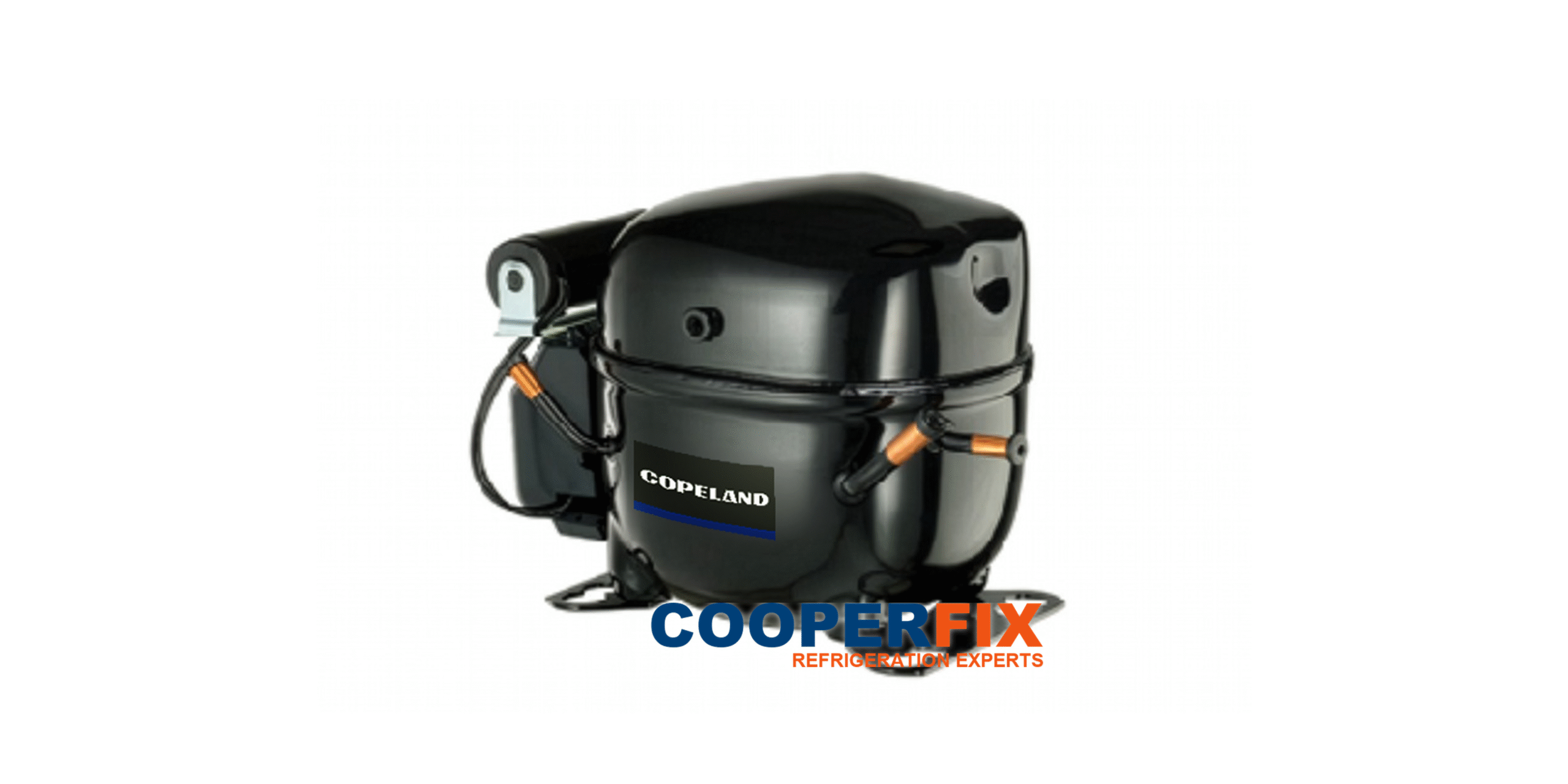
Copeland’s commercial refrigeration information includes A-, R-, and C-platform hermetic reciprocating families used across varied applications. CooperFix relates electrical, control, and circuit findings to the exact model rather than assuming that similar-looking compressors share the same duty. The recommendation identifies whether supported work concerns an external condition, the connected system, or the compressor itself.
Semi-hermetic and Discus refrigeration compressors
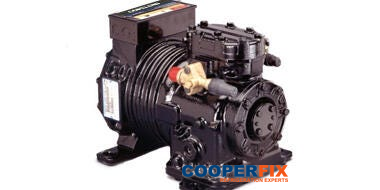
Copeland lists semi-hermetic and Discus families whose service context differs from a small hermetic platform. CooperFix evaluates the exact compressor, control and protection arrangement, and connected system. Professional testing separates confirmed compressor findings from supply, control, operating, and system conditions that can produce similar symptoms.
Indoor and outdoor condensing units
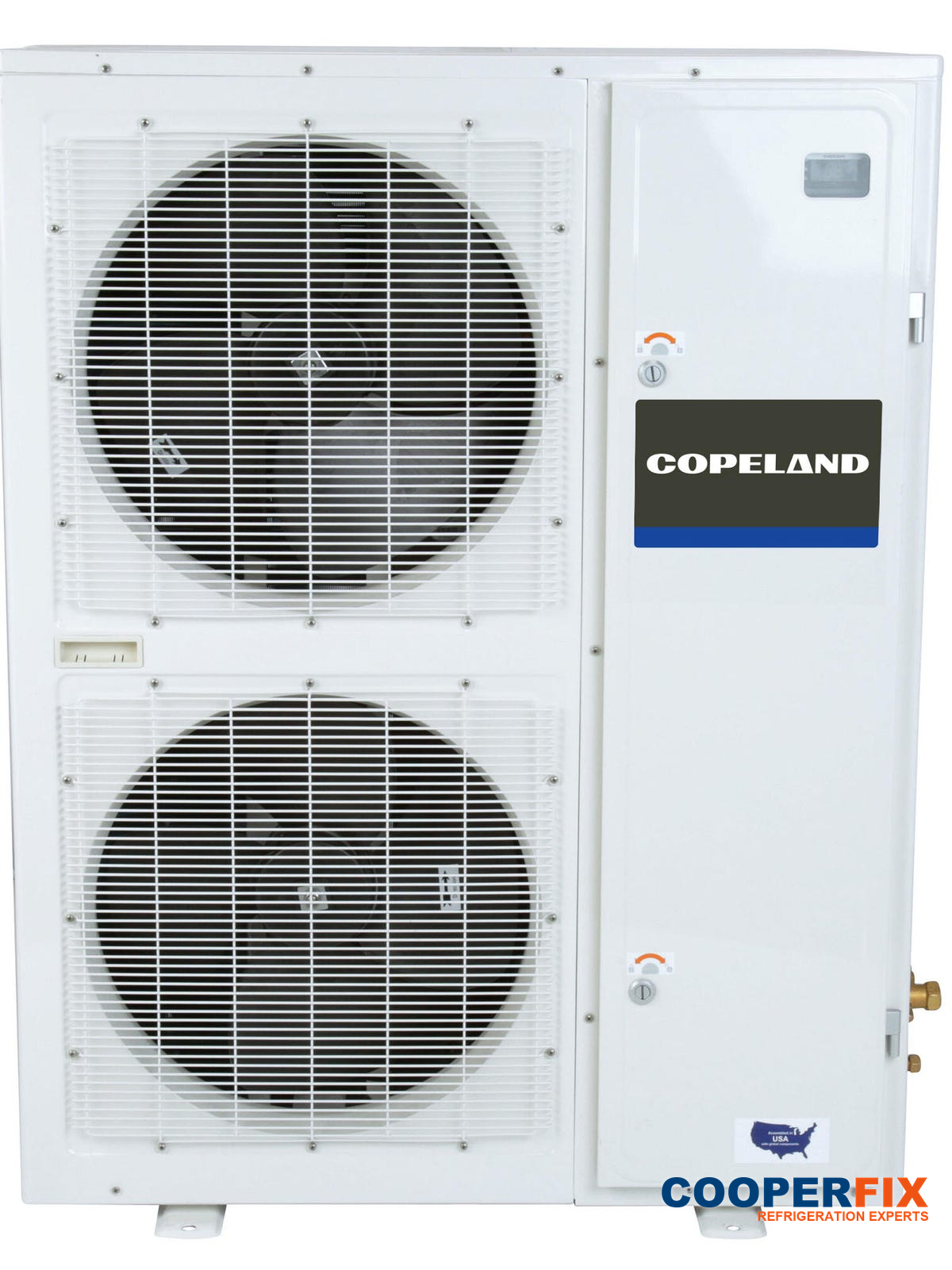
Copeland condensing units combine a compressor, controls, and other components in an arranged package. Copeland publishes indoor and outdoor commercial refrigeration condensing-unit portfolios; X-Line and Digital X-Line are documented outdoor families. Service considers compressor operation, applicable protection and controls, condenser-fan performance, and the relationship to the served equipment. CooperFix identifies the exact unit and application before planning work.
Service situations
A compressor symptom is the beginning of the assessment, not the diagnosis
The compressor does not start
The technician evaluates the applicable electrical supply, controls, protection, starting arrangement, and operating condition before deciding whether the compressor itself requires corrective work.
The system stops or trips repeatedly
Repeated interruptions can involve protection response, control signals, operating limits, electrical conditions, or a refrigeration-system problem. CooperFix establishes which condition is present on the installed system.
The compressor runs but the equipment does not hold temperature
Running sound alone does not prove that the complete system is moving heat as intended. The assessment relates compressor operation to the controls, circuit conditions, airflow on the served equipment, and the actual refrigeration result.
Operating sound changes
An unusual sound is documented and assessed with the model, electrical and operating readings, and connected-system condition. It is not used by itself to select a part.
A condenser fan stops or becomes inconsistent
On a condensing unit, fan operation and heat rejection affect the complete refrigeration process. CooperFix evaluates the fan circuit and unit operation before defining the supported repair.
A controller or protection condition appears
The technician interprets the observed indication in relation to the exact unit and its documented control arrangement. An indication is evidence to investigate, not a customer-facing repair instruction.
For business operations
One Copeland component can support an entire refrigerated operation
A compressor or condensing unit can serve more than the area where the first performance change appears. Displays, preparation equipment, reach-ins, and walk-in storage systems depend on stable compression, controls, and heat rejection. CooperFix keeps the served equipment and business priority visible without turning urgency into an unsupported conclusion.
Food retail and refrigerated display
A display system that loses performance can affect a full merchandising section. The service record identifies the Copeland unit and the exact equipment served so findings are not generalized to unrelated cases.
Preparation and point-of-use equipment
When a compressor supports a preparation counter or compact refrigerated base, the business may first notice a temperature or recovery change near the work area. CooperFix evaluates the full system relationship before defining a repair.
Reach-in and storage equipment
The compressor label may be less visible than the cabinet brand. Recording both identities helps connect the service request to the correct technical information and installed application.
Walk-in refrigeration systems
An indoor or outdoor condensing unit can support a larger storage system. The technician relates unit findings to the connected evaporator-side operation and applicable controls.
Service coordination
The Copeland label and the equipment brand belong in the same service record
Copeland may manufacture the compressor or condensing unit while another company manufactures the served equipment. CooperFix records both identities so a component model is not mistaken for the complete equipment model. Where several systems are present, findings, recommended work, and approved repair remain attached to the correct Copeland unit, application, and service history.
How CooperFix approaches the service call
Establish the model, application, and operating condition before choosing work
01 — Identify the complete installed system
CooperFix records the Copeland model and identifies the cabinet, case, preparation unit, display, or refrigeration system it serves.
02 — Review electrical and control operation
The technician performs applicable checks of supply, control signals, protection, starting components, and unit response. Technical testing remains part of CooperFix’s professional assessment.
03 — Relate compressor behaviour to refrigeration performance
Operating readings and system conditions are interpreted together. A compressor observation is compared with the refrigeration result and the condition of the connected equipment.
04 — Define the supported corrective scope
CooperFix explains the confirmed cause, affected components, compatibility requirements, and the work supported by the assessment. Parts are selected only after the scope is clear.
Professional refrigeration work
Service decisions stay model-specific and system-aware
Electrical and protection conditions — Applicable supply, terminals, starting arrangements, protection devices, and control signals are assessed in relation to the installed compressor or unit.
Compressor operating condition — The technician interprets applicable electrical and refrigeration readings, sound, cycling, and system response to determine what the observed behaviour means.
Condensing-unit controls and fans — On complete units, control response and condenser-fan operation are evaluated as part of the equipment package rather than as unrelated symptoms.
Connected refrigeration circuit — Circuit conditions are assessed where they affect compressor operation, capacity, protection response, or the service decision.
Repair and component work — Corrective work follows the confirmed fault, applicable model information, and the agreed scope. CooperFix does not substitute a look-alike component for a verified match.
Operating review after approved work — The technician reviews the system in relation to the completed scope and records what was observed for the exact unit and served equipment.
Findings guide the investment decision
A replacement choice must fit more than the mounting position
When assessment confirms a compressor condition, the next decision considers the complete model, application, capacity, electrical requirements, refrigerant compatibility, controls, physical arrangement, connected-system condition, and parts availability. A similar appearance or partial model number is not enough. CooperFix explains the supported repair or replacement path and the associated system work before a part is ordered.
Replacement also does not eliminate the need to address the condition that affected the installed system. If controls, electrical conditions, heat rejection, or another refrigeration-circuit issue contributed to the fault, the recommended scope identifies that relationship. This keeps a compressor decision connected to the cause rather than treating the compressor as an isolated object.
Protect the value of confirmed work
Keep compressor service connected to controls, heat rejection, and the served equipment
Professional refrigeration maintenance can include technician review of accessible unit condition, control and protection response, condenser-fan operation, relevant electrical connections, and recorded operating behaviour. The work depends on the Copeland platform, unit arrangement, access, and served equipment. A separate repair condition is documented before corrective work proceeds.
Unit-specific records identify the complete model, served equipment, observed condition, relevant measurements, and completed work. Each compressor or condensing unit keeps its own history, so later maintenance can use that context without assuming that a prior condition has returned or another system shares the same cause. Component observations remain connected to the complete refrigeration result and professional interpretation.
A Copeland service record connects the compressor or condensing-unit model to the cabinet, case, preparation unit, display, or refrigerated space it serves. CooperFix records the reported behaviour, application, electrical and refrigeration findings, confirmed cause, approved scope, and completed work. When one compression platform supports several operating areas, the affected equipment and business priority remain identified separately. Repair, replacement, compatibility, and maintenance decisions can then refer to the same verified model and connected-system evidence instead of relying on a repeated symptom alone.
Information about compressors, condensing units, and professional service
Does a Copeland compressor that will not start always need replacement?
No. A no-start condition can involve the applicable electrical supply, starting or protection components, controls, operating conditions, the connected refrigeration circuit, or the compressor. CooperFix performs professional assessment before recommending repair or replacement. The customer only needs to describe what changed and provide the equipment information that is reasonably available.
Which Copeland commercial refrigeration products can CooperFix assess?
The page covers Copeland refrigeration scroll, reciprocating hermetic, semi-hermetic, and Discus compressor families, along with applicable commercial condensing units such as X-Line configurations. The final service scope is confirmed against the exact installed model, application, equipment served, and access available for professional work.
Why can the cabinet brand differ from the Copeland name on the compressor?
Copeland can supply a compressor or condensing unit used within refrigeration equipment made by another manufacturer. Both labels can be important: one identifies the compression equipment and the other identifies the cabinet, case, preparation unit, display, or system being served. CooperFix records the relationship before defining work.
What operating changes can be included in a Copeland service request?
A request can describe a compressor that does not start, repeated stopping, inadequate refrigeration performance, changed operating sound, a stopped condenser fan, or a controller or protection indication. These are service observations rather than customer diagnoses. CooperFix performs the applicable testing and explains the confirmed condition.
How does CooperFix approach a repair-versus-replacement decision?
The decision follows model-specific electrical and operating findings, the condition of the connected refrigeration system, the application, capacity and compatibility requirements, and the work needed to address the confirmed cause. CooperFix explains the supported scope before a replacement component is ordered.
Why is the connected refrigeration system checked when a compressor fault is suspected?
Controls, electrical conditions, heat rejection, and refrigeration-circuit operation can change compressor behaviour or contribute to a fault. Assessing the connected system helps distinguish a confirmed compressor problem from another condition and ensures that recommended work addresses the system relationship rather than only the visible symptom.
Request Copeland refrigeration service
Keep the request tied to the exact compressor and served equipment
Send normal contact details and a short description of the Copeland compressor or condensing unit, the refrigeration equipment it serves, and the change in operation. Include a full model only when it is readily available through ordinary equipment information or site records. CooperFix establishes the identity, operating condition, and supported service scope through professional assessment.
Request Copeland Service
Share ordinary contact details and a brief description of the Copeland compressor or condensing unit and the refrigeration equipment it serves.
Model-specific findings guide the next step
Request service for Copeland refrigeration equipment
CooperFix will connect the Copeland compressor or condensing unit to the equipment it serves, assess the applicable electrical, control, and refrigeration conditions, and explain the repair or replacement work supported by the findings.