
Dukers commercial refrigeration service
Dukers Commercial Refrigeration Repair for Business Operations
Dukers refrigeration can support several parts of one working business, from upright cold storage and refrigerated preparation to compact point-of-use cabinets and beverage service. When one unit changes its operating pattern, the request needs to stay connected to the exact cabinet, model, section, and business role affected.
CooperFix provides professional diagnosis, repair, and maintenance for confirmed Dukers reach-in refrigerators and freezers, refrigerated preparation tables, undercounter refrigerators and freezers, bar and beverage coolers, and glass merchandisers. A technician evaluates the installed unit, measures its operation, and explains the work supported by the findings. The business can begin with a brief description; determining the technical cause remains CooperFix’s responsibility.

Identify the exact unit
Each cabinet keeps its own model, operating role, reported condition, and service record.
Assess the complete refrigeration operation
Temperature behaviour, airflow, fans, controls, and circuit performance are considered together.
Explain findings before work
The recommended scope follows professional measurements and the verified condition of the unit.
Start a Dukers service request
Connect the request to the affected cabinet
Provide a contact name, telephone number, email address, and a short description of the Dukers unit. Include the model when it is already available, along with the observed operating change and the role the cabinet supports. CooperFix will handle equipment identification, technical measurements, cause-finding, and repair planning.
Request Dukers Service
Describe the affected cabinet in ordinary terms. Professional assessment begins after the request is received.
Refrigeration organized by operating role
Confirmed Dukers equipment groups require distinct service context
Dukers offers commercial refrigeration in several cabinet formats. CooperFix keeps those formats separate because an upright storage cabinet, a preparation station, a compact undercounter unit, and a beverage-service cabinet do not carry the same load or support the same workflow.
Reach-in refrigerators and freezers
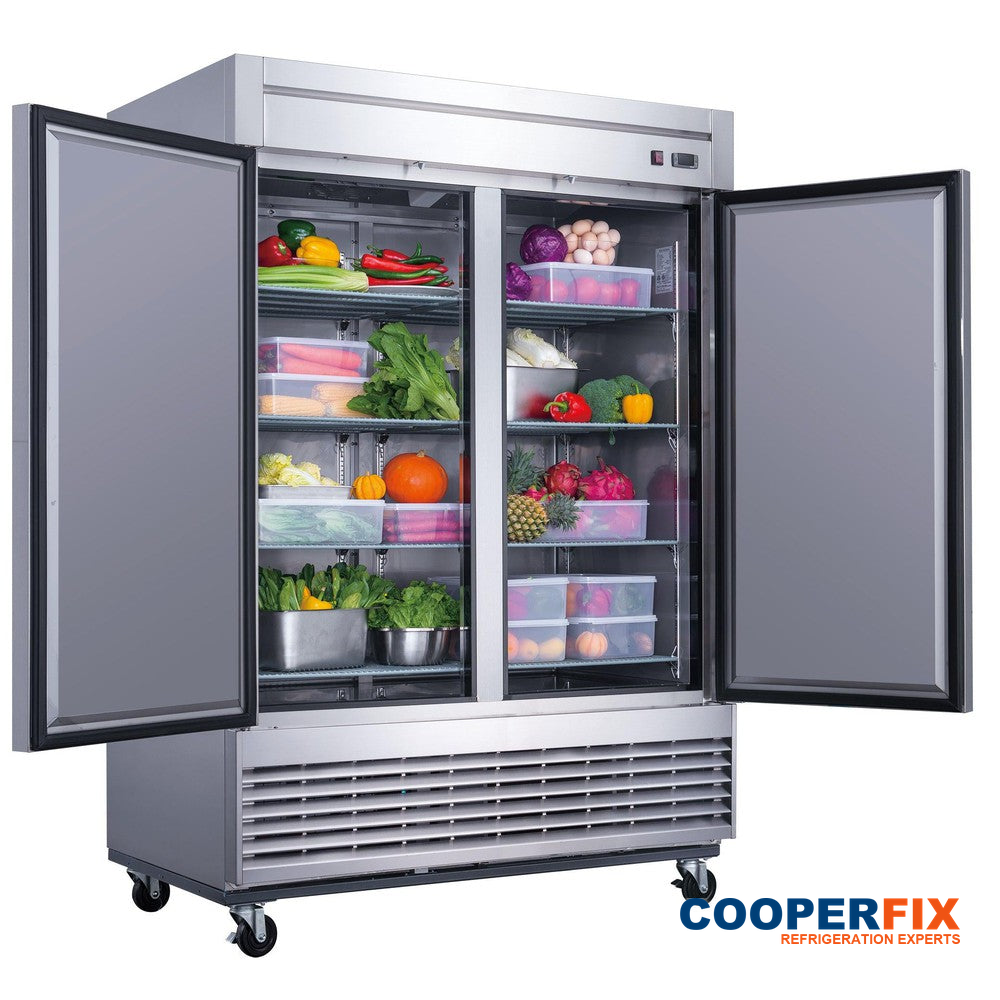
Reach-in cabinets provide upright storage with one or more sections. The D55R is a confirmed Dukers reach-in refrigerator model. For an installed reach-in, CooperFix identifies the model and affected section, then assesses cabinet temperature, recovery pattern, airflow, fan operation, control response, and refrigeration-circuit performance. Where several sections share one cabinet, the technician relates the reported change to the section involved instead of treating the entire unit as one undifferentiated space.
Refrigerated preparation tables
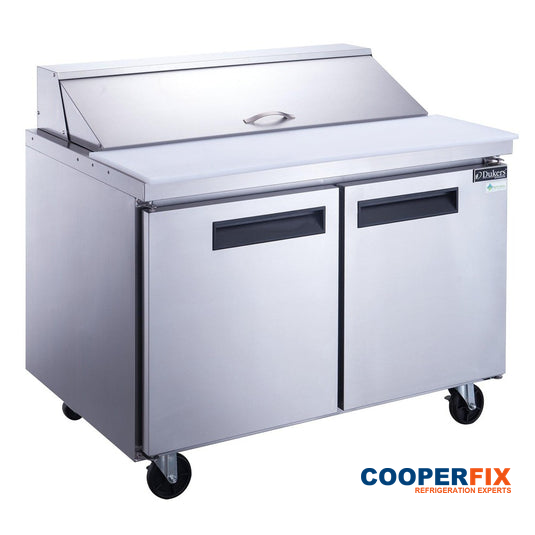
Dukers preparation tables combine an upper ingredient area with a refrigerated lower cabinet. The DSP48-12-S2 is a confirmed model. These two working zones are related, but a condition reported in one area does not prove that the other has the same cause. CooperFix evaluates temperature behaviour, air distribution, fan operation, controls, and refrigeration performance in relation to the zone affected and the way the table supports active preparation.
Undercounter refrigerators and freezers
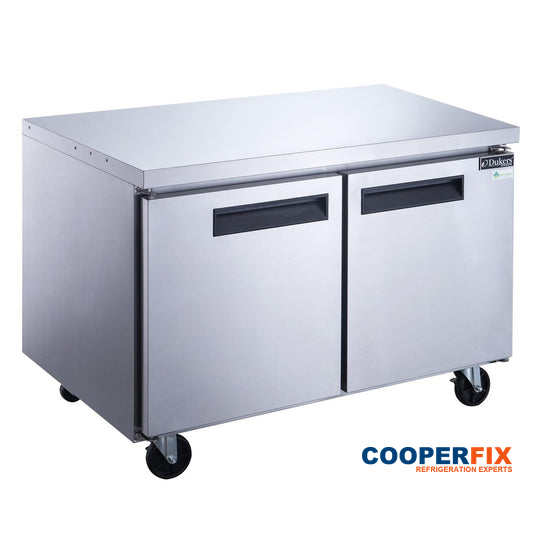
Dukers DUC equipment includes compact and multi-section undercounter configurations, including door and drawer arrangements. These units place refrigerated storage close to the point of use while fitting beneath a working surface. CooperFix considers the actual configuration, compartment performance, airflow, controls, installation conditions, service access, and workload across the business day. Each DUC unit keeps its own findings even when several similar cabinets operate nearby.
Bar and beverage coolers
Dukers DBB equipment supports beverage storage behind an active beverage station. Frequent access and changing demand can make recovery and temperature stability important parts of the service record. CooperFix evaluates the installed cabinet, storage arrangement, airflow, fans, controls, recovery behaviour, and refrigeration operation before defining work. The assessment stays tied to the exact cooler rather than being generalized across every cabinet serving the same operation.
Glass merchandisers
Glass merchandisers combine refrigerated storage with a customer-facing display. CooperFix assesses cabinet temperature, airflow distribution, fan behaviour, control response, recovery, and refrigeration performance as one connected operating system. Product visibility does not change the evidence required for a professional repair recommendation.
Different cabinets can report similar changes
The symptom begins the assessment but does not define the repair
A reach-in may stop holding its normal cabinet condition, recover slowly after access, or show a change in fan or control behaviour. A preparation table may behave differently between its upper ingredient area and lower cabinet. A DUC unit may become unreliable during a busy period, while a DBB cooler may show a recovery pattern that affects beverage service. A merchandiser may show uneven performance across its display space.
CooperFix records the exact unit and the operating change reported, then compares that information with professional measurements. The technician evaluates the functions applicable to the model and determines how the evidence connects to the affected section. Similar descriptions from two cabinets do not establish one shared cause. Each service recommendation remains specific to the Dukers unit that was assessed.
The operating record also captures whether the change is continuous, appears during a particular workload, affects one compartment, or becomes visible during recovery. That context helps organize assessment without turning an observation into a component conclusion. If several units are mentioned, CooperFix confirms which condition belongs to which cabinet before findings and recommended work are documented.
Refrigeration supports different parts of the working day
Service priorities follow the cabinet’s business role
A reach-in may support central storage, a preparation table may sit directly in the production flow, an undercounter cabinet may provide frequent point-of-use access, and a bar cooler may support a concentrated service period. The effect of unreliable operation therefore depends on more than cabinet size.
CooperFix connects the technical assessment to that operating context without substituting business impact for diagnosis. The service record identifies what the unit supports, when the change is most visible, and whether another Dukers cabinet is involved. This gives the business a clear basis for discussing access, priorities, and approved work while preserving the technical independence of each unit.
One request can include a mixed equipment group
Keep every model, condition, and recommendation identifiable
A business may operate reach-ins, preparation tables, compact cabinets, and beverage coolers under the same brand. CooperFix can coordinate one request across several Dukers units while keeping separate equipment identities and service histories.
The request record distinguishes each model, reported condition, operating role, and affected section. During service, findings and recommended work remain attached to the correct unit. If work must be staged, the record shows which cabinet has been assessed, which scope has been approved, and which recommendation remains pending. This prevents a condition found on one unit from being carried over to another unit without evidence.
Measurements turn a reported change into a service decision
Professional cause-finding follows the installed configuration
The technician begins by confirming the Dukers model, cabinet format, affected section, and reported operating change. The assessment then follows the systems applicable to that unit. Depending on the evidence, this can include cabinet-temperature behaviour, control response, airflow, fans, electrical operation, applicable defrost functions, heat rejection, and refrigeration-circuit performance.
For a preparation table, the technician relates findings to the upper ingredient area, lower cabinet, or shared refrigeration operation. For a multi-section reach-in or DUC cabinet, performance is compared across the relevant compartments. For beverage and display equipment, recovery and airflow are considered in the context of the installed arrangement. No displayed reading, alarm, or isolated symptom is treated as a complete diagnosis.
CooperFix then explains the condition found, the work supported by that evidence, and any limitation that should remain part of the service record. Technical testing and component decisions stay with the technician.
Work is defined by findings, not by cabinet category alone
The confirmed cause determines the applicable scope
Professional work can involve controls, electrical functions, fan operation, airflow, model-relevant defrost operation, heat rejection, condensate conditions, or refrigeration-circuit performance. Listing those assessment areas does not mean every area requires attention on every Dukers unit.
CooperFix connects the approved work to the verified condition and the equipment section involved. After the work within scope is completed, the technician reviews the relevant operation and records the result against the correct cabinet. This creates a useful service history without turning a single visit into a broad claim about future operation under every load or workflow condition.
Where access, parts identification, or additional evidence affects the next step, CooperFix keeps that information within the unit record and explains the current decision. The business can then distinguish completed work from a pending recommendation and understand which operating function will be reviewed when the authorized scope continues.
Immediate work and planned care remain separate
Make the current decision from the evidence available
A confirmed fault can require corrective work, while other observations may support planned refrigeration maintenance. CooperFix separates those decisions so the business can understand what addresses the present condition and what belongs to a later care plan.
The immediate recommendation identifies the affected unit, verified cause, applicable work, and relevant post-work review. A maintenance observation remains separately documented and does not become part of the corrective scope without support. This distinction is especially important for a mixed Dukers equipment group, where one cabinet may need repair while another is operating and only requires a future service discussion.
Clear separation also protects the usefulness of later records. A returning condition can be compared with earlier findings, completed work, and the cabinet’s operating role instead of being treated as a continuation by default.
Previous work provides context, not an automatic conclusion
Build the next assessment from an exact unit history
When an operating change returns, CooperFix reviews the model, affected section, timing, earlier findings, and work already completed. That history can help the technician understand what changed, but it does not replace new measurements or prove that the earlier cause has returned.
For businesses with several similar Dukers cabinets, unit-specific records are essential. The service history identifies which reach-in, preparation table, DUC cabinet, DBB cooler, or merchandiser received work. It also distinguishes an unresolved recommendation from a later and separate condition. The result is a clearer decision trail for current repair approval, future maintenance planning, and communication across shifts or management teams.
A mixed Dukers equipment group is easier to coordinate when every cabinet keeps a separate identity and operating role. A request can name the reach-in, preparation table, undercounter unit, beverage cooler, or merchandiser involved, together with the affected section and a plain-language description of what changed. The business may also identify which unit supports the most immediate storage, preparation, display, or beverage need. CooperFix confirms the model and configuration, performs the technical assessment, and records measurements and findings against the correct unit rather than transferring a conclusion from a nearby cabinet.
That record remains useful after the immediate visit. It can connect the reported condition, access context, control response, fan and airflow findings, applicable defrost observations, refrigeration evidence, recommended work, approval, and completion details for one Dukers unit. If several cabinets are included in one request, each receives its own findings and scope. A later operating change can then be compared with the correct model and earlier work while current measurements still determine the cause. This approach keeps urgent corrective work distinct from a separate maintenance recommendation and gives the business a clear history for planning without asking staff to diagnose equipment. Clear unit-by-unit records also support access planning, parts research, communication with the site contact, and approval decisions for the exact cabinet involved during service.
Which Dukers refrigeration units can CooperFix assess?
CooperFix assesses confirmed Dukers reach-in refrigerators and freezers, refrigerated preparation tables, undercounter refrigerators and freezers, bar and beverage coolers, and glass merchandisers. Service remains tied to the installed model, cabinet configuration, affected section, and operating role.
What information helps identify the affected Dukers unit?
Contact details, the equipment type, a brief description of the operating change, and the model when it is already available are enough to begin. CooperFix confirms the unit and performs the technical assessment; the request does not depend on a customer-created diagnosis.
How is a Dukers preparation-table concern assessed?
The upper ingredient area and lower refrigerated cabinet are treated as related but distinct working zones. The technician evaluates temperature behaviour, airflow, fans, controls, and refrigeration performance, then connects the findings to the zone or shared operation involved.
Can one request include several Dukers units?
Yes. Reach-ins, preparation tables, undercounter units, beverage coolers, and merchandisers can be coordinated under one request. Each unit keeps its own identity, reported condition, findings, recommended work, and service history.
What happens when a condition returns after earlier service?
CooperFix reviews the exact unit history, earlier findings, completed work, affected section, and timing of the new change. Previous service provides context, while current measurements determine whether the condition has the same cause or requires a different recommendation.
When is maintenance appropriate instead of a repair recommendation?
The distinction follows professional findings. Corrective work addresses a verified fault affecting current operation. A separate maintenance recommendation can document equipment care supported by the inspection without being blended into the corrective work scope.
Request Dukers refrigeration service
Start with the unit that needs professional attention
Share contact information and a short description of the affected Dukers cabinet. If several units are involved, list each one separately when possible. CooperFix will confirm the equipment identity, organize the assessment, and explain the work supported by the findings.
Request Service for Your Dukers Equipment
Identify the cabinet and its operating change in ordinary terms. CooperFix handles technical testing and repair planning.
A service record connected to the right unit
Request professional service for Dukers commercial refrigeration
CooperFix identifies the installed cabinet, evaluates the operating condition, and explains the work supported by professional findings.