
Commercial shock freezer service
Eurodib Shock Freezer Repair for Commercial Food Operations
CooperFix provides technician-led diagnosis, repair and maintenance for Eurodib ECOBLAST 320 and ECOBLAST 620 shock freezers. The service scope follows the installed model, the programmed cycle that changed, and the operating evidence gathered during professional assessment. Controls, sensing, airflow, fan operation and refrigeration performance are evaluated as connected parts of the unit rather than guessed from a single message or temperature condition.
ECOBLAST equipment supports scheduled rapid temperature-reduction and freezing work in commercial food production. When a cycle misses its target, stops unexpectedly or behaves differently across tray positions, CooperFix identifies the affected unit, measures its operation and explains the findings. The recommended work is tied to the confirmed condition and the role that unit serves in production.

Exact two-model scope
Focused service information for the Eurodib ECOBLAST 320 and ECOBLAST 620.
Technician-led assessment
Measurements and repeatable operating evidence guide the recommendation.
Clear service record
The model, cycle condition, findings and approved work stay connected.
Request Eurodib service
Request service for an ECOBLAST shock freezer
Provide a contact name, telephone number, email address and a short description of the operating change. Include the ECOBLAST model, displayed message or cycle stage when already known. CooperFix handles technical measurements, interpretation and cause-finding.
The request can be opened before every detail is known. No technical inspection or conclusion is expected from the person submitting the form.
Request Eurodib Service
Share ordinary contact details and a brief description of the ECOBLAST cycle condition. Professional assessment remains CooperFix’s work.
CooperFix services the confirmed Eurodib ECOBLAST shock freezer scope.
Confirmed equipment scope
Two ECOBLAST models, kept specific
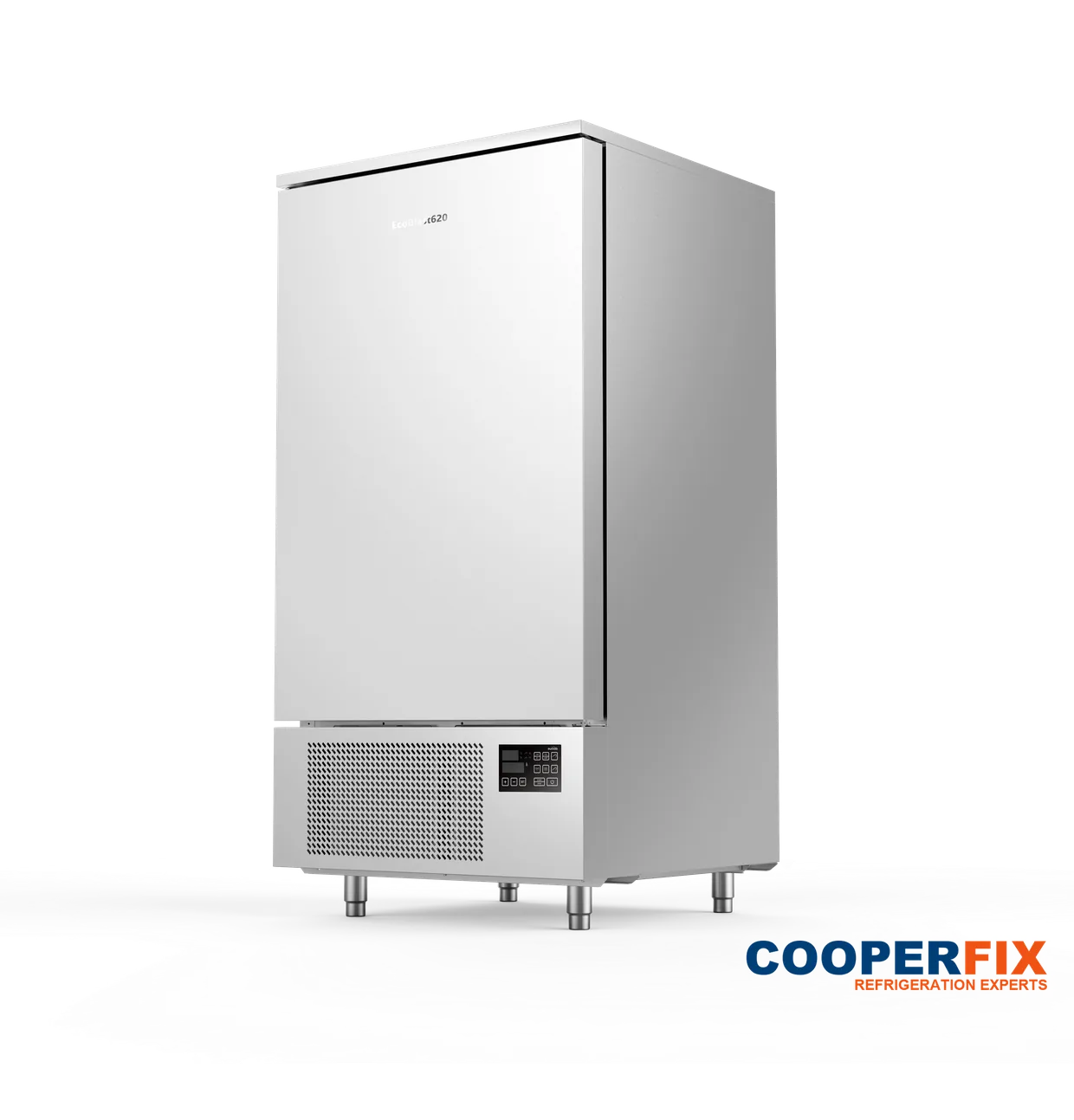
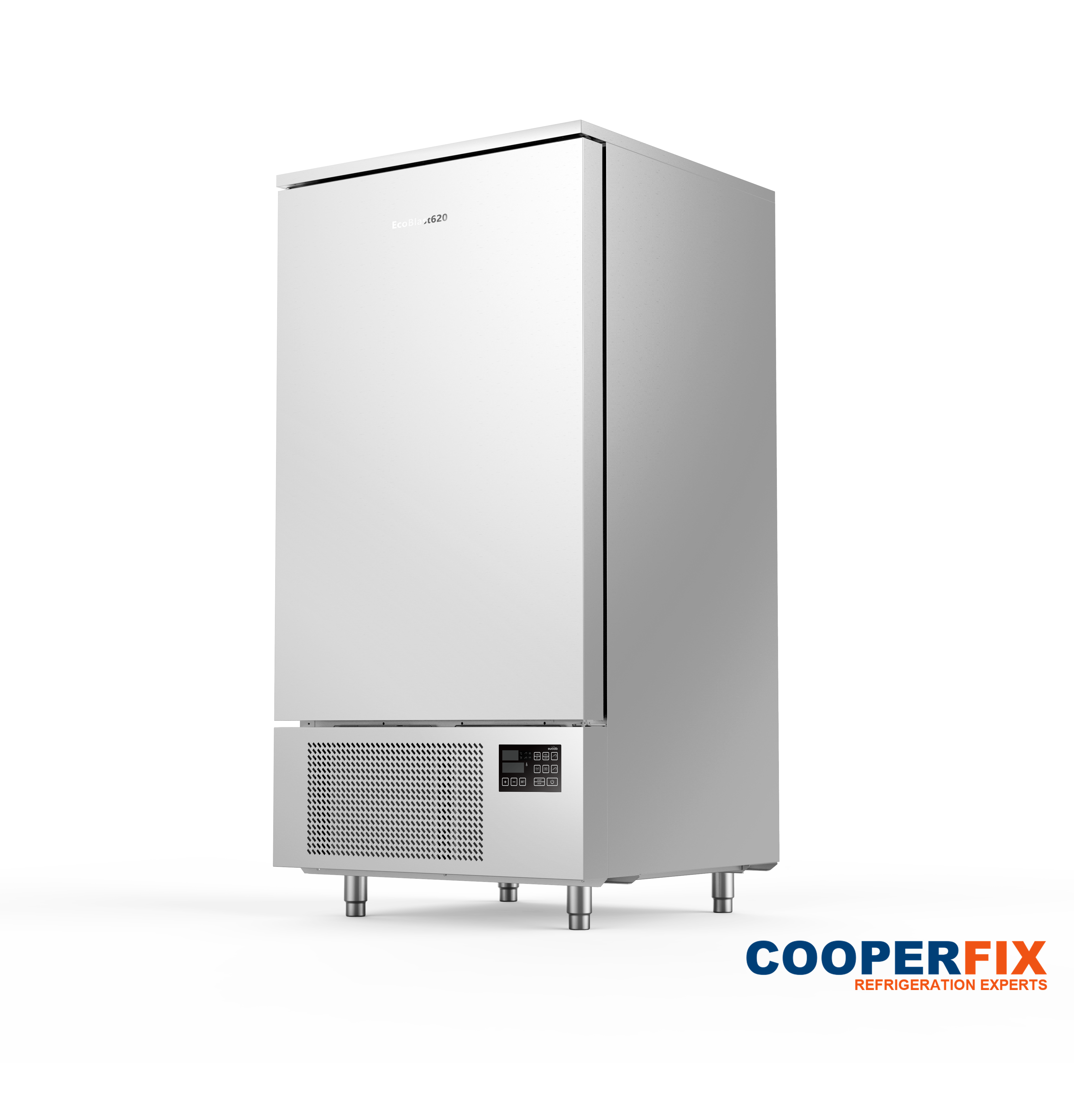
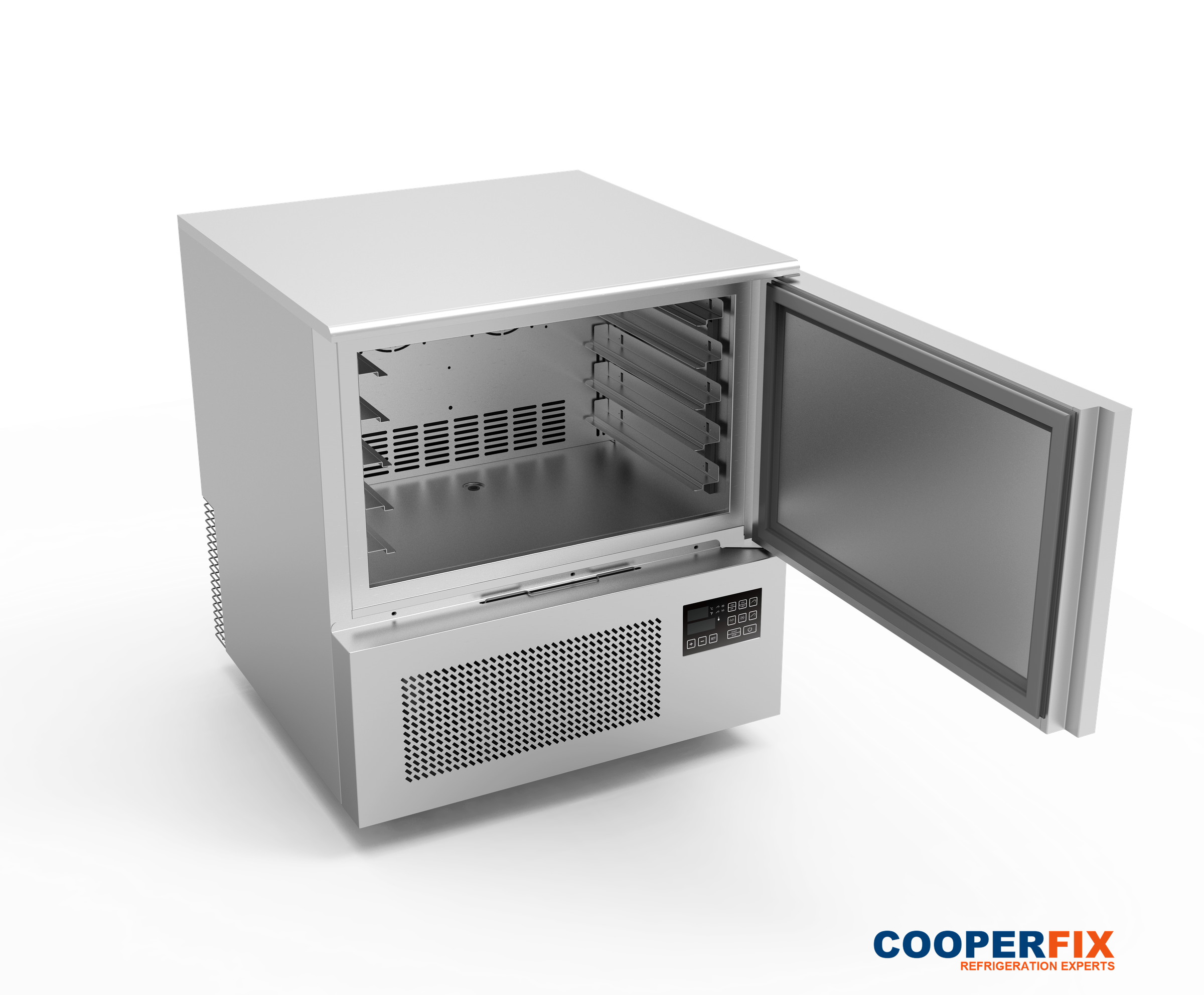
This page covers the compact ECOBLAST 320 and the larger ECOBLAST 620. Both use programmed rapid temperature-reduction and freezing operation, touchscreen controls and R290 refrigeration. Because cabinet size and tray capacity differ, service evidence must remain attached to the exact model.
This narrow scope keeps unrelated Eurodib product families out of the service request.
Model specificity also keeps the service record usable. A cycle description, displayed condition or part reference has meaning only when it remains connected to the correct ECOBLAST cabinet and its documentation. CooperFix confirms that identity before translating operating evidence into a proposed scope of work.
ECOBLAST 320
The ECOBLAST 320 is the compact model and provides five tray positions. Its service record connects the selected program, the stage where performance changed and any displayed condition to the exact unit. Those observations establish context rather than identify a failed part.
CooperFix relates touchscreen response and cycle behaviour to measured cabinet conditions, sensing, fan operation, airflow and refrigeration findings. The recommendation remains specific to the ECOBLAST 320.
ECOBLAST 620
The ECOBLAST 620 is the larger model and provides ten tray positions. The technician distinguishes a whole-cabinet condition from a pattern tied to a cycle stage or particular tray positions instead of assuming that capacity explains the change.
Controls, product-probe or temperature-sensing behaviour where applicable, fan operation, airflow, defrost behaviour and refrigeration performance may form part of cause-finding. Proposed work follows findings for the exact unit.
One request can cover more than one unit
A business may include multiple ECOBLAST units in one request. CooperFix keeps the model, cycle change, measurements, findings and recommended work separate so one conclusion is not carried across different cabinets.
Service situations
A changed cycle is the starting point, not the diagnosis
A request may begin because a programmed cycle stops early, misses its target, displays an alarm or behaves inconsistently. It may also concern a condition returning after earlier service. These descriptions identify what changed but do not prove which system requires work.
CooperFix establishes when the condition appears and relates that cycle stage to controls, sensing, airflow, fan operation, defrost behaviour and refrigeration performance. A displayed message is considered with measurements and physical findings. The recommendation follows model identity, repeatable evidence and technician findings.
The timing pattern matters. A unit that changes behaviour as soon as a program begins presents different evidence from one that progresses normally before an interruption. A condition that appears only during a particular scheduled cycle is also documented separately from a cabinet-wide pattern. These distinctions help the technician reproduce the relevant behaviour without turning an initial observation into an assumed cause.
When a condition cannot be reproduced during the first observation, the service history still matters. CooperFix records the model, program context, sequence reported and evidence available at the visit, then explains what can be concluded and what remains unconfirmed.
For business operations
ECOBLAST service belongs in the production schedule
Restaurants, catering operations, central food-preparation facilities and institutional foodservice may use shock-freezing cycles as defined production steps. A cycle change can affect batch timing, staff coordination, tray availability and surrounding work, so service needs both operating context and technical evidence.
Staff can describe the business impact in ordinary terms while CooperFix establishes cabinet and refrigeration conditions. When several ECOBLAST units are involved, the request can identify each model’s production role. Every cabinet still receives its own findings and record.
That record can connect the affected batch window, unit availability and service access with the technical findings. It gives managers a defined basis for deciding how to sequence production while applicable work is considered. CooperFix does not promise a production result; the service role is to assess the equipment, explain the condition and define work supported by evidence.
Practical service coordination
Plan access without turning production staff into technicians
Coordination begins with the affected model, an ordinary description of the cycle change and the production window in which the unit is used. CooperFix organizes assessment around the equipment and available access.
Food handling and production decisions remain under the business’s procedures. CooperFix identifies the model, observes relevant operation when appropriate, takes professional measurements and documents findings. The customer is not asked to access components, alter controls for testing or interpret technical values.
A short service description does not become an assumed repair plan. Applicable parts, labour and follow-up are discussed after assessment.
Where the operating schedule allows, relevant cycle context can be preserved for the visit without asking staff to create a special test. If access is limited by active production, that constraint becomes part of coordination and is separated from the eventual technical conclusion.
From condition to findings
How CooperFix approaches an ECOBLAST service call
01 — Confirm the equipment and service context
The technician confirms whether the affected unit is an ECOBLAST 320 or ECOBLAST 620 and connects the request to its production role. Available model details, the programmed cycle involved, prior service context and the observed change become part of the record.
02 — Establish measured operating evidence
Professional assessment may include cabinet-temperature behaviour, sensor or product-probe response where applicable, touchscreen and alarm behaviour, fan operation, airflow across the installed tray arrangement, defrost behaviour and refrigeration performance. The exact checks depend on the unit and the condition demonstrated.
03 — Relate the evidence to the cycle stage
An interrupted program, missed target or uneven tray-position pattern is evaluated in the context of when it occurs. The technician compares control commands, sensing and actual equipment response so that a message or symptom is not mistaken for a complete diagnosis.
04 — Explain findings and applicable work
CooperFix explains the confirmed condition, the work supported by the findings and any limits that remain until further access or an approved next step is available. The business can then review a defined recommendation tied to the exact unit.
Technical service scope
Connected systems are assessed as connected systems
Programmed operation depends on controls, sensing, cabinet airflow, fan operation, defrost behaviour and the refrigeration system working together. Professional service evaluates those relationships instead of selecting work from a displayed condition alone.
Controls and sensing
CooperFix evaluates touchscreen response with relevant sensors and the product probe where applicable. Readings are compared with measured operation and the cycle stage under assessment.
Airflow, fan operation and tray-position patterns
The technician evaluates fan behaviour and measured conditions across the installed tray arrangement. A pattern near one position is documented without treating it as a whole-cabinet result.
Defrost and refrigeration performance
Defrost behaviour, temperature recovery and refrigeration-circuit findings are related to the complaint and operating sequence. Work involving the R290 system remains within qualified professional procedures.
Cabinet condition and service access
Door condition, sealing surfaces, cabinet use and access are recorded with controls and refrigeration findings so the recommendation reflects the installed condition.
The purpose of this combined review is to define work at the right level. A control response may need to be understood alongside sensing; an airflow pattern may need to be compared with fan operation; a temperature condition may require refrigeration measurements. CooperFix keeps these relationships visible in the findings instead of presenting isolated observations as separate repairs.
Findings before scope
Keep corrective work and planned care distinct
Corrective work addresses a confirmed condition affecting the ECOBLAST cycle or cabinet. Planned commercial refrigeration maintenance reviews operating condition and recurring needs on an agreed schedule. One does not automatically substitute for the other.
When a unit has an active interruption, alarm condition or missed target, CooperFix first establishes what the evidence supports. The recommendation may identify applicable corrective work, an additional assessment step or a condition that should be documented for later planning. A maintenance visit is not used to conceal an unresolved fault, and an corrective-work recommendation does not create an automatic future maintenance program.
The explanation remains tied to the unit, findings and approved scope. If a condition returns, the earlier record supports comparison without assuming that the previous cause repeated.
This distinction also helps a business evaluate priorities across multiple units. A cabinet with a confirmed active fault can be addressed through a defined corrective recommendation, while another unit may remain in planned review. Each decision retains its own evidence, approval and service history.
Useful records for future decisions
Keep every cycle condition connected to the correct unit
A useful service record identifies the ECOBLAST model, programmed behaviour, observed change, technician measurements, findings and approved work. Details remain separate for multiple units.
CooperFix explains what is known, what work is supported and whether another step depends on access, an approved part or more operating evidence. The business can plan around a defined technical record.
Model and cycle history can help distinguish a recurring condition from a new one. Current measurements and findings still govern the assessment.
The same discipline applies after approved work. The record should state which unit was addressed, what evidence supported the decision and what work was completed. If another cycle change is reported later, CooperFix can compare like information while still assessing the current condition independently.
Which Eurodib models does this page cover?
This page covers the Eurodib ECOBLAST 320 and ECOBLAST 620 shock freezers within CooperFix’s confirmed commercial refrigeration scope. It does not extend the service statement to other Eurodib product families. The exact model is kept with the request, measurements, findings and recommended work so the compact five-tray ECOBLAST 320 is not confused with the larger ten-tray ECOBLAST 620.
What information helps identify an ECOBLAST unit?
Share ordinary contact details, the ECOBLAST model when already known, a brief description of the cycle change and any displayed message already visible during normal use. Prior service context may also be helpful. You can contact CooperFix before every detail is available; model confirmation, technical measurements and interpretation are handled during professional service.
Can CooperFix assess a cycle that stops before reaching its target?
Yes. The technician relates the point of interruption to control response, temperature sensing, product-probe behaviour where applicable, airflow, fan operation, defrost behaviour and refrigeration findings. A stopped cycle or displayed condition is useful operating context, but the recommendation follows measured evidence rather than an assumption based on the symptom alone.
How is uneven performance across tray positions handled?
CooperFix evaluates measured cabinet behaviour, fan operation and airflow across the installed tray arrangement. The technician documents whether the pattern is localized or appears more broadly and relates it to controls, sensing and refrigeration performance. No repair is selected solely because one tray position appears different; the complete operating evidence guides the recommendation.
What if the same alarm or temperature condition returns?
Earlier work, the timing of the recurrence and the model’s cycle history become part of the current assessment. The technician still gathers current evidence because a familiar message does not prove that the same cause has returned. Findings and proposed work are documented for the affected unit instead of being copied automatically from an earlier visit.
Can several ECOBLAST units be included in one request?
Yes. One request can identify several ECOBLAST 320 or ECOBLAST 620 units and describe the operating change associated with each. CooperFix keeps model identity, cycle context, measurements, findings and recommendations separate so priorities remain clear and one cabinet’s condition is not assigned to another.
Request professional Eurodib service
Start with the affected ECOBLAST model and cycle condition
Share contact information and a brief description of the ECOBLAST unit. Include the model or displayed message when already known. CooperFix handles equipment confirmation, measurements and assessment.
The request does not predetermine a component, part, scope, schedule or outcome. Decisions follow technician findings and approval of proposed work.
Request Service for Your Eurodib ECOBLAST Unit
Describe the model and cycle change in ordinary terms. Technical assessment and repair recommendations remain CooperFix’s work.
CooperFix services the confirmed Eurodib ECOBLAST shock freezer scope.
One clear next step
Request service for the affected Eurodib ECOBLAST unit
Start with the model and the operating change you observed during normal use. CooperFix will identify the unit, assess its cycle and refrigeration performance, and explain the work supported by the findings.