Commercial Refrigeration Repair | Diagnostics | Preventive MaintenanceEmergency calls are received and assessed 24/7. Availability and response depend on location, workload and the repair required.
Commercial Refrigeration Repair | Diagnostics | Preventive MaintenanceEmergency calls are received and assessed 24/7. Availability and response depend on location, workload and the repair required.
Heatcraft commercial refrigeration service
Heatcraft Commercial Refrigeration Repair & Service
A Heatcraft system may connect an indoor unit cooler, condensing unit or compressor section, remote condenser, controls and the refrigerated space they serve. Packaged systems combine major functions, while split systems place components in separate locations. CooperFix identifies the connected equipment before testing so a symptom at one component is evaluated within the complete refrigeration system.
CooperFix services confirmed Heatcraft unit coolers, condensing units, condensers, PRO3 packaged systems and applicable refrigeration controls. CooperFix maps the connected components, traces the reported condition through that circuit and explains which measured findings support the proposed work. Technician-led cause finding continues through the post-work operating review.
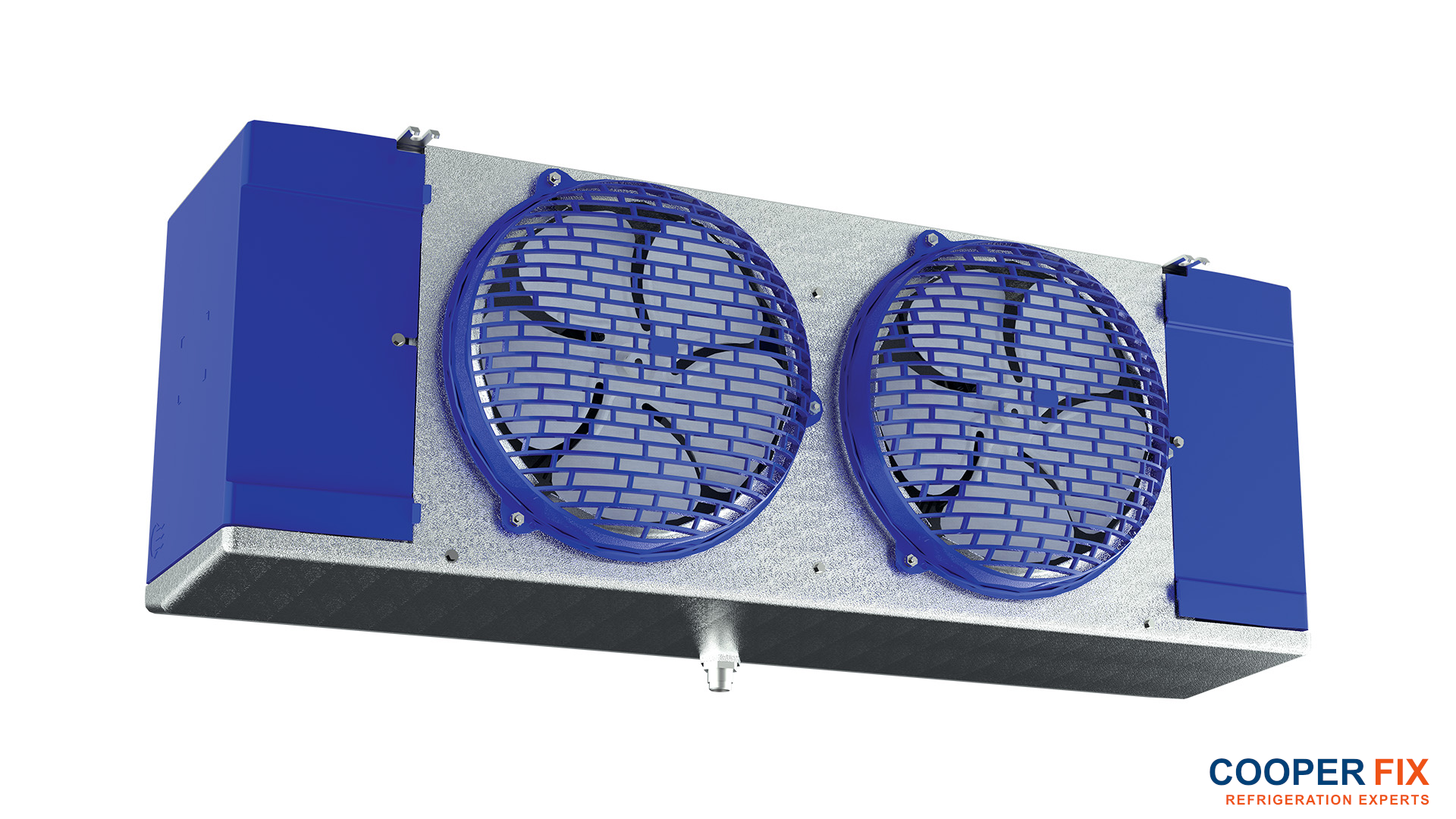
Heatcraft low-profile unit cooler for walk-in refrigeration.
Unit cooler and condensing equipment mapped together Model numbers, component roles and connected equipment define the correct system map.
Served space and heat-rejection side both reviewed The indoor and outdoor portions are evaluated as parts of one verified refrigeration system.
Circuit readings guide the Heatcraft repair recommendation Measurements and operating tests determine the proposed work for the confirmed condition.
Map the Heatcraft circuit before scheduling access
Connect the request to the equipment and space it serves
Provide your contact details, identify the refrigerated space served and briefly describe what changed in the Heatcraft system. Include a model or serial only when it can be read from an accessible nameplate or existing record. The technician will map the unit cooler, condensing equipment and controls before choosing system-level tests.
Request Heatcraft Service
Describe the equipment, refrigerated space and operating change in ordinary terms. CooperFix handles system identification, technical assessment and repair planning.
System components organized by refrigeration role
Identify every connected component before defining the service path
Heatcraft’s official portfolio spans unit coolers, condensing equipment, packaged systems, condensers and controls. These categories perform different jobs and may be installed together. CooperFix records each component separately and then maps its relationship to the refrigerated fixture, room or process included in the request.
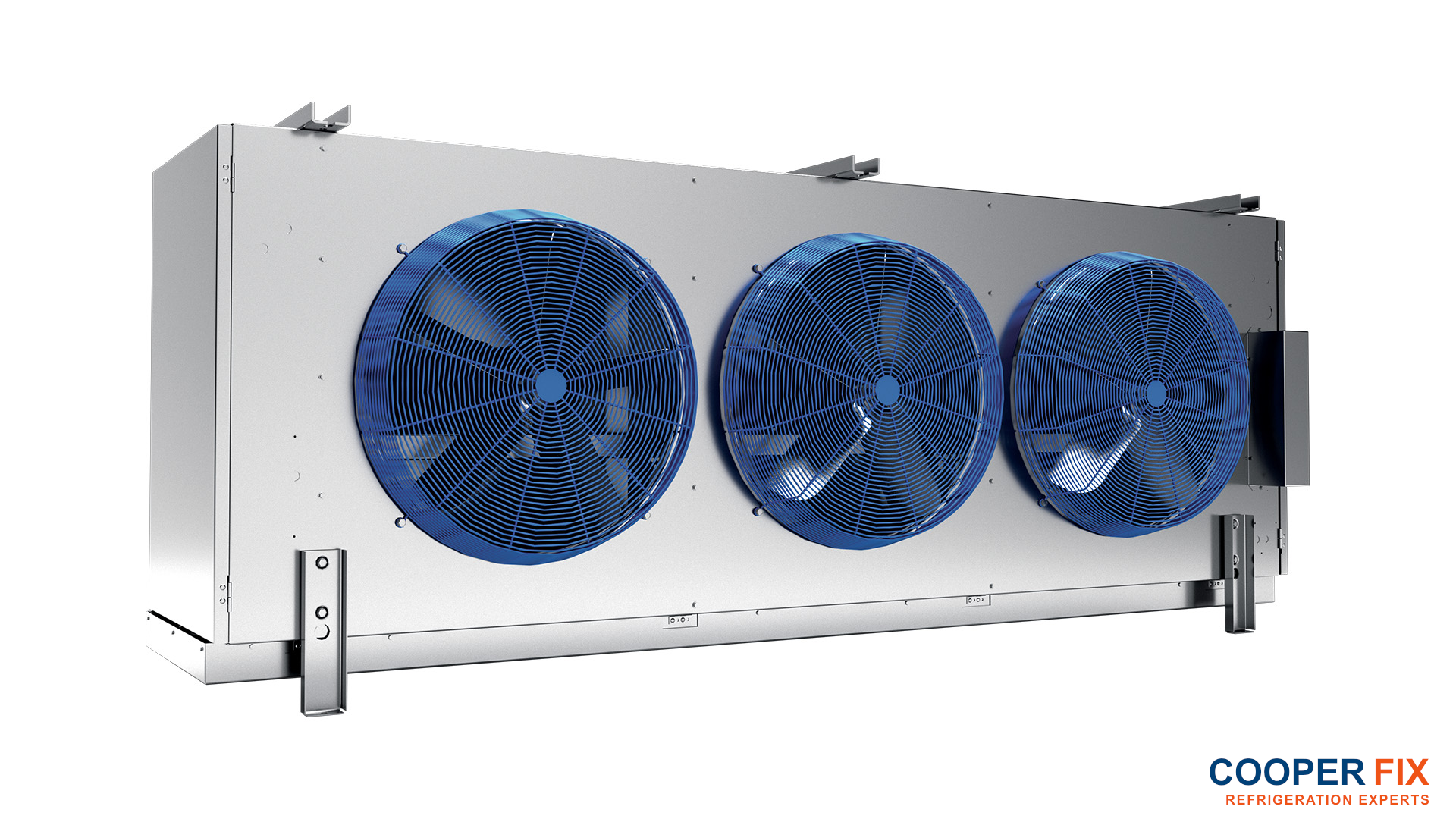
Heatcraft large unit cooler for higher-capacity refrigerated spaces.
Walk-in, reach-in and larger unit coolers
Heatcraft identifies unit coolers for walk-in spaces, reach-in fixtures and larger cold-storage applications. Official product groups include low-profile, center-mount, medium-profile, large and multiple reach-in arrangements. The exact model determines airflow direction, fan arrangement, temperature duty and applicable defrost design. CooperFix assesses coil condition, airflow, fan operation, sensing, defrost functions where fitted, drainage, refrigerant distribution and the relationship between the unit cooler and the equipment serving it.
Air-cooled and water-cooled condensing units
Heatcraft condensing-unit documentation covers horizontal and vertical air-discharge arrangements, multiple capacity ranges, remote compressor units and water-cooled configurations. CooperFix confirms the model, temperature application, compressor arrangement, controls and installed heat-rejection path before testing. Electrical operation, safeties, compressor behaviour, condenser airflow or water-side conditions, piping and refrigeration-circuit performance are evaluated only as applicable to the verified unit.
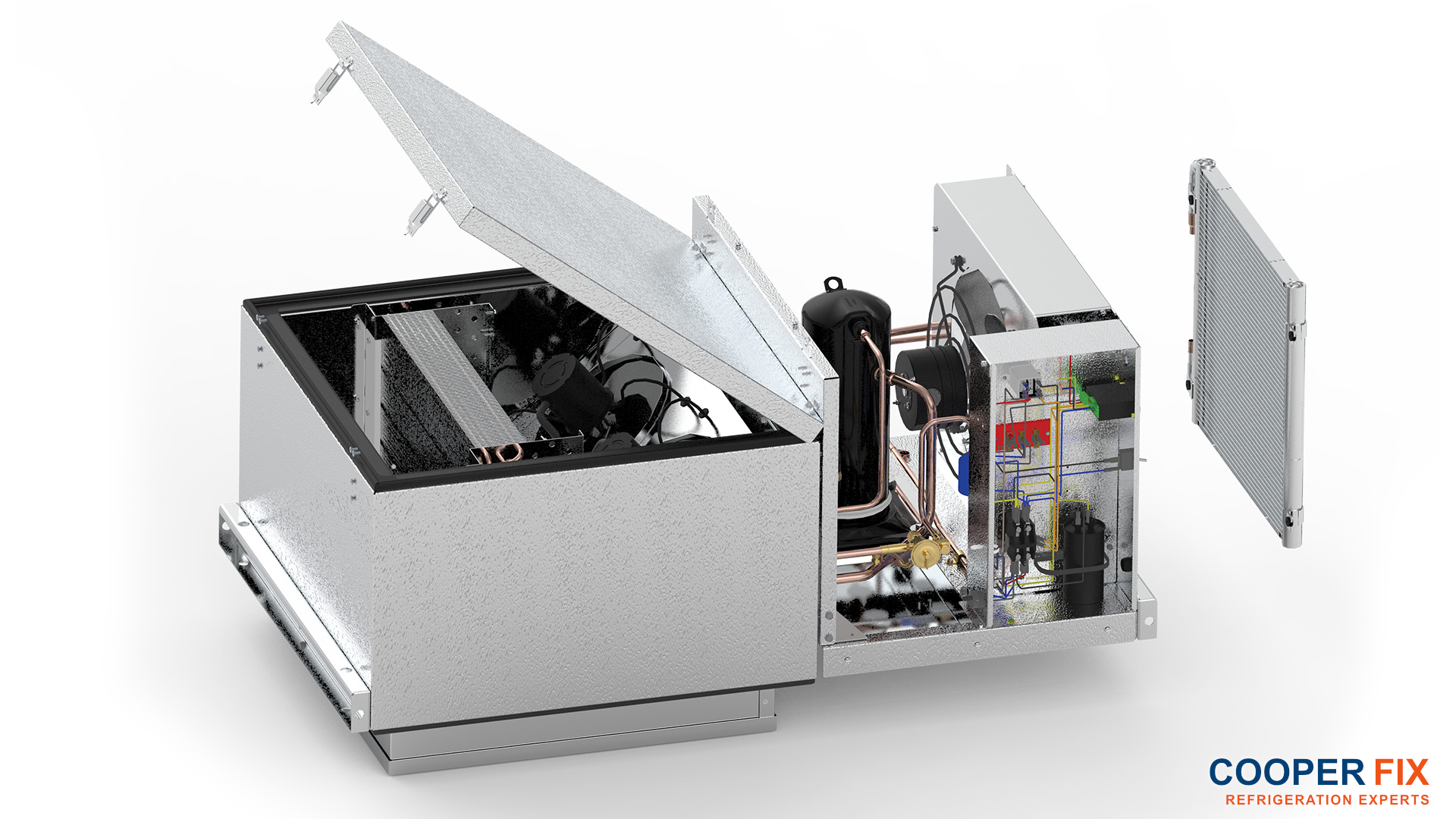
Heatcraft describes the PRO3 as a packaged configuration combining a unit cooler and condensing unit for walk-in cooler or freezer duty. A packaged format reduces the distance between major refrigeration sections, but it still requires exact model identification and a complete operating assessment. CooperFix evaluates the indoor and outdoor portions, fans, controls, applicable defrost functions, condensate management, electrical operation, heat rejection and refrigerated-space response as one connected package.
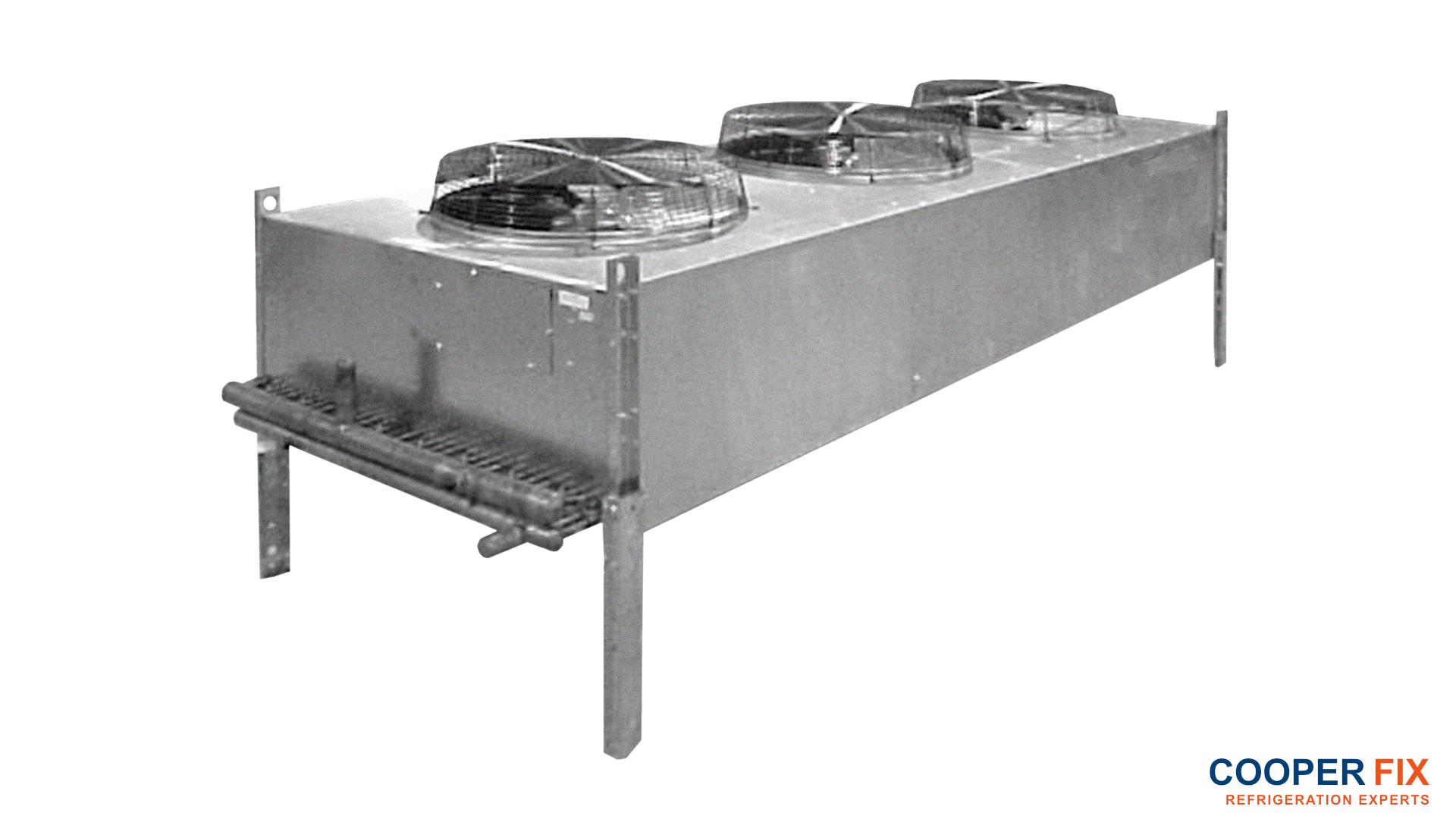
Heatcraft direct-drive air-cooled condenser.
Condensers and refrigeration controls
Heatcraft also documents air-cooled condensers, gas coolers, fluid coolers and several control families, including intelliGen™, Beacon II™ and Quick Response Controller products. CooperFix confirms which condenser and control architecture is actually installed. A displayed alarm or control message is recorded, then tested in relation to sensors, wiring, commanded functions and system behaviour. It is not treated as an automatic component verdict.
A reported effect can originate in another part of the system
Follow the refrigeration path from the served space to heat rejection
A warm refrigerated space can coincide with an indoor airflow condition, a control or sensing issue, an applicable defrost condition, a refrigeration-circuit change, a condensing-unit problem or limited heat rejection. A condensing-unit sound or control alert can likewise be the result of operating conditions elsewhere in the connected system. CooperFix avoids defining the repair from the location where the effect was first noticed.
The technician maps the unit cooler, condensing section, condenser, controls and served space. Temperature behaviour, pressure and electrical measurements, airflow, fan operation, controls, safeties, applicable defrost functions and heat rejection are then assessed in a sequence appropriate to the verified configuration. Findings identify where the operating path changes and what repair work is supported.
Refrigeration duty defines the risk to the served space
Service priorities stay connected to the space and stock supported
A low-profile unit cooler in a compact cold room supports a different access pattern from a larger unit in a high-volume storage space. A reach-in unit cooler may serve a fixture opened repeatedly during operations. A packaged system can support a defined walk-in, while a remote condensing unit may be connected to equipment located elsewhere.
CooperFix records the system’s role, temperature duty, affected area, operating schedule and the circumstances in which the change appears. This information helps coordinate access and interpret measured performance, but it does not replace testing. Technical findings remain the basis for the repair recommendation and the order in which connected components are addressed.
Access and communication follow the system map
Treat separate locations as one verified refrigeration circuit
Heatcraft equipment can place the unit cooler inside a refrigerated space and the condensing or condenser section elsewhere. Controls and disconnects may be positioned separately again. CooperFix identifies the connected components before work begins so access and testing remain aligned to the same system.
When several Heatcraft systems are included in one request, each receives a separate equipment map and reported condition. Model and serial information, served space, controller details, findings, approved work and post-work observations stay connected. This prevents a reading from one circuit or an alert from one controller from being assigned to another system merely because the equipment is located nearby.
Coordination also accounts for the practical separation between components. Access to the refrigerated space, controller, electrical section and heat-rejection equipment may require different operating windows or site contacts. CooperFix identifies those needs from the verified system map and records which section was available for assessment. If a connected component cannot be evaluated during the authorized visit, the record states that limitation instead of converting an incomplete check into a conclusion. Work already completed, testing still required and any new approval remain separate, giving the business a clear picture of the system’s current service status.
For a PRO3 packaged system, the coordination map keeps the integrated sections under one equipment record while still documenting the indoor load, controls and heat-rejection functions separately. For a split Heatcraft installation, the same map links the unit cooler to the exact condensing equipment and controller that serve it. This distinction helps the technician sequence testing correctly and prevents an observation from a packaged arrangement from being carried into a remote circuit with a different access and control path.
Trace the served space through the unit cooler and high side
How CooperFix traces Heatcraft components through the connected system
01 — Identify the Heatcraft components serving the space
CooperFix records the exact brand and model shown on each nameplate, the serial number when available, the equipment category and the refrigerated space or fixture served. Product-family names and model prefixes remain attached to the correct component.
02 — Connect the unit cooler, controls and heat rejection
The technician identifies the unit cooler, condensing section, condenser or heat-rejection arrangement, controls, relevant safeties, temperature duty, defrost design where applicable and component locations. Packaged and split configurations receive different system maps.
03 — Compare room, airflow, defrost and high-side response
Applicable checks can include temperature behaviour, recovery, airflow, fans, coil condition, sensing, control input and output, electrical operation, safeties, defrost functions, drainage, pressures, compressor operation and heat rejection. The verified design determines which measurements are relevant.
04 — Assign each action to the exact Heatcraft component
CooperFix connects each finding to the affected system and explains the work it supports. A control code, frost pattern, sound, temperature change or interrupted cycle begins the investigation; it does not independently establish the failed component or final repair recommendation.
Testing covers the components that serve the affected space
Corrective work stays with the measured Heatcraft circuit condition
Test results from a Heatcraft installation may lead to work on a unit cooler and its fans, coil, drainage or defrost functions; the connected condensing equipment; the controls joining those sections; or the piping and refrigerant circuit they share. A PRO3 packaged system is handled according to its integrated layout, while a distributed installation keeps indoor load and heat-rejection findings linked but separately documented. This is a range of possible work, not a standard parts list.
For a split Heatcraft system, indoor and outdoor findings stay attached to one verified circuit. With PRO3 equipment, integrated sections are evaluated together while their individual functions remain traceable. Controller alerts are checked against actual inputs, outputs and refrigeration behaviour. Following authorized work, the technician observes the affected circuit functions and records that response.
The post-work review is defined by the component and function included in the authorization. Unit-cooler work is followed by applicable airflow, fan, coil, drainage or defrost observations; condensing-equipment work is reviewed through its electrical, compressor and heat-rejection response; controller work is checked against verified inputs, outputs and commanded operation. CooperFix records the available system response without extending that result to an inaccessible component or another Heatcraft circuit.
Separate an active circuit fault from planned coil or airflow care
Assign each recommendation to the unit cooler, condensing unit or control involved
Heatcraft corrective work addresses the verified cause within the mapped refrigeration circuit. A separate condition may justify planned commercial refrigeration maintenance, yet it remains outside the immediate authorization unless the business approves it. CooperFix distinguishes the current decision, optional follow-up and additional testing still required.
On a system with multiple connected components, this distinction prevents unplanned work. A unit-cooler finding does not automatically authorize work on the condensing unit. A condenser observation is not converted into a controller replacement without supporting test results. Each recommendation identifies the component, reason, proposed work and relationship to the reported condition.
When more than one condition is confirmed, the decisions can still be staged without breaking the circuit map. The active correction identifies the Heatcraft component and system effect it addresses. A separate coil, airflow or access observation can remain a maintenance or follow-up item with its own findings. Any test that could not be completed remains a limitation rather than a presumed fault. This keeps repair, planned care and additional assessment understandable at the component and circuit levels.
Keep the served space tied to its Heatcraft component map
Model, circuit, controls and completed work stay connected
Heatcraft’s official parts resources use model and serial information to distinguish equipment. CooperFix carries that precision into the service record. The file identifies the product category, model, serial information when available, served space, connected components, controller family, temperature duty, reported change, measurements, approved work and relevant post-work review.
The service notes also preserve the exact nameplate brand. Heatcraft’s portfolio is organized across manufacturer product families, so the brand shown on the installed nameplate remains attached to the service history. Earlier service notes provide useful context, while current measurements determine the next recommendation. Completed work, an open repair recommendation and maintenance observations remain clearly separate.
Which Heatcraft low-side and high-side components can CooperFix assess?
CooperFix services confirmed Heatcraft unit coolers, condensing units, condensers, PRO3 packaged refrigeration systems and applicable controls used in commercial refrigeration. The exact models, temperature duty and connection between components determine which checks apply.
Why trace the refrigerated space through both Heatcraft low- and high-side components?
A reported effect in the refrigerated space can be connected to the unit cooler, controls, condensing section, condenser, electrical functions or another verified system condition. Mapping the connected equipment allows CooperFix to test the correct circuit and avoid defining work from the location where the effect first appeared.
Can CooperFix assess both the unit cooler and condensing unit?
Yes, when both components are part of the confirmed commercial refrigeration system included in the request. Each component keeps its own model and findings, while the assessment also considers how the two sections operate together. The repair recommendation follows measurements and the verified connection.
How does CooperFix approach a Heatcraft controller alert?
The technician records the exact controller family and displayed information, then evaluates relevant sensors, wiring, inputs, outputs, commanded functions and refrigeration behaviour. An alert is useful information, but it is not treated as an automatic decision to replace a controller or another component.
How are several Heatcraft circuits distinguished during a coordinated visit?
CooperFix gives every Heatcraft circuit its own served-space map, unit-cooler and high-side model details, controller record, measurements, findings and authorization during a coordinated visit. Data from one evaporator–condensing-unit pairing remain with that verified circuit and are never used as proof for another system.
Which served-space and component details help prepare Heatcraft service?
Identify the affected refrigerated space, describe what changed and when it happens, and provide safely accessible nameplate details for each connected component. CooperFix confirms how the components are connected, tests the system and explains which findings support the proposed work.
Identify the refrigerated space and connected Heatcraft equipment
Begin with the Heatcraft circuit serving the affected space
Share contact information and describe the Heatcraft equipment and operating change in ordinary terms. If several systems are involved, identify the served space and model for each when possible. CooperFix will establish the equipment map, evaluate the relevant functions and explain the supported service recommendation.
Request Service for Your Heatcraft Equipment
Tell us which system is affected and what changed. Professional system identification, testing and repair planning remain CooperFix’s work.
Professional service across the mapped Heatcraft circuit
Request service for the Heatcraft system serving the affected space
CooperFix identifies the connected equipment, evaluates the condition and explains the work supported by professional findings.