Commercial Refrigeration Repair | Diagnostics | Preventive MaintenanceEmergency calls are received and assessed 24/7. Availability and response depend on location, workload and the repair required.
Commercial Refrigeration Repair | Diagnostics | Preventive MaintenanceEmergency calls are received and assessed 24/7. Availability and response depend on location, workload and the repair required.
Hoshizaki commercial refrigeration service
Hoshizaki Commercial Refrigeration Repair & Service
Hoshizaki commercial refrigeration supports storage, preparation and display operations through equipment families with very different cabinet layouts. CooperFix services confirmed Hoshizaki reach-in refrigerators and freezers, undercounter units, refrigerated worktops, preparation tables and refrigerated merchandisers. Service begins with the exact model, cabinet layout and role of the affected unit.
A glass-door reach-in, compact undercounter refrigerator and preparation table can all show a temperature change, but their airflow, controls, service access and operating zones differ. CooperFix identifies the exact model, tests the affected cabinet or preparation zone and explains the confirmed repair. The brand name identifies the equipment family; the diagnosis comes from the installed unit.
Steelheart and preparation-table model identified Each finding is tied to the model, cabinet family, door or drawer arrangement, and refrigeration layout.
Rail, base and cabinet zones kept separate Cabinet, rail, drawer, display and storage functions are separated before a recommendation is made.
Hoshizaki readings guide each cabinet recommendation Professional readings and observed operation guide the repair or maintenance recommendation.
Identify the Hoshizaki cabinet before the visit
Connect the request to the affected refrigeration unit
Complete the required request fields, identify the Hoshizaki Steelheart, undercounter or preparation format and summarize the changed cabinet or pan-zone behaviour. Include the model number if it is readily available. CooperFix verifies the layout before choosing the relevant refrigeration checks.
Request Hoshizaki Service
Name the Hoshizaki cabinet and affected storage, pan or base zone; CooperFix confirms the model, takes measurements and plans the repair.
Refrigeration families organized by cabinet function
Identify the equipment format before defining the work
Hoshizaki’s refrigeration range includes upright storage, compact workline cabinets and preparation equipment with dedicated ingredient and lower-cabinet functions. CooperFix keeps these formats distinct so the assessment follows the actual airflow path, control arrangement, access conditions and business role of the installed model.
Steelheart reach-in refrigerators and freezers
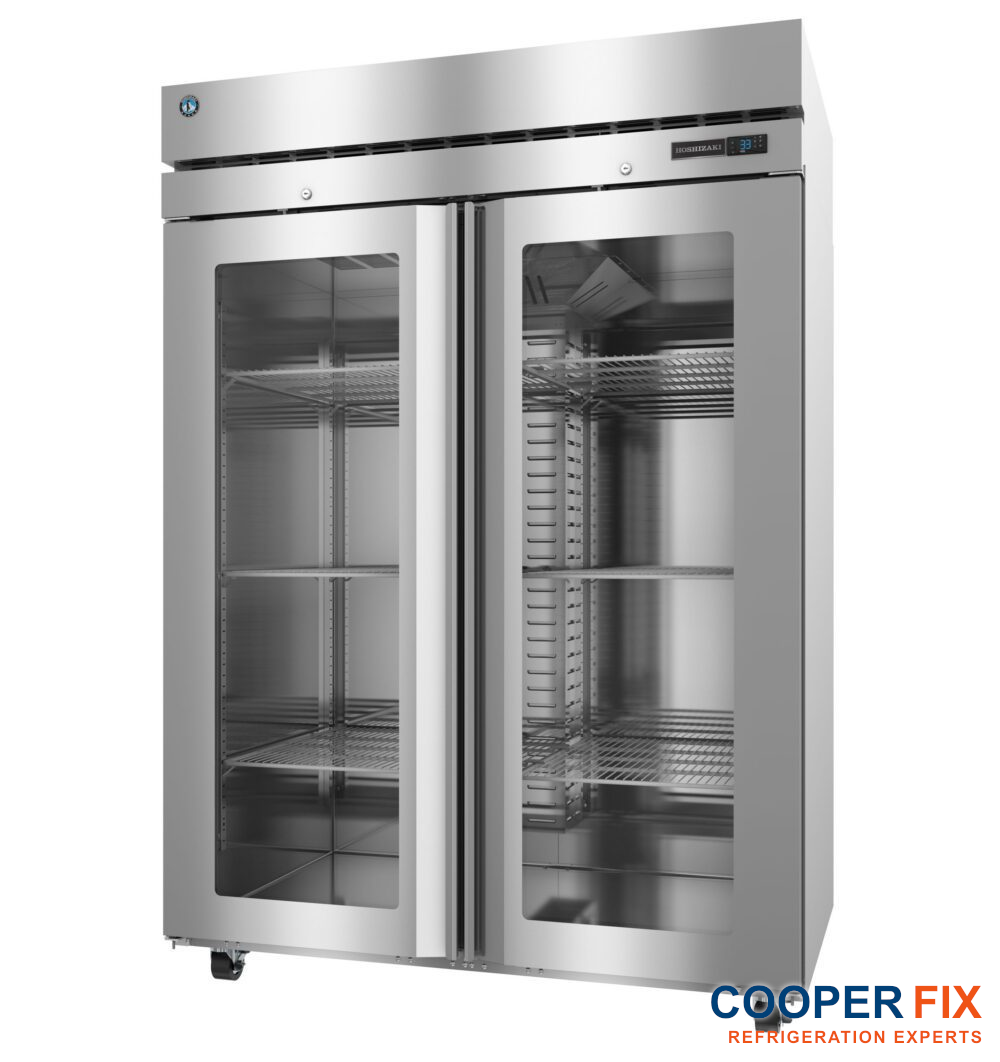
Hoshizaki documents solid-door and glass-door reach-ins, dual-temperature cabinets, pass-through units and roll-in or roll-through configurations. The R2A-FGE is an official two-section glass-door refrigerator model with ducted cabinet airflow, a digital controller, temperature alarms, LED lighting and top-mounted refrigeration. CooperFix confirms which features belong to the installed model before evaluating cabinet temperature, recovery, fan operation, controls, doors, condensate handling, heat rejection and refrigeration-circuit performance.
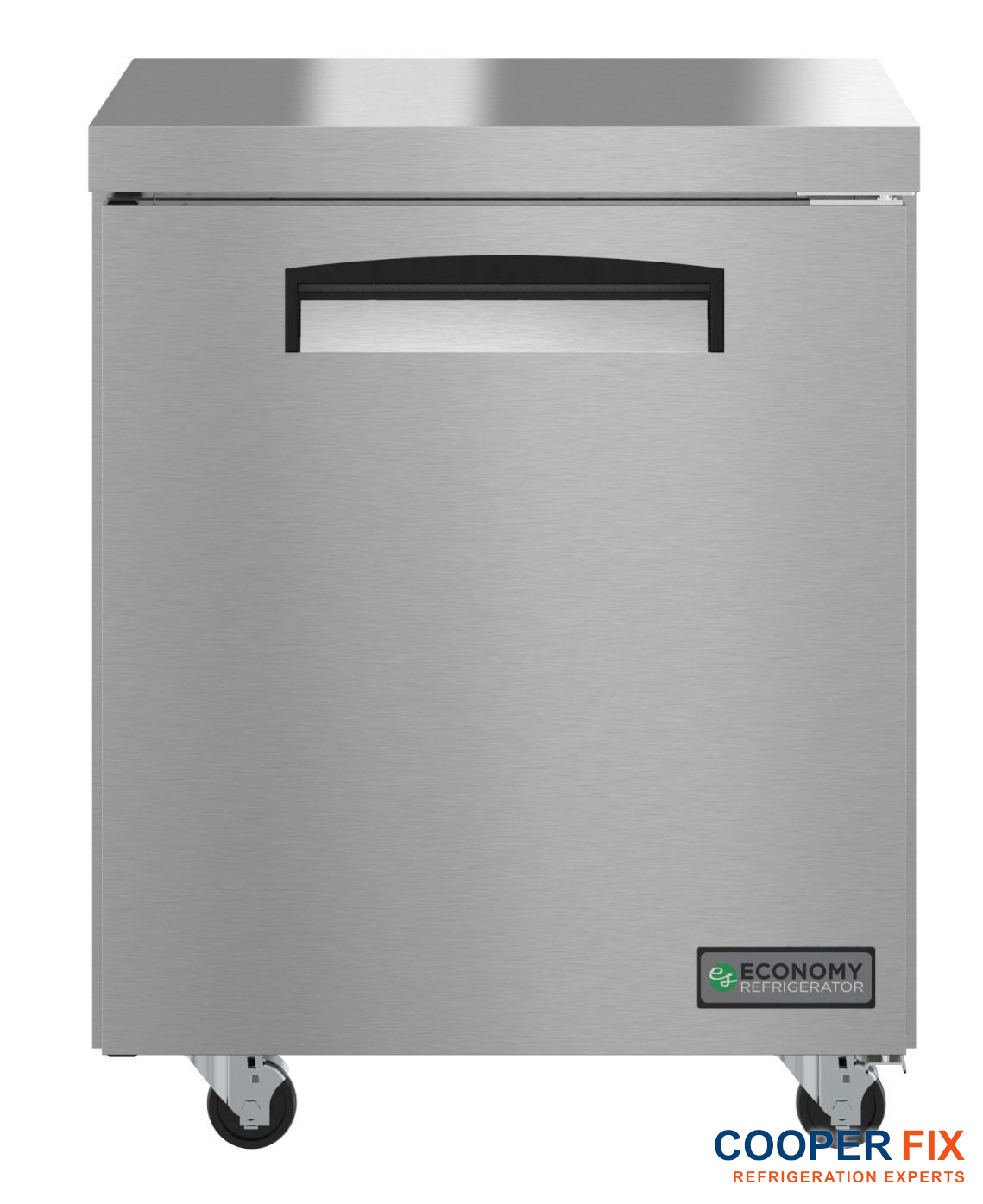
Undercounter equipment places refrigerated storage close to a production position while concentrating access and condenser airflow within a compact cabinet. The EUR27A is an official one-section refrigerator model with a stainless door and front-airflow layout. CooperFix records the model, door or drawer configuration, cabinet role and installed access before testing. A compact footprint does not justify transferring assumptions from an upright reach-in.
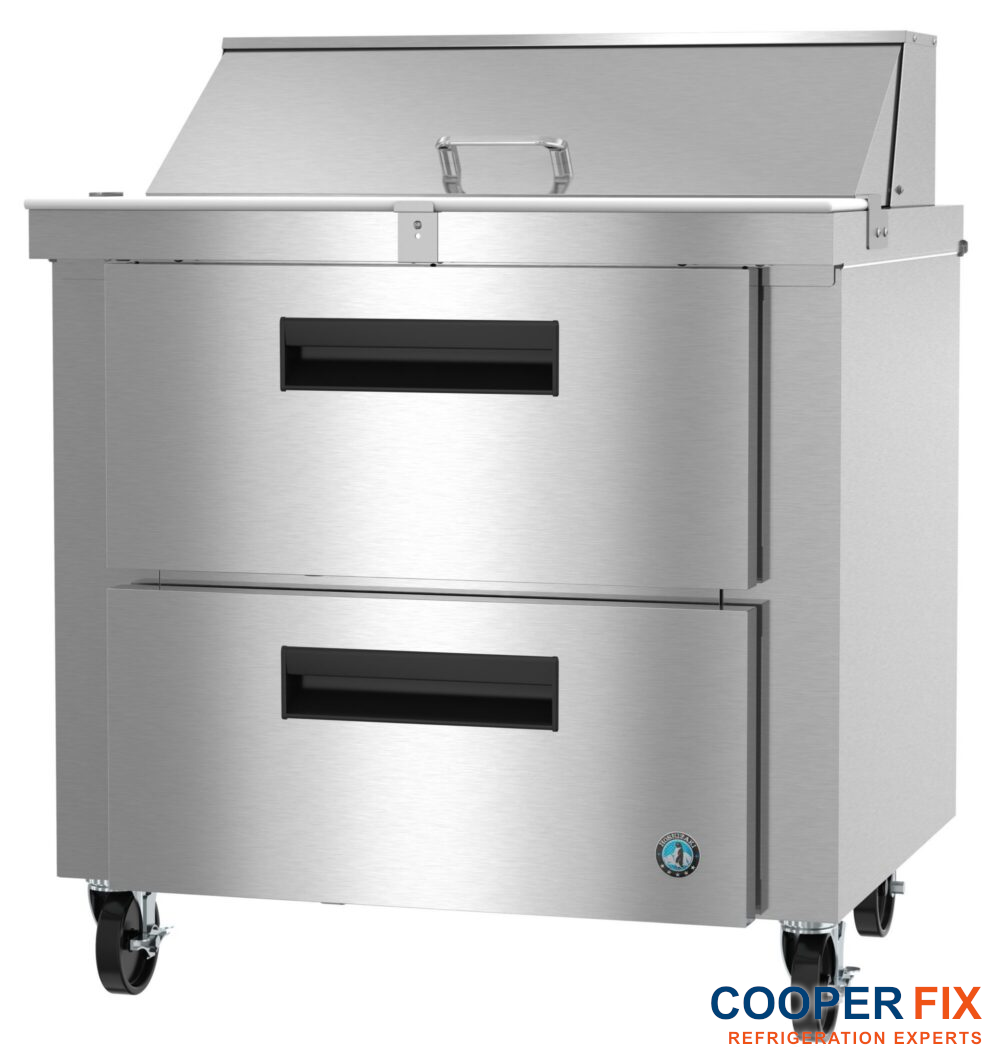
Hoshizaki Steelheart refrigerated preparation table with drawers.
Refrigerated sandwich preparation tables
The SR36B-10D2 is an official Steelheart preparation-table model with two refrigerated drawers and a ten-pan top rail. The rail, drawers and refrigeration system work together but represent different operating areas. CooperFix evaluates the reported zone, temperature behaviour, airflow, controls, access pattern and lower-cabinet performance before linking a symptom to a service decision.
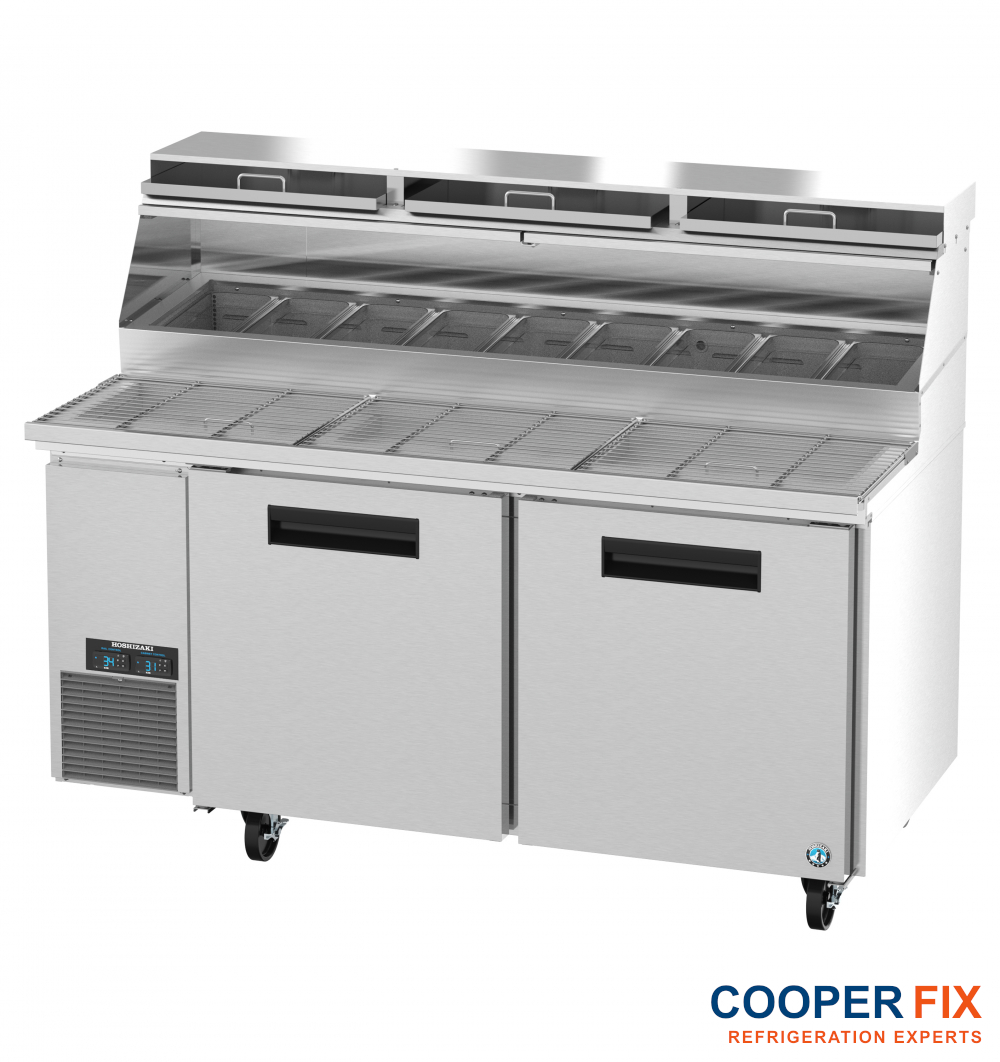
The PR67B-Z is an official two-section pizza preparation table with distinct rail and cabinet temperature management, front-breathing airflow and stainless construction. Its layout makes precise zone identification essential. CooperFix records whether the operating change affects the rail, cabinet or both, then uses measurements and model documentation to define the supported work.
Merchandisers and other confirmed refrigeration formats
Hoshizaki also documents refrigerated merchandisers, relevant back-bar refrigeration, worktops and chef bases. CooperFix services these families only after confirming the exact model. Their display, storage or equipment-support role informs visit planning, while professional testing determines the cause and recommendation.
One cabinet can contain more than one refrigeration priority
Check the ingredient rail and lower cabinet separately
A preparation table can present a change at the ingredient rail, in the lower storage section or across both areas. Those observations are useful, but they do not prove a shared cause. Door or drawer activity, product loading, airflow distribution, controls, sensing and refrigeration operation can affect how each area behaves during service.
CooperFix identifies the affected zone, checks the model-specific layout and tests the functions related to the complaint. On the SR36B-10D2, the drawer cabinet and top rail are recorded separately. On the PR67B-Z, the ingredient rail and lower cabinet are assessed as distinct operating zones. The recommendation states what was confirmed, where it applies and how the result will be checked after approved work.
Service planning also keeps the physical arrangement visible. A drawer configuration changes access and storage compared with a door cabinet, while an ingredient rail introduces repeated product access above the refrigerated base. CooperFix accounts for those differences when organizing measurements and reviewing performance after approved work. The technician does not infer that a stable lower cabinet proves stable rail operation, or that a rail concern automatically identifies a lower-cabinet fault. Each zone is checked according to its own function.
Refrigeration equipment supports different parts of the operation
Storage, preparation and display create different priorities
A reach-in may protect working inventory, an undercounter unit may keep ingredients close to a station, and a preparation table may support repeated access through a busy production period. A merchandiser adds product visibility and door activity to the refrigeration context. CooperFix records the business function, affected section and timing of the operating change so the assessment reflects actual use without turning operating details into a diagnosis.
When several units support one process, the service plan keeps their roles clear. A preparation-table rail concern is not merged with an unrelated reach-in condition. Each unit keeps its own model details, readings, recommendation and approval status.
Operating priorities can also change across the day. A reach-in may face repeated door openings during preparation, while an undercounter unit supports faster access at a dedicated station. CooperFix records when the change is most apparent and compares that context with measured operation. The timing helps organize the assessment without becoming a shortcut to the cause.
One request can cover several cabinet families
Keep every unit separate during testing
A business may operate an R2A-FGE reach-in, an EUR27A undercounter refrigerator and one or more preparation tables. CooperFix can coordinate those units in one request while keeping the model, reported condition, test results and work decision separate for each item.
This discipline matters when equipment shares stainless construction, similar controls or related brand styling. A control finding on an undercounter unit is not applied to a reach-in. A rail-temperature concern is not assigned to a lower cabinet without separate testing. If work is staged, the service summary shows what is approved, what is complete and what remains a separate recommendation.
Coordination becomes more precise when the request identifies the working role of each Hoshizaki cabinet as well as its model. The R2A-FGE may protect refrigerated inventory, the EUR27A may support a compact line position, and the SR36B-10D2 or PR67B-Z may divide service attention between an ingredient rail and refrigerated base. CooperFix uses those distinctions to sequence access and measurements while preserving a separate technical conclusion for every unit and operating zone.
Trace the rail, cabinet and refrigeration path
How CooperFix connects Hoshizaki control behaviour to the affected cabinet zone
01 — Record the Hoshizaki cabinet and operating zone
CooperFix records the Hoshizaki model, cabinet family, section count, door or drawer arrangement, temperature duty and operational role. Current manufacturer documentation is matched to that exact unit.
02 — Trace airflow, controls and heat rejection
The technician identifies the applicable airflow path, control and sensing arrangement, fans, evaporator and condenser location, access conditions, condensate provisions, door or drawer interfaces and model-relevant defrost functions. Features are verified rather than assumed across the brand.
03 — Compare rail, base and cabinet performance
Assessment can include cabinet and rail temperature behaviour, recovery, control response, alarms, airflow, fan and electrical operation, coil condition, heat rejection, condensate behaviour, door or drawer closure and refrigeration-circuit performance. The exact checks follow the confirmed model and complaint.
04 — Connect test results to the affected zone
CooperFix connects the findings to the affected operating zone and describes the work they support. A displayed value, sound, frost pattern or change in product condition adds context, but the recommendation comes from professional test results.
Approved work stays tied to confirmed findings
Different Hoshizaki formats require different access and review
Depending on the confirmed fault, work may involve controls, sensors, electrical components, fans, airflow, condensate management, heat rejection, defrost components or the refrigeration circuit. CooperFix limits the repair to the functions tested on the identified Hoshizaki unit.
For a glass-door reach-in, CooperFix keeps display visibility and door observations distinct from refrigeration cause-finding. For an undercounter unit, compact installation and front or rear access influence service planning. For a preparation table, rail and cabinet performance remain separately traceable. Hoshizaki close-out retests only the authorized cabinet or preparation-zone functions and records their response.
The review after authorized work follows the same cabinet map used during diagnosis. A preparation-table rail is observed as a rail, the lower section is reviewed as a refrigerated cabinet, and drawer or door operation is recorded against the applicable opening. On an upright or undercounter Hoshizaki unit, the technician keeps airflow, control response and heat-rejection observations tied to that model. This makes the close-out useful without implying that an untested zone or another cabinet was corrected.
Keep the current cabinet repair separate from planned care
Rail, base and cabinet findings receive separate approvals
Repair addresses the fault confirmed in the identified Hoshizaki unit and operating zone. A separate door, drawer, airflow or cleaning condition can be documented for planned commercial refrigeration maintenance or follow-up. CooperFix keeps the current repair, optional care and any additional testing as separate decisions.
This separation is especially important for mixed Hoshizaki equipment. One preparation table may require corrective work while a reach-in has only a maintenance observation. Each recommendation remains connected to its unit, operating zone and supporting findings.
When a cabinet remains operational but shows a separate serviceable condition, CooperFix records the observation without folding it into the active repair. A door or drawer item can remain distinct from a measured rail, airflow or refrigeration condition. The business can then consider the supported correction and any later care as separate decisions. The model number, affected zone and findings for each item remain visible throughout approval and follow-up.
Preserve model and zone history for the next decision
Clear records prevent unrelated conditions from being merged
CooperFix records the model, cabinet family, door or drawer configuration, relevant operating zones, reported change, measurements, approved work and post-work review. For preparation tables, rail and lower-cabinet observations remain distinct. For mixed-unit requests, every model keeps its own service history.
This record supports future comparison without turning an earlier conclusion into a standing assumption. If a later operating change appears, current measurements and the present configuration still determine the recommendation.
When the same Hoshizaki model appears in more than one location, CooperFix keeps the cabinet position, door or drawer arrangement, preparation-rail role and recorded measurements with that individual unit. The comparison remains useful because it separates a current operating change from the history of another cabinet and gives future parts research or service planning a traceable equipment record.
Which Hoshizaki cabinet and preparation formats does CooperFix service?
CooperFix services confirmed Hoshizaki reach-in refrigerators and freezers, undercounter units, refrigerated worktops, sandwich and pizza preparation tables, refrigerated merchandisers and relevant back-bar refrigeration. The exact model, cabinet family and installed layout determine which functions apply to the assessment.
Which Hoshizaki cabinet details does the exact model establish?
Hoshizaki equipment can differ by cabinet size, section count, solid or glass doors, drawers, temperature duty, control arrangement, airflow and refrigeration layout. The exact model connects the unit to relevant manufacturer documentation and prevents one cabinet layout from being applied to another.
How are Hoshizaki ingredient-rail and lower-cabinet readings separated?
CooperFix records whether the operating change affects the ingredient rail, lower cabinet, drawers or more than one zone. The technician then evaluates model-relevant temperatures, airflow, controls, fans, access conditions and refrigeration operation. Measurements establish the cause and guide the service recommendation.
How are multiple Hoshizaki cabinets kept separate during one coordinated visit?
CooperFix assigns each Hoshizaki unit its own model, reported condition, measurements, recommendation and completed-work record within the coordinated visit. A result from one reach-in, undercounter unit or preparation table is not transferred to another unit without testing that specific cabinet and operating zone.
What happens when a Hoshizaki control shows an alarm or unusual value?
On a Hoshizaki Steelheart reach-in, undercounter unit or preparation table, an alarm or unusual value is recorded with the model and the cabinet, pan or base zone affected. CooperFix compares that control behaviour with relevant temperatures, sensor inputs, airflow, electrical response and refrigeration operation. The code or number is one observation from the identified Hoshizaki unit, not a repair diagnosis by itself.
Which cabinet-zone details help prepare a Hoshizaki visit?
Enter the required contact details and describe whether the change affects a Hoshizaki Steelheart cabinet, undercounter unit, preparation-table base, pan zone or another confirmed format. Include the model number if it is readily available. CooperFix confirms the model, tests the functions connected to the reported change and explains the findings behind any proposed repair.
Identify the affected Hoshizaki cabinet and operating zone
Begin with the unit and operating zone that need attention
Describe the Hoshizaki format and indicate whether the change affects an upright cabinet, undercounter section, preparation rail or lower base. Separate coordinated units by model when readily possible. CooperFix confirms each cabinet layout and presents a measured, unit-specific recommendation.
Request Service for Your Hoshizaki Equipment
Identify the Hoshizaki cabinet or preparation zone that changed; CooperFix handles technical identification, testing and repair planning.
Professional service for Hoshizaki rail, base and cabinet refrigeration
Plan service around the affected Hoshizaki cabinet function
CooperFix verifies the Hoshizaki model and zone, tests the relevant functions and explains the action supported for that exact unit.