Commercial Refrigeration Repair | Diagnostics | Preventive MaintenanceEmergency calls are received and assessed 24/7. Availability and response depend on location, workload and the repair required.
Commercial Refrigeration Repair | Diagnostics | Preventive MaintenanceEmergency calls are received and assessed 24/7. Availability and response depend on location, workload and the repair required.
Larkin commercial refrigeration service
Larkin Commercial Refrigeration Repair & Service
Larkin refrigeration can place the evaporator-side unit cooler inside a refrigerated space while the condensing unit or condenser operates elsewhere. Low-profile and medium-profile unit coolers serve different airflow, capacity and access requirements. Air-cooled condensing units and condensers perform separate high-side roles. CooperFix treats these components as one mapped system while preserving the exact model and function of each Larkin unit.
Professional assessment begins with the full model, temperature duty, defrost arrangement, voltage and connected equipment. CooperFix records the reported operating change, measures the functions relevant to the verified configuration and explains the repair supported by test results. A visible coil condition, control message or temperature change starts the investigation; it does not substitute for system-level cause-finding.
LEL, LEM, LCH or LNLS model and duty confirmed The full model, temperature application and defrost arrangement define the correct service record.
Unit cooler and high-side components traced as one circuit The unit cooler, condensing equipment, condenser and controls are mapped before findings are assigned.
Measurements stay attached to the exact Larkin component Measurements support the recommendation, and limitations remain explicit.
List the Larkin component and refrigerated space
Connect the request to the refrigerated space and system
Enter the required request details, name the Larkin component and briefly state what changed in the refrigerated space. When the nameplate is ordinarily accessible, add the LEL, LEM, LCH or LNLS model or serial reference and identify the fixture or room served. CooperFix traces the relationship between low-side and high-side equipment before selecting tests.
Request Larkin Service
Tell us which Larkin component serves the affected space and what changed. Our technician will map and test the system.
Separate unit-cooler, condensing and condenser responsibilities
Use the Larkin model and duty to plan testing
Larkin’s official portfolio includes unit coolers, condensing units, condensers and electronic controls. The selected current models demonstrate distinct component roles rather than one universal design. CooperFix identifies the exact product and records how it is paired with the refrigerated space and evaluates only the functions supported by that configuration.
LEL0105MS6ACAB0000 low-profile unit cooler
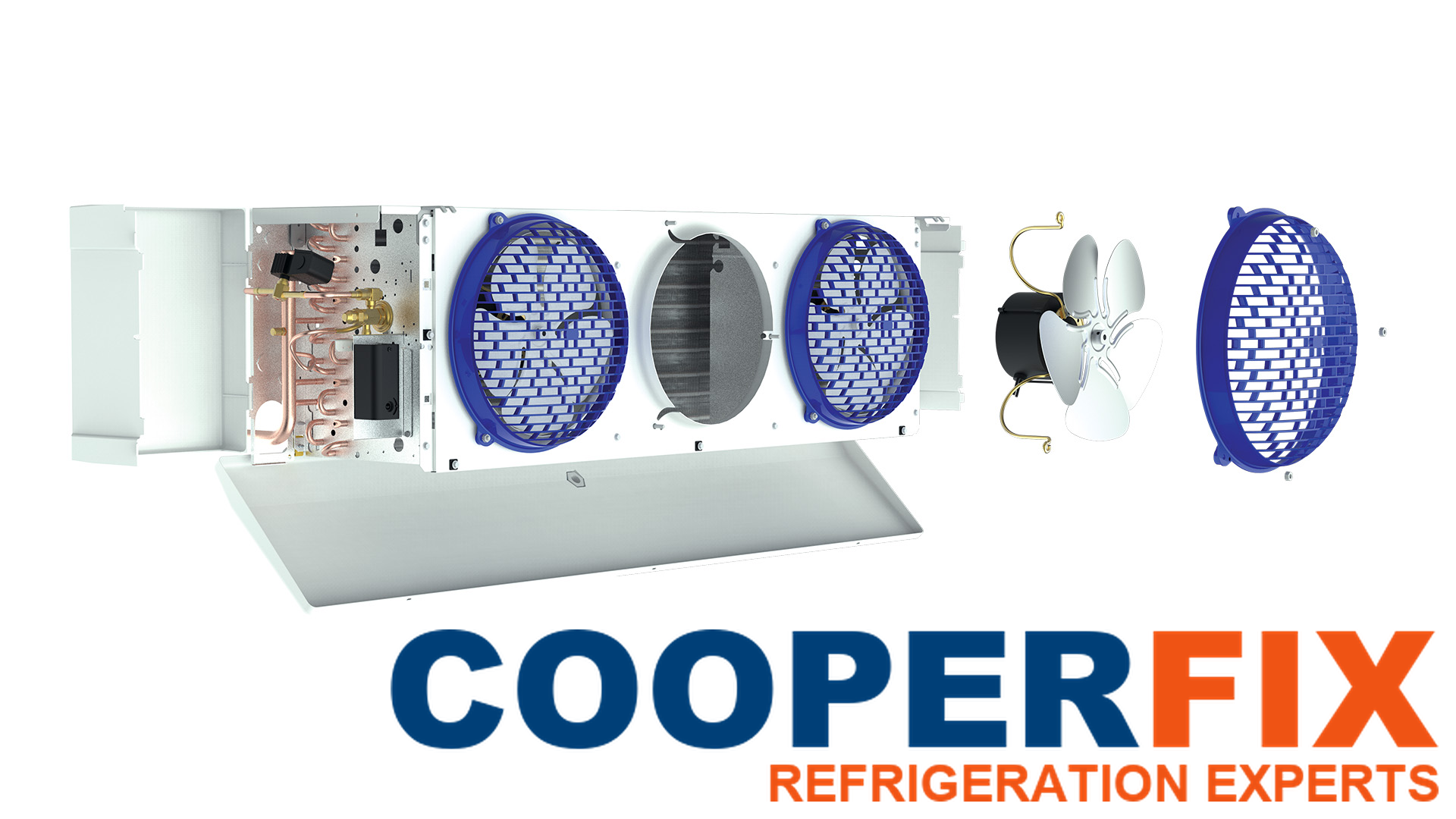
The official product page classifies LEL0105MS6ACAB0000 as a current Larkin low-profile walk-in unit cooler for cooler duty. It lists air defrost, two fans and R448A performance data. The low-profile cabinet is intended to manage airflow while preserving space above stored product. CooperFix assesses coil condition, air movement, fan operation, drainage, sensing, control response, refrigerant distribution and the unit’s relationship to the serving condensing equipment as applicable.
Larkin medium-profile walk-in unit cooler.
LEM0125BY6EMAB0000 medium-profile unit cooler
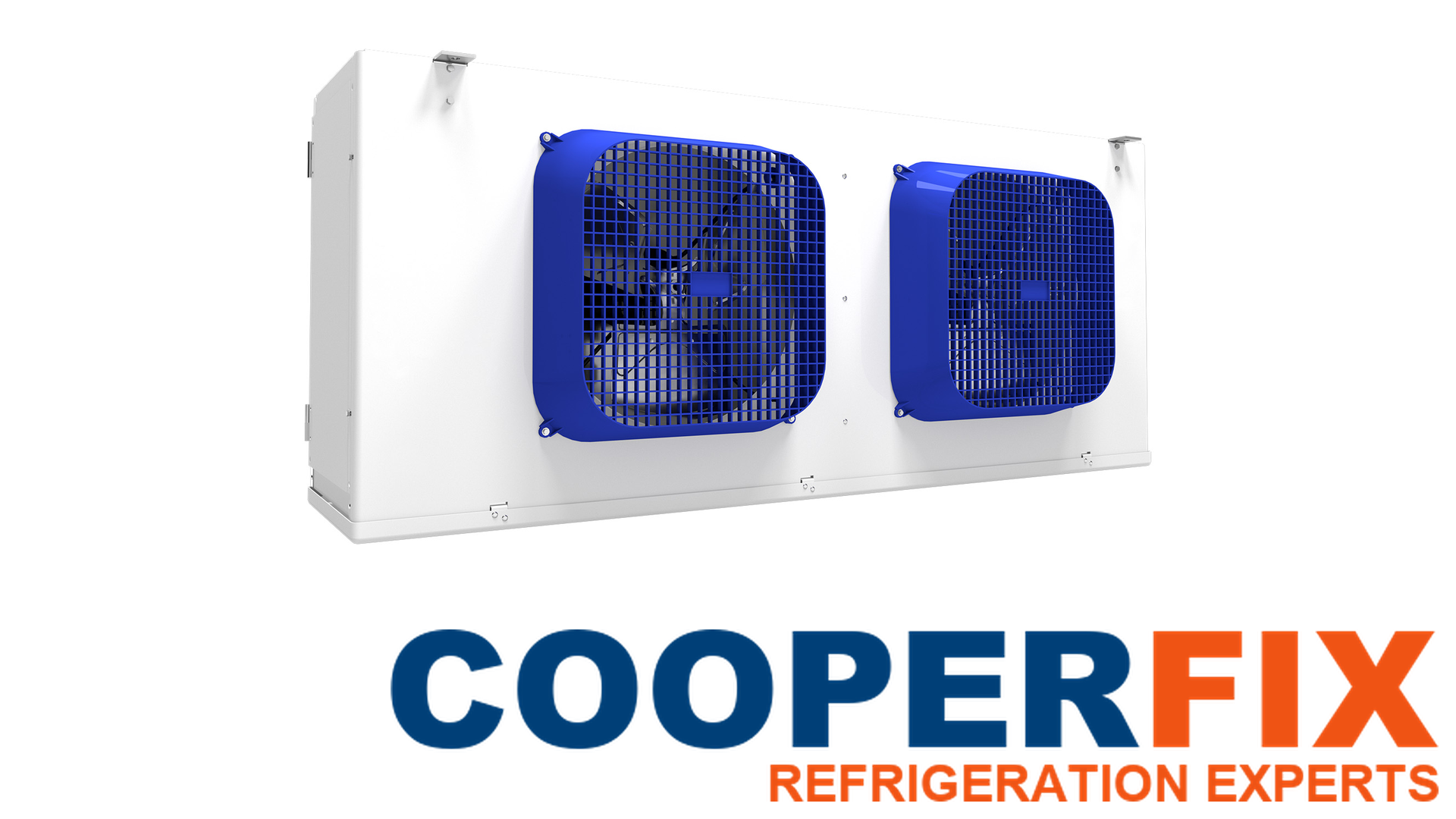
Larkin classifies LEM0125BY6EMAB0000 as a current medium-profile walk-in unit cooler for freezer duty. The page lists electric defrost, a two-speed EC fan and R454A application data. Its physical and operating context differs from the selected low-profile cooler. CooperFix records defrost arrangement, temperature duty, fan and heater functions, drainage, coil condition, controls and connected high-side equipment before proposing work.
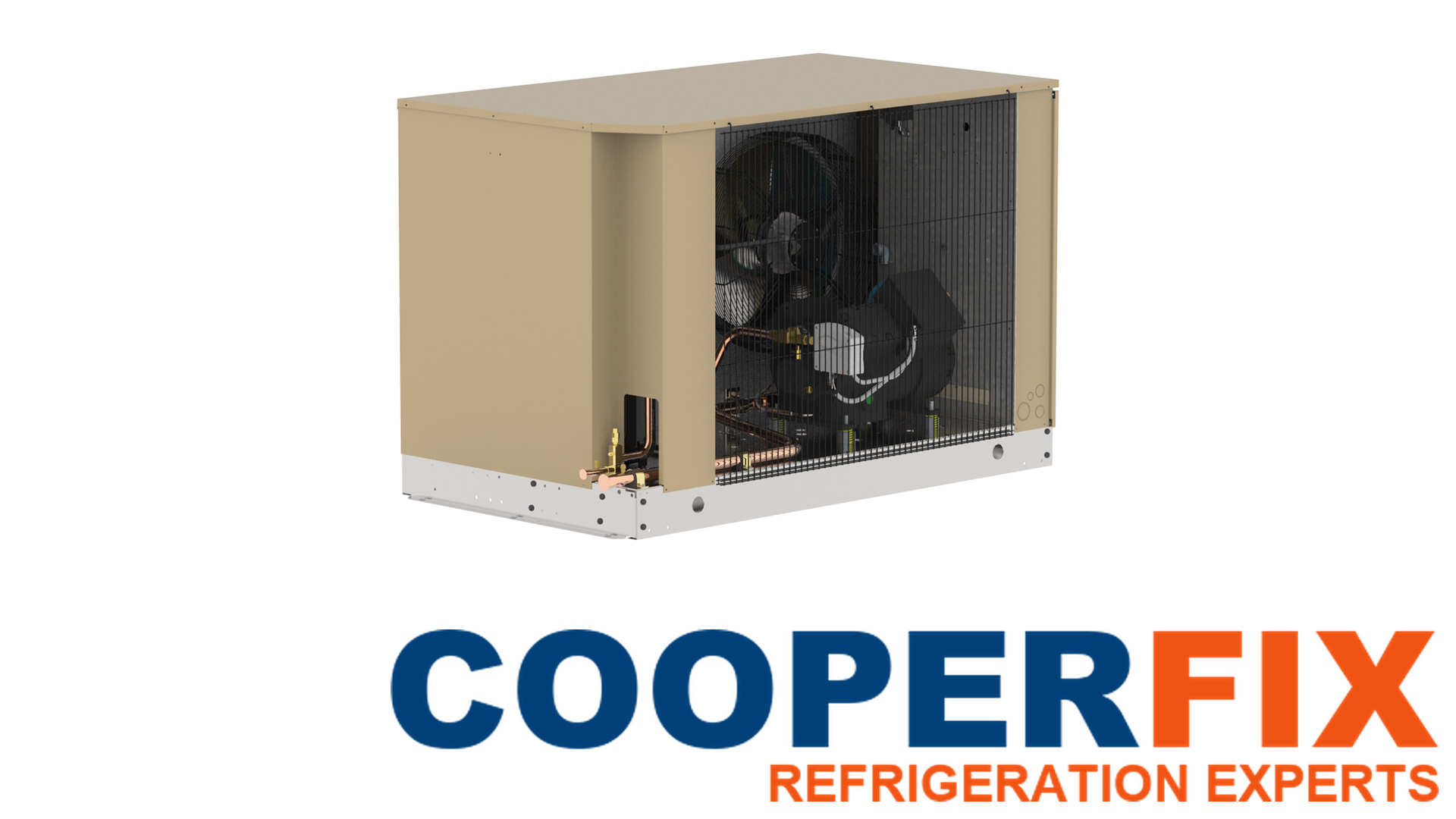
Larkin horizontal-discharge condensing unit.
LCH0150MEACEA0000 air-cooled condensing unit
The LCH0150MEACEA0000 is a current air-cooled condensing unit in Larkin’s 3–22 HP horizontal-discharge family for medium-temperature duty. The official listing identifies a semi-hermetic compressor, microchannel condenser coil and outdoor horizontal arrangement. CooperFix confirms the compressor and cabinet configuration, electrical and safety functions, condenser airflow, controls, piping and refrigeration-circuit behaviour in relation to the verified load it serves.
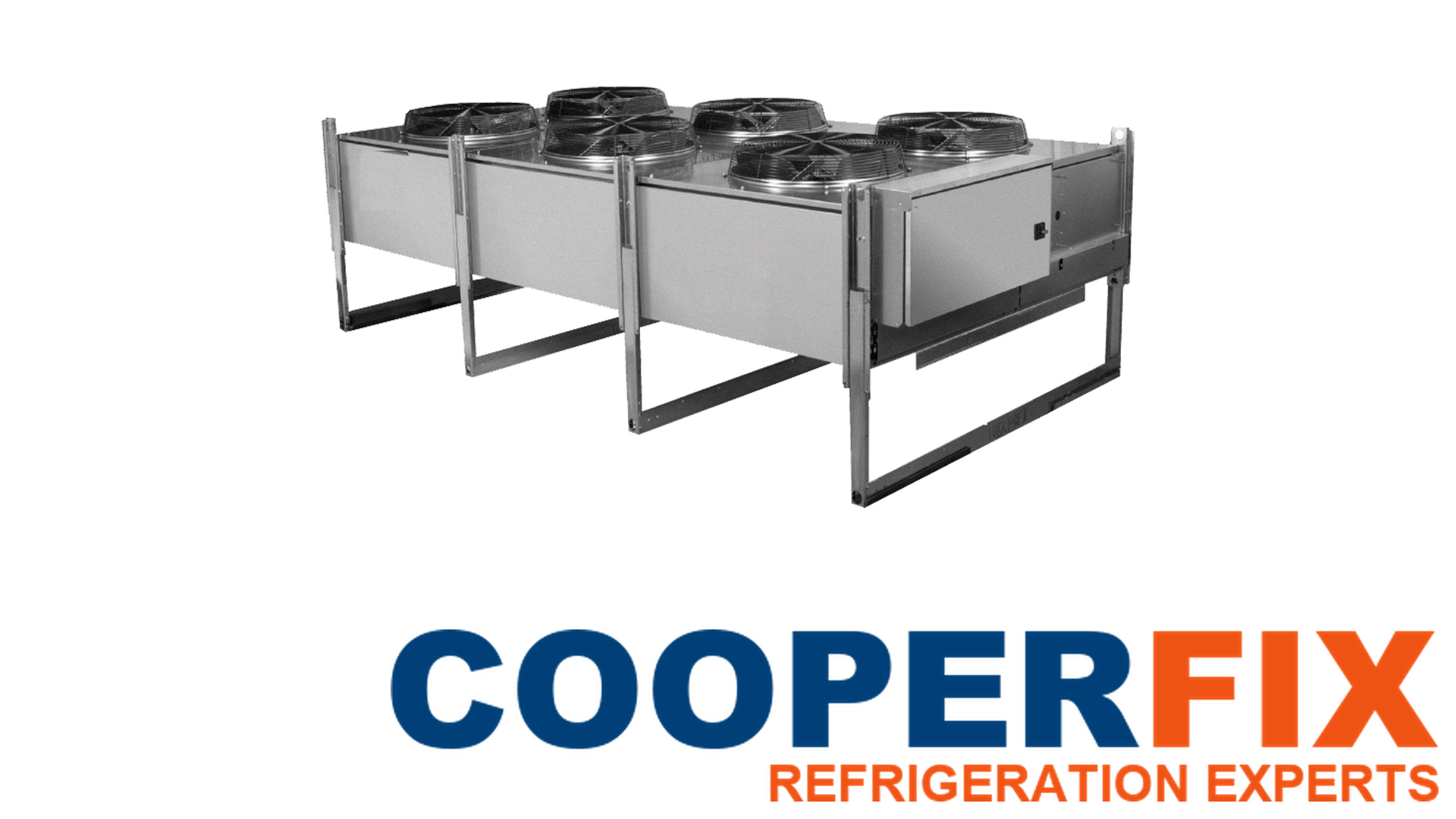
Larkin air-cooled condenser for a remote refrigeration system.
LNLS02A016 air-cooled condenser
The LNLS02A016 is a current Larkin air-cooled condenser in the 11–264 ton product family. Its official listing identifies a 1×2 fan configuration and fixed-speed motors. A condenser rejects heat but is not itself the complete refrigeration system. CooperFix maps the associated compressor equipment and served load, then evaluates fan operation, coil condition, airflow, electrical performance, controls and heat-rejection behaviour as applicable.
The first visible effect may originate elsewhere
Follow the refrigeration path instead of isolating one component too early
A temperature change inside a refrigerated space can coincide with airflow at the unit cooler, fan operation, sensing, defrost behaviour, drainage, control response, compressor operation, piping condition or limited heat rejection. A sound near the condensing equipment can also reflect how the connected system is operating. CooperFix does not define the repair solely from the component nearest the reported effect.
The Larkin service map begins with the named LEL, LEM, LCH or LNLS component, the space it serves, every verified control and each confirmed high-side or low-side connection. The technician orders temperature, pressure, electrical, airflow, coil, fan, drainage, defrost, compressor and heat-rejection checks around that installed arrangement. The point where measured behaviour departs from expected operation defines the next supported action.
Clean operating spaces still require exact system measurements
Match access and assessment to the equipment role
Larkin’s official brand profile positions its refrigeration products for foodservice and other clean operating environments. That context can make access planning, condensate control, cabinet condition and work-area coordination especially important. It does not change the requirement for complete technical testing or establish a cause from appearance alone.
A low-profile unit cooler can serve a compact refrigerated space where overhead clearance matters. A medium-profile model can support a different airflow and capacity requirement. Condensing equipment may be positioned away from the served space, and a condenser can support larger system heat rejection. CooperFix records the equipment role, affected area, operating schedule and access conditions, then bases the recommendation on current measurements from the verified system.
Keep indoor and high-side equipment in one verified map
Separate locations do not create separate conclusions
The Larkin unit cooler may be inside the refrigerated space while the condensing unit, condenser, disconnects or controls are located elsewhere. CooperFix confirms the connections before work begins so that readings, findings and approvals remain attached to the same circuit. A model number from one component is not used as a substitute for the model details of its paired equipment.
A multi-system Larkin request is divided into verified refrigeration circuits before assessment. Each record binds its served space and unit cooler to the applicable high-side equipment, controls, duty, reported event, measurements and approved work. Proximity or a similar finish cannot justify moving test results between circuits.
Coordination also identifies which areas can be accessed during the approved visit. If the unit cooler can be tested but the corresponding condensing section is unavailable, the record states that limitation. CooperFix separates what was confirmed, what remains untested and what would require a later approval instead of turning partial access into a complete system verdict.
The component map preserves the difference between an LCH condensing unit and an LNLS condenser. An LCH record includes the compressor-containing condensing assembly and its relationship to the connected load. An LNLS record identifies a heat-rejection component that must be interpreted with the compressor equipment and refrigeration circuit it supports. CooperFix uses those roles to plan access, assign readings and explain whether a finding belongs to the unit cooler, compressor equipment, condenser or controls.
Trace the refrigerated space through its Larkin component chain
How CooperFix traces each Larkin component through the complete refrigeration circuit
01 — Record the Larkin model, profile and temperature duty
CooperFix records the full model, serial information when available, product type, profile, temperature duty, voltage, defrost arrangement and the refrigerated space served. The exact Larkin model is preserved rather than reduced to a generic unit-cooler or condenser label.
02 — Connect the unit cooler to condensing and control equipment
The technician identifies the unit cooler, condensing equipment, condenser or other heat-rejection arrangement, controls, relevant safeties and component locations. The map distinguishes a condensing unit from a separate condenser and records how the verified components are connected.
03 — Compare airflow, defrost, electrical and high-side response
Checks can include temperature behaviour, recovery, airflow, fans, coils, sensing, control inputs and outputs, electrical operation, safeties, drainage, applicable defrost functions, pressures, compressor operation and heat rejection. The verified product design and available access determine which measurements apply.
04 — Assign the work to the exact Larkin component
CooperFix connects each recommendation to a measured condition and exact component. Confirmed corrective work, related observations, optional planned care and testing limitations remain separate. A control message, frost pattern, sound or temperature report begins the investigation; it does not independently establish the failed part or final repair recommendation.
The verified system defines what is applicable
Corrective work stays with the measured Larkin component condition
On a Larkin system, the supported work is defined by where test results point to an LEL or LEM unit cooler, an LCH condensing unit or an LNLS condenser, and by how that component interacts with the connected refrigeration equipment. Service may involve the relevant fan and motor, coil, drain or defrost functions, electrical controls, compressor or condenser functions, piping or refrigerant-circuit conditions, but only where the installed family and measurements support that work.
For a unit-cooler concern, CooperFix evaluates the component and its relationship to the serving high-side equipment. For a condensing-unit concern, compressor, condenser section, controls and connected load remain in the same testing process. For a separate air-cooled condenser, fan and coil findings are interpreted in relation to the refrigeration system it supports. At close-out, CooperFix retests the component functions included in the approved work and records their response within the verified circuit.
The review also respects profile and duty. An LEL low-profile cooler is not evaluated as though it were the LEM freezer-duty model with electric defrost, and neither unit-cooler result is transferred to the LCH or LNLS high-side equipment. CooperFix records the airflow, fan, drainage, defrost, control or heat-rejection response that applies to the authorized component. Untested links in the refrigeration chain remain visible as limitations instead of being included in the close-out conclusion.
Separate corrective repairs from planned equipment care
Each recommendation identifies the component and reason
The corrective Larkin work follows the measured cause of the present system condition. An additional serviceable observation can be documented for a separate planned commercial refrigeration maintenance decision without enlarging the repair authorization. Every recommendation names the component, the findings and its relationship to the reported effect.
This separation prevents unplanned work across connected equipment. A unit-cooler observation does not automatically approve condensing-unit work. A condenser finding does not establish a control replacement without supporting test results. An incomplete high-side test remains incomplete. Corrective work, planned care and additional assessment stay distinct so the business can approve each decision with a clear system record.
Keep model pairing and defrost duty available for later service
Model details, pairing and completed work stay connected
Larkin’s official catalogue distinguishes low-profile and medium-profile unit coolers, several condensing-unit arrangements, condensers, duties, voltages, defrost designs and refrigerant applications. CooperFix carries those details into the service history. The record includes the exact model, serial information when available, served space, connected components, control arrangement, reported change, measurements, approved work and relevant post-work observations.
Earlier records provide context, while present measurements determine the next recommendation. A previous repair on a unit cooler does not establish the condition of its condensing equipment. A similar Larkin model in another system does not prove identical configuration or parts. Model-level identification protects the accuracy of testing, recommended work, parts planning and later service.
Which Larkin unit-cooler and high-side components can CooperFix assess?
CooperFix services confirmed Larkin unit coolers, air-cooled condensing units, air-cooled condensers and applicable refrigeration controls. The exact model, product type, temperature duty, voltage, defrost arrangement and connected system determine the assessment and recommended work.
Why connect each Larkin unit cooler to its condensing and control equipment?
A temperature effect in the room may originate at the Larkin evaporator, controller, condensing unit, condenser, wiring or another confirmed link. Recording that component chain lets the technician assign measurements to the circuit that produced them rather than to the location where the symptom was noticed.
What is the service difference between low-profile and medium-profile Larkin unit coolers?
The profiles can differ in cabinet size, fan arrangement, airflow context, duty and defrost configuration. CooperFix confirms the complete model and installed application before testing. The assessment follows the verified design rather than assuming that two Larkin unit-cooler profiles require the same measurements or work.
Can CooperFix assess a Larkin condensing unit and unit cooler together?
If the nameplates confirm that both components belong to the requested circuit, they can be evaluated in one coordinated system record. The Larkin unit cooler and high-side equipment still keep individual model details and findings; their measured interaction defines the recommendation.
How are multiple Larkin refrigerated spaces separated in one service plan?
CooperFix gives every Larkin refrigerated space its own component map, model record, symptom history, measurements, authorization and follow-up within the coordinated service plan. Test results remain with the verified circuit that was tested and never move between Larkin systems without direct verification.
Which Larkin model, duty and served-space details help coordinate the visit?
Enter the request details, state whether the Larkin issue involves an evaporator, condensing unit, condenser or served space, and describe the observed change. Add ordinary-access nameplate information when available; CooperFix establishes the component chain and performs the relevant system tests.
Identify the Larkin component and refrigerated space
Begin with the Larkin component serving the reported space
Describe the Larkin component and the refrigerated space it serves. Separate multiple circuits by nameplate or business location when that information is readily available. CooperFix will trace each equipment relationship, test the applicable functions and present a component-specific recommendation.
Request Service for Your Larkin Equipment
Name the Larkin circuit or served space and summarize the change; system mapping and technical cause-finding stay with CooperFix.
Professional service for the Larkin unit cooler and high side
Plan service around the verified Larkin refrigeration circuit
CooperFix traces the Larkin refrigeration path, tests the affected component in system context and presents the work justified by those results.