Reach-in, undercounter, prep or merchandiser model identified
The cabinet family, model, door arrangement, refrigeration-section location and business role are recorded before repair conclusions are made.

Maxx Cold reach-in, undercounter, preparation, and display service
Maxx Cold refrigeration can serve very different positions in a food-service or retail operation. A solid-door reach-in protects bulk storage, an undercounter refrigerator brings ingredients close to a workstation, a refrigerated preparation station combines cold holding with an active production surface, and a glass-door merchandiser supports both storage and product presentation. CooperFix provides professional assessment, repair and maintenance for supported Maxx Cold refrigeration across those equipment families.
Service begins with the exact model and the work the cabinet performs. Similar stainless exteriors do not establish the same airflow path, condensing-section location, control sequence or access plan. CooperFix combines nameplate information, the reported change and technician measurements to prepare a supported repair recommendation for the installed unit.

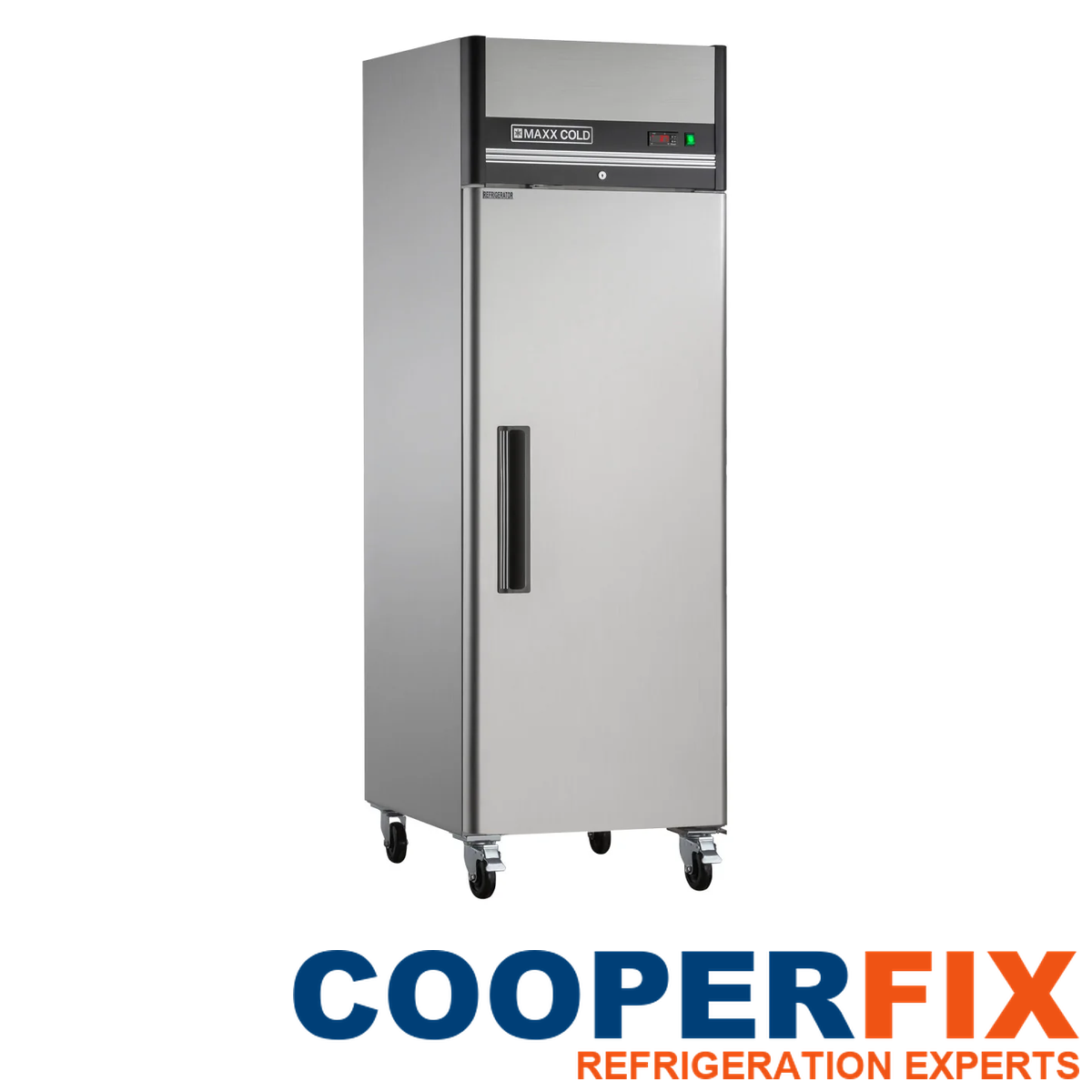
The cabinet family, model, door arrangement, refrigeration-section location and business role are recorded before repair conclusions are made.
Door activity, loading, surrounding equipment, condenser airflow and the work supported by the unit help frame the assessment without replacing measurements.
CooperFix separates observations from diagnosis and explains the findings that support a repair or maintenance recommendation.
Start with the exact Maxx Cold cabinet role
Name the Maxx Cold cabinet, include the model number if it is readily visible, and summarize the changed behaviour and business role. Specify whether it is a reach-in, undercounter refrigerator, preparation station or merchandiser so coordination begins with the correct cabinet layout; technician testing still establishes the cause.
Reach-in, undercounter, preparation, and display refrigeration
The current Maxx Cold catalogue includes multiple refrigeration families with different cabinet arrangements and operating demands. CooperFix confirms the installed model rather than assuming that one Maxx Cold layout represents the full range.
Reach-ins provide full-height refrigerated or frozen storage with frequent access through solid or glass doors. Current ranges include different door counts, top- and bottom-mounted refrigeration arrangements and varying interior formats. The MXCR-23FDHC is one current model: a one-door, top-mount refrigerator with electronic control, adjustable shelves, a self-closing door and a cabinet designed around full-height storage.
When a reach-in changes operation, the service picture may include cabinet temperature, recovery after normal door use, evaporator and condenser condition, fan operation, heat rejection, door closure, controls, defrost behaviour and refrigeration-circuit test results. No single reading proves the cause. The technician relates measurements to the model, cabinet function and conditions found during the visit.
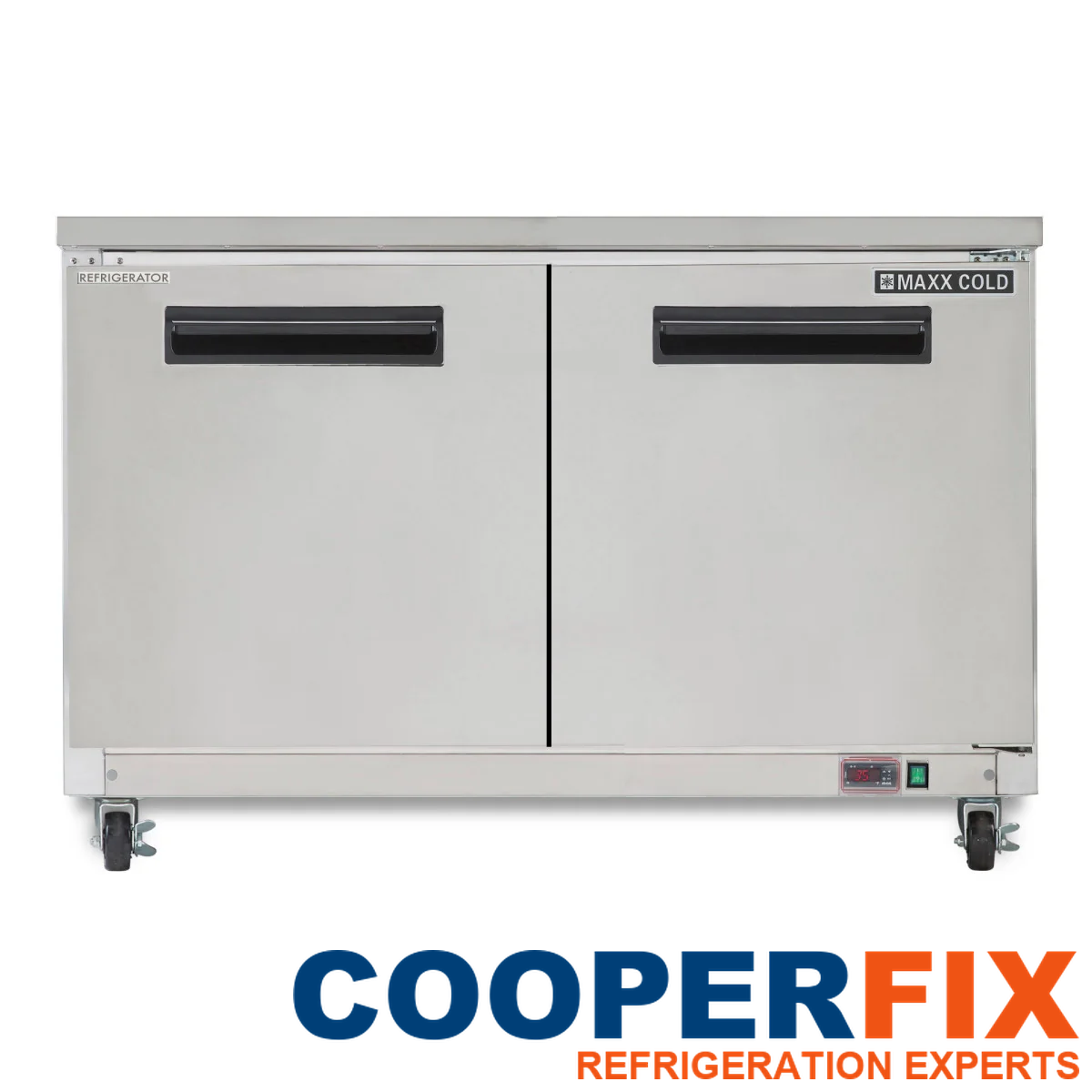
Undercounter cabinets place refrigerated storage beneath a counter or work surface. The MXCR48UHC is a current two-door model with compact work-height construction, electronic control, an external display and a self-contained refrigeration system. Its access, condenser airflow and loading environment differ from those of a full-height reach-in.
For service, CooperFix identifies the condensing-section position, checks the available condenser airflow and notes nearby heat or equipment that may affect the work area. Door use, shelf loading and the cabinet's relationship to the station are documented alongside temperatures and system measurements. Staff are not asked to open panels or conduct technical tests.
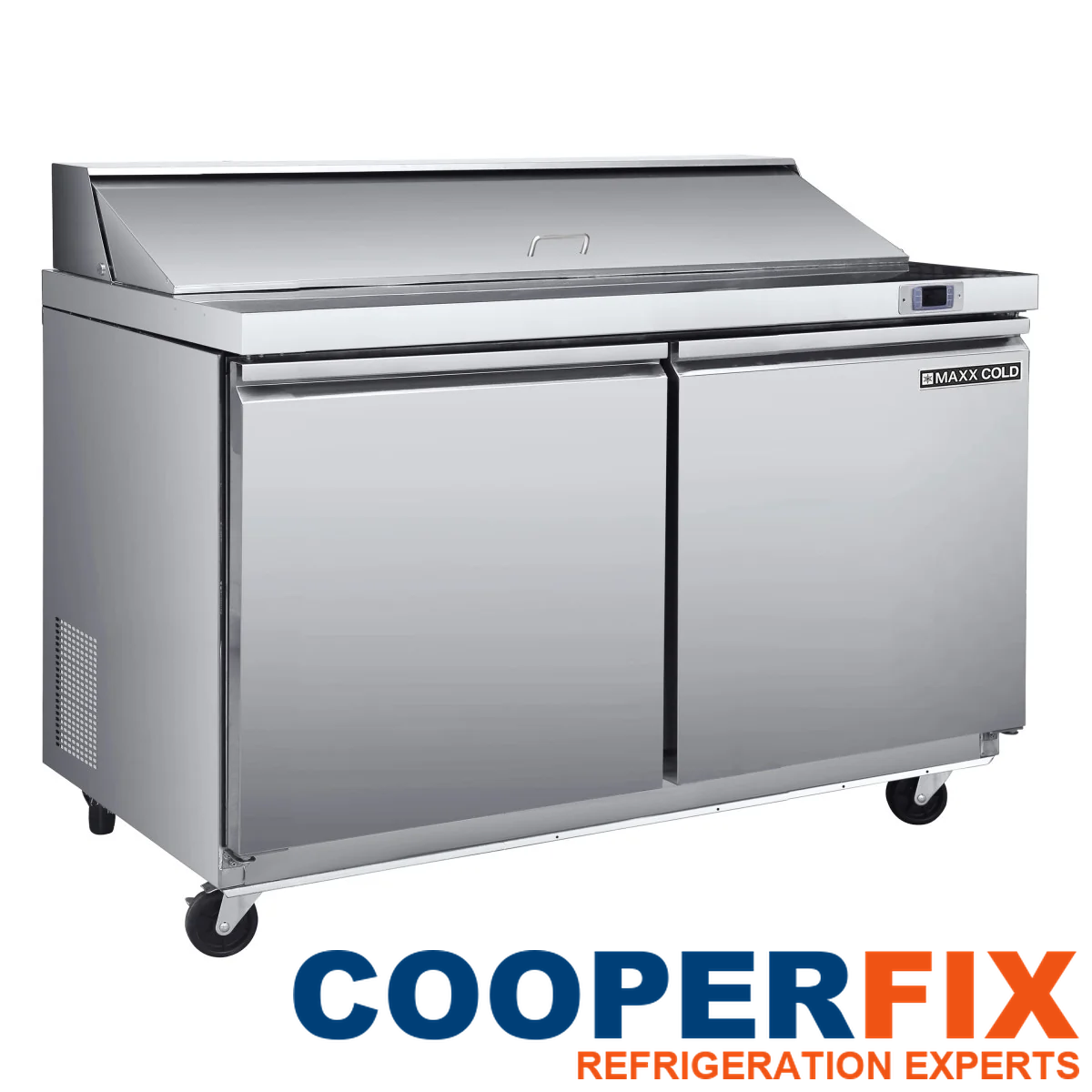
Preparation stations combine a refrigerated lower cabinet with an upper ingredient area and work surface. The MXSR48SHC is a current two-door model with a closable pan section, cutting board and refrigerated storage below. That arrangement creates several distinct operating areas that must be kept clear in the service record.
A report that the lower cabinet is warm is not automatically the same concern as a temperature issue around the upper pan area. CooperFix records where the change was observed, how the unit is loaded, whether covers and doors are closing, and what the refrigeration system shows under measurement. The resulting recommendation follows the confirmed condition rather than a generic prep-table label.
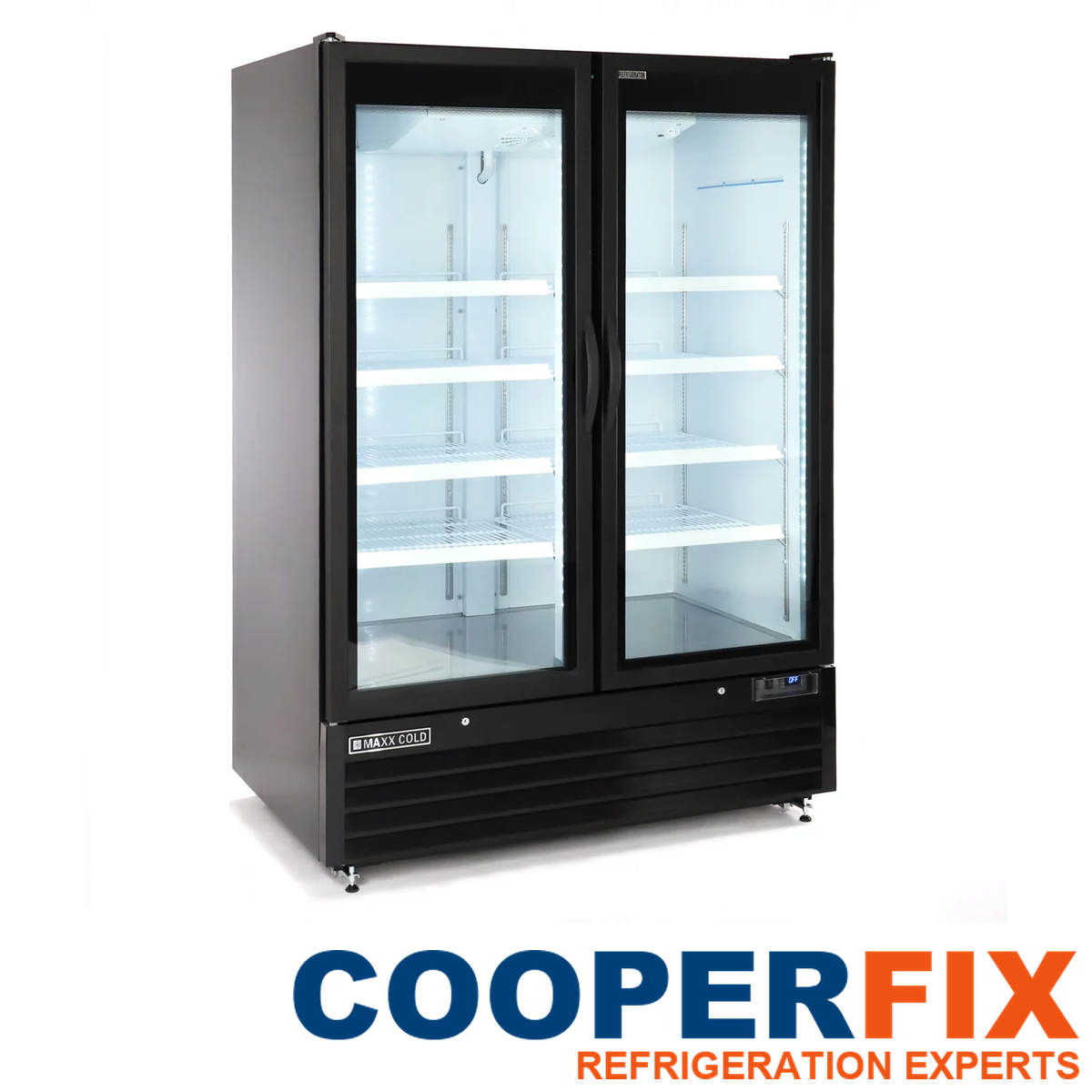
Merchandisers combine temperature control with visible display. The MXGDM-50RBHC is a current two-glass-door model with adjustable shelving, electronic control, self-closing doors and a bottom-mounted condensing section. Product presentation, door activity and internal airflow all shape the cabinet's operating context.
Service may consider cabinet temperature and recovery, fans, coils, control response, door alignment, condensation patterns, lighting and the refrigeration circuit. Display-related observations remain separate from refrigeration findings unless testing connects them. That distinction helps avoid replacing a refrigeration diagnosis with a cosmetic description.
Load, door activity, and airflow shape the observed condition
Commercial cabinets work through repeated changes in load and access. Warm product, prolonged openings, crowded shelves or blocked air paths can affect what staff observe, but those conditions do not eliminate the need to evaluate the system. CooperFix asks when the change occurs, records normal door activity and reviews the cabinet under conditions that can be documented.
Door format matters. A solid door may conceal frost or loading patterns until it is opened; a glass door makes condensation and product visibility part of the operating picture; a preparation station adds lids, pans and a work surface. Door closure is reviewed as a cabinet detail, not as an automatic explanation for every temperature complaint.
Airflow connects cabinet use with refrigeration performance. Evaporator fans, shelf loading, return-air paths, coil condition and heat rejection may all be relevant. The technician interprets them with temperature and electrical findings so that an obvious visual condition is not mistaken for the complete diagnosis.
Each cabinet supports a different part of the operation
A Maxx Cold cabinet often supports a specific part of an operation. A reach-in may protect reserve ingredients, an undercounter unit may feed one production position, a preparation station may be central to a service period, and a merchandiser may support customer selection. The business impact of a fault depends on that role and on what alternate refrigerated capacity is actually available.
CooperFix gathers practical context without turning staff into technicians. Useful information includes the model, the cabinet's normal contents, when the change first appeared, whether it is constant or intermittent, and whether loading or placement changed recently. The technician then tests the equipment rather than treating the description as proof of a failed component.
Service planning also considers safe access, surrounding work and the need to keep findings tied to the correct unit. Operational importance helps coordinate the visit, but it does not create an unsupported promise about arrival time, parts availability or repair outcome.
Multiple units require separate equipment records
One site may operate several Maxx Cold units from different product families. A model list prevents a concern at one cabinet from being carried into another record. CooperFix distinguishes each unit by model, serial information, cabinet type, door configuration, operating role and reported change.
If several cabinets show similar symptoms, the assessment still separates test results by system. Shared room conditions, condenser airflow or electrical context may be relevant, but they do not prove a shared component fault. Each cabinet receives its own observations and measurements before recommendations are combined into a coordinated plan.
This approach also improves parts research. A fan or control component must match the exact model and applicable configuration. Broad brand descriptions are insufficient for selection, and a photograph alone is not treated as a substitute for verified model information.
Coordination also preserves the operating zone inside each Maxx Cold cabinet. A preparation station can require separate notes for its upper ingredient area and lower refrigerated base, while a merchandiser record distinguishes glass-door presentation from cabinet cooling. An undercounter unit and a reach-in can support different work positions even when their reported changes sound similar. CooperFix carries those roles into the measurement plan without treating them as proof of a shared cause.
From model confirmation to cabinet-specific measurements
The technician records the Maxx Cold model and serial information, refrigerator or freezer function, cabinet family, door arrangement, condensing-section position and normal business role.
Staff observations are organized by unit and location within the cabinet. Temperature drift, slow recovery, cycling changes, noise, fan behaviour, visible frost, condensation, door concerns and other symptoms are documented without assigning an early cause.
Maxx Cold assessment can combine cabinet temperature and recovery with air delivery, coil and fan condition, controller response, electrical test results, defrost behaviour, heat rejection and applicable circuit readings. Findings are interpreted as a model-specific operating picture rather than as isolated proof.
CooperFix reports what was found, what work is recommended, what parts or access conditions matter and what requires a separate decision. Additional work is not hidden inside a broad repair description.
Professional work follows measured cabinet findings
Maxx Cold service can involve mechanical, electrical, control, airflow, defrost, door and sealed-refrigeration-system findings. The exact task follows test results from the installed unit. Depending on the diagnosis, professional work may address a verified component failure, electrical connection, control problem, fan condition, drainage concern, airflow restriction or refrigeration-circuit fault. These are possible service categories, not a diagnosis for every cabinet.
Work planning includes protecting the surrounding station, keeping clear model details and confirming how the unit operates after the authorized work is completed. Replacement parts must match the model and applicable specification. Where access, further testing or an additional business decision is required, that dependency is stated clearly.
The final Maxx Cold record traces the original report into the technician’s measurements, connects those results to the authorized action and then records the operation observed afterward. This service summary is more useful than a generic closed-ticket statement.
Close-out remains cabinet-specific. A preparation-station action is reviewed against the authorized rail, base or airflow function; merchandiser work is documented with the applicable door, display and refrigeration response; and reach-in or undercounter work is tied to that cabinet’s control, airflow and temperature duty. Any untested area or separate observation stays outside the completed-work conclusion.
Repair and planned care address different needs
Maxx Cold repair responds to a diagnosed operating fault on the installed cabinet. Planned care addresses accessible, serviceable conditions under a separately defined checklist. CooperFix records the two purposes independently, so routine work cannot be presented as fault correction and one repair cannot become an open-ended program.
Recurring-care discussion for Maxx Cold equipment can cover reachable coils, air movement, fans, door closure, drains, controls, cabinet condition and prior service as allowed by the model and access. After the immediate fault has its own repair plan, a reach-in, undercounter cabinet, preparation station or merchandiser can follow the separate planned commercial refrigeration maintenance route.
When cabinet age, condition, repair cost and operating importance create a broader choice, CooperFix presents the available findings. The business decides whether to authorize repair, request further investigation or plan replacement. No single symptom or preliminary observation is presented as a guaranteed answer.
Preserve model, cabinet role, measurements, and close-out
A strong Maxx Cold service record should identify the exact unit long after the immediate visit. It includes model and serial information, cabinet family, temperature function, door arrangement, refrigeration-section position, reported change, measurements, supported work and post-work observations.
The record keeps family-specific details in the right place. An MXCR reach-in finding should not be assigned to an MXSR preparation station or an MXGDM merchandiser merely because all carry the same brand. That separation supports accurate parts research and follow-up decisions.
When a feature or configuration is not confirmed, the record says so. Published details for a current model are useful for identification, but the nameplate and installed equipment remain the controlling reference for service. Clear documentation prevents assumptions from becoming permanent facts in later work.
CooperFix services supported Maxx Cold reach-in refrigerators and freezers, undercounter refrigerators, refrigerated preparation stations and glass-door merchandisers. The exact model is confirmed because cabinet function, door format, control arrangement and refrigeration layout vary across the range.
The model helps distinguish equipment family, temperature function, door arrangement and component configuration. It supports parts research and access planning. CooperFix verifies the installed cabinet rather than transferring features from a similar-looking Maxx Cold unit.
CooperFix lists each Maxx Cold cabinet separately by model, business role, operating zone and reported change, then keeps its measurements, findings and parts information under that unit’s record. A reach-in, undercounter cabinet, preparation station or merchandiser therefore retains its own test results throughout the coordinated visit.
The technician distinguishes the upper ingredient area, lower refrigerated cabinet, doors, covers, airflow and refrigeration system. Reported conditions are tied to the area where they occur, then evaluated with temperatures, controls, fans, coils, electrical findings and other relevant test results.
The same model-specific principles apply, but a merchandiser adds glass doors, display lighting, product visibility and distinctive door-use patterns. CooperFix evaluates those details alongside cabinet temperature, recovery, airflow, controls and refrigeration-system operation.
Share the Maxx Cold model number if it is readily visible, identify the cabinet family and business role, and describe the changed behaviour. Staff do not need to open panels or attempt technical tests; CooperFix establishes the cause through equipment-specific inspection and measurements.
Continue with the affected Maxx Cold unit
Name the affected Maxx Cold reach-in, undercounter, preparation station or merchandiser and describe which storage, worktop or display function changed. The resulting assessment remains attached to that cabinet and model.
A cabinet-specific decision for the next step
A verified Maxx Cold model, model-specific measurements and clearly approved work support the next service decision. Request professional attention for the affected reach-in, undercounter refrigerator, preparation station or merchandiser.