Commercial refrigeration service
Professional attention for reach-in storage, freezer displays, prep stations and refrigerated chef bases in the Maxx Cold range.

Maxximum enquiries — Maxx Cold commercial refrigeration
Looking for service under the Maxximum name? Maxx Cold is its commercial refrigeration line, with equipment for refrigerated storage, frozen display and food preparation. CooperFix diagnoses, repairs and maintains these commercial units. The equipment retains its Maxx Cold identity throughout service, from the first inspection to component selection and the completed repair.
A storage refrigerator that runs continuously, a freezer with recurring frost, a prep station that loses temperature during service and a refrigerated base with uneven cooling need different investigations. CooperFix examines the affected function, tests the refrigeration and control systems, and explains the repair that the findings support. The aim is to restore the unit’s refrigeration function with a clear account of the work, not to replace parts on the strength of a symptom alone.
Professional attention for reach-in storage, freezer displays, prep stations and refrigerated chef bases in the Maxx Cold range.
The technician tests the affected system before recommending a control, fan, electrical or refrigeration repair.
CooperFix explains the completed repair, the response observed and any remaining condition that needs attention.
Professional help for the unit that is not performing
Contact CooperFix about the affected refrigerator, freezer, preparation station or chef base. A short description of the problem is enough to start the conversation. The technician handles equipment identification, inspection and testing.
Maxx Cold equipment for storage, display and preparation
The Maxx Cold commercial range associated with Maxximum includes equipment with very different daily workloads. These four models show why repair must follow the actual refrigeration function, not just the appearance of a stainless cabinet.
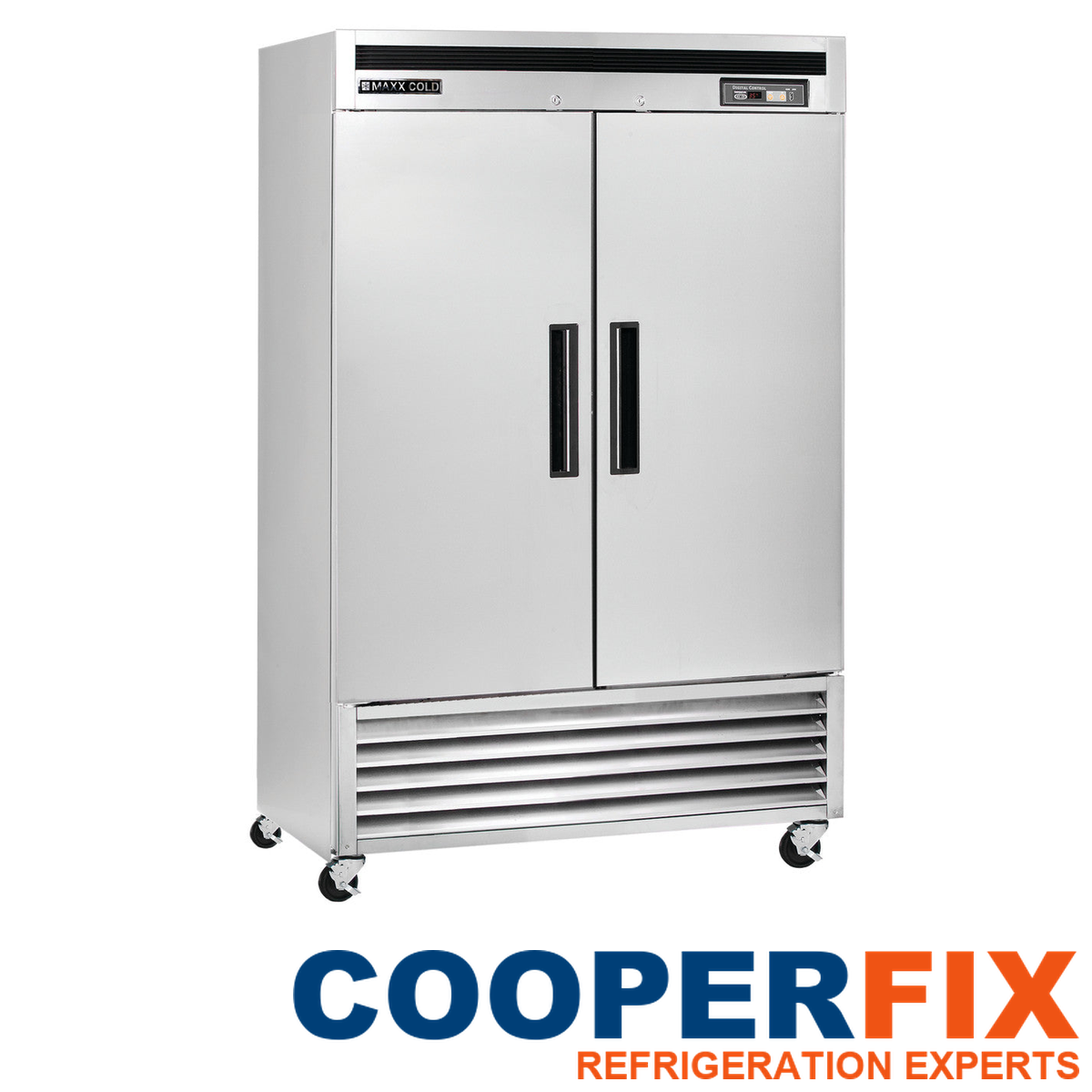
The two-door MCR-49FDHC has a bottom-mounted refrigeration system and full-height refrigerated storage. It supports reserve supplies that may be accessed throughout a service period. Slow recovery after replenishment, uneven temperatures across the cabinet or extended running are reasons to assess the system rather than assume the temperature setting is wrong.
CooperFix examines air circulation through the stored load, the evaporator’s condition, condenser performance and the controller’s response. Electrical and refrigerant-system testing follows where needed. Shelf arrangement and normal use help explain the operating load, but the repair recommendation comes from the technician’s findings on the refrigerator itself.
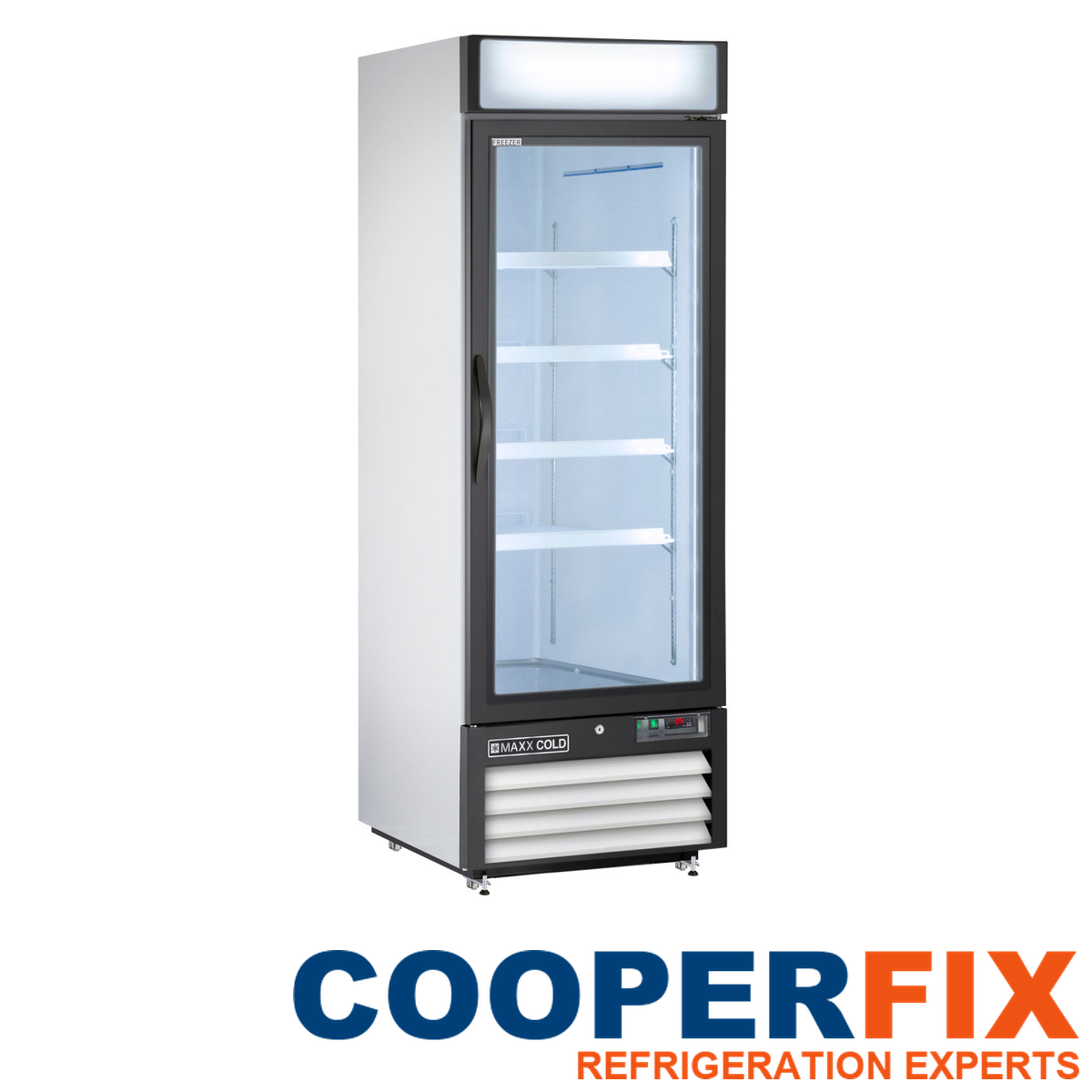
The MXM1-23FHC is a single-glass-door merchandiser freezer with digital control and automatic defrost. Its refrigeration must support the intended frozen-storage duty while the glass front makes changes in visibility or frost noticeable to staff and customers.
A frosted area, changing display reading or unusually long run does not identify the failed part. CooperFix tests the freezer’s cooling and defrost behaviour, fan operation and control response. A visibility concern is considered separately from measured cabinet performance. This helps distinguish a refrigeration fault from another condition instead of treating every visible change as evidence of a compressor problem.
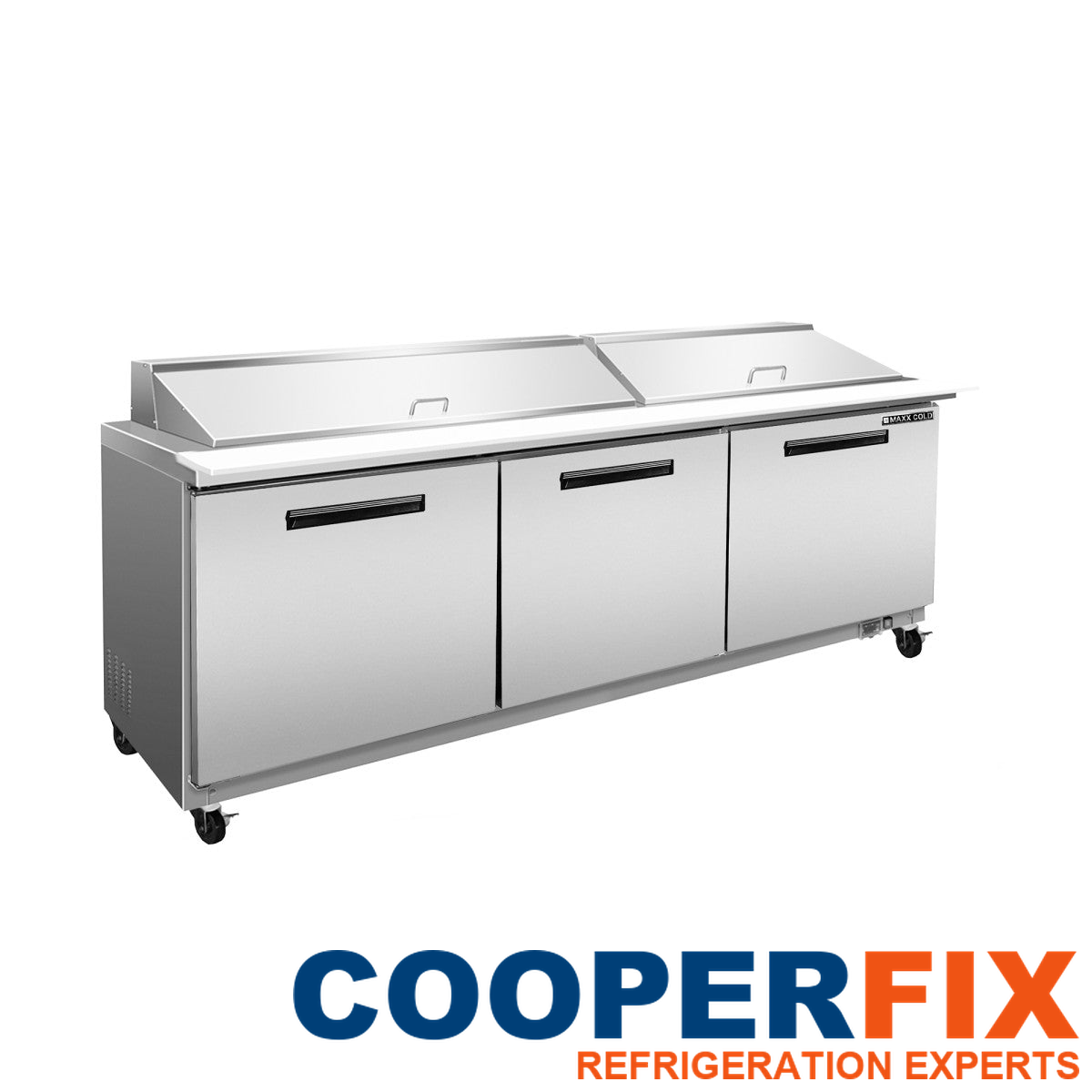
The three-door MXCR72SHC combines an upper ingredient-pan area with refrigerated storage below. Those areas support different parts of preparation: accessible ingredients above and replenishment supplies below. A concern limited to the upper section needs a more specific investigation than a report that the entire unit has stopped cooling.
CooperFix checks temperatures in the affected locations and examines the circulation of refrigerated air, fans, controls and cooling system. Pan arrangement, loading and the pattern of use are considered when interpreting the measurements. Testing establishes whether the problem is local to one area or affects the refrigeration serving the station.
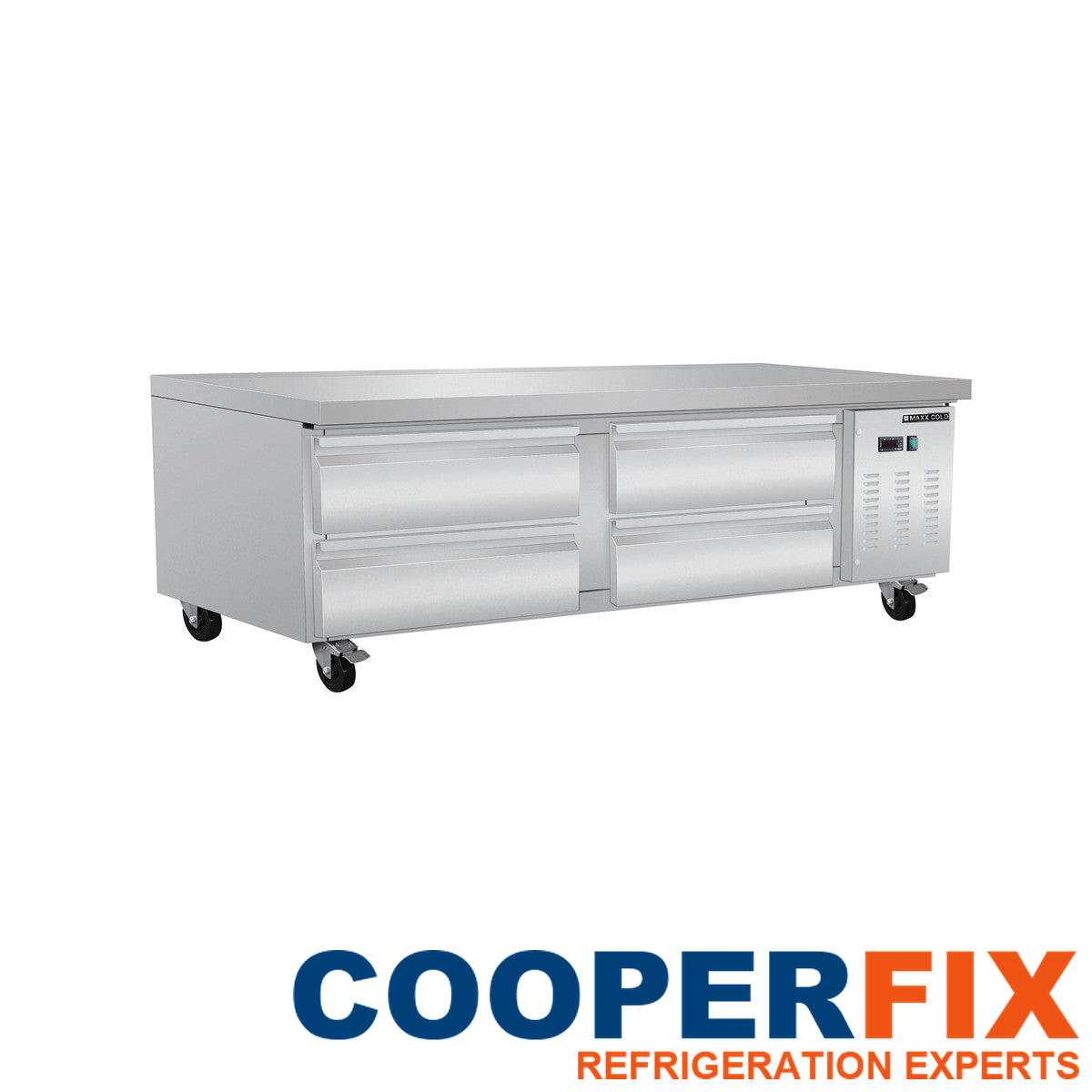
The MXCB72HC provides refrigerated ingredient storage in four drawers, with a side-mounted compressor. Its horizontal layout puts the cooling equipment and stored load in a different relationship from an upright reach-in. A temperature difference between drawer positions can therefore be an important starting point for diagnosis.
CooperFix evaluates air distribution within the base, the refrigeration section and control operation. The assessment accounts for drawer use, loading and nearby heat without assuming these explain the fault. Where a fan, sensor, electrical component or cooling-system problem is confirmed, the repair is defined for this exact base and its installed configuration.
When cooling falls behind normal use
Refrigeration has to remove the heat introduced during ordinary access and replenishment. A cabinet may reach its set point during a quiet period yet struggle when work resumes. CooperFix assesses this difference by examining cooling response alongside the workload present during the visit. A single low reading is not enough to explain a recurring daytime problem.
The technician checks whether refrigerated air reaches the storage areas, whether the condenser releases heat effectively and whether the controls call for cooling appropriately. A running compressor does not establish that the complete system is performing correctly. Fan faults, restricted air movement, sensing problems and refrigerant-circuit conditions require different tests and different remedies.
On the reach-in, the concern may extend across stored supplies. At the prep station, the change may be concentrated around the ingredient area. At the chef base, its location may follow one drawer section. CooperFix uses those differences to direct testing and then checks the response of the affected area after authorized work.
Freezer frost, moisture and interrupted cooling
The freezer display adds defrost operation to the cooling investigation. Frost can interfere with air movement, but its presence does not tell the technician which part requires replacement. CooperFix evaluates the pattern alongside fan performance, temperature sensing, the applicable defrost sequence and the unit’s return to refrigeration.
Repeated loss of airflow may explain why a cabinet performs differently before and after frost develops. The investigation also considers whether the cooling circuit can meet the load once air movement is available. Finding one visible restriction does not end the assessment if the measured behaviour suggests another problem remains.
Moisture is traced to its location and timing. Water near a refrigerated section, condensation on a display and recurring moisture after a defrost event may have different causes. The technician assesses the relevant drainage and condensate arrangements without promising that one cleaning or component replacement will resolve every observation. Findings concerning presentation remain distinct from the freezer’s ability to perform its intended duty.
Service that fits an active foodservice operation
In a foodservice business, reserve storage, ingredient preparation and frozen display are not interchangeable. Losing a chef base can interrupt one preparation position even while a reach-in continues working. CooperFix coordinates service around the affected equipment and the access needed to inspect it, with the business deciding how stock and production are managed.
A visit may involve more than one unit, but each repair needs its own authorization. Work on a prep station does not authorize changes to a nearby freezer. The technician identifies the equipment included in the visit and explains any additional work before proceeding.
Refrigeration components need safe access even when equipment sits within a busy workstation. CooperFix establishes what inspection or servicing is practical in that position and explains any access limitation. This prevents a partial inspection from being presented as a complete assessment. Staff do not have to disassemble equipment, move a loaded unit or perform technical checks to request help.
From a reported fault to a tested explanation
The technician identifies the Maxx Cold model, serial information and actual component arrangement. Published model information helps locate the correct references, while the installed equipment establishes what is present. Previous modifications are considered before applying a standard control or component specification.
A displayed temperature, a cooling demand and an operating compressor describe different parts of the process. CooperFix compares relevant readings and checks the control response, sensors and electrical operation. An illuminated display alone does not prove that the refrigeration components are receiving or responding to the correct command.
The assessment follows air through the affected refrigerated area and examines heat rejection at the condensing section. Where findings call for further investigation, the technician tests the refrigerant circuit using methods appropriate to the unit. Component diagnosis is based on these results, not on sound or appearance alone.
CooperFix presents the cause established by testing, the recommended work and the checks that will follow. If an intermittent condition has not appeared during the visit, that limitation is stated. An unconfirmed possibility is not turned into a confirmed failure simply to finish the service record.
Repairs selected for the confirmed fault
Depending on diagnosis, repair may involve a failed fan, a control or sensor problem, an electrical fault, a defrost malfunction, a drainage restriction or work on the refrigeration circuit. CooperFix defines the action around the affected function and obtains authorization for that work. A general description such as poor cooling is not a parts list.
Replacement components are checked against the complete model and applicable equipment details. The MCR reach-in, MXM freezer, MXCR prep station and MXCB base have different functions; a shared brand or similar connector does not establish compatibility. Refrigerant type and other service requirements are confirmed on the installed equipment before circuit work.
Unusual noise also needs to be traced before a component is condemned. A fan contacting an obstruction, vibration transmitted through the cabinet and a problem within a running component can sound similar from the work area. CooperFix identifies when the sound occurs and which part produces it, then checks the related mechanical and electrical operation. A noise concern may accompany a cooling fault, or the two may be separate. The recommendation explains that distinction. Where the sound is intermittent and does not occur during assessment, the technician states what could be verified and what still needs investigation rather than recommending replacement solely from a description.
Completion includes checking the response related to the repair. That may involve observing fan operation, control switching, temperature movement or the applicable defrost function. The technician explains which checks were completed and which conditions could not be reproduced. This gives the business a usable result without disguising an unresolved issue as completed work.
Planned attention to the refrigeration system
A storage refrigerator, freezer merchandiser and active prep station can accumulate different service needs even in the same building. Maintenance should reflect use, accessible refrigeration components and previous findings. CooperFix reviews those conditions before defining recurring care rather than applying one undifferentiated checklist to the entire range.
Professional maintenance can include serviceable condenser and evaporator areas, fans, air paths, condensate handling and control operation. Access and the manufacturer’s instructions determine which procedures are appropriate. The purpose is to address serviceable conditions and identify concerns, not to represent routine cleaning as the repair of an untested fault.
A recurring fault still needs its own diagnosis. If cooling deteriorates again after a service visit, CooperFix compares the new condition with the earlier findings instead of simply repeating the same task. Businesses arranging regular attention can use the separate commercial refrigeration maintenance service for a defined scope alongside any necessary repair.
A service history that supports the next decision
When a unit has been serviced before, the previous repair matters, but it does not predetermine the next diagnosis. A prep station that is warm again may have a different fault or may be operating under different conditions. CooperFix reviews the earlier work and tests the present problem before recommending another intervention.
The completed service summary connects the original concern, the confirmed cause, the authorized repair and the operation observed afterward. For a chef base, that means describing the affected drawer area and refrigeration response. For the display freezer, it means retaining the distinction between cooling, defrost and visibility findings.
If further work depends on a component, additional access or a condition that could not be reproduced, the next step is explained separately. Clear limits help the business judge the remaining work and the unit’s role in its operation. They also keep an estimate or an untested suspicion from becoming part of the equipment’s history as a completed repair.
Yes. Maxx Cold is the commercial refrigeration line associated with Maxximum. CooperFix can arrange service for the commercial equipment described here while retaining the Maxx Cold model and manufacturer identity in the diagnosis, component selection and service record.
Yes. Reaching a low temperature during a quiet period does not establish adequate recovery under normal use. CooperFix checks airflow, heat rejection, controls and cooling performance in relation to the workload, then explains whether a repair or another corrective action is supported.
Not by itself. CooperFix evaluates frost development with fan operation, the applicable defrost sequence, temperature sensing and refrigeration performance. A compressor recommendation requires evidence about the compressor and system; visible frost alone is not sufficient.
The ingredient area and lower storage experience different access and loading conditions. Their air circulation also needs to be evaluated. CooperFix measures the affected locations and tests the refrigeration serving them before deciding whether the concern is localized or affects the whole station.
Yes. Service includes assessment of the refrigerated storage, air distribution, controls and cooling system in the supported Maxx Cold chef base. The technician investigates uneven drawer temperatures or loss of cooling and recommends work for the confirmed refrigeration fault.
No. Describe the problem in ordinary terms and contact CooperFix. Equipment identification, technical testing and the repair recommendation are the technician’s work. Staff are not expected to open service panels or carry out electrical or refrigeration tests.
Arrange professional refrigeration attention
Use the form for a Maxximum commercial refrigeration enquiry. CooperFix will discuss the service need and arrange assessment of the reach-in, freezer display, preparation station or refrigerated chef base.
Repair and maintenance for commercial refrigeration
CooperFix handles inspection, diagnosis and authorized refrigeration work. Contact us about the Maxx Cold commercial equipment behind your Maxximum service enquiry.