
Peerless unit-cooler service for commercial refrigeration systems

Peerless Commercial Refrigeration Unit Cooler Repair

Peerless unit coolers serve as evaporator-side components within commercial refrigeration systems. The official range includes compact low-slope, slope-front, Power Pack and two-way formats for display cases, reach-ins, undercounter cases and walk-in applications. CooperFix provides professional assessment, repair and maintenance for confirmed Peerless unit coolers and the connected refrigeration conditions that affect their operation.

Service begins with the exact Peerless series, model and system duty. A low-slope unit installed where vertical clearance is limited should not be approached as though it were a Power Pack or two-way discharge model. The unit cooler also cannot be assessed in isolation from controls, piping, drainage, air movement and the rest of the refrigeration system. CooperFix uses model-specific context and measurements to define the recommended work.

Request Peerless Service
Review Peerless Equipment

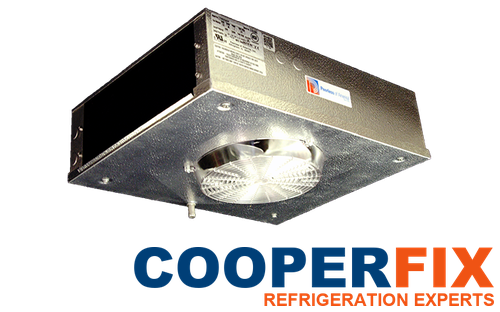
Peerless LS-190A low-slope unit cooler
Peerless low-slope commercial refrigeration unit cooler.

Series and model confirmed
The Peerless family, model, temperature duty, defrost arrangement, mounting format and connected system role are noted before conclusions are made.

Airflow and drainage evaluated together
Discharge pattern, fan operation, coil condition, drain-pan arrangement and installed clearances are evaluated as related operating conditions.

Unit-cooler readings connected to the system
The unit cooler is assessed with applicable controls, electrical findings, refrigeration-circuit measurements and the connected refrigeration system. Recommendations follow measurements, not assumptions.

Start with the installed Peerless series and refrigerated space

Identify the Peerless unit cooler and affected space

Name the Peerless unit-cooler series, add an ordinarily visible model, identify the refrigerated fixture or space and summarize the airflow, temperature, frost, fan or drainage change. Those details distinguish Low Slope, Slope Front, Power Pack and Two Way equipment for coordination without asserting capacity, compatibility or cause.

    Please prove you are human by selecting the flag.

    CooperFix services commercial refrigeration equipment only.

    Unit coolers organized by profile, discharge, and duty

    Match Peerless testing to the installed unit-cooler family

    Peerless publishes multiple unit-cooler configurations rather than one universal evaporator assembly. The installed family influences mounting, discharge pattern, drain arrangement, service access and intended temperature duty. CooperFix confirms the equipment before interpreting an operating complaint.

    Low Slope unit coolers

    The Peerless Low Slope series is a compact ceiling-mount family used where vertical space matters. The LS-190A is one model in this series. Peerless describes a textured aluminum cabinet, protected motors, a moisture-resistant wiring arrangement and a front-panel and drain design intended to support service access.

    Assessment may include coil condition, frost pattern, fan operation, air entry and discharge, drain and pan condition, controls, electrical findings, defrost operation and refrigerant distribution. Low physical profile does not remove the need to check clearances and air paths. A visible frost pattern alone does not establish the cause.
    Slope Front medium-temperature unit coolers

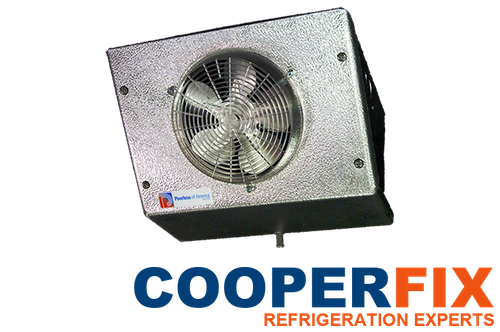
    The Slope Front family uses a compact ceiling-mount cabinet with two-way discharge for medium-temperature applications. The SF-175 is one model in this series. The sloped front and discharge arrangement are relevant to airflow through the refrigerated space, but model identification remains necessary because capacities and connection details vary within the series.

    The technician notes whether fans operate as expected, whether discharge paths are obstructed, how the coil and drain present, and how controls and the connected system respond. Air movement is interpreted with product placement, fixture layout and measured temperatures rather than treated as a stand-alone explanation.

    Power Pack medium-temperature unit coolers

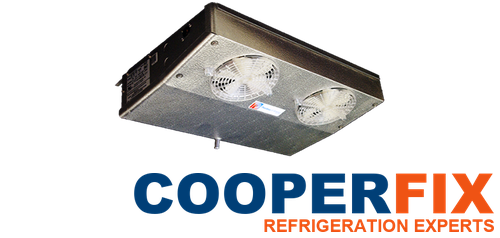
    Peerless describes its Power Pack family as compact, ceiling-mounted, medium-temperature equipment with air defrost. Standard and deluxe versions differ in drain-pan setup. The P-82D is a deluxe Power Pack unit cooler.

    Service documentation identifies the exact version before parts or drainage assumptions are made. Coil condition, fan and motor operation, cabinet access, drain-pan condition, electrical findings, controls and refrigeration-circuit measurements can all be relevant. The unit's compact construction makes accurate access planning important.

    Two Way medium-temperature unit coolers

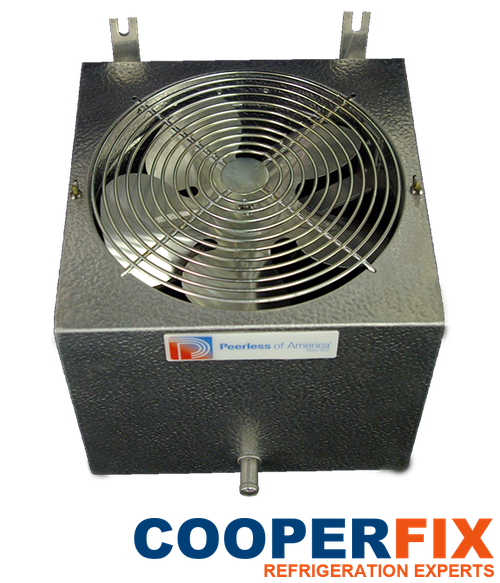
    The Two Way family uses two-direction air discharge from a ceiling-mounted cabinet. The TM-250 is one model in this series. This format is designed to distribute air in two directions, so clear discharge paths and appropriate placement are material to the operating picture.

    Assessment considers fan performance, discharge balance, coil condition, drainage, controls, electrical connections, defrost context and refrigeration-system behaviour. CooperFix does not ask business staff to remove covers, handle wiring or judge system sizing. These remain professional service decisions.

    Peerless SF-175 slope-front unit cooler
    Peerless slope-front medium-temperature unit cooler.
    Peerless P-82D deluxe Power Pack unit cooler
    Peerless deluxe Power Pack medium-temperature unit cooler.
    Peerless TM-250 two-way unit cooler
    Peerless two-way medium-temperature unit cooler.

    Evaporator performance depends on the connected system

    Assess the Peerless unit cooler with controls, piping, and load

    A Peerless unit cooler absorbs heat at the refrigerated fixture or space, but its performance depends on the connected system. Refrigerant supply and return conditions, controls, defrost strategy, condensing-side operation, piping, drainage, air distribution and the load in the refrigerated area can all influence what is observed at the evaporator.

    That is why a fan concern, frost pattern or temperature change should not be treated as proof of one failed component. The technician compares the reported change with actual fan operation, coil condition, measured temperatures, control response, electrical findings and applicable refrigeration-circuit measurements. The evaluation then separates a local unit-cooler condition from a problem elsewhere in the connected system.

    System context also matters when more than one evaporator serves a shared refrigeration arrangement. Findings must remain attached to the correct Peerless unit and circuit so that one coil's condition is not assigned to another.

    For a Peerless unit cooler serving a larger refrigerated system, CooperFix records when the reported change appears in relation to fan operation, control calls and the applicable defrost cycle. The technician also identifies whether the observed frost, water or airflow condition is limited to one section of the coil or extends across the unit. Those distinctions help order the tests for motors, heaters, controls, drainage and refrigerant distribution while keeping the final conclusion tied to measured system behaviour.

    The refrigerated fixture or space defines operating context

    Connect Peerless airflow and temperature changes to business use

    Peerless unit coolers can support customer-facing display cases, enclosed storage fixtures, compact refrigerated cases or larger refrigerated spaces. The business effect of a change depends on which area is affected, what product it protects, whether other refrigeration remains available and how airflow interacts with normal loading.

    CooperFix asks when the change was first noticed, whether it is continuous or intermittent, which case or space the unit supports, and whether loading, cleaning, construction or service activity changed nearby. Staff observations provide a useful timeline without asking staff to make a technical diagnosis.

    Access planning may involve ceiling clearances, case panels, stock movement and a safe working area. These facts help coordinate the visit while leaving electrical, refrigerant and defrost decisions to the technician. They do not create an unsupported promise about timing or outcome.

    Replacement suitability requires more than cabinet dimensions

    Verify Peerless duty, defrost, connections, and discharge before selection

    Peerless describes several families as suitable for original-equipment or replacement applications, but that does not mean any unit cooler can replace another. Temperature duty, capacity, refrigerant compatibility, defrost method, voltage, connections, dimensions, mounting, air discharge and the connected refrigeration design must align with the actual application.

    CooperFix therefore separates repair assessment from replacement selection. The first question is what the installed system shows and whether a recommended repair plan can be defined. If replacement planning becomes relevant, the existing model, system measurements, application duty and applicable technical documentation guide the decision.

    No public page can substitute for engineering and field confirmation. A visually similar Peerless cabinet or matching width is not enough to establish compatibility. Any dependency that cannot be confirmed during the initial assessment is noted for the next decision.

    Replacement planning also requires separation of cabinet fit from system suitability. Mounting clearance and overall dimensions matter, but so do coil duty, air throw, drainage, electrical characteristics, defrost arrangement and the way the unit connects to the rest of the refrigeration system. If a required value is unavailable, it remains an open dependency instead of being inferred from a photograph or a nearby model number.

    From Peerless identity to connected-system measurements

    Build the unit-cooler assessment around the installed series

    01 — Identify the Peerless unit cooler

    The technician notes the series, model, mounting format, temperature duty, defrost arrangement, voltage information where safely available and the refrigerated fixture or space served.

    02 — Establish the reported operating change

    Peerless cause-finding compares staff chronology with current evaporator behaviour, separating temperature and air-distribution changes from fan, frost, condensation, drain, cycling and broader system observations.

    03 — Measure the connected refrigeration conditions

    Assessment can include temperatures, fan and motor operation, coil condition, air entry and discharge, drainage, controls, electrical condition, defrost operation, piping observations and refrigeration-circuit measurements where applicable.

    04 — Define the recommended work

    CooperFix identifies the Peerless finding, the correction or care it supports, access and parts implications, connection to the serving system and any separate approval required. A condition outside the authorized unit-cooler work is noted before further work is considered.

    Repair follows the confirmed component or system fault

    Authorize only Peerless work supported by testing

    Peerless service may involve fan motors, wiring, controls, defrost components, drain pans and lines, coil condition, mounting hardware or the connected refrigerant circuit. The actual task depends on the model and test results. A technician may need to correct a confirmed electrical condition, address a failed motor or control, clear an accessible drainage restriction, service a defrost-related component or investigate system conditions affecting refrigerant distribution. These are possible categories, not a diagnosis of a specific unit.

    Professional work includes protecting the refrigerated space, managing safe access and preserving model traceability. Replacement components must match applicable Peerless information and the installed system. Where capacity, compatibility or refrigerant work requires additional test results, the dependency is noted before work begins.

    After authorized work, operating observations are noted in the context of the confirmed fixture or space. The record should show what was found, what was changed and what condition was observed afterward.

    Corrective work and recurring unit-cooler care remain separate

    Separate the Peerless repair from planned maintenance

    A Peerless repair addresses the measured unit-cooler or connected-system fault. Maintenance considers reachable coil, fan, drain, wiring, mounting, control and defrost conditions for periodic service; it cannot guarantee future operation or displace a required correction.

    Periodic attention for Peerless equipment is built around the confirmed series and duty and may cover reachable coil surfaces, guards and blades, motors, drain pan and line, wiring, mounting, controls and defrost observations. Recurring care for those unit-cooler functions follows the separate planned commercial refrigeration maintenance route.

    When repair plan, equipment condition and system duty raise a larger decision, CooperFix presents the measured findings. The facility then decides whether the affected Peerless unit cooler will receive the recommended repair, specifically defined follow-up testing, or replacement planning within its connected system.

    Airflow, defrost, and drainage require distinct records

    Preserve Peerless findings by function and service date

    A useful Peerless service file keeps three related areas distinct. Airflow covers fan operation, coil entry, discharge direction and obstructions. Defrost covers the applicable air- or electric-defrost arrangement, controls and observed frost removal. Drainage covers pan condition, drain path and signs of water or refreezing where applicable.

    The relationship among these areas matters, but one observation should not overwrite the others. A blocked discharge path can affect temperature distribution without proving a refrigeration-circuit fault. A frost pattern may involve defrost, airflow or refrigerant distribution and requires measurement. A drain concern can be local or can follow another operating condition.

    CooperFix notes the Peerless model, the fixture or space served, the reported change, measured findings, recommended work and post-work observations. Unconfirmed specifications remain marked as unconfirmed rather than borrowed from another series.

    Service history can clarify whether a recurring observation follows a prior motor, control, defrost, drain or refrigerant-system intervention. That history is useful only when it stays connected to the exact Peerless unit and date. CooperFix compares the record with current measurements, because a previous repair label or replaced component does not by itself establish the cause of a new operating change. The final recommendation identifies what is confirmed, what remains unknown and what further testing is required.

    Which Peerless unit-cooler series can CooperFix assess?

    CooperFix services confirmed Peerless of America unit coolers, including Low Slope, Slope Front, Power Pack and Two Way families. The exact series, model, duty and connected system are confirmed before repair or maintenance recommendations are made.

    How does the Peerless model identify slope, airflow, and defrost setup?

    The model helps establish cabinet family, capacity range, defrost arrangement, voltage, dimensions, connections and intended duty. CooperFix verifies the installed unit because similar-looking unit coolers are not automatically interchangeable.

    Can a Peerless unit cooler be assessed separately from the rest of the system?

    The unit cooler can be inspected as a component, but its performance must be interpreted with controls, piping, drainage, air distribution and the connected refrigeration system. A symptom at the evaporator does not always originate there.

    What is checked when airflow from a Peerless unit changes?

    Assessment may include fan and motor operation, coil condition, entry and discharge paths, mounting clearances, controls, frost patterns and temperatures. The technician relates those findings to the exact series and refrigerated fixture or space.

    Does a replacement Peerless unit cooler only need to match the cabinet size?

    No. Replacement planning can require confirmation of temperature duty, capacity, refrigerant compatibility, defrost method, voltage, connections, dimensions, mounting and air discharge. Selection follows test results rather than appearance alone.

    Which Peerless unit-cooler and room details help begin service?

    Share an ordinarily visible Peerless model, the fixture or refrigerated space served and the business effect of the changed airflow, temperature, fan, frost or drainage behaviour. No cover removal, electrical testing or refrigerant work is requested from staff; CooperFix determines cause professionally.

    Continue with the identified Peerless unit cooler

    Name the Peerless series and connected refrigerated space

    Tell us which Peerless series is installed, which fixture or refrigerated space it serves, and what changed in its airflow, temperature, frost, fan operation or drainage. CooperFix will assess that unit cooler in the context of its connected refrigeration system.

      Please prove you are human by selecting the truck.

      CooperFix services commercial refrigeration equipment only.

      Measured findings for the unit cooler and connected system

      Request service for the Peerless unit cooler and connected system

      A confirmed Peerless series, component measurements and the unit cooler’s relationship to the connected system support the next repair, maintenance or replacement choice. Request professional service for the affected unit cooler and serving refrigeration circuit.

      Request Peerless Service
      Review Equipment Coverage