Perlick back-bar, pass-through, dispensing, and froster service

Perlick Commercial Refrigeration Repair & Service

Perlick commercial refrigeration is closely integrated with daily bar operations. A back-bar refrigerator supports frequent door use and organized cold storage; a pass-through cabinet can serve two work sides; a direct-draw dispenser combines a refrigerated cabinet with beverage-delivery components; and a glass froster operates at a different temperature range with top access. CooperFix provides professional assessment, repair and maintenance for confirmed Perlick equipment across these distinct formats.

The service process begins with the exact model, serial information and installed setup. CooperFix records what changed, how the unit supports the operation and which access or loading pattern applies. A technician then measures cabinet and refrigeration performance before defining recommended work. Brand recognition alone never replaces model-specific test results.

Request Perlick Service
Review Perlick Equipment

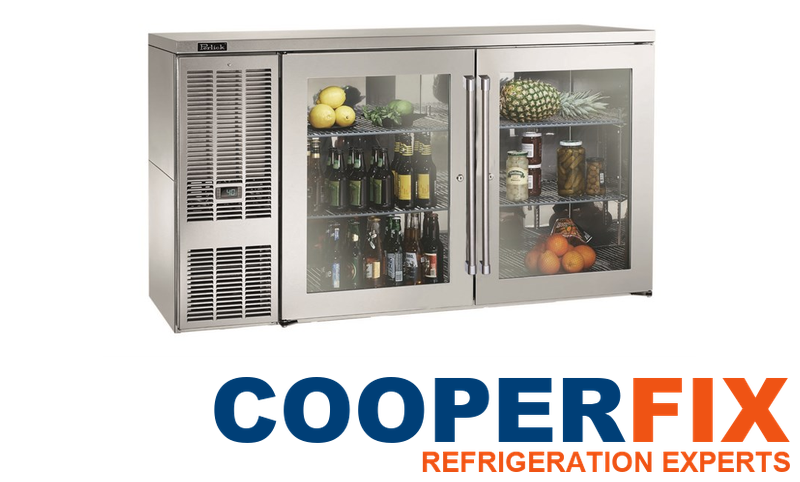
Perlick BBS60 self-contained back-bar refrigerator
Perlick BBS60 back-bar refrigerator with glass-door configuration.

Format-specific assessment
Back-bar, pass-through, direct-draw and low-temperature froster formats are evaluated according to their own cabinet layout and operating role.

Service planned around bar and beverage access
Access, loading, nearby fixtures, staff movement and the importance of the affected unit are noted before work is planned.

Cabinet, door, and dispensing findings measured separately
Temperatures, recovery, airflow, controls, doors, fans, electrical condition and refrigeration test results are considered together before a recommendation is presented.

Start with the Perlick format and beverage-station role

Identify the Perlick bar cabinet or dispenser in service

Start with the Perlick cabinet format—back-bar, pass-through, direct-draw or glass froster—and add the model only when staff can read it without moving equipment. Explain the symptom, its timing and the unit’s operating role. CooperFix uses that context to prepare the visit, while the technician establishes the cause.

    Please prove you are human by selecting the flag.

    CooperFix services commercial refrigeration equipment only.

    Commercial refrigeration organized by bar-equipment function

    Match Perlick testing to the installed cabinet format

    Perlick’s current commercial catalogue includes multiple refrigerated cabinet formats. The models below establish useful equipment context, but the installed nameplate remains the controlling reference for setup, settings and parts.

    BBS60 self-contained back-bar refrigerator

    The BBS60 is a 60-inch self-contained back-bar refrigerator. Perlick lists a stainless-steel interior and top, end-wall refrigeration that may be positioned on either side, digital control and multiple door or drawer choices within the family. The cabinet can therefore appear in more than one setup even when the BBS60 model details are shared.

    CooperFix confirms the actual door arrangement, compartment use, refrigeration side and service clearances before testing. Assessment may include cabinet temperature, recovery under normal access, gasket contact, hinges or slides, fans, airflow, controls, electrical condition, heat rejection and refrigeration-circuit measurements. A door observation is noted, but it is not treated as the complete explanation for a cooling concern without supporting measurements.

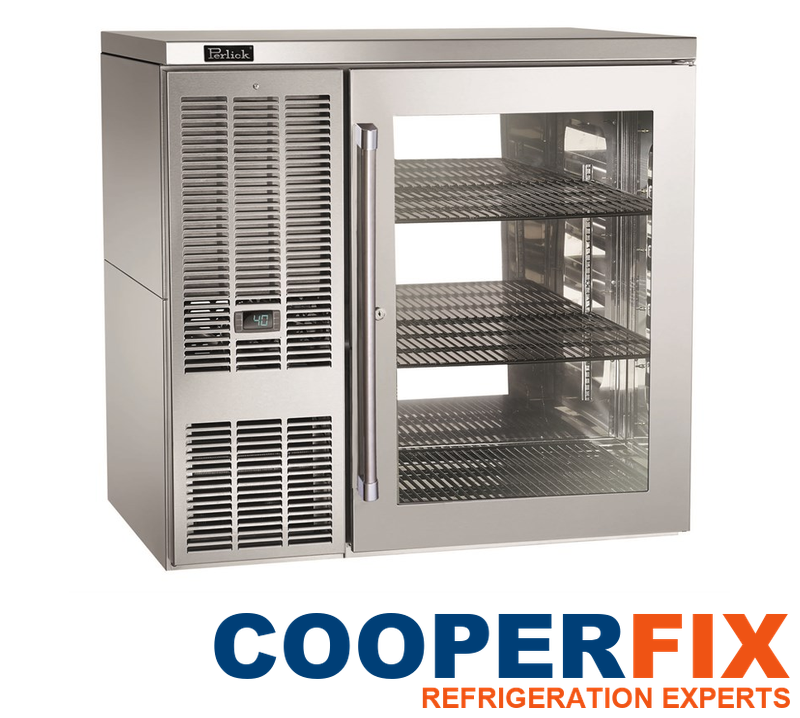
    PTS36 pass-through back-bar refrigerator

    The PTS36 is a 36-inch self-contained pass-through back-bar refrigerator. The manufacturer describes access from both sides and lists swing or sliding glass-door possibilities, a stainless-steel interior and top, digital control and multiple temperature-range options. Two-sided access changes the service file: the technician must identify the exact side, door and operating sequence involved in each observation.

    Assessment can compare closure, gasket contact and loading on both sides, then relate those conditions to airflow, cabinet temperature and recovery. A concern noticed on one side may reflect local door hardware, the loading pattern or a wider cabinet condition. CooperFix keeps those possibilities separate until testing supports a conclusion.

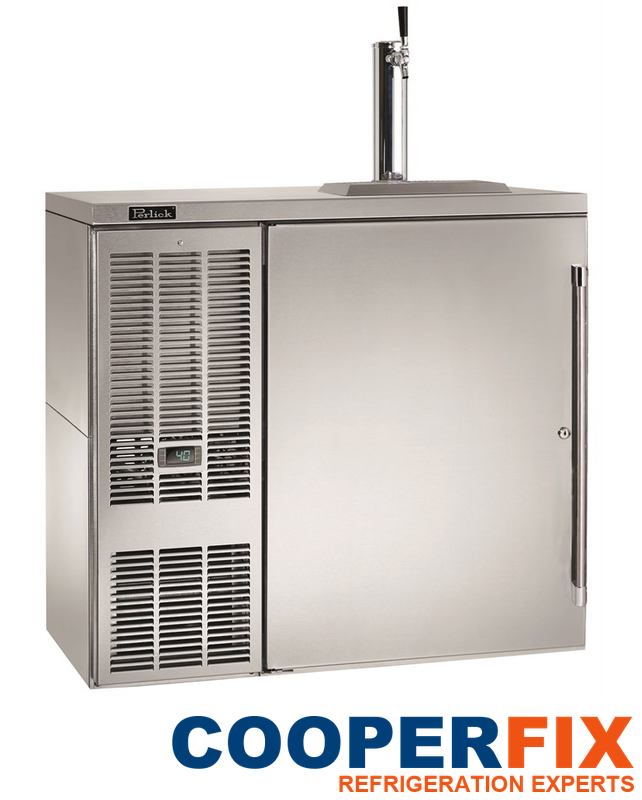
    DDS36 direct-draw refrigerated dispenser

    The DDS36 is a 36-inch self-contained direct-draw beverage dispenser. Perlick describes a family with multiple cabinet widths and keg layouts, while the DDS36 page identifies digital control, configurable compressor-side placement and beverage-tower options. The unit combines refrigerated storage with a delivery path, so one customer-visible symptom may involve both cabinet refrigeration and beverage-delivery components.

    CooperFix distinguishes cabinet refrigeration from tower, line and dispensing observations. Cabinet temperature, recovery, airflow, control response, door condition, compressor operation and heat rejection are measured as refrigeration test results. Beverage-delivery findings are noted separately unless testing establishes a direct relationship. This prevents a pour-quality concern from being assigned automatically to the refrigeration system.

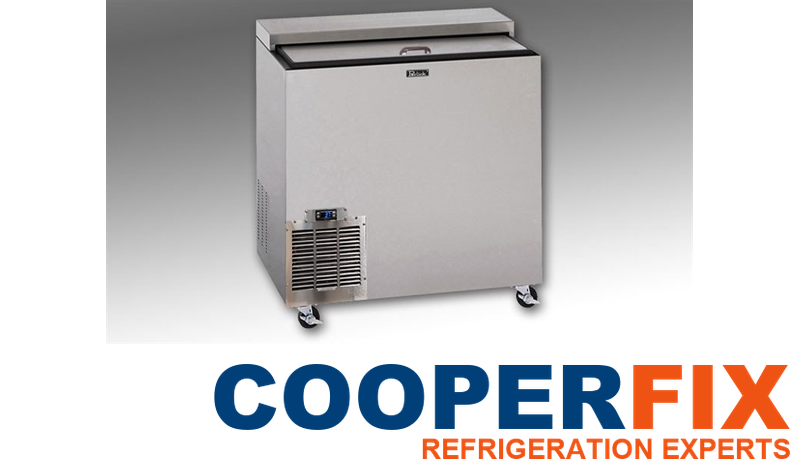
    FR36RT-3 glass froster

    The current FR36 product page identifies model FR36RT-3, a 36-inch top-opening glass froster with sliding access. Perlick lists a stainless-steel interior and top, an adjustable low-temperature control range, manual defrost and R290 refrigeration. This format is not evaluated as if it were a standard back-bar refrigerator.

    The technician notes the operating setting, loading, sliding-cover condition, gasket contact, frost pattern, airflow, controls, condensate behaviour and refrigeration performance. Low-temperature operation and defrost history provide context, but neither replaces measurement. If heavy frost or restricted access is present, the service plan defines safe equipment access rather than asking staff to conduct technical work.

    Perlick PTS36 pass-through back-bar refrigerator
    Perlick PTS36 pass-through back-bar refrigerator.
    Perlick DDS36 direct-draw refrigerated beverage dispenser
    Perlick DDS36 direct-draw refrigerated dispenser.
    Perlick FR36RT-3 top-opening glass froster
    Perlick FR36RT-3 commercial glass froster.

    Reported symptoms require model-specific comparison

    Separate cabinet, access, control, and dispensing observations

    Perlick equipment can present temperature drift, slow recovery, unusual cycling, excessive run time, fan or compressor noise, incomplete door closure, damaged gasket contact, condensation, controller concerns or inconsistent low-temperature performance. These are reportable conditions, not diagnoses. CooperFix links the symptom history to the exact cabinet and setup before determining what should be tested.

    Door and access hardware deserve model-specific attention. A BBS60 may have different door or drawer choices; a PTS36 can have more than one service side; a DDS36 has loading access within a dispensing arrangement; and an FR36RT-3 uses top sliding covers. Alignment, track condition, hinge movement and gasket contact are noted at the exact position observed. The technician then compares those findings with temperature and recovery data.

    Controls and displayed temperatures are also interpreted in context. A controller value can help establish what the unit is reporting, but it does not by itself prove product temperature, airflow or refrigeration capacity. CooperFix compares relevant readings and component operation, then notes any difference that affects the repair recommendation.

    Bar and beverage use defines the operating context

    Connect the Perlick cabinet change to its service role

    The operational effect of a Perlick fault depends on the equipment’s role. A back-bar refrigerator may support rapid service access; a pass-through cabinet may connect two work positions; a direct-draw dispenser may be central to a beverage program; and a glass froster may support glass preparation during peak periods. Cabinet size alone does not determine business importance.

    For a Perlick report, CooperFix maps the first observed change against cabinet loading, door or cover use, beverage-service demand and nearby heat sources. Staff supply the chronology and business effect; instrument readings and physical inspection supply the technical conclusion. The service file preserves that distinction.

    Service planning also respects product handling and staff traffic. The business identifies operational priorities and any alternate capacity. CooperFix explains access needs and the recommended work without promising a specific completion time or result before the unit is assessed.

    Work-area access changes by Perlick cabinet format

    Coordinate testing around the installed bar or beverage station

    Back-bar equipment often sits close to counters, walls, drains, towers, shelving or adjacent cabinets. Before work begins, CooperFix identifies the service side, electrical access, condenser airflow clearance and any fixture that limits safe inspection. If movement or disconnection outside the confirmed work is required, that dependency is noted instead of being assumed.

    When access to a Perlick refrigeration section is restricted by an adjoining cabinet, counter or beverage connection, CooperFix records the limitation before recommending further work. The service plan identifies which component can be tested in place and which task would require separate access authorization.

    Loading and normal access patterns provide useful context. Dense stock, blocked internal air paths or repeated door openings may affect recovery, but staff are not asked to reorganize equipment as a substitute for diagnosis. The technician notes the condition found, measures operation and explains whether loading or access contributed to the test results.

    For pass-through units, both sides must be available when the reported concern involves closure or recovery. For direct-draw equipment, cabinet access and beverage-system access may require different coordination. For top-opening frosters, the area above the unit must remain clear enough for inspection. Each requirement is tied to the actual model and task.

    When several Perlick units are included in one request, each receives its own model record, symptom history and measurements. Shared surroundings can be noted, but one cabinet’s findings are never copied to another.


    From Perlick model details to measured performance

    Build the assessment around the exact cabinet setup

    01 — Confirm the installed Perlick unit

    The technician notes the model and serial information, cabinet format, door or cover arrangement, refrigeration placement, loading pattern and operating role. Published model information is checked against the equipment rather than assumed to be universal.

    02 — Establish the reported change

    Staff observations are organized by unit and time. Temperature change, recovery, cycling, sound, condensation, closure, frost or dispensing-related concerns are noted without assigning an early cause.

    03 — Measure relevant performance

    Assessment may include cabinet temperature, recovery, airflow, fan operation, coil condition, controls, electrical measurements, condensate behaviour, compressor operation, heat rejection and refrigeration-circuit measurements where applicable. Door, drawer, sliding-cover and gasket conditions are evaluated according to the format.

    04 — Define the recommended work

    CooperFix explains the findings, recommended work, relevant parts research, access needs and any condition requiring a separate decision. Refrigeration and beverage-delivery scopes remain distinct unless the test results connect them.

    Repair follows confirmed hardware and refrigeration findings

    Authorize only the Perlick work supported by testing

    Perlick service can involve doors, drawers, sliding covers, gaskets, controls, sensors, fans, electrical components, condensate paths, airflow and the sealed refrigeration system. The exact work follows the confirmed model and professional diagnosis. A technician may correct confirmed hardware or control faults, address an airflow restriction, replace a failed component, investigate compressor or circuit performance, or define further testing. These are possible work categories, not a predetermined repair list.

    Professional execution includes protecting the surrounding work area, keeping the equipment model clearly identified and matching every part to the confirmed setup. If a service choice depends on moving the cabinet, accessing a remote area, coordinating beverage components or obtaining model-specific information, CooperFix records that dependency before the work scope changes.

    After authorized work, relevant operation is observed and noted. The record states what was completed and what was seen during the verification period without converting that observation into a long-term guarantee.

    Current correction and recurring cabinet care remain separate

    Separate the active Perlick repair from planned maintenance

    Corrective work on Perlick equipment responds to a diagnosed operating defect. Planned care instead covers serviceable cabinet conditions—accessible coils, fan and airflow paths, sliding covers or doors, gasket contact, controls and condensate handling—when those items can be evaluated safely. CooperFix documents each purpose independently, so a maintenance visit cannot be mistaken for resolution of an active fault.

    Any recurring-care plan follows the Perlick setup rather than a universal list. Pass-through doors are reviewed from both work sides, direct-draw refrigeration remains separate from the beverage-delivery assembly, and an FR-series froster is considered in its own low-temperature and defrost context. The dedicated commercial refrigeration maintenance planning page is the appropriate route when a business wants scheduled attention beyond the present Perlick diagnosis.

    If age, cabinet condition, beverage-program reliance or the recommended repair plan raises a larger capital question, CooperFix summarizes the confirmed Perlick test results and unresolved dependencies. Management then chooses among the quoted correction, a defined additional investigation or its own replacement plan.

    Model-specific records prevent findings from crossing between units

    Keep every Perlick result attached to the correct setup

    A strong Perlick service file identifies the exact model, serial, door or cover arrangement, refrigeration placement and operating role. It then connects the reported change to measured findings, approved work and post-work observations. This detail prevents a brand-level description from becoming a false assumption about one installed unit.

    Setup distinctions remain visible in future records. A BBS60 door finding should not migrate to a PTS36 pass-through side. A DDS36 cabinet measurement should not be presented as proof about its beverage-delivery path. An FR36RT-3 frost pattern should not be assigned to a standard back-bar refrigerator. Traceability supports parts research and consistent follow-up.

    The record also notes access, loading and surrounding fixtures when they materially affected the assessment. If a revision, setting or component cannot be confirmed, the uncertainty is stated. Photographs obtained through an approved process may support model details, but they do not replace written measurements or the technician’s noted work.

    Which Perlick back-bar, pass-through, dispensing, and froster units can CooperFix assess?

    CooperFix services confirmed Perlick commercial refrigeration, including back-bar refrigerators, pass-through back-bar cabinets, direct-draw refrigerated dispensers and glass frosters. The exact model and setup are confirmed before the service plan is defined.

    How does the Perlick model separate back-bar, dispensing, and froster functions?

    The model identifies cabinet format, access arrangement and published setup. It helps distinguish a BBS60 back-bar refrigerator from a PTS36 pass-through cabinet, DDS36 direct-draw dispenser or FR36RT-3 glass froster and supports accurate parts research.

    How is a pass-through Perlick refrigerator assessed?

    The technician records both access sides, identifies the exact door or track involved, evaluates gasket contact and loading, and compares those observations with cabinet temperature, recovery, airflow, controls and refrigeration performance.

    Does a dispensing problem always mean the refrigeration system has failed?

    No. A direct-draw unit includes a refrigerated cabinet and beverage-delivery components. CooperFix documents the reported symptom, measures cabinet refrigeration and keeps the delivery system separate unless testing establishes a connection.

    How is a Perlick glass froster different from a back-bar refrigerator?

    A glass froster uses top access and operates in a lower temperature range with its own frost and defrost context. CooperFix confirms the exact model, setting, covers, loading, frost pattern, airflow, controls and refrigeration performance rather than applying a standard-refrigerator assumption.

    Which Perlick format and beverage-station details help begin service?

    Tell CooperFix whether the unit is back-bar, pass-through, direct-draw or a froster, then provide a safely readable model and the time pattern of the change. Include the cabinet’s role during service periods. Leave covers, controls and technical testing to the attending refrigeration technician.

    Continue with the identified Perlick unit

    Name the Perlick format and the operating change

    Use the form to identify the Perlick unit and describe the operating change. CooperFix will use that information to coordinate a model-specific assessment while preserving the differences among back-bar, pass-through, direct-draw and low-temperature froster equipment.

      Please prove you are human by selecting the heart.

      CooperFix services commercial refrigeration equipment only.

      Measured findings for the exact Perlick cabinet

      Plan the Perlick repair for the exact bar cabinet

      Use the confirmed Perlick model, measurements that match its access and temperature duty, and a written recommendation to make the service decision. Request professional service for the affected Perlick back-bar refrigerator, pass-through cabinet, direct-draw dispenser or glass froster.

      Request Perlick Service
      Review Equipment Coverage