
Randell prep-table, chef-base, and worktop service

Randell Commercial Refrigeration Repair & Service

Randell refrigeration supports daily food preparation and point-of-use cold storage through raised-rail preparation tables, flat-top sandwich and salad stations, refrigerated worktops, compact cabinets and chef bases. These formats may share stainless construction, yet their storage zones, pan systems, drawers, doors, controls, airflow and service access are not interchangeable. CooperFix provides professional assessment, repair and maintenance for confirmed Randell commercial refrigeration equipment.

Service begins with the exact installed unit. A raised rail has a different relationship between its ingredient zone and refrigerated base than a flat-top table. A chef base combines a load-bearing top with refrigerated drawers, while the worktop must combine usable counter space with cabinet access and heat rejection. CooperFix connects those equipment differences with technician measurements before defining a repair or maintenance scope of work.

Request Randell Service
Review Randell Equipment

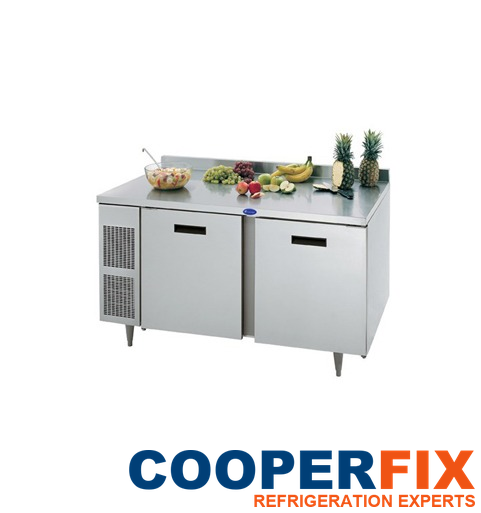
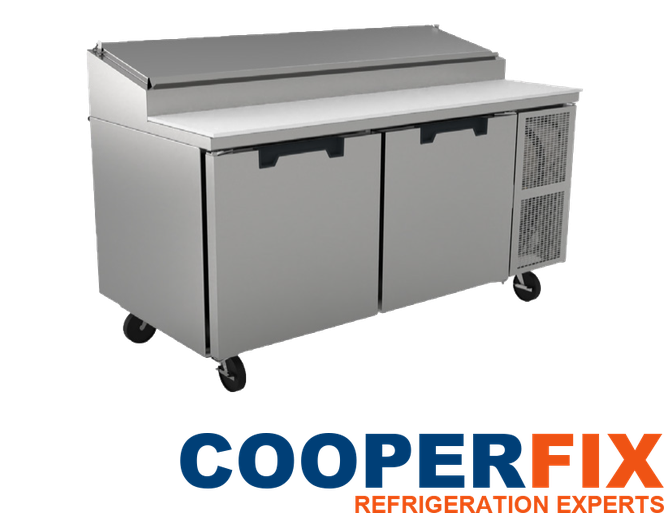
Randell raised-rail refrigerated preparation table shown by the manufacturer
Randell raised-rail refrigerated preparation equipment.

Model and setup identified first
The model, serial information, table family, rail or top arrangement, door or drawer layout and refrigeration-section location are noted before conclusions are made.

Service planned around rail, base, and workstation access
Prep activity, nearby heat, product handling, loading patterns, access restrictions and the role of the unit inform coordination without replacing technical diagnosis.

Rail, cabinet, and chef-base readings guide the recommendation
Temperature behaviour, airflow, controls, fans, electrical condition, drainage, defrost where applicable and refrigeration-circuit findings are considered together.

Start with the Randell rail, base, or equipment stand

Identify the Randell format and affected refrigeration zone

Identify the Randell unit, provide the model if it is safely visible, describe the operating change and explain whether the equipment supports preparation, point-of-use storage or a refrigerated workstation. This information helps separate the relevant cabinet family before a visit is coordinated. A submitted request begins professional assessment; it does not establish the cause from a symptom description.

    Please prove you are human by selecting the key.

    CooperFix services commercial refrigeration equipment only.

    Refrigeration organized around food preparation and point-of-use cold storage

    Match testing to the Randell rail, base, worktop, or chef-base layout

    The official Randell range uses several refrigeration layouts for different operating roles. CooperFix confirms the exact model because the same cabinet width can contain different rail, base, drawer, door, control and compressor arrangements.

    Raised-rail preparation tables

    Randell raised-rail preparation tables combine a refrigerated base with an elevated ingredient system. Current manufacturer information distinguishes traditional, dual-tier and mega-top formats. Within applicable families, the rail and base may have separate operating relationships, so a complaint reported at the pans should not automatically be assigned to the lower cabinet.

    Assessment can include the rail zone, base temperatures, recovery after access, controls, covers, doors or drawers, gaskets, airflow, coils, drains and refrigeration-system test results. The technician notes which section changed and whether the observation is continuous, intermittent or connected to a particular part of the work cycle.
    Flat-top sandwich and salad preparation tables

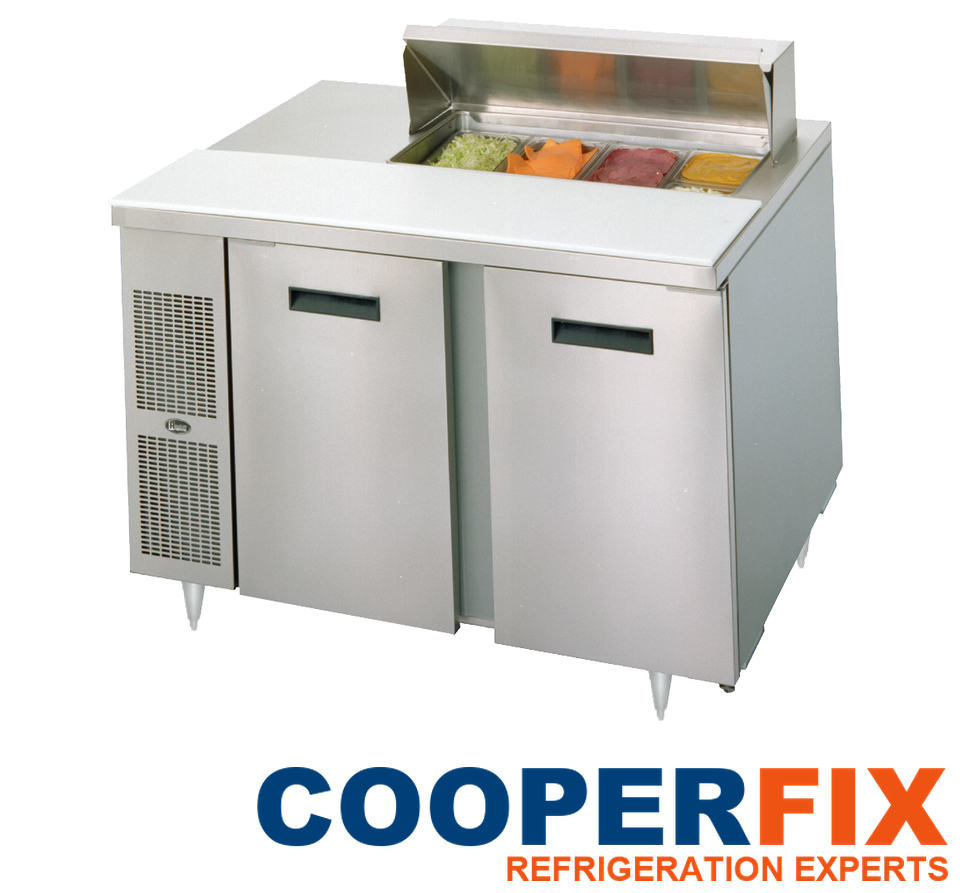
    Flat-top preparation tables place pans within a lower-profile ingredient opening beside the work surface. Randell publishes traditional and mega-top configurations and documents both forced-air and cold-wall approaches in applicable lines. Those distinctions affect how the pan area and refrigerated base must be evaluated.

    CooperFix keeps the upper pan zone, lower storage and condensing section distinct in the service file. Loading, covers, cutting-board use and frequent access provide operating context, while temperatures, airflow, controls, doors, gaskets and circuit findings provide the test results.

    Refrigerated chef bases

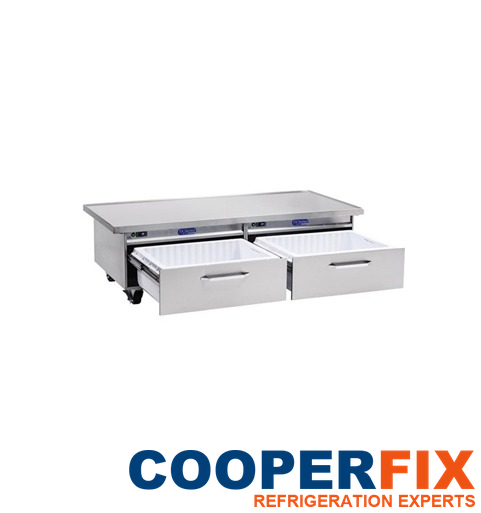
    A Randell chef base combines a load-bearing top with refrigerated storage. Its role creates a close relationship among top loading, line heat, front access, drawer operation and heat rejection. The base cannot be evaluated as an ordinary low cabinet without accounting for the installed equipment and safe service space around it.

    The technician can document drawer closure, gasket contact, cabinet temperature, airflow, coil condition, controls, electrical operation and refrigeration response. Surface load, surrounding heat and blocked access may be relevant conditions, but they do not by themselves prove the cause of a cooling change.

    Compact and refrigerated worktops

    Randell worktops and compact refrigeration place storage at the point of use while preserving the work surface. Current official information includes different door and drawer arrangements, side-mounted and other refrigeration layouts, and specialized configurations. Exact model details matter because access and component research vary across those designs.

    Assessment considers the cabinet, top use, doors or drawers, gaskets, loading, clearance, airflow, controls, coils, electrical condition and refrigeration circuit. CooperFix does not ask staff to remove panels, adjust technical settings or perform electrical or refrigerant tests.

    Randell flat-top refrigerated preparation table shown by the manufacturer
    Randell flat-top refrigerated preparation table.
    Randell refrigerated chef base shown by the manufacturer
    Randell refrigerated chef base and equipment stand.
    Randell commercial refrigerated worktop shown by the manufacturer
    Randell commercial refrigerated worktop.

    Upper ingredient zones and lower storage can behave differently

    Measure the Randell rail and refrigerated base as distinct zones

    A preparation table can show different behaviour in its pan area and lower cabinet. A warmer observation at the rail does not automatically establish the condition of the base, and a normal lower-cabinet reading does not prove that the ingredient zone is operating as intended. The rail format, pan depth, covers, loading and operating cycle all belong in the record.

    Randell pages also distinguish equipment families whose cooling arrangements are not the same. CooperFix verifies the model and setup before interpreting readings. The technician examines the relevant zones, compares behaviour over an appropriate period and relates control, airflow and refrigeration findings to the exact table.

    This separation keeps the recommendation tied to the measured condition. It prevents a rail concern from becoming an unsupported whole-system diagnosis and prevents work on the base from being presented as a confirmed answer for a different zone.

    Preparation activity and surrounding heat shape the observed load

    Record access, loading, and surrounding heat by Randell unit

    A raised-rail table may be opened repeatedly during preparation. A flat-top station can be central to ingredient assembly. A chef base may sit beneath heat-producing equipment, and the worktop can support a compact station where every clearance matters. Those roles affect access planning and the way staff describe a change.

    CooperFix asks when the condition began, which section is affected, whether it is constant or intermittent, how the unit is normally loaded and whether the operating pattern or surrounding equipment changed. Staff observations establish a timeline and business impact. They are not used as a substitute for measurement.

    The business can also identify restricted production periods, safe access windows and product-handling requirements. Those facts help coordinate professional service without creating an unsupported promise about arrival time, repair duration or final result.

    Each cabinet keeps its own model, findings, and approval

    Coordinate multiple Randell units without mixing their records

    A facility may use more than one Randell preparation table or combine prep stations, worktops and chef bases across a line. CooperFix separates every affected unit by model, setup, operating role and reported condition even when service is requested together.

    A rail-zone temperature concern, a drawer that no longer closes consistently and the worktop that recovers slowly require separate service notes. Similar timing can be relevant, but it does not prove a shared failure. Ambient conditions, power history or line changes may form common context while each refrigeration system still receives its own measurements.

    Access is also planned unit by unit. A chef base may require coordination with equipment above it; the worktop may be fitted tightly beside other fixtures; a long preparation table may affect an active production route. The technician confirms actual access and notes any condition that limits inspection or authorized work.

    Unit-level documentation keeps parts research, findings, approved tasks and post-work observations connected to the correct Randell cabinet. It also prevents features from one table family being copied into another unit's service file.

    From exact Randell setup to zone-specific measurements

    Use the rail, base, door, and drawer layout to select tests

    01 — Confirm the installed Randell equipment

    The technician notes model and serial information, equipment family, rail or top format, door or drawer layout, refrigeration-section location, controls and normal business role.

    02 — Define the reported operating change

    Staff observations are compared with the current condition. The record distinguishes upper-zone and base concerns, temperature or recovery changes, fan or control behaviour, doors, drawers, gaskets, drainage and unusual cycling.

    03 — Measure connected conditions

    Assessment can include temperatures, airflow, coils, fans, controls, electrical condition, drainage, defrost where applicable, heat rejection and refrigeration-circuit measurements. Findings are interpreted together rather than as isolated proof.

    04 — Explain the recommended repair and why it is needed

    CooperFix explains confirmed findings, recommended repair or maintenance, access and parts considerations, and any dependency that requires another decision. When a finding falls outside the agreed scope for the Randell unit and line zone, CooperFix pauses, explains the dependency and seeks a separate authorization.

    Repair follows the confirmed Randell model and findings

    Authorize Randell repair work supported by measurements

    Randell service can involve mechanical, electrical, airflow, control, drain or sealed-refrigeration-system conditions. The actual task depends on the model and measured findings. A technician may need to address a confirmed fan or electrical condition, correct an accessible airflow or drain restriction, evaluate control response or investigate refrigerant-circuit performance. These are possible work categories, not a diagnosis of a particular unit.

    Professional work includes protecting the work area, keeping the model and serial number with the service record, and checking operation after the authorized task. Components must be matched to the exact model and applicable manufacturer information. A part that fits physically is not automatically suitable for a different table, drawer or refrigeration layout.

    The approved work also accounts for the line around the cabinet. Product protection, access to nearby workstations, nearby fixtures and production sequencing may need coordination before work advances. These dependencies support safe execution without changing the test results required for the recommendation.

    The completed record should connect the reported change to measured findings, the findings to the approved work and the authorized work to post-work observations.

    Current correction and planned care are separate decisions

    Keep Randell repair and maintenance recommendations distinct

    Repair addresses a confirmed fault or operating condition. Maintenance addresses accessible conditions that can be inspected, cleaned, adjusted or noted. Routine attention cannot guarantee that a future motor, control, electrical or refrigeration-system failure will not occur, and it should not be used to postpone a repair confirmed by test results.

    For Randell equipment, a maintenance discussion may include accessible coil condition, airflow, fans, drains, controls, cabinet condition and service history. The exact checklist follows the model, setup and safe access. For scheduled care of a Randell raised-rail table, flat-top preparation station, chef base or worktop beyond the current fault, consult planned commercial refrigeration maintenance as a distinct service decision.

    When condition, repair plan, line role and parts availability raise a larger decision, CooperFix presents what has been confirmed and what remains open. With the Randell model, line role, access limits and findings noted, the operator selects repair, a focused next investigation or replacement planning.

    Model, line role, and service history remain connected

    Preserve traceability for every Randell rail, base, and worktop

    Randell equipment can place several functional zones within one stainless assembly. A preparation table has an upper ingredient area and lower storage. A chef base combines refrigerated drawers with a loaded top. A worktop combines cabinet storage, work surface and a model-specific condensing section. The service file should name the exact zone affected instead of treating the entire unit as one undifferentiated box.

    Traceability becomes especially important when equipment has been moved, reconfigured or serviced before. A component found in the cabinet should not be assumed correct merely because it is installed. CooperFix compares model information, field condition and measurements before recommending the next step.

    Service history can clarify whether a recurring observation follows earlier control, fan, drain or refrigeration work. That history is useful only when it stays tied to the exact unit and date. Current measurements remain necessary because a prior repair label does not establish the cause of a new change.

    The completed Randell record keeps equipment model, complaint, findings, authorized work and post-work observations together. Unknown facts remain marked as unconfirmed rather than being filled with specifications from another Randell family.

    Which Randell prep tables, chef bases, and worktops can CooperFix assess?

    CooperFix services confirmed Randell raised-rail and flat-top preparation tables, refrigerated worktops, compact cabinets and chef bases. The exact model and setup are confirmed because rail, base, door, drawer, airflow and access arrangements differ across the range.

    Why must the rail and base of a Randell prep table be assessed separately?

    The ingredient zone and lower cabinet can have different operating relationships and controls. CooperFix notes which zone changed and evaluates temperatures, loading, airflow, controls, access and refrigeration test results for the exact table instead of transferring one observation to the whole unit.

    Can CooperFix assess a Randell refrigerated chef base?

    Yes, when safe access can be established. The technician considers the refrigerated base, drawers, airflow, condensing section, top load and surrounding line conditions while keeping the diagnosis tied to measurements from the installed unit.

    How are several Randell rail, base, and chef-base records kept separate?

    CooperFix opens a separate record for every Randell unit and identifies its model, setup, operating role and reported condition. Readings, findings, parts research and approved work remain connected to the correct rail, base or chef-base cabinet even when access and scheduling are coordinated during one visit.

    How is planned Randell maintenance kept separate from a confirmed rail or base repair?

    Planned Randell maintenance is noted as a separate decision for serviceable conditions such as accessible coils, airflow, drains and controls. A confirmed failed component or refrigeration condition is placed in a separate repair plan supported by the technician's findings.

    Which Randell rail, base, or chef-base details help begin service?

    Provide the model and serial information if safely visible, identify whether the unit is a preparation table, worktop or chef base, name the affected zone and describe the operating change. Do not remove panels or perform technical tests; CooperFix establishes the diagnosis professionally.

    Continue with the affected Randell work-line unit

    Name the rail, base, chef base, or worktop that changed

    Use the form to identify the Randell equipment and describe the affected zone and operating change. CooperFix will use that information to coordinate assessment while keeping preparation-table, worktop and chef-base conditions tied to the correct model.

      Please prove you are human by selecting the plane.

      CooperFix services commercial refrigeration equipment only.

      Randell service based on zone-specific findings

      Plan the Randell repair from rail, base, and cabinet measurements

      Exact model details, zone-specific measurements and a clearly documented scope of work provide a stronger basis for repair and maintenance decisions. Request service for the affected Randell preparation table, refrigerated worktop or chef base.

      Request Randell Service
      Review Equipment Coverage