Saba reach-in, undercounter, and prep-table service

Saba Commercial Refrigeration Repair & Service

Saba commercial refrigeration includes solid-door and glass-door reach-ins, compact undercounter refrigerators and refrigerated preparation tables. Each format supports a distinct operating role: enclosed bulk storage, visible inventory, point-of-use access or ingredient preparation. CooperFix diagnoses and services those confirmed Saba families according to their cabinet layout and business use.

The correct service process begins with model details and setup. A three-door upright cabinet cannot be evaluated from the same assumptions as a one-door undercounter unit. A glass door adds lighting and presentation conditions, while a preparation table divides refrigeration duties between its pan area and lower storage. CooperFix uses the installed model, operating context and technician measurements to define the recommended work.

Request Saba Service
Review Saba Equipment

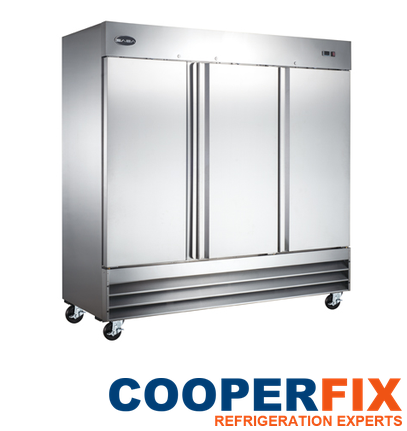
Saba S-72R three-door reach-in refrigerator
Saba S-72R solid-door reach-in refrigerator.

Exact cabinet model identified
The model, serial information, equipment family, door arrangement, refrigeration-section location and normal business role are noted before technical conclusions are made.

Cabinet use helps plan testing
Loading, access frequency, visibility requirements, nearby fixtures and the effect of the reported change help plan service but do not replace professional measurements.

Connected-system measurements guide the recommendation
Temperatures, recovery, airflow, controls, fans, electrical condition, doors, gaskets, drains, defrost where applicable and refrigeration-circuit findings are interpreted together.

Start with the Saba cabinet and affected storage zone

Identify the Saba format and the storage or prep area that changed

Name the Saba cabinet, add an ordinarily visible model, describe its storage or preparation role and summarize the changed behaviour. Specify solid-door, glass-door, undercounter or preparation-table format so the request record is routed correctly; inspection still establishes cause.

    Please prove you are human by selecting the plane.

    CooperFix services commercial refrigeration equipment only.

    Refrigeration organized by cabinet and access format

    Match testing to the Saba reach-in, undercounter, or prep-table layout

    Saba publishes several commercial refrigeration families whose external finish can look similar while their door count, storage role, controls, access and refrigeration layout differ. CooperFix verifies the exact unit before recommendations or parts research.

    Saba solid-door reach-ins for enclosed storage

    The S-72R is a current three-solid-door reach-in model. Its official product page identifies a bottom-mounted refrigeration section, digital temperature control, adjustable shelves, self-closing doors and casters. Those features describe the S-72R only; they are not assigned automatically to every Saba reach-in.

    For a Saba three-section cabinet, assessment may combine section-by-section temperature and recovery with door alignment, gasket contact, fan delivery, coil condition, controller response, electrical measurements, heat rejection and circuit readings. The record identifies the first affected section instead of assuming uniform behaviour across all doors.

    Saba glass-door reach-ins for visible inventory

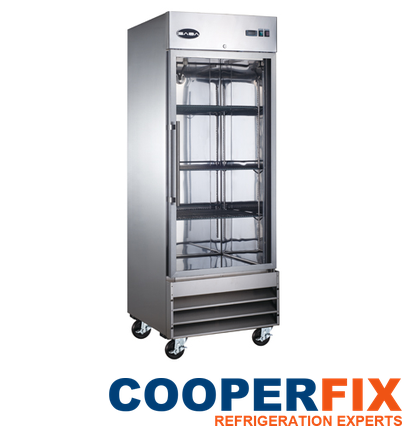
    The S-23RG represents a one-glass-door Saba reach-in. The transparent door supports visible inventory and adds interior lighting, glass condition and condensation patterns to the operating record. These presentation details can help describe the complaint, but they do not determine refrigeration performance on their own.

    CooperFix distinguishes a lighting or door concern from a measured cooling condition. Door alignment, gasket contact, temperature recovery, airflow, fans, coils, controls and the refrigerant circuit are examined as applicable to the installed cabinet.

    Saba undercounters beneath active work surfaces

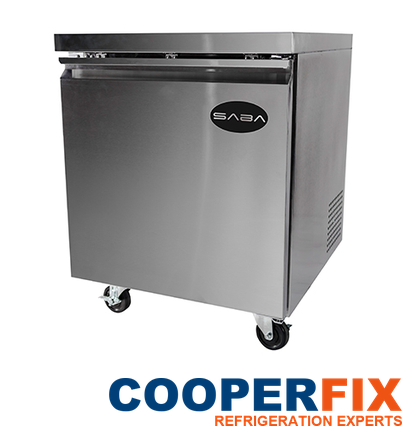
    The SUC-27R is a compact one-door undercounter refrigerator intended to provide storage below the work surface. Its official page documents digital control, an adjustable shelf, a removable magnetic gasket, a self-closing door and caster-mounted construction. Its low profile changes service access compared with an upright cabinet.

    The technician notes the undercounter location, condenser clearance, adjacent fixtures, top use, door operation and access to the refrigeration section. Limited clearance can affect inspection planning, but it is not treated as proof of a specific failure without supporting measurements.

    Saba preparation tables with pan rail and lower base

    The SPS-27-8 is identified by Saba as a one-door sandwich and salad preparation refrigerator. It combines lower refrigerated storage with an upper ingredient area and work surface. Loading, pans, covers, repeated access and the relationship between upper and lower zones belong in the service history.

    CooperFix evaluates the relevant zones separately. A pan-area observation does not automatically describe the lower cabinet, and a base reading does not establish performance at the ingredient opening. Temperatures, recovery, controls, airflow, doors, gaskets, drains and refrigeration test results are connected to the exact setup.

    Saba S-23RG one-glass-door reach-in refrigerator
    Saba S-23RG glass-door reach-in refrigerator.
    Saba SUC-27R one-door undercounter refrigerator
    Saba SUC-27R compact undercounter refrigerator.
    Saba SPS-27-8 refrigerated sandwich and salad preparation table
    Saba SPS-27-8 one-door refrigerated preparation table.

    Solid and glass doors create different service observations

    Separate door, cabinet, and refrigeration findings by Saba model

    A Saba solid door conceals more of the interior and puts emphasis on repeatable closure during loading. Its glass-door counterpart exposes lighting, panel condition and visible moisture or frost. Those format-specific observations belong in documentation but cannot diagnose refrigeration performance by appearance.

    CooperFix records door alignment, gasket contact, closing behaviour, access frequency and recovery alongside the broader refrigeration system. A door that does not close consistently may be relevant, but the technician still evaluates controls, airflow, fans, coils, heat rejection and circuit conditions before assigning cause.

    The model remains central to every conclusion. Similar cabinet width or door count does not prove that hinges, gaskets, controls, fans or refrigeration components are interchangeable between Saba units.

    Door format also affects how staff describe an intermittent condition. A solid-door cabinet may be reported through product temperature or recovery after access, while a glass-door unit may first draw attention through visible moisture, lighting or an uneven appearance. CooperFix notes the observation in its original context, then verifies whether it relates to the door, cabinet airflow, controls or refrigeration system. This prevents a visible sign from being promoted into a cause before testing.

    Storage and preparation roles shape the operating pattern

    Record loading, access, and production use for the affected Saba cabinet

    A solid-door reach-in may carry staged inventory for several work areas. A glass-door cabinet can support rapid visual checks. An undercounter refrigerator may serve one station with limited floor space, while a preparation table can be tied directly to production pace and ingredient access.

    For a Saba request, CooperFix notes when the change began, whether it repeats, the section involved, normal cabinet use and recent changes in loading, door traffic or nearby equipment. This establishes operational sequence while measurements supply the technical conclusion.

    Operations can flag Saba access limits, the least disruptive inspection window, inventory movement needs and high-use periods. CooperFix uses those facts to coordinate safe cabinet access, not to predict arrival, duration or outcome before measurements exist.

    Every Saba cabinet keeps its own measurements and authorization

    Coordinate multiple Saba units without mixing their findings

    A business may operate Saba cabinets from several product families. Combining them under one general complaint can blur which symptom belongs to which refrigerator. CooperFix creates a separate service record with model details and findings for every affected unit, even when the visit is coordinated as one request.

    A three-door reach-in with uneven recovery, a glass-door unit with condensation and a preparation table with an upper-zone concern require different records. Similar timing can be useful context, but it does not prove a common fault. Room conditions, electrical history or recent daily work changes may be noted while each unit receives its own measurements.

    Access planning is also equipment-specific. An undercounter unit may sit between fixtures, a preparation table may interrupt an active work line and an upright cabinet may require space near its lower refrigeration section. The technician verifies actual access rather than assuming it from catalogue dimensions.

    Unit-level documentation keeps parts research, authorized work and post-work observations connected to the right Saba model. It prevents a component, feature or conclusion from migrating between visually similar stainless cabinets.

    When several cabinets share a room, Saba records note common heat, restricted condenser clearance, electrical events, cleaning activity and loading changes while preserving separate technical findings. Temperatures, controller response, fan delivery and refrigeration behaviour remain unit-specific, allowing CooperFix to distinguish an environmental influence from a fault inside one cabinet.


    From Saba model details to cabinet-specific tests

    Use the door, storage, and prep-zone layout to select measurements

    01 — Identify the exact Saba unit

    The technician notes model and serial information, cabinet family, door count and type, refrigeration-section location, controls and the unit's normal operating role.

    02 — Establish the reported change

    The Saba assessment compares staff chronology with current cabinet behaviour, separating temperature and recovery from fan, controller or cycling reports, door and gasket contact, drainage, condensation and presentation-lighting observations.

    03 — Measure connected refrigeration conditions

    Saba measurements can follow cabinet or pan-zone temperatures, air movement, coil and fan behaviour, controller and electrical response, applicable defrost, heat rejection and refrigerant-side test results within the identified cabinet layout.

    04 — Define the recommended work

    CooperFix states the Saba finding, the repair or care it supports, the access and parts implications and any condition needing another approval. Work outside the agreed cabinet scope is explained before it is considered.

    Repair follows the confirmed Saba cabinet and current findings

    Authorize Saba repair work supported by testing

    Professional Saba work may address a drain, fan and airflow path, controller or electrical fault, defrost function, compressor, piping or sealed refrigeration circuit when measurements from that cabinet justify the task. The S-72R, S-23RG, SUC or SPS layout determines which task applies; no category is assigned in advance.

    Professional work includes protecting the surrounding area, preserving model traceability and checking operation after the authorized task. Any replacement component must match the exact Saba model and applicable specifications. Physical fit alone does not prove that a component is correct.

    Work planning also reflects the unit's operating role. Product protection, preparation-line access, adjacent counters and staff movement may require coordination. CooperFix documents those dependencies and separates them from the test results used to support the repair.

    The service file connects the initial report, measured findings, approved work and post-work observations so that the next decision does not rely on memory or a generic cabinet description.

    Current Saba correction and planned care are separate

    Keep repair and maintenance decisions tied to the named cabinet

    A Saba repair responds to the measured operating fault in the named cabinet. Maintenance considers reachable conditions for periodic inspection, cleaning, adjustment or documentation; routine care cannot guarantee future operation or replace a correction confirmed by measurements.

    Scheduled care for Saba equipment is organized around the installed format. Reachable heat-exchange surfaces, air delivery, fan operation, door contact, gaskets, drainage, controls and cabinet history enter the checklist only where the model and access support them. Recurring attention for a reach-in, undercounter or preparation table remains available through the separate planned commercial refrigeration maintenance route.

    When equipment condition, repair plan, business role and parts considerations create a broader decision, CooperFix presents what is confirmed and what remains unknown. The operator uses the noted Saba model, cabinet condition, business role and known dependencies to choose repair, focused follow-up testing or replacement planning.

    Model, section, and service history remain connected

    Preserve traceability across Saba reach-ins, undercounters, and prep tables

    Saba model details prevent several avoidable errors. A solid-door reach-in should not inherit glass-door lighting details. An undercounter cabinet should not inherit the access assumptions of a full-height reach-in. A preparation table requires the upper ingredient area and lower storage to remain distinct throughout diagnosis and reporting.

    Traceability matters when a unit has been moved, altered or serviced previously. A component already installed in the cabinet is not assumed correct solely because it appears to fit. CooperFix compares current condition, exact model information and measurements before recommending the next step.

    Service history can show whether a recurring observation followed earlier fan, control, gasket, door, drain or refrigeration work. That record remains useful only when the date and exact unit are clear. Current measurements still determine whether an earlier condition is relevant to the present complaint.

    The completed file keeps the Saba model, affected section, reported change, findings, authorized work and post-work observations together. Unknown specifications remain marked as unconfirmed instead of being filled with details from another model.

    On multi-door Saba reach-ins, the service record also identifies the section used for each reading and whether adjacent sections followed the same pattern. On preparation tables, it separates the upper ingredient zone from lower storage; on undercounters, it records the installed clearance and service side. These distinctions help a later technician compare like conditions, verify that a proposed component belongs to the named model and understand which part of the cabinet was accessible. They also give the business a clear close-out record without implying that an untouched section received the same inspection or work.

    Which Saba reach-in, undercounter, and preparation cabinets can CooperFix assess?

    The confirmed Saba equipment scope covers solid-door and glass-door reach-ins, compact undercounter refrigerators and refrigerated preparation tables. CooperFix first verifies the installed model so door layout, storage zones, controls, access and refrigeration setup are not inferred from another family.

    Why does the Saba model number matter for service?

    The model identifies the cabinet family, door arrangement, dimensions, control context and applicable parts information. CooperFix verifies the installed unit so features and components from a similar-looking Saba cabinet are not applied without measurements.

    Is a glass-door Saba reach-in assessed differently from a solid-door unit?

    For an S-23RG, the record includes lighting, the transparent door, visible moisture and presentation conditions. Cooling is still evaluated from measured temperature and recovery, airflow, fan and coil behaviour, control response and refrigeration test results.

    How is a Saba preparation table assessed?

    CooperFix notes the upper ingredient area and lower refrigerated storage separately, then evaluates loading, access, temperatures, recovery, airflow, controls, doors, gaskets, drainage and refrigeration test results for the exact preparation-table setup.

    Can several Saba refrigerators be assessed during one coordinated request?

    Yes. List each Saba unit by model, family, business role and reported behaviour. Cabinet-specific records keep measurements, parts research, authorization and close-out from migrating between the S-72R, S-23RG, SUC and SPS formats.

    Which Saba cabinet and storage-or-prep details help begin service?

    Share an ordinarily visible Saba model and serial reference, the cabinet family, affected section and business effect of the change. No panel removal or technical self-test is expected; CooperFix determines the cause through professional measurements.

    Continue with the affected Saba cabinet

    Name the reach-in, undercounter, or preparation zone that changed

    Tell CooperFix which Saba unit needs service and how the change affects storage, display or preparation. The technician confirms the model, examines the affected area and recommends work supported by that cabinet’s measurements.

      Please prove you are human by selecting the heart.

      CooperFix services commercial refrigeration equipment only.

      Saba service based on cabinet-specific findings

      Plan the Saba repair from the confirmed model and measured condition

      Base the Saba decision on the confirmed model, measurements from its own storage or preparation zones and a clear authorization. Submit the identified reach-in, undercounter cabinet or preparation table for professional refrigeration service.

      Request Saba Service
      Review Equipment Coverage