
Tecumseh compressor, condensing-unit, and unit-cooler service

Tecumseh Commercial Refrigeration Repair & Service

Tecumseh components operate inside many forms of commercial refrigeration, from compact systems built around a hermetic compressor to installations that connect a condensing unit with one or more unit coolers. The name on one component does not identify the entire system, its application, refrigerant, electrical requirements or control strategy. CooperFix provides professional assessment, repair and maintenance for confirmed Tecumseh compressors, condensing units and unit coolers within the installed refrigeration system.

Service starts with the component model and measurements from the connected system. The technician notes the model and data plate, determines the component's role, reviews the connected equipment and measures actual operation. This prevents a compressor sound, a condensing-unit condition or an evaporator-side symptom from becoming an unsupported conclusion about the whole system.

Request Tecumseh Service
Review Tecumseh Equipment

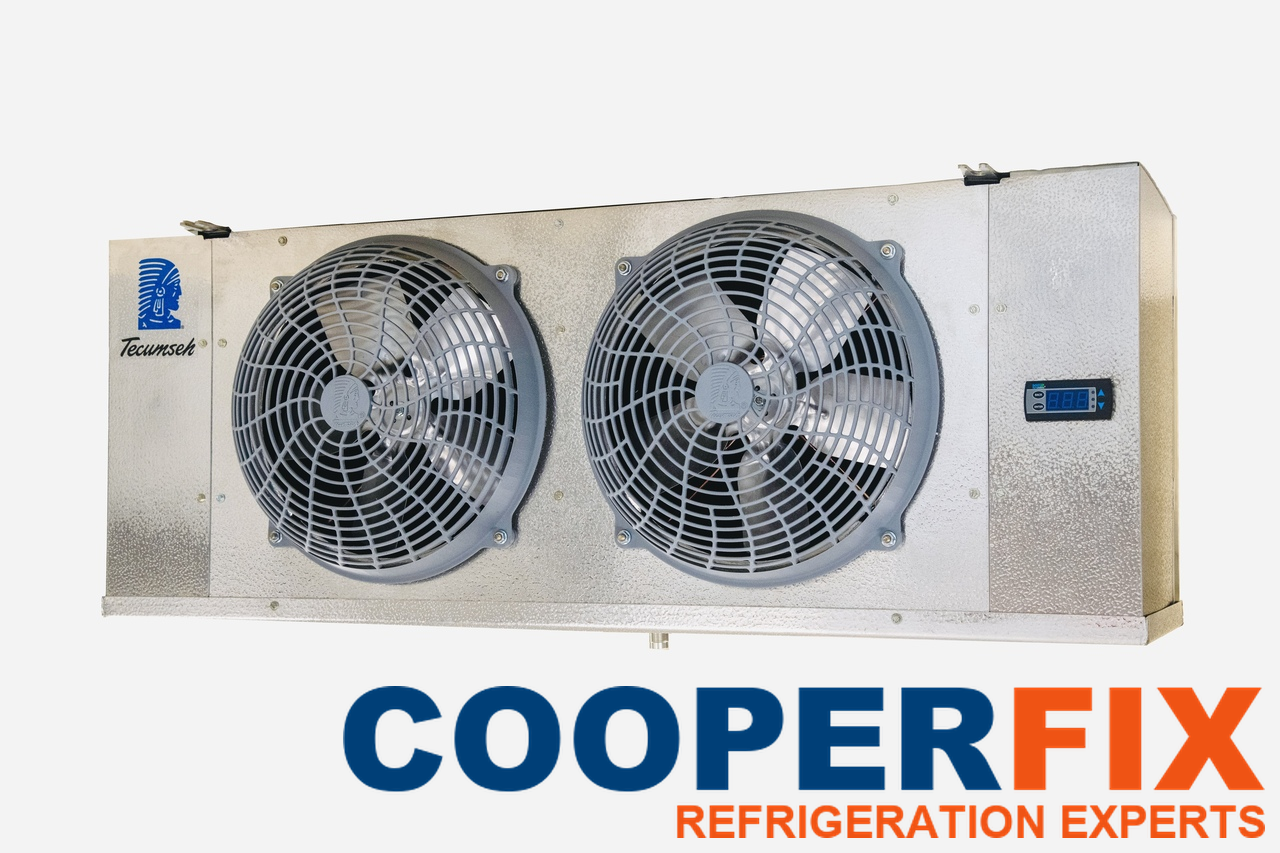
Tecumseh CRIOS low-profile refrigeration unit cooler.
Tecumseh CRIOS low-profile unit-cooler family.

Exact component model identified
The Tecumseh family, model, serial details, application data, refrigerant information, electrical rating and installed role are noted before parts or replacement research begins.

Whole-system assessment
Compressors, condensers, controls, fans, piping, metering devices, evaporator-side equipment and operating conditions are evaluated as connected elements rather than isolated labels.

Component and circuit readings define the work
Temperature, pressure where authorized, electrical measurements, airflow, control calls, defrost behaviour, component condition and operating history support the recommendation.

Start with the Tecumseh component and the system it serves

Identify the Tecumseh component and connected refrigeration system

Provide the Tecumseh model and serial information if it is safely visible, identify whether the label is on a compressor, condensing unit or unit cooler, and describe the operating change. If the component serves a larger refrigeration system, name the affected cabinet, room or process without removing panels or attempting technical tests. This information supports coordination; the cause is established by professional assessment.

    Please prove you are human by selecting the star.

    CooperFix services commercial refrigeration equipment only.

    Components organized by refrigeration-system role

    Match testing to the Tecumseh compressor, condensing unit, or unit cooler

    Tecumseh publishes multiple refrigeration component families. Similar appearance does not establish equivalent capacity, application, refrigerant, voltage or control requirements. CooperFix confirms the installed model and the system it serves before defining work.

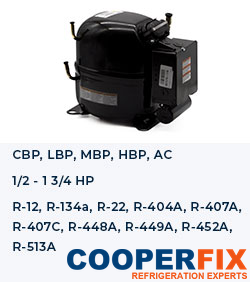
    AJ reciprocating compressors

    The official AJ family covers reciprocating compressors offered in multiple application, electrical and refrigerant combinations. A compressor is only one part of the circuit: its operating condition depends on the load, heat rejection, refrigerant flow, controls and evaporator-side response around it.

    Assessment can include electrical condition, control demand, start and run behaviour, accessible temperatures, system pressures where authorized, oil or refrigerant test results, connected fan operation and heat-rejection conditions. A noisy start, high current or interrupted operation may be important test results, but no single observation proves that the compressor itself is the failed component.
    Easypack condensing units

    Tecumseh presents Easypack as a factory-assembled condensing-unit family with different sizes and capacities. A condensing unit combines components that must operate together, commonly including the compressor, condenser, fan or fans, electrical devices and system connections. The exact arrangement remains model-specific.

    CooperFix documents the family and model, installed application, electrical supply, refrigerant data, control call, condenser condition, fan operation and accessible circuit measurements. An enclosure or family name is not used as permission to substitute a part or alter a control setting without confirmed compatibility.

    UHE condensing units

    UHE is a separate Tecumseh condensing-unit family and remains distinct from Easypack in the service file. Differences in enclosure, component arrangement, capacity, application and electrical setup can affect access, testing and parts research even when the two units serve similar business functions.

    The technician confirms which assembly is installed and relates condensing-side findings to the evaporator load. Heat around the unit, obstructed airflow or a fan concern can matter, but they must be measured alongside the control sequence and refrigeration circuit before a repair plan is recommended.

    CRIOS low-profile unit coolers

    Tecumseh identifies CRIOS as a low-profile unit-cooler family with different fan counts, temperature applications and defrost arrangements. The unit cooler is the evaporator-side equipment that moves air across the coil and manages condensate and, where applicable, defrost. Its condition cannot be inferred from a condensing-unit observation alone.

    Assessment can include fan operation, coil condition, airflow, frost pattern, drain and pan condition, control response, defrost components where present and the connected circuit's behaviour. CooperFix verifies the exact package before associating any feature with the installed unit.

    Tecumseh AJ refrigeration compressor family illustration
    Tecumseh AJ reciprocating-compressor family.
    Tecumseh Easypack condensing-unit family diagram
    Tecumseh Easypack condensing-unit family reference.
    Tecumseh UHE condensing-unit family diagram
    Tecumseh UHE condensing-unit family reference.

    Visible component behaviour can originate elsewhere in the circuit

    Evaluate the Tecumseh component as part of the connected system

    A refrigeration complaint often appears at the component that is easiest to hear or see. A compressor may cycle unexpectedly, a condensing unit may reject heat poorly, or a unit cooler may show uneven airflow. Each observation matters, yet the origin can be elsewhere in the connected system.

    CooperFix builds a sequence instead of assigning blame from the first symptom. The technician confirms the call for cooling, observes how controls respond, checks accessible electrical and mechanical conditions, and relates condensing-side behaviour to the evaporator load. System charge, restrictions, airflow, defrost and control faults are considered only through test results appropriate to the installed setup.

    This method keeps the recommendation tied to the measured condition. It avoids condemning an expensive compressor when the measured cause is external to it, and it avoids treating a damaged component as an isolated event when another confirmed system condition must also be corrected.

    Intermittent conditions require the same discipline. A protective device may interrupt operation only after the system has run under load, while a control call may disappear before the technician arrives. CooperFix compares available history with present measurements, checks whether the sequence can be reproduced safely and records what could not be observed. A temporary restart is not treated as proof that the cause has cleared, and a quiet component at rest is not treated as proof of failure. The recommendation remains limited to measurements from the installed system.

    Load, operating pattern, and access shape system readings

    Record refrigeration load and site access around the Tecumseh circuit

    Tecumseh components may support a single cabinet, a remote display, a preparation station or a temperature-controlled room. The business impact depends on what that system protects, how it is loaded and when the operating change occurs. Staff observations help establish that timeline without replacing technician measurements.

    CooperFix asks which equipment is affected, whether the change is constant or intermittent, whether it follows access or defrost, and whether power, controls, loading or surrounding conditions recently changed. A recurring alarm, slow recovery or new sound can help reproduce the condition. It is not presented as a diagnosis.

    The business can identify access restrictions, production windows and any need to coordinate around other equipment. Those facts make the visit safer and more focused. They do not create an unsupported promise about arrival time, repair duration, parts availability or restored performance.

    Remote equipment requires access at both ends of the circuit

    Coordinate Tecumseh condensing-unit and unit-cooler service areas

    A remote refrigeration system can place the Tecumseh condensing unit and unit cooler in different service areas. Safe access may require coordination around stored product, ceiling clearance, rooftop or mechanical-space rules, electrical isolation and active work routes. CooperFix confirms those conditions before authorized work begins.

    When one condensing unit serves more than one evaporator-side section, every affected section is noted separately. Similar temperatures do not prove identical airflow, control or defrost behaviour. When several Tecumseh systems are reported together, each receives its own model details, readings, findings and work record.

    This unit-level discipline also protects parts research. A compressor family may appear across many assemblies, but the correct replacement decision depends on the full model, application, refrigerant, electrical data and confirmed system duty. CooperFix does not select a component from brand and physical size alone.

    From exact Tecumseh model to connected-system tests

    Use component identity and system role to select measurements

    01 — Confirm model details and system role

    The technician notes the Tecumseh family and model, readable data, component type, connected equipment, refrigerant information, electrical rating, controls and normal operating role.

    02 — Reproduce the reported condition

    Staff observations are compared with current operation. The record distinguishes a start concern, interrupted run, temperature change, airflow issue, control event, defrost issue or abnormal sound.

    03 — Measure connected operation

    Authorized checks can include electrical values, temperatures, pressures, control signals, fans, coils, airflow, condensate management, defrost components and refrigeration-circuit measurements relevant to the exact system.

    04 — Identify the cause supported by the test results

    Findings are tested against the complete sequence. Coincidental conditions are separated from defects that explain the observed behaviour, and any limit on access or testing is noted.

    05 — Define and verify authorized work

    For Tecumseh equipment, CooperFix links the authorized work to the mapped system, completes that recommended work and notes the component and circuit response observed afterward. The available operating condition limits the verification; it cannot promise performance under every future load.

    Repair follows the diagnosed component and circuit condition

    Authorize only Tecumseh work supported by connected-system testing

    Tecumseh service can involve electrical controls, fan assemblies, accessible coils, defrost components, condensate paths, compressor starting components, protective devices or sealed-system work. The exact task follows the diagnosis and the approved scope of work that can be completed safely on the installed system.

    Refrigerant-circuit work requires more than replacing a visibly affected part. The technician must preserve refrigerant and application compatibility, evaluate measurements related to the underlying cause, follow appropriate recovery and charging practices, and verify operation after the authorized work. A replacement compressor must never be selected solely because it carries the same brand or appears to fit the available space.

    Documentation connects the original complaint, measurements, approved work and verification. When a condition remains outside the authorized work, it is noted rather than hidden behind a broad statement that the entire system has been restored.

    Component correction and planned system care are separate

    Keep Tecumseh repair and maintenance decisions distinct

    Repair addresses a confirmed defect: an electrical device that does not perform its function, a failed fan, a control problem, a confirmed refrigerant-circuit condition or a compressor whose failure is confirmed by testing. The recommendation should identify both the failed function and any confirmed system condition that could affect the repair.

    Maintenance addresses serviceable conditions before they obscure system behaviour. Depending on equipment and access, this can include accessible coil condition, airflow, fan inspection, electrical connections, drains, pans, controls and recorded operating observations. Maintenance is not presented as a substitute for a failed component.

    For businesses managing several systems, planned commercial refrigeration maintenance can create a consistent record of model identities and developing conditions. It cannot guarantee that a component will not fail or that every future operating change will be prevented.

    Complete model data keeps system research accurate

    Preserve Tecumseh component identity across service history

    Tecumseh publishes many families across different capacities, applications, refrigerants and electrical configurations. Accurate model transcription is therefore central to service. A missing character, suffix or voltage detail can point to a different component than the one installed.

    CooperFix notes readable data and connects it to the host system before researching parts. The record can include component family, complete model, serial information, refrigerant, electrical rating, control arrangement, equipment served and relevant measurements. If a plate is unreadable or access is incomplete, that uncertainty remains explicit.

    This service history supports a clear decision whether the approved work is an adjustment, component repair, component replacement, further system testing or monitoring. It also keeps facts from one Tecumseh installation from being copied into another system whose duty is materially different.

    When an exact component is no longer directly available, the record still does not authorize an improvised substitute. Any proposed alternative must be checked against the host system's application, capacity, refrigerant, electrical supply, controls, physical service space and noted manufacturer information. If that testing is incomplete, CooperFix identifies the unresolved compatibility question instead of presenting the alternative as confirmed.

    Which Tecumseh compressors, condensing units, and unit coolers can CooperFix assess?

    CooperFix services confirmed Tecumseh compressors, condensing units and unit coolers within commercial refrigeration systems. The exact family, model, application, refrigerant data, electrical rating and connected equipment are confirmed before repair or maintenance work is defined.

    Does a compressor symptom prove that the Tecumseh compressor has failed?

    No. A compressor's behaviour is affected by controls, electrical supply, refrigerant flow, heat rejection and evaporator load. CooperFix measures the connected system and identifies the cause supported by current test results before recommending compressor work or replacement.

    Can CooperFix service Tecumseh Easypack and UHE condensing units?

    CooperFix can assess confirmed Easypack and UHE condensing units. The two families remain separate in the service file, and the technician verifies model, application, controls, electrical data and connected evaporator-side equipment before defining work.

    Can a Tecumseh unit cooler be assessed separately from the condensing unit?

    Its fans, coil, airflow, drain, controls and defrost arrangement can be inspected as a distinct service area, but the final diagnosis must still account for the connected refrigeration circuit. CooperFix relates evaporator-side findings to condensing-side operation rather than treating either side in isolation.

    How is planned Tecumseh maintenance kept separate from a confirmed system repair?

    Planned Tecumseh maintenance is noted separately for serviceable conditions such as accessible coils, airflow, fans, electrical connections, drains and recorded controls. A confirmed failed component or sealed-system condition is placed in a separate repair plan supported by technician findings from the connected refrigeration system.

    Which Tecumseh component and connected-system details help begin service?

    Report whether the accessible Tecumseh label belongs to a compressor, condensing unit or unit cooler, then give its complete model details and name the cabinet or room served. Describe the sequence of the change without opening equipment; system mapping and technical tests belong to CooperFix.

    Continue with the identified Tecumseh component and circuit

    Name the compressor, condensing unit, or unit cooler involved

    Tell CooperFix which Tecumseh component is installed, what refrigeration equipment it serves and what changed in operation. Include a safely readable model number and note whether the condition is constant, intermittent or connected to a control or defrost event. A complete request helps prepare the correct service context while leaving technical diagnosis to the technician.

      Please prove you are human by selecting the tree.

      CooperFix services commercial refrigeration equipment only.

      Tecumseh service based on connected-system findings

      Authorize the Tecumseh repair from component and circuit measurements

      Tecumseh compressors, condensing units and unit coolers perform different jobs within one refrigeration process. CooperFix identifies the installed component, measures the connected system and documents the recommended repair or maintenance path without assuming compatibility from the brand name alone.

      Request Tecumseh Service
      Review Equipment Coverage