
Traulsen reach-in, prep-table, undercounter, and equipment-stand service

Traulsen Commercial Refrigeration Repair & Service

Traulsen refrigeration supports upright storage, daily food preparation and point-of-use cold storage. R-Series reach-ins, TS-Series raised-rail tables, TU-Series undercounters and TE-Series refrigerated equipment stands place their refrigeration sections, controls, doors, drawers and airflow systems in different relationships. CooperFix evaluates and services confirmed Traulsen cabinets with methods specific to those layouts and operating roles.

Service begins with the exact cabinet and setup. A top-mounted reach-in cannot be assessed as if it were a horizontal undercounter. A pan-rail concern must be separated from the lower cabinet, and an equipment stand must be considered in relation to the load and heat above it. CooperFix connects those operating differences with technician measurements before defining the work.

Request Traulsen Service
Review Traulsen Equipment

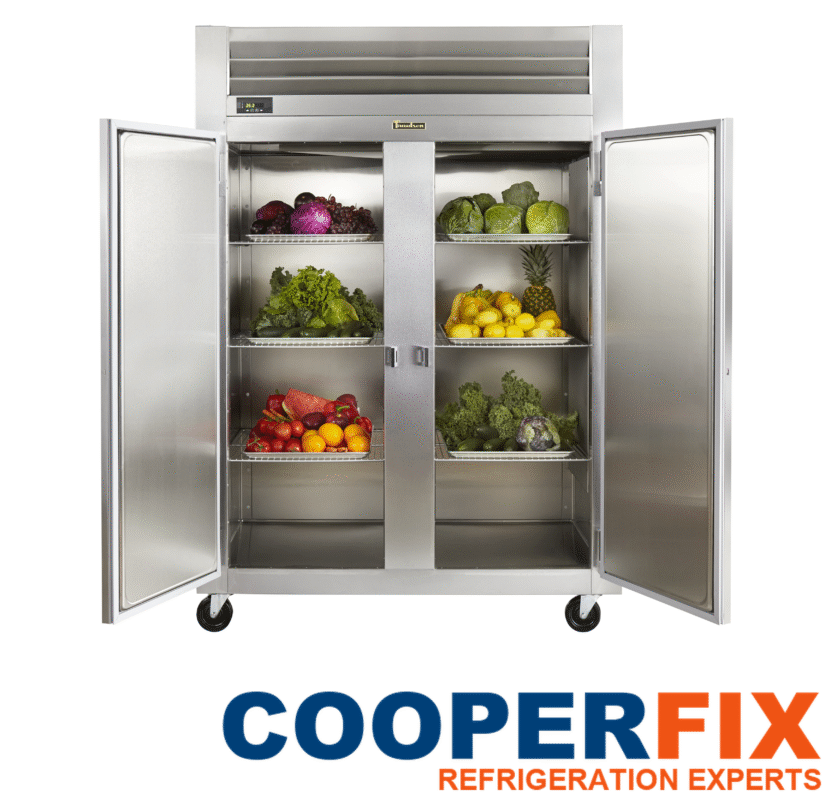
Traulsen R-Series solid-door reach-in refrigeration cabinet
Traulsen R-Series solid-door reach-in refrigeration.

Series and setup identified first
The series, model, serial information, temperature class, section count, door or drawer layout, refrigeration location and control type are noted before conclusions are made.

Service planned around preparation and workstation access
Access frequency, product loading, preparation activity, nearby heat, clearances and the unit's business role inform planning without replacing technical diagnosis.

Rail, base, door, and equipment-stand readings guide the recommendation
Temperatures, recovery, controls, fans, airflow, coils, doors, drawers, gaskets, drains, defrost where applicable and refrigeration-circuit findings are considered together.

Start with the Traulsen series and affected cabinet zone

Identify the Traulsen format, section, door, or drawer involved

Begin the Traulsen request with the upright, prep-table, undercounter or equipment-stand family, then add a safely readable full model and the affected door, drawer or section. Describe the timing and any access constraint. This prepares the correct service approach without diagnosing the cabinet from the request.

    Please prove you are human by selecting the house.

    CooperFix services commercial refrigeration equipment only.

    Cabinets organized by storage, preparation, and point-of-use role

    Match testing to the Traulsen series and installed configuration

    The current Traulsen catalogue includes refrigeration families with different storage, access and heat-rejection arrangements. CooperFix confirms the complete model because series names do not replace cabinet-specific test results.

    R-Series solid-door reach-ins

    R-Series solid-door refrigerators and freezers are upright cabinets with configurable section, door and operating arrangements. The official family page places the refrigeration system at the top and documents cabinet airflow and control features. The technician still verifies the exact model rather than assigning every family feature to every installed unit.

    Assessment can include cabinet temperatures, recovery, control indications, evaporator and condenser fans, accessible coils, airflow paths, doors, hinges, gaskets, drains, defrost where applicable, electrical condition and refrigeration response. An alarm or elevated reading is noted with its timing and affected section before a cause is assigned.
    TS-Series raised-rail preparation tables

    TS-Series raised-rail tables combine an upper ingredient zone with refrigerated storage below. Those zones share a cabinet but may present different airflow, loading and access conditions. A report about the rail is therefore kept separate from observations about the lower base.

    CooperFix documents pan arrangement, covers, rail behaviour, base temperatures, recovery, doors or drawers, gaskets, controls, fans, coils, drains and refrigeration-system test results. Staff handling patterns provide useful context, while measurements establish whether the concern belongs to the ingredient zone, lower cabinet or a condition affecting both.

    TU-Series full-size undercounters

    TU-Series undercounters place refrigerated storage below the work surface. The official line includes different cabinet lengths and door or drawer choices, so service access and air movement depend on the installed setup. Tight placement beside other fixtures may be operationally important without proving a fault.

    Assessment considers the worktop environment, openings, gaskets, cabinet temperature, recovery, airflow, front and side access, controls, electrical operation, coils and refrigeration circuit. CooperFix notes the actual layout before parts research or disassembly is authorized.

    TE-Series refrigerated equipment stands

    TE-Series equipment stands combine refrigerated drawer storage with a load-bearing top. Their job brings top loading, line heat, drawer use, air distribution and condensing-section access into one service context. They must not be treated as ordinary low cabinets without accounting for the equipment above and the safe method of reaching service areas.

    On a Traulsen equipment stand, the technician records each drawer’s travel and seal, temperatures, air delivery, controller behaviour, accessible coil condition, electrical readings and circuit response. Top loading and surrounding heat remain operating context; the recommendation rests on measured cabinet test results.

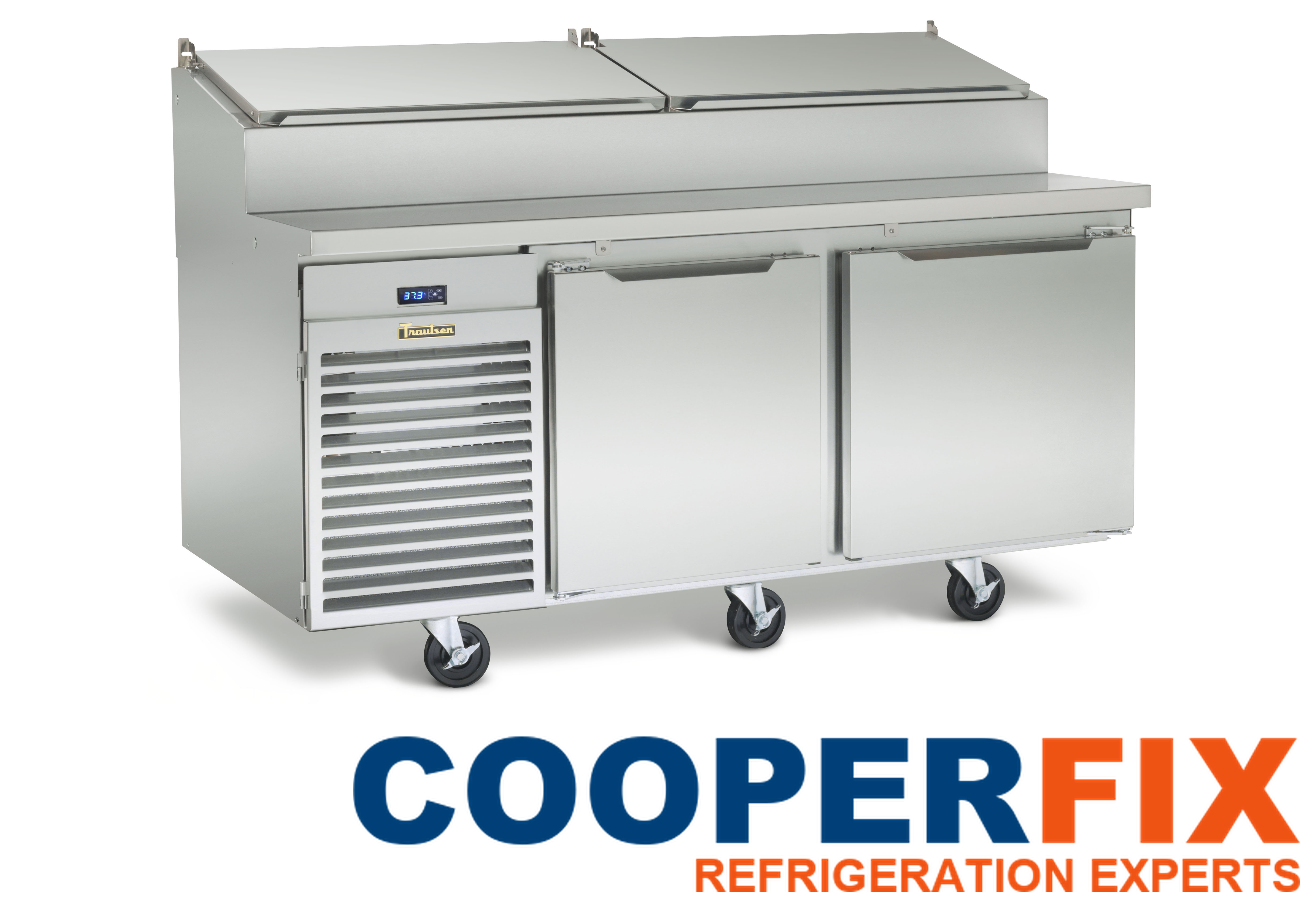
    Traulsen TS-Series raised-rail refrigerated preparation table
    Traulsen TS-Series raised-rail preparation table.
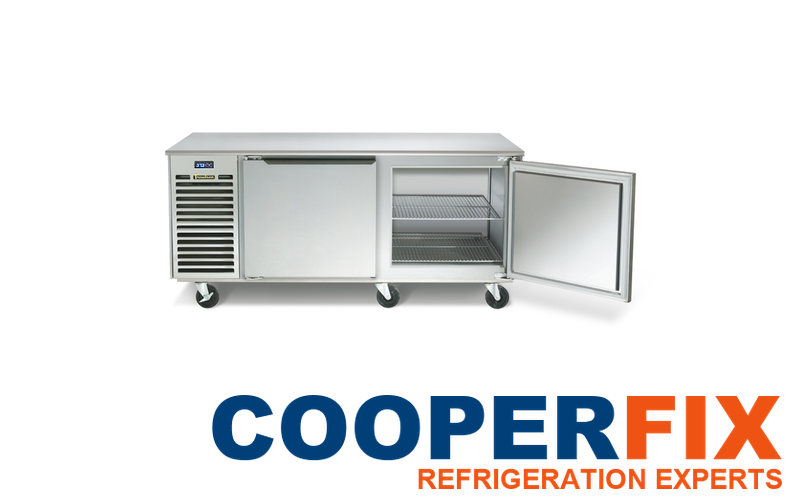
    Traulsen TU-Series full-size undercounter refrigeration cabinet
    Traulsen TU-Series full-size undercounter refrigeration.
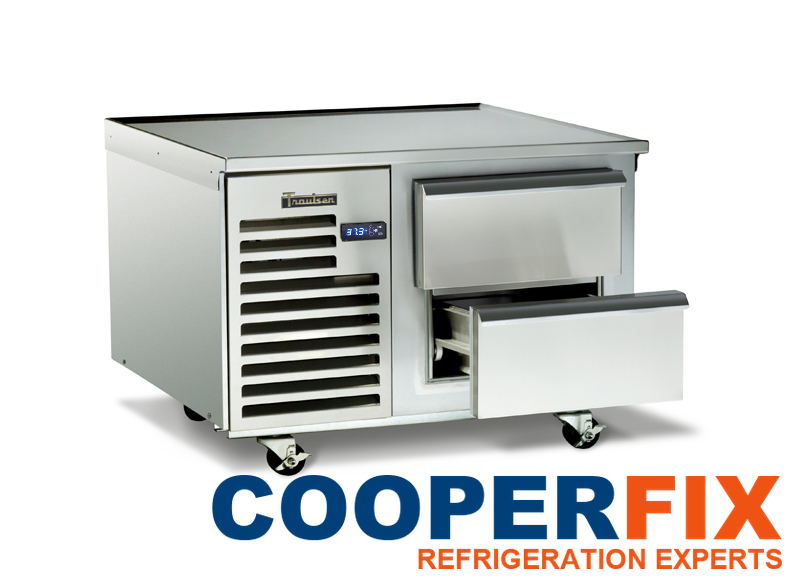
    Traulsen TE-Series refrigerated equipment stand
    Traulsen TE-Series refrigerated equipment stand.

    One Traulsen cabinet can contain several service zones

    Separate rail, base, door, drawer, and refrigeration findings

    Traulsen equipment can contain several distinct service zones. A reach-in may have multiple cabinet sections beneath one refrigeration assembly. A preparation table combines a pan rail and base, while an equipment stand combines drawers with a heat-loaded top. A single temperature statement is not enough to describe all of them.

    CooperFix records where the change occurs, when it appears and whether another zone remains stable. The technician compares control readings with measured conditions, observes recovery after normal access and checks the airflow, openings and refrigeration response relevant to that section.

    This separation prevents work on one zone from being presented as a confirmed answer for another. It also helps distinguish a local door, drawer, gasket or airflow condition from a refrigeration issue that affects the cabinet more broadly.

    Recovery is noted in context as well. A cabinet that has just received a load or experienced frequent openings should not be judged from one isolated reading, while a persistent difference between sections should not be dismissed as ordinary access. CooperFix identifies the operating event, observes the relevant interval when practical and compares control information with independent measurements. This creates a useful sequence without asking staff to change technical settings or hold the unit in an artificial operating state.

    Operating role and surrounding heat shape cabinet behaviour

    Note rail, door, drawer, and workstation activity by Traulsen unit

    An upright reach-in may be opened repeatedly during staging. A TS table can be central to preparation, a TU undercounter can support point-of-use storage, and a TE stand combines a working top with refrigerated drawer storage. Those roles affect access frequency, loading and the time available for coordinated service.

    CooperFix asks when the change began, whether it is constant or intermittent, which section is affected and whether loading, nearby equipment or the operating schedule changed. Staff observations help establish a timeline. They are not used as a substitute for measured temperatures, electrical checks, airflow findings or refrigeration test results.

    The business can identify safe access windows, product-handling requirements and equipment that must be coordinated before work begins. These facts support planning without creating a promise about arrival time, repair duration, parts availability or final performance.

    Each Traulsen cabinet keeps its own measurements and approval

    Coordinate multiple Traulsen units without mixing their findings

    A facility may operate several Traulsen reach-ins, preparation tables and undercounter units. CooperFix separates every cabinet by model, serial information, series, door or drawer layout, operating role and reported condition even when one visit covers several units.

    A reach-in alarm, a prep-table rail concern and a drawer that does not close consistently require three distinct records. Similar timing can be relevant, particularly after a shared power or environmental event, but it does not prove a common component failure.

    Access is planned for each unit. A top-mounted system may require overhead clearance, an undercounter may be tightly fitted between fixtures, and an equipment stand may require coordination to provide safe access around its loaded top. Any condition that limits safe inspection or approved work remains explicit.

    Unit-level documentation keeps readings, findings, parts research and post-work observations attached to the correct Traulsen cabinet. It prevents a feature or measurement from one series from being copied into another unit's decision.

    From Traulsen series details to cabinet-specific tests

    Use section, door, drawer, and refrigeration layout to select measurements

    01 — Confirm the installed Traulsen unit

    The technician records series, model and serial information, temperature class, sections, door or drawer arrangement, refrigeration location, controls and normal business role.

    02 — Define the reported operating change

    The record distinguishes temperature, recovery, alarm, airflow, fan, control, door, drawer, drain, defrost or abnormal-sound concerns and identifies the affected zone.

    03 — Measure actual operation

    Authorized checks can include temperatures, controls, electrical values, fans, airflow, coils, openings, gaskets, drains, defrost components and refrigeration-circuit measurements relevant to the model.

    04 — Confirm the cause with test results

    Measurements are reviewed as a sequence. Conditions that explain the complaint are separated from unrelated wear, normal operating variation and limits created by access or load.

    05 — Complete and verify authorized work

    CooperFix explains the Traulsen-specific work, performs only the authorized cabinet work and records how the affected section operated during the available post-work window. That observation is bounded by the load and conditions present during the visit.

    Repair follows the confirmed Traulsen model and measured fault

    Authorize Traulsen repairs supported by diagnosis

    Traulsen work can involve controls, sensors, fans, accessible coils, drains, defrost components, electrical devices or the sealed refrigeration circuit. The technician chooses the task from diagnosis, not from a generic list attached to the brand.

    Cabinet access changes the work. A top-mounted reach-in, horizontal undercounter and refrigerated stand expose components in different locations. CooperFix confirms safe clearances and protects surrounding operations before opening an authorized service area. Staff are not asked to remove panels, bypass controls or attempt electrical or refrigerant procedures.

    When sealed-system work is confirmed, the record preserves model, refrigerant and application compatibility and addresses measurements related to the cause. Post-work observations are tied to the cabinet and condition available at the visit. Any unresolved issue outside the approved work remains noted.

    Current correction and planned cabinet care are separate

    Keep Traulsen repair and maintenance decisions distinct

    Repair addresses a confirmed defect such as a failed fan, control, sensor, electrical device, defrost part or refrigeration-system condition. The recommendation explains the failed function and its connection to the reported operating change.

    Maintenance addresses serviceable conditions that affect heat transfer, airflow and drainage. Depending on model and access, the work may include accessible coils, fan condition, drains, controls and baseline operating observations. Maintenance cannot reverse a failed component and is not used to avoid a confirmed repair.

    For multi-unit operations, planned commercial refrigeration maintenance can standardize equipment identities and trend records. It does not guarantee continuous operation, eliminate all failures or replace diagnosis when a specific Traulsen cabinet changes behaviour.

    Series, model suffix, and service history remain connected

    Preserve traceability across Traulsen cabinet configurations

    Traulsen series contain multiple lengths, section counts, temperature classes and opening arrangements. A family name or cabinet width alone is not enough for parts research. Complete model and serial information help distinguish the correct control, fan, gasket, hinge, drawer, electrical and refrigeration setup.

    CooperFix notes readable data before recommending a part. The service file connects model details with the affected zone, measurements, technician findings, approved work and post-work observations. If the plate is inaccessible or damaged, the uncertainty is noted and the decision is limited accordingly.

    Traceability also protects future visits. It keeps an R-Series reading from being treated as a TU-Series baseline and prevents a TS rail setup from being assumed for another table. The result is a cabinet-specific history rather than a generic brand note.

    Setup changes must remain visible in that history. Replacement doors, drawers, controls or refrigeration components may alter the information needed for the next visit even when the exterior cabinet looks unchanged. CooperFix notes confirmed changes and distinguishes original model data from later installed parts. When a proposed part cannot be tied to reliable model information and measurements, the uncertainty is escalated before installation rather than resolved by appearance or approximate dimensions.

    Post-work notes serve the same purpose. They identify the condition available for verification, the readings obtained and any follow-up item outside the approved work. A short observation under a light load is not described as proof of every future production condition; it is noted accurately so the business and the next technician can understand what was confirmed.

    Which Traulsen reach-ins, prep tables, undercounters, and equipment stands can CooperFix assess?

    CooperFix services confirmed Traulsen reach-in refrigerators and freezers, raised-rail preparation tables, undercounter cabinets and refrigerated equipment stands. The exact series, model, temperature class and door or drawer setup are confirmed before work is defined.

    Why are the rail and base of a Traulsen prep table recorded separately?

    The ingredient zone and lower cabinet have different loading, access and airflow conditions even when they share one unit. CooperFix identifies the affected zone and compares temperatures, recovery, controls, airflow and refrigeration test results before connecting the observations.

    Can CooperFix assess a Traulsen refrigerated equipment stand?

    Yes. Once the Traulsen equipment stand can be reached safely, the technician evaluates its refrigerated drawers, top load, surrounding heat, air path, controls and condensing section as one installed context. Conclusions remain tied to readings from that exact stand.

    How are several Traulsen cabinet zones noted during one visit?

    CooperFix documents each Traulsen upright, preparation table, undercounter or equipment stand on its own equipment line with model, series and reported section. Separate measurements, parts research, authorizations and close-out results keep every cabinet zone traceable even when the visit is coordinated.

    How is planned Traulsen maintenance kept separate from a confirmed cabinet repair?

    Planned Traulsen maintenance is noted as a separate decision for accessible cabinet conditions suitable for scheduled attention. A diagnosed component or refrigeration failure requires its own corrective authorization, with the distinction grounded in the technician’s findings for the installed Traulsen model.

    Which Traulsen series and cabinet-zone details help begin service?

    Supply safely readable Traulsen model details, name the upright, prep-table, undercounter or stand family, and pinpoint the affected door, drawer or section with its timing. Leave panel access, setting changes and instrument testing to CooperFix.

    Continue with the affected Traulsen cabinet

    Name the rail, base, door, drawer, or section that changed

    Tell CooperFix whether the affected unit is a reach-in, preparation table, undercounter or equipment stand. Include the complete model if safely readable, identify the affected section and describe whether the condition is constant, intermittent or connected to access or defrost. A clear request prepares the correct service context without replacing onsite diagnosis.

      Please prove you are human by selecting the heart.

      CooperFix services commercial refrigeration equipment only.

      Traulsen service based on cabinet-specific findings

      Plan the Traulsen repair from section and refrigeration measurements

      Traulsen equipment supports different storage and production roles, and each setup creates its own access, airflow and operating context. CooperFix confirms the installed series, measures the affected zone and documents a repair or maintenance decision grounded in the actual cabinet.

      Request Traulsen Service
      Review Equipment Coverage