Trenton refrigeration-system equipment service

Trenton Commercial Refrigeration Repair & Service

Trenton equipment can form different parts of a commercial refrigeration system. A low-profile evaporator manages heat transfer and air movement inside a refrigerated space. A medium-profile evaporator supports larger loads. A hermetic condensing unit combines compression, controls and heat rejection in a packaged assembly, while a remote air-cooled condenser performs a narrower system role. CooperFix begins with the exact Trenton model and the circuit it serves.

Professional diagnosis follows the whole operating relationship without treating every component as the same device. A technician confirms the model, generation, nameplate, temperature application, refrigerant, defrost arrangement, voltage, controls and connected equipment before selecting tests. Airflow, fans, coils, drainage, electrical functions, compression, pressures, piping and heat rejection are considered where applicable. The recommendation is tied to current measurements rather than a generic family name or one isolated symptom.

Request Trenton Service
Review Trenton Equipment

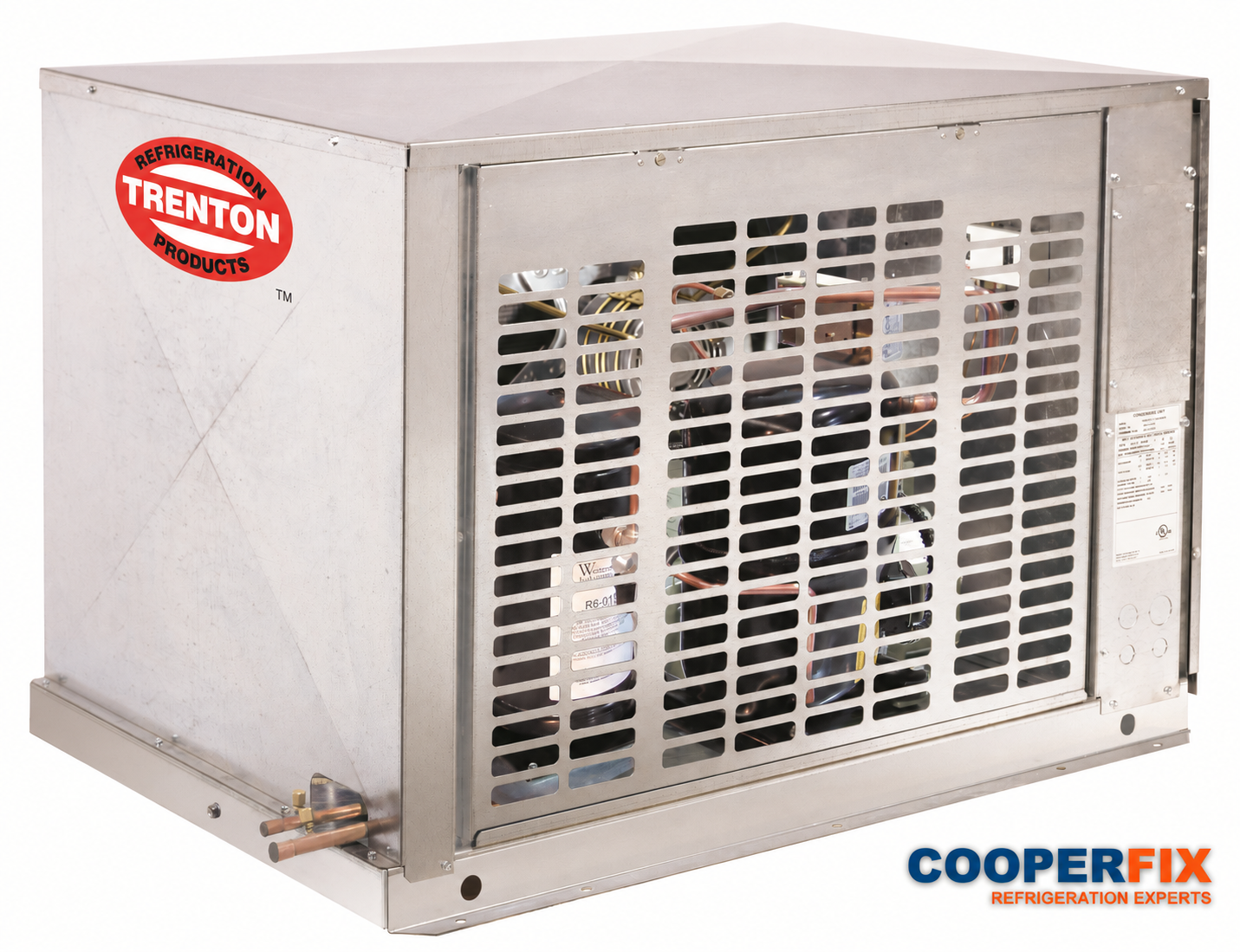
Trenton TEZ air-cooled scroll condensing unit
Trenton TEZ air-cooled scroll condensing unit.

Exact component identified
Model, generation and nameplate establish which Trenton setup is being assessed.

System relationships preserved
Evaporator, condensing-unit and condenser findings remain attached to the correct circuit.

Recommendations tied to measurements
Recommendations identify the measured condition, affected function and recorded limitation.

Start with the Trenton component’s circuit role

Identify the Trenton component and the refrigeration circuit affected

Use the required request fields to name the Trenton evaporator, condensing unit or condenser and describe the affected circuit or refrigerated space. Add only nameplate information that is ordinarily visible; no panel access is expected. CooperFix verifies the component generation and maps its system relationship before testing.

Describe the Trenton Component in Service

Identify the Trenton component and served circuit; CooperFix establishes setup, connections and the measurement plan.

    Please prove you are human by selecting the truck.

    CooperFix services commercial refrigeration equipment only.

    System equipment organized by refrigeration function

    Match testing to the Trenton evaporator, condensing unit, or condenser

    The selected official products illustrate four different roles. TLP and TMP are evaporator families with different physical profiles and published capacity ranges. TEH is a packaged hermetic condensing-unit family. TCS is an air-cooled condenser family, not a complete condensing unit. CooperFix keeps these roles separate while tracing how the affected circuit operates as a system.

    TLP low-profile evaporators

    The official TLP page describes a compact, flush-to-ceiling evaporator line intended to preserve storage space and distribute air through the coil. Current features include front access, internally enhanced tubing, accessible electrical and header compartments, a positive-slope hinged drain pan and air, electric or hot-gas defrost variants. The page publishes medium and low-temperature applications at -30°F and above, with different capacity ranges by duty. CooperFix confirms the exact model and installed defrost arrangement before evaluating airflow, fans, coil, control and drainage behaviour.

    TMP medium-profile evaporators

    TMP is presented for larger refrigerated spaces and publishes medium, low and specialty very-low-temperature context. Current features include hinged access panels, enclosed EC motors, internally enhanced tubing, electrical and header compartments, a positive-slope drain pan and multiple defrost arrangements. Its published capacity bands differ from TLP. CooperFix notes the exact TMP model, circuit, fan setup, defrost method and control arrangement rather than transferring a TLP expectation to a larger unit.

    TEH hermetic condensing units

    The TEH family consists of air-cooled hermetic condensing units for high, medium and low-temperature refrigeration applications. The official page publishes indoor or outdoor configurations and a 1/2 to 1 1/3 HP range. It identifies a welded-hermetic compressor, condenser design, electrical controls, receiver and service valves among the family features, with added housing and control provisions for outdoor versions. CooperFix verifies the installed package and connected evaporator before assessing compression, controls, pressures and heat rejection.

    TCS small air-cooled condensers

    TCS is a compact remote condenser family offering horizontal or vertical air discharge. The current page identifies enhanced tube-and-fin construction, fan motors, low-GWP compatibility and sizes from 2 to 24 nominal tons under its stated rating basis. A condenser rejects heat but does not replace the functions of a complete condensing unit. CooperFix evaluates the installed fan and coil arrangement, cleanliness, airflow, control inputs, circuit connection and operating conditions within the matched system.

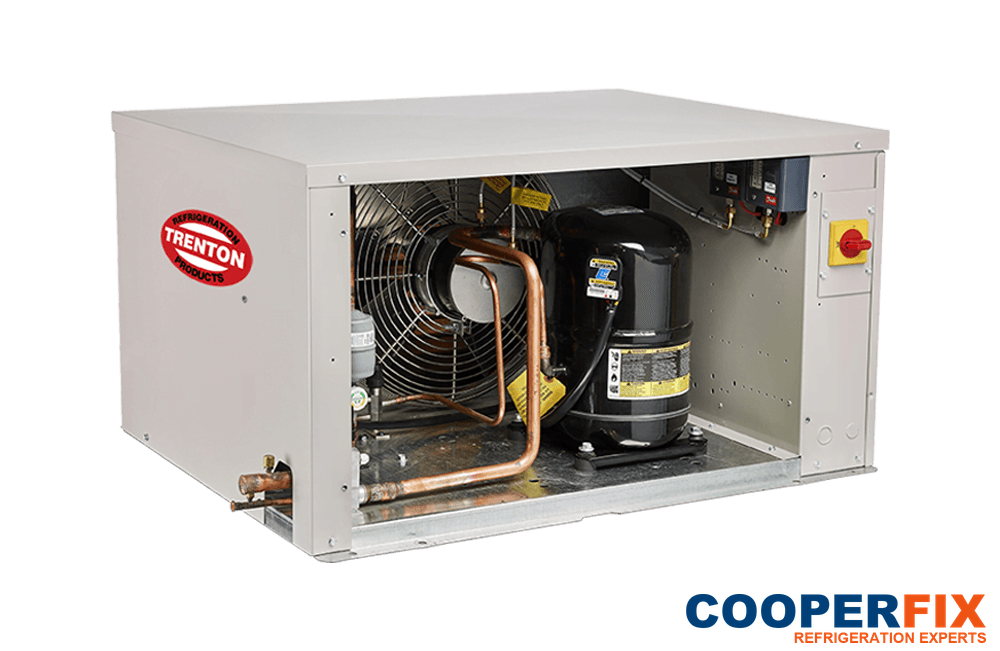
    Trenton TEH air-cooled hermetic condensing unit
    Trenton TEH air-cooled hermetic condensing unit.
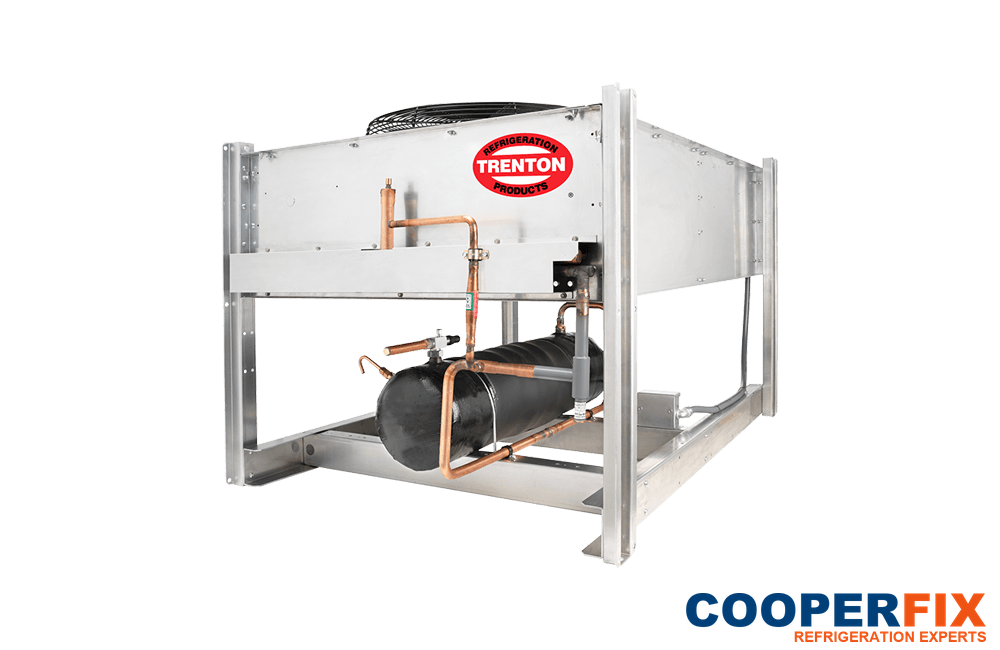
    Trenton TCS compact air-cooled condenser
    Trenton TCS compact air-cooled refrigeration condenser.

    One reported symptom can cross several components

    Trace the reported condition across the connected Trenton circuit

    Temperature performance depends on the relationship between load, evaporator heat transfer, airflow, defrost, refrigerant feed, compression, piping and condenser heat rejection. A condition observed at a TLP or TMP evaporator may originate locally or reflect another part of the circuit. A pressure or temperature change at a TEH unit does not by itself identify which connected function requires work.

    CooperFix builds a component map, observes the operating cycle and measures the applicable points. Possible contributors may include fan operation, coil condition, defrost, drainage, controls, sensors, electrical supply, valves, piping, refrigerant condition, compressor performance or condenser airflow. Each remains a possibility until measured results establish a finding.

    That map also respects the published family differences. TLP and TMP evaporators can use air, electric or hot-gas defrost variants, but their profile, application and capacity context are not interchangeable. TEH combines compression, controls, receiver and heat rejection within a condensing-unit package; TCS performs remote heat rejection without replacing those condensing-unit functions. CooperFix confirms which component starts and ends each measurement path, notes the operating state at the same interval and then evaluates how the connected results support or rule out a component-level conclusion.

    Note load, airflow, defrost, and site conditions around the circuit

    Refrigeration duty changes with load and operating cycle

    A low-profile evaporator may serve a compact space where storage position influences airflow. A medium-profile unit may serve a larger volume with longer air throw and different load patterns. A condensing unit or remote condenser may encounter varying heat-rejection conditions while supporting one or more controlled spaces. These factors help reproduce the report, but they do not establish a fault by themselves.

    CooperFix notes when the change appears, which space or circuit is affected, whether the condition is continuous or intermittent and what ordinary load or access activity surrounds it. Staff observations provide useful context. Professional measurements, safe access and technical cause-finding remain CooperFix's responsibility.

    Keep every finding attached to the correct system map

    Plan component access without merging separate refrigeration circuits

    Evaporator service may require access to fans, coil surfaces, drain pan, drain connection, controls and defrost components. Condensing-unit work involves a different mechanical and electrical map. A remote condenser adds its own fans, coil, discharge orientation and controls. CooperFix confirms safe access and notes any limitation before describing an assessment as complete.

    Coordinated Trenton components remain separate in the service notes. Each TLP, TMP, TEH or TCS item keeps its model, available serial reference, circuit assignment, duty, reported behaviour, readings and authorization. One evaporator cannot define another, and condenser test results cannot by themselves establish compressor or refrigerant-feed condition.

    Coordination begins by identifying the served space and tracing the line set between the applicable evaporator, compression package and heat-rejection component. For a TLP or TMP unit, fan setup, drain-pan condition and installed defrost method stay with that evaporator. For a TEH package, indoor or outdoor arrangement and its control provisions are noted before electrical or pressure findings are interpreted. For TCS, horizontal or vertical air discharge, coil condition and fan operation are tied to the remote condenser. This confirmed relationship prevents a local access limitation from being hidden inside a general system conclusion.

    From Trenton nameplate data to circuit-level measurements

    Evaporators, condensing units, and condensers need different tests

    01 — Confirm the Trenton setup

    CooperFix captures the exact Trenton model and generation, available serial reference, component role, temperature application, voltage, installed-nameplate refrigerant, defrost arrangement, controls and circuit connection. Technical references are selected only after that model details are resolved.

    02 — Map the applicable functions

    The technician identifies fans, motors, coil, distributor and feed components, drain pan, drainage, defrost, controls, sensors, electrical sections, compressor, receiver, service valves, piping and condenser functions as applicable. A feature from another Trenton family is not assumed.

    03 — Measure the reported condition

    Trenton measurements are arranged around the component's place in the circuit. Applicable work can compare served-space temperature and recovery, evaporator airflow, fans and coil, defrost and drainage, controller signals, electrical response, refrigerant-side temperatures and pressures, compression and condenser heat rejection. The installed system and available access set the order.

    04 — Explain the recommended work

    Each Trenton recommendation links a measurement to the evaporator, condensing-unit or condenser function that produced it. Current correction, a separately recorded observation, future care and any additional circuit investigation are presented as independent approvals.

    Repair follows the confirmed setup and test results

    Authorize Trenton work only for the confirmed component and circuit

    Confirmed Trenton test results may support work on a controller or sensor circuit, contactor, fan motor or blade, evaporator or condenser coil, drainage and defrost functions, valves, compressor or receiver, piping, leak investigation or refrigerant circuit. Model, component role and installed refrigerant determine the applicable procedure; no item is presumed from the brand alone.

    Trenton close-out retests the authorized component within its noted circuit and notes the resulting response. Correcting an evaporator drain condition does not imply condensing-unit work. Addressing condenser airflow does not imply compressor replacement. Close-out remains tied to the exact equipment, circuit and authorized action.

    Active Trenton correction and planned system care are separate

    Link each recommendation to a measured component or circuit condition

    Corrective action on a Trenton refrigeration system is tied to the cause supported by current testing and to the role of the identified TLP or TMP evaporator, TEH condensing unit or TCS condenser. Another accessible condition can be recorded for a later maintenance decision without extending the current authorization. Each recommendation states the component relationship, measurement and operating purpose that supports it.

    This separation prevents evaporator frost, a pressure reading or a warm space from naming a failed component without system test results. Work on one Trenton component does not authorize work elsewhere in the matched system; immediate correction, periodic care and added investigation are decided independently.

    For scheduled care beyond the confirmed correction, use the separate planned commercial refrigeration maintenance route for the identified Trenton system.

    Keep component model, matched system, and readings in one record

    Compare each Trenton component within its own circuit history

    CooperFix retains the full model, serial information when available, generation, temperature application, installed refrigerant, defrost arrangement, voltage, controls, connected equipment, reported change, measurements, approved work and relevant post-work observations. Evaporator records retain airflow and drainage context. Condensing-unit and condenser records preserve heat-rejection and circuit relationships.

    The record also distinguishes the access conditions and confirmed duty surrounding each reading. For an evaporator, that can include the served space, fan setup, defrost mode and drain observations. For a condensing unit or remote condenser, it can include the connected load, air-discharge arrangement and applicable control response. These details make later comparisons more precise without turning an earlier observation into a present conclusion. They also help CooperFix select the relevant technical reference for the exact Trenton family instead of relying on a visually similar component.

    Earlier Trenton history can guide comparison without proving the present cause. A previous fan result does not establish today's condition, and a similar model cannot provide measurements for the affected circuit. Consistent component records support testing continuity and parts research while new test results control the decision.

    Which Trenton evaporators, condensing units, and condensers can CooperFix assess?

    Confirmed Trenton evaporators, condensing units and air-cooled condensers are covered. Another Trenton refrigeration component is considered only after its exact model and circuit role are confirmed; the installed system and current test results then define the assessment.

    Why does CooperFix need the complete Trenton model and generation?

    The Trenton designation and generation distinguish component role, profile, duty, voltage, defrost design, controls, capacity context and refrigerant compatibility. CooperFix pairs that information with the installed nameplate before selecting technical references or tests.

    How is a Trenton evaporator assessed differently from a condensing unit?

    For a Trenton evaporator, the testing process centres on coil, fans, airflow, refrigerant feed, defrost and drainage inside the controlled space. A TEH condensing-unit path includes compression, electrical controls, receiver, piping and heat rejection. Their interaction is assessed without merging component-level findings.

    Is a Trenton air-cooled condenser the same as a condensing unit?

    No. The TCS family is a remote heat-rejection component with coil, fans, airflow orientation and related controls. A TEH condensing unit includes a compressor and additional refrigeration functions. CooperFix confirms the installed system map before describing the system or recommending work.

    Can CooperFix coordinate several Trenton components in one request?

    Yes. Several Trenton components may share scheduling, but every item retains an independent model, circuit assignment, symptom history, measurement set, authorization and completion notes. Results remain on the circuit where they were obtained.

    Which Trenton component and circuit details help begin service?

    Identify the Trenton component, served space or circuit and the observed change in the request. Add an ordinarily accessible model or serial reference when available. CooperFix resolves the setup, traces the connections and explains the action confirmed by circuit-level test results.

    Continue with the affected Trenton refrigeration circuit

    Name the Trenton component and connected system condition

    At the lower form, state whether the Trenton issue begins at an evaporator, condensing unit or condenser and name the served load. Separate multiple components by model or circuit role when readily possible. CooperFix verifies their relationships, measures the applicable functions and defines each component's work.

    Submit Trenton Component and Circuit Details

    Name the Trenton component and affected circuit; technical mapping, testing and repair planning stay with CooperFix.

      Please prove you are human by selecting the cup.

      CooperFix services commercial refrigeration equipment only.

      Trenton service based on component-to-system findings

      Restore the affected Trenton component within the refrigeration system

      CooperFix verifies the Trenton generation and circuit role, traces measured behaviour across connected equipment and presents the component-specific action those results justify.

      Request Trenton Service
      Review Equipment Coverage